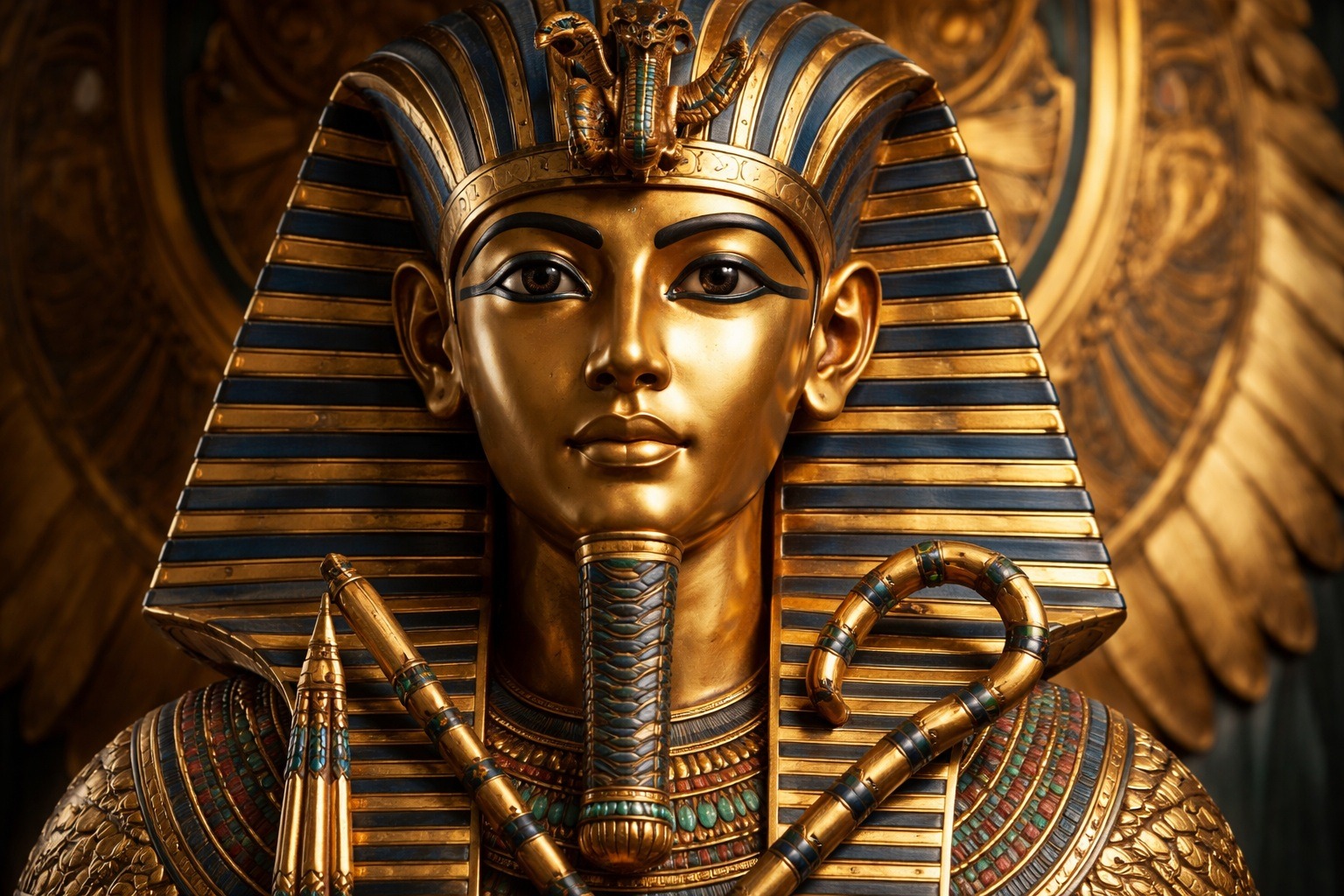
Tutankhamun possessed a blade practically gifted to him by the heavens
When archaeologists unwrapped Tutankhamun’s mummy in 1925, among the gold and jewels they discovered something truly extraordinary. It was an iron dagger that had not rusted in over three thousand years. For a long time, scientists debated its origins, until chemical analysis confirmed that the blade had been forged from a meteorite.
Why Tutankhamun’s Dagger Did Not Rust for 3,000 Years
Tutankhamun’s tomb, discovered by Howard Carter in 1922, became one of the most famous archaeological finds in history. Among thousands of artifacts, the iron dagger attracted particular interest. The fact is that Ancient Egypt during Tutankhamun’s time (around 1330 BCE) was still in the Bronze Age. Iron was an incredible rarity and was valued more highly than gold.
The dagger with its gold hilt and crystal pommel looked as if it had been made yesterday. The blade was almost untouched by corrosion, which seemed impossible for ordinary iron. In 2016, X-ray fluorescence analysis revealed a high content of nickel and cobalt in the metal — a characteristic “fingerprint” of meteoric iron. The mystery of its preservation was solved: the nickel in the meteorite’s composition acted as a natural anti-corrosion agent.
But where exactly did this meteorite come from, and who forged the blade? This is where it gets really interesting.
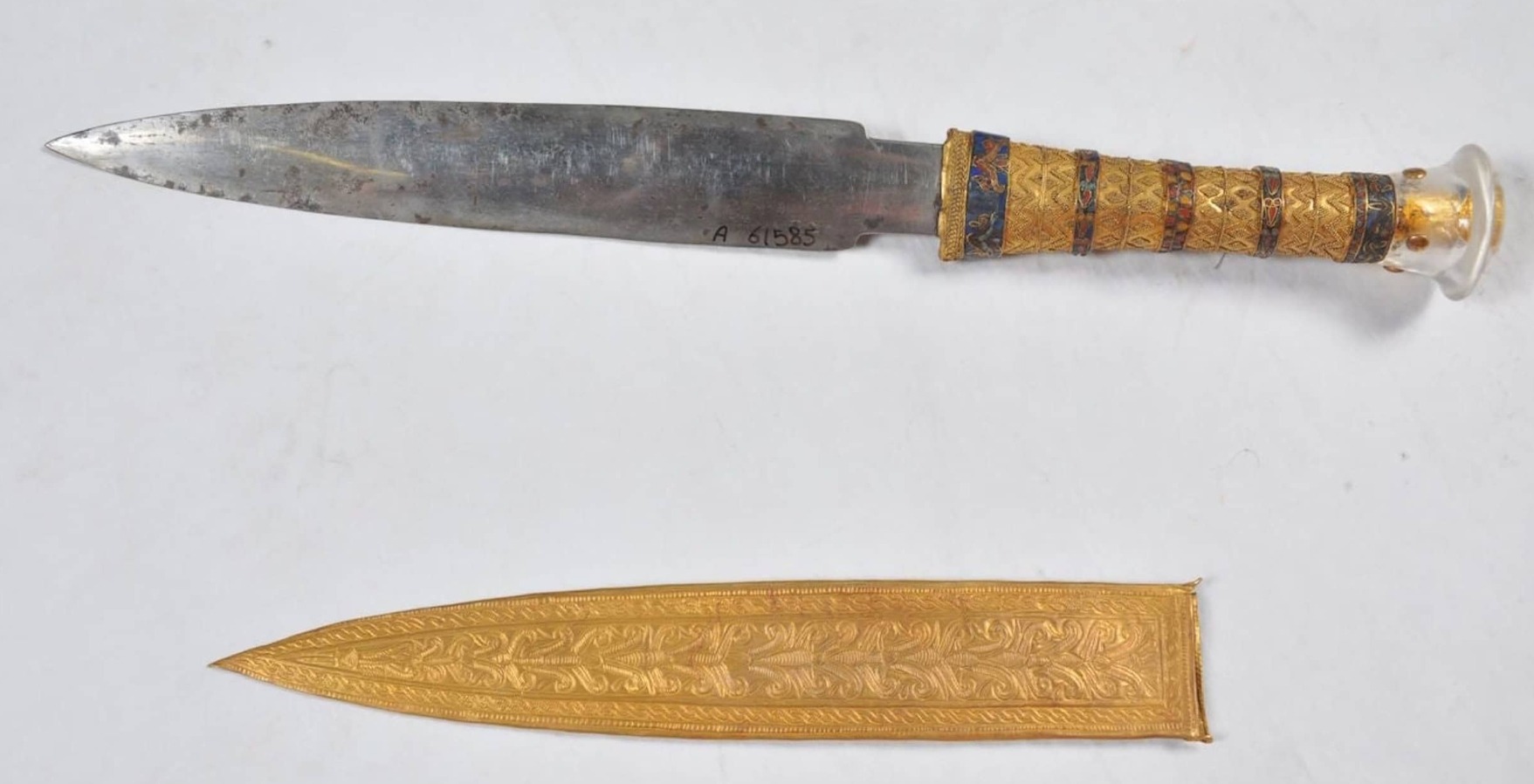
This dagger lay beside the pharaoh’s mummy for over three millennia and looks as if it was just polished. Image source: zmescience.com
How the Ancient Egyptians Obtained the Iron Meteorite
For a long time, it was believed that the Egyptians simply found a fallen meteorite and worked it. However, researchers uncovered new details about the dagger’s origin, and the story turned out to be far more intricate.
Analysis of the metal’s structure showed that the blade was made using a technique uncharacteristic of Egyptian craftsmen of that period. It turns out the dagger may not have been of Egyptian but of foreign manufacture. In the diplomatic correspondence of the time, the so-called Amarna Letters, gifts of iron are mentioned that rulers of Mitanni and other states sent to Egyptian pharaohs. In other words, the meteorite dagger may have been a diplomatic gift.
This changes the entire picture. It was not simply a chance meteorite find in the desert, but a complex chain: a cosmic rock falls to earth somewhere in Asia Minor, local craftsmen forge a blade from it, and then it travels hundreds of kilometers as a gift for Tutankhamun.
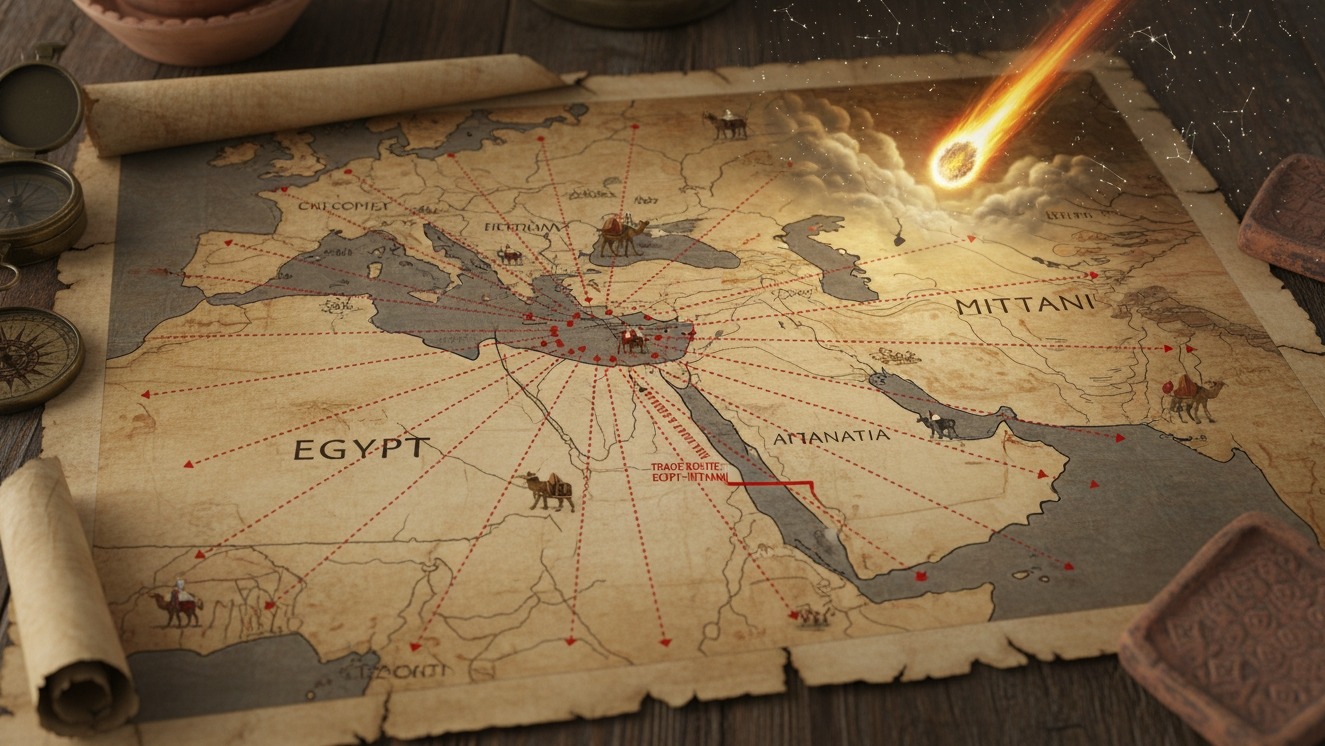
Iron from space traveled through Bronze Age diplomatic channels long before humans learned to extract it from ore
How the Pharaoh’s Dagger Was Forged
Researchers conducted a more detailed analysis of the blade’s microstructure and discovered something remarkable. The distribution of nickel in the metal turned out to be uneven — with characteristic bands known as Widmanstätten patterns. These structures form during very slow cooling of metal in space over millions of years and are considered the “calling card” of iron meteorites.
But here’s the nuance: during intense heating in the forging process, these structures are usually destroyed. The fact that they were partially preserved indicates that the craftsman worked at relatively low temperatures, taking care not to overheat the metal. This demonstrates an astonishing level of skill — a Bronze Age blacksmith somehow intuitively understood the peculiarities of this unusual material.
Furthermore, the new data allows for a more precise identification of the meteorite type. By comparing the ratios of nickel, cobalt, and phosphorus, scientists are attempting to match the blade’s composition with known meteorite fields. If a match is found, it would allow the complete journey of the dagger to be reconstructed — from its fall from space to the tomb in the Valley of the Kings.
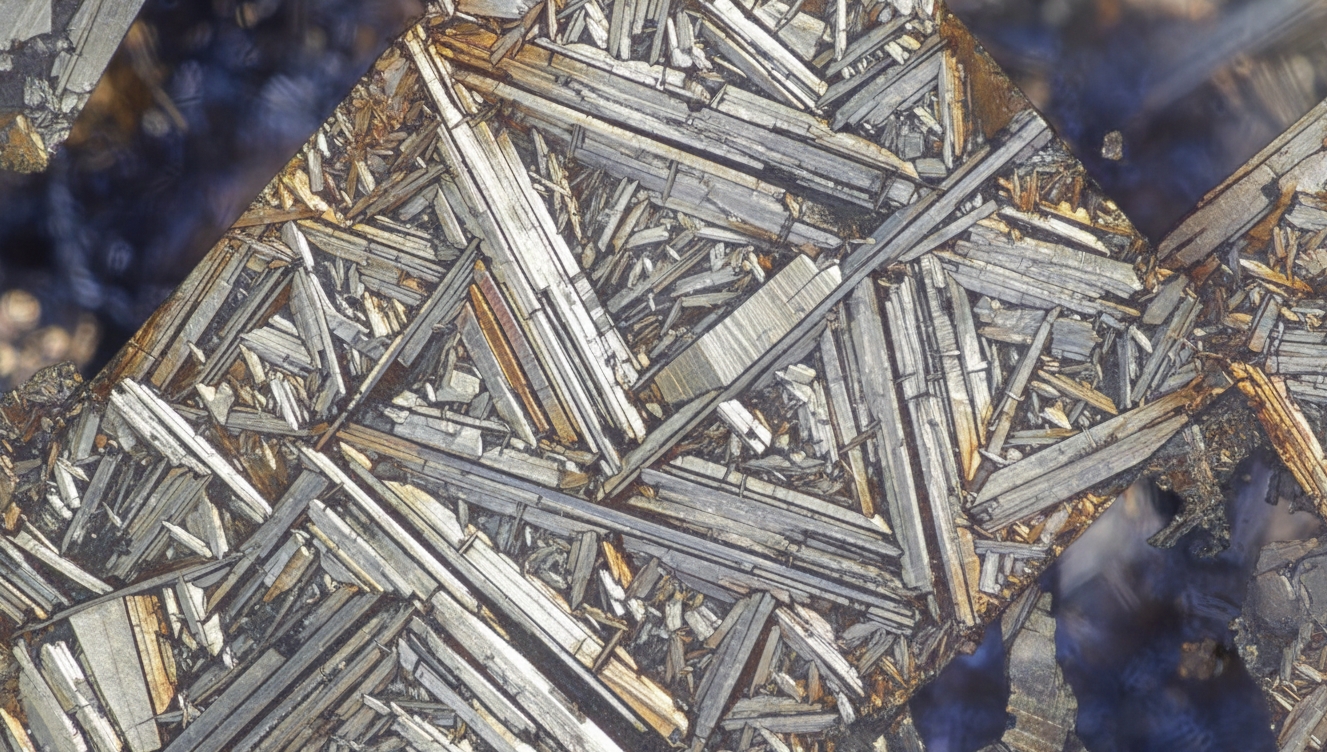
These patterns form in space over millions of years. Reproducing them under terrestrial conditions is impossible
Iron in Ancient Egypt
For us, iron is an everyday metal. But in the 14th century BCE, the situation was radically different. People did not yet know how to smelt iron from ore — this required temperatures that Bronze Age furnaces simply could not reach. The only source of iron was meteorites.
The ancient Egyptians called this metal “iron of the sky.” They perfectly understood its cosmic origin. And valued it accordingly: meteoric iron cost several times more than gold. A dagger made from such material in a pharaoh’s tomb was not merely a weapon. It was a symbol of divine power, literally a gift from the heavens.
As for the practical side, meteoric iron is harder than bronze, holds an edge better, and barely rusts thanks to its high nickel content. A warrior with such a blade would have had a serious advantage on the battlefield. However, Tutankhamun’s dagger was most likely never used in combat — it was a ritual object, intended to protect the pharaoh in the afterlife.