Buying a new iPad used to be simple: there was one model, and the choice was obvious. Today, Apple’s lineup includes four tablets with overlapping features, accessories, and price tags. Figuring out which iPad is right for you has become a genuinely difficult task. Or maybe it’s actually easier to buy a MacBook Neo and get a full-fledged Mac for the same money. Let’s look at how Apple positions each model and what’s really behind it.
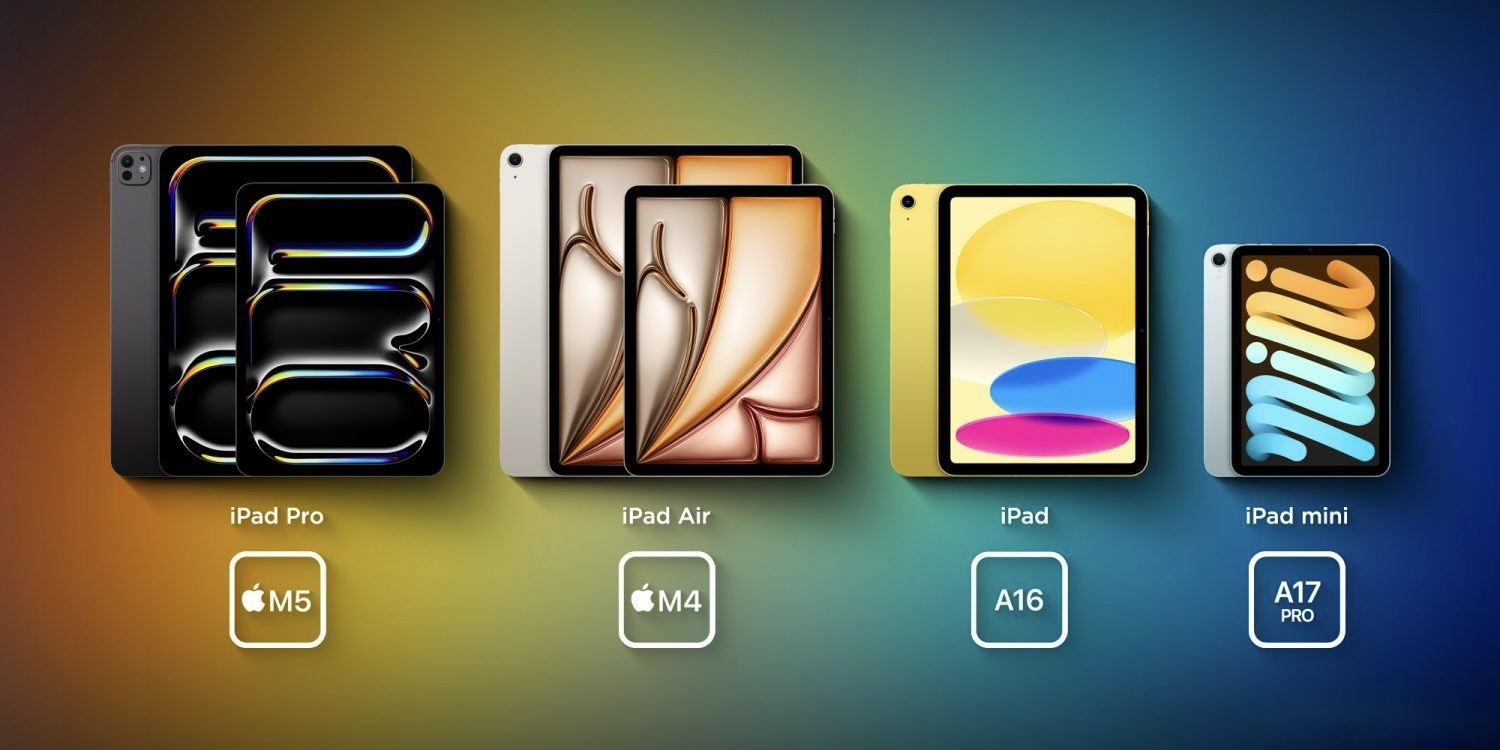
The entire iPad lineup now looks like this. Image: 9to5mac.com
iPad 11th Generation: Who Should Get Apple’s Most Affordable Tablet
Apple markets its standard iPad 11th generation under the slogan “Lovable. Drawable. Magical.” and positions it as a tablet “for what you do every day.” That sounds vague, but essentially it’s about streaming on the couch, FaceTime video calls, homework, and casual sketches with Apple Pencil.
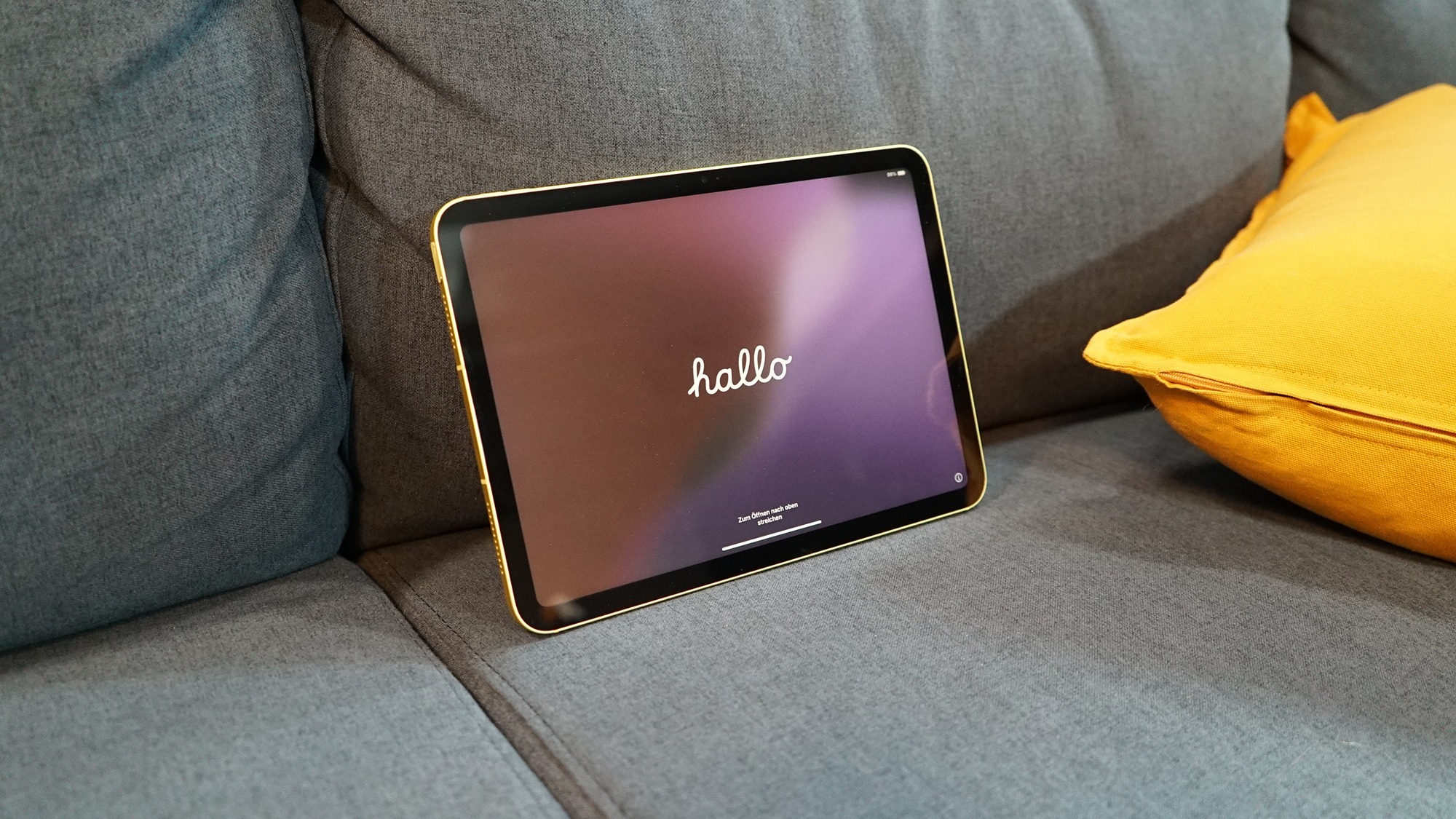
The base iPad will be the optimal choice for many. Image: macworld.com
On its product page, Apple highlights the bezel-less design without a Home button, as well as compatibility with Apple Pencil 1st generation (and the USB-C version) and the Magic Keyboard Folio. However, if you buy all of that together, it might be easier to choose a MacBook Neo — you’d get a full-fledged computer for the same money. Under the hood is the A16 chip, an 11-inch Liquid Retina display with sRGB and True Tone support, a 12-megapixel main camera with 4K recording, and a 12 MP wide-angle front camera in landscape orientation.
An important nuance: this iPad does not support Apple Intelligence. Some might say that’s actually a plus right now. But what could really become a trap is the storage. At the starting price of $349, the base 128 GB has finally become standard, but depending on your use case, space can run out pretty quickly. If the budget allows, it’s better to go straight for the 256 GB version.
The base iPad is a case where “ordinary” means “sufficient for most people.” And yes, 128 GB runs out faster than you’d think.
Is It Worth Paying Extra for the iPad Air with M4 Chip
Starting at $599, the iPad Air is positioned by Apple as “Whoosh” — a tablet for those who need something more serious. It’s the first model in the lineup that offers two screen sizes — 11 and 13 inches — and Apple Intelligence support.
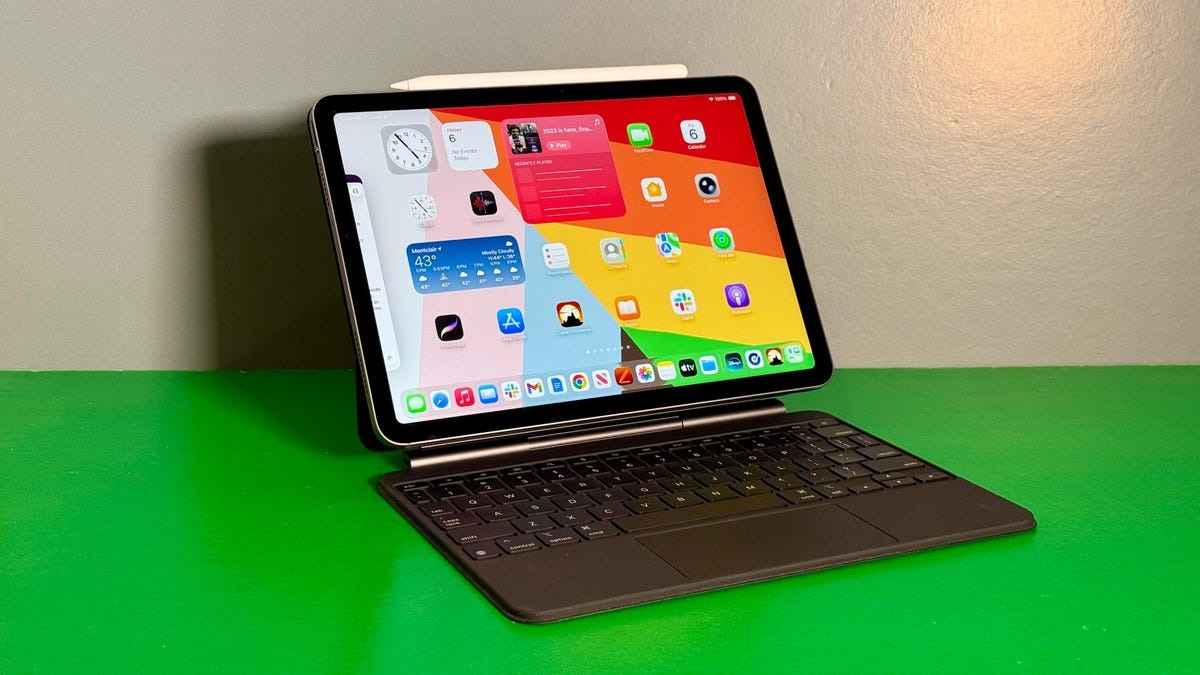
With a keyboard and stylus, the tablet can get quite pricey. Image: cnet.com
Apple actively uses the word “powerhouse” in its description, hinting that you can handle heavy tasks here that the base iPad can’t manage. Liquid Retina display with wide P3 color gamut, True Tone, and anti-reflective coating. Inside is the M4 chip with an 8-core CPU and 9-core GPU. For comparison, the M4 in the iPad Pro offers up to 10 CPU cores and 10 GPU cores.
An interesting detail: the 13-inch iPad Air weighs 1.36 pounds — that’s more than the similarly sized iPad Pro (1.28 pounds). You’d think the “professional” model should be heavier, but no. That said, the previous iPad Air with M3 handled Final Cut and Lightroom with confidence, so the M4 version certainly won’t disappoint. This means you can save $400 compared to the entry-level iPad Pro. But don’t forget: the Magic Keyboard and Apple Pencil Pro are sold separately, and that’s a significant addition to the bill.
iPad Air is the sweet spot of the lineup. Mac-level power, but without the price tag that makes you want to cry.
Who Actually Needs the iPad Pro
The iPad Pro’s slogan is “Thinpossible.” And it’s not just marketing. At just 5.1 mm thick, it’s the thinnest iPad in history, and the fact that Apple managed to pack so much power into it is truly impressive. Starting price — from $999.
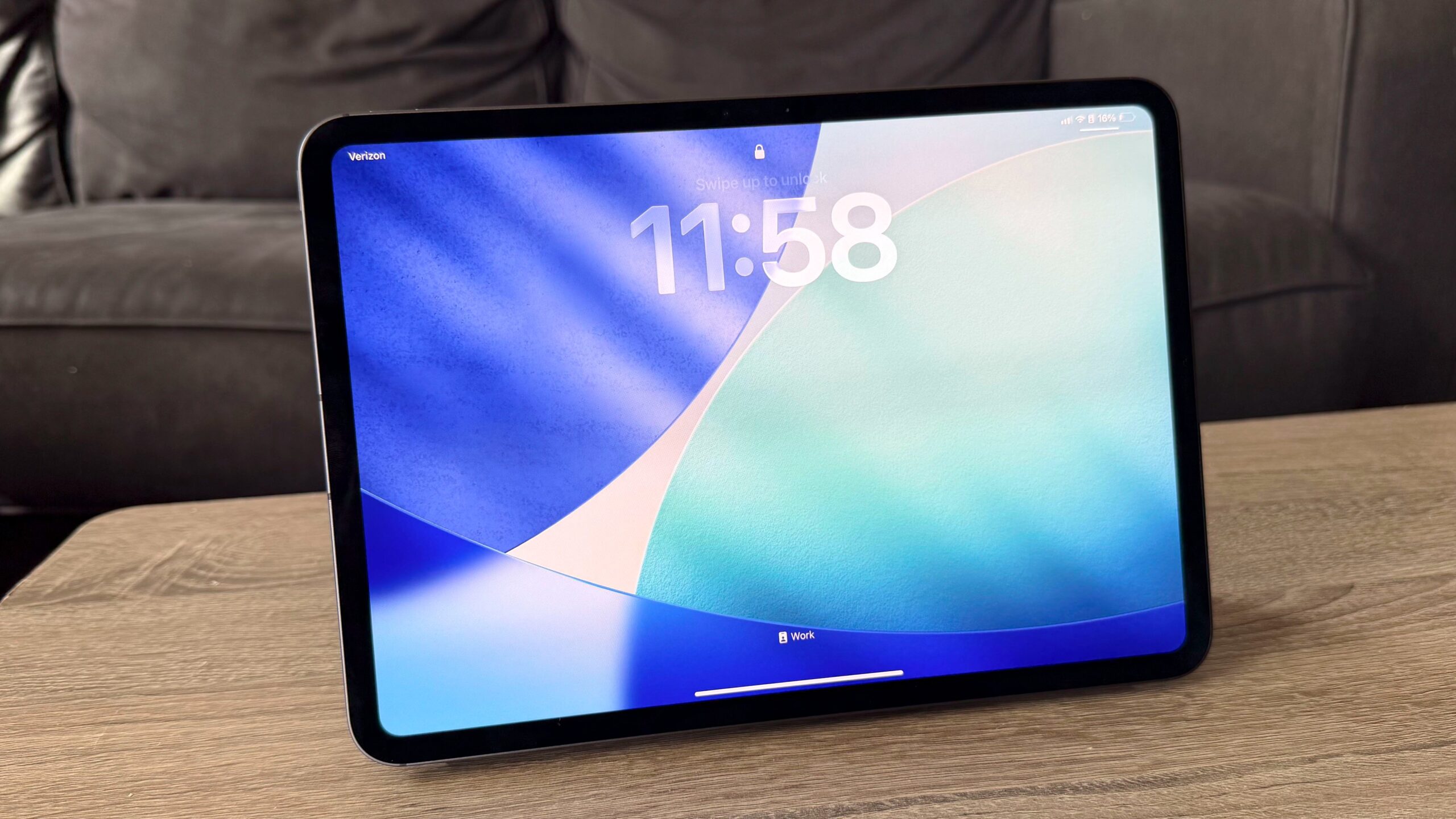
OLED is undoubtedly cool, but expensive. Image: edition.cnn.com
Apple doesn’t hold back with the words “fast” and “advanced” on the product page. And there are good reasons for it: the iPad Pro can work with external displays up to 6K, provides data transfer speeds of up to 40 Gbps, and its M4 chip can handle multi-layer 8K ProRes video.
The display here is Ultra Retina XDR with ProMotion, wide P3 color gamut, and anti-reflective coating. Models with 1 TB and 2 TB storage offer a nano-texture glass option. The screen comes in two sizes: 11 and 13 inches. Cameras include a 12 MP main camera with ProRes support and a 12 MP front-facing TrueDepth camera with Center Stage. Naturally, Apple Intelligence is on board.
But here’s the thing. If phrases like “multi-layer 8K ProRes” don’t excite you, the iPad Air is most likely more than enough for you. If you’re still asking yourself “Do I need an iPad Pro?”, then you probably don’t.
5.1 mm thick — roughly like a stack of five credit cards. And this body houses a full-fledged video editing workstation.
iPad mini: Why Buy Apple’s Smallest Tablet
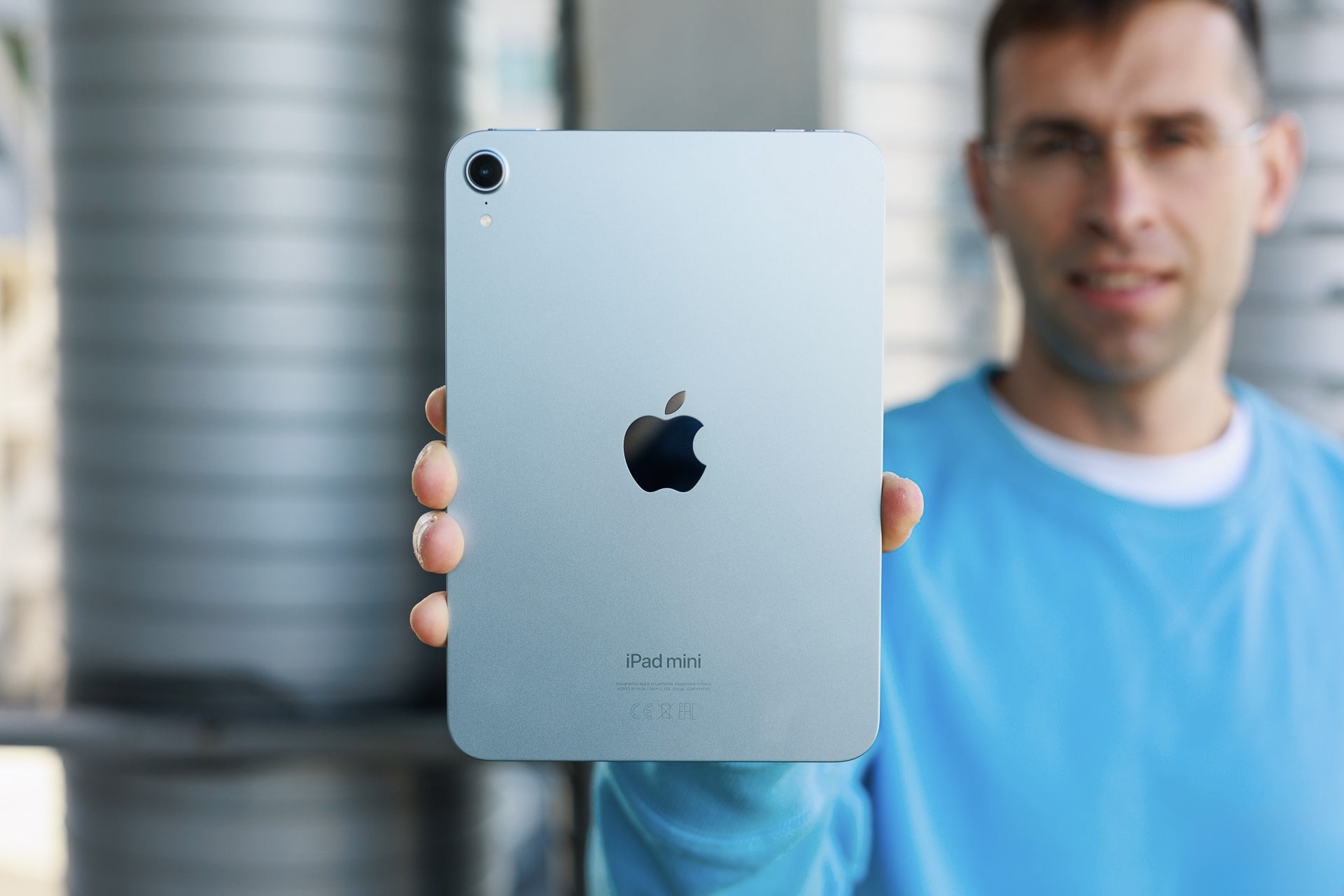
“Single-handedly awesome” — that’s how Apple describes its most compact tablet. And it’s no exaggeration: the iPad mini truly fits in a coat pocket, yet runs the same apps as its bigger siblings.