Biology of cut plants: why some wilt the very next day while others stay fresh and beautiful for a long time.
Many people have noticed a strange thing: one bouquet stays beautiful for nearly two weeks, while another wilts in just a couple of days. It often seems like it’s about the “freshness” of the flowers or special water additives. But in reality, everything comes down to the biology of the plant itself. Different flowers have different stem structures, vascular systems, and water evaporation mechanisms. That’s why some plants survive perfectly fine in a vase, while others quickly lose moisture and droop. This is especially noticeable with tulips — we’ve already discussed why tulips wilt quickly in a vase and what can be done about it. The good news is that a bouquet’s longevity can be predicted. You just need to know a few biological characteristics of plants.
Which Flowers Last the Longest in a Vase: The Most Resilient Bouquets
Flowers that handle cutting best usually have dense stems and a slow metabolism. Such plants evaporate less moisture and maintain turgor longer.
The most resilient ones include:
- Chrysanthemums — can last up to 2–3 weeks
- Carnations — often last 14–21 days
- Alstroemerias — stay fresh for 10–14 days, gradually blooming and looking fresh for a long time
- Lilies — last about 10 days (a reminder — they are very dangerous for cats!)
- Orchids (not potted) — can last 7–14 days, with good care more than two weeks
An interesting fact: chrysanthemums release natural antiseptic substances that slightly suppress bacterial growth in water. This is one of the reasons for their hardiness.
In general, a plant’s ability to conserve water is an important survival mechanism. For example, in nature many species use special strategies that allow them to survive drought and prolonged absence of moisture.
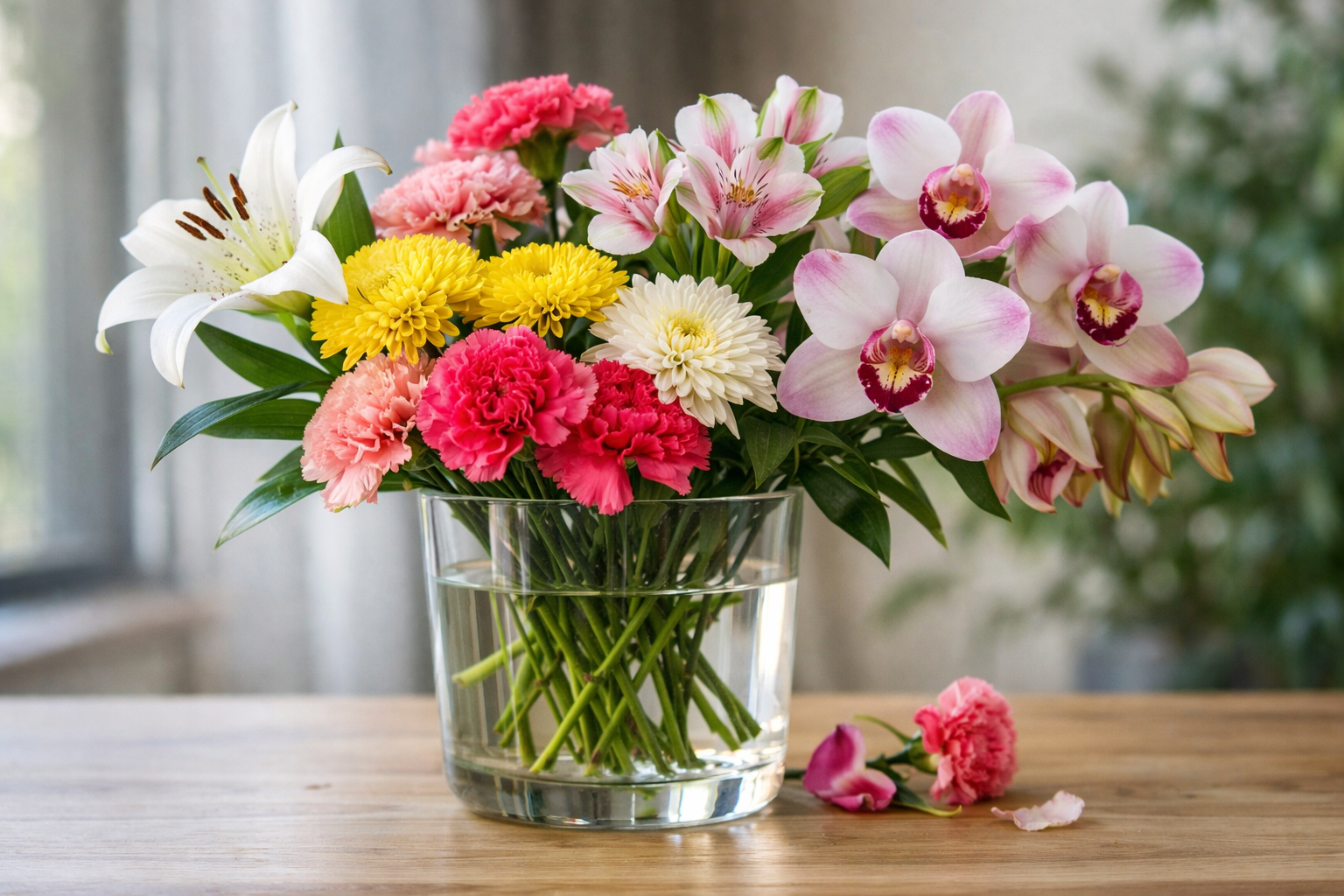
A guide for men and beyond: chrysanthemums, carnations, alstroemerias, lilies, and orchids — the most resilient flowers for a vase.
Why Flowers Wilt Quickly in a Vase
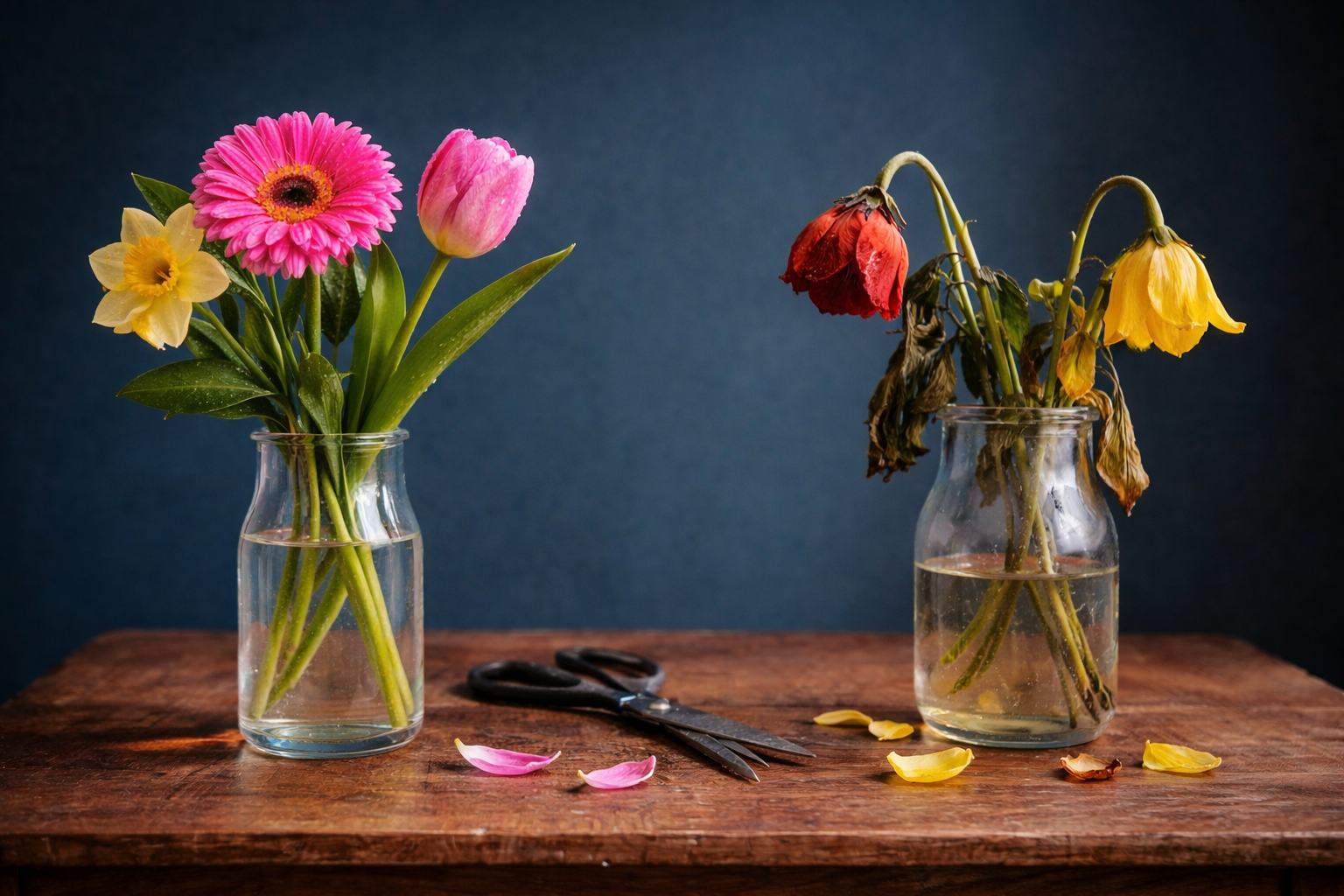
The main reason is blockage of the stem’s vascular system. After cutting, water should rise through the vascular channels, but bacteria and air bubbles gradually block this process.
Particularly sensitive to vascular blockage are:
- tulips
- daffodils
- poppies
- gerberas
Interestingly, tulips continue to grow even in a vase, which is why they quickly use up water and lose their shape, but this can be managed.
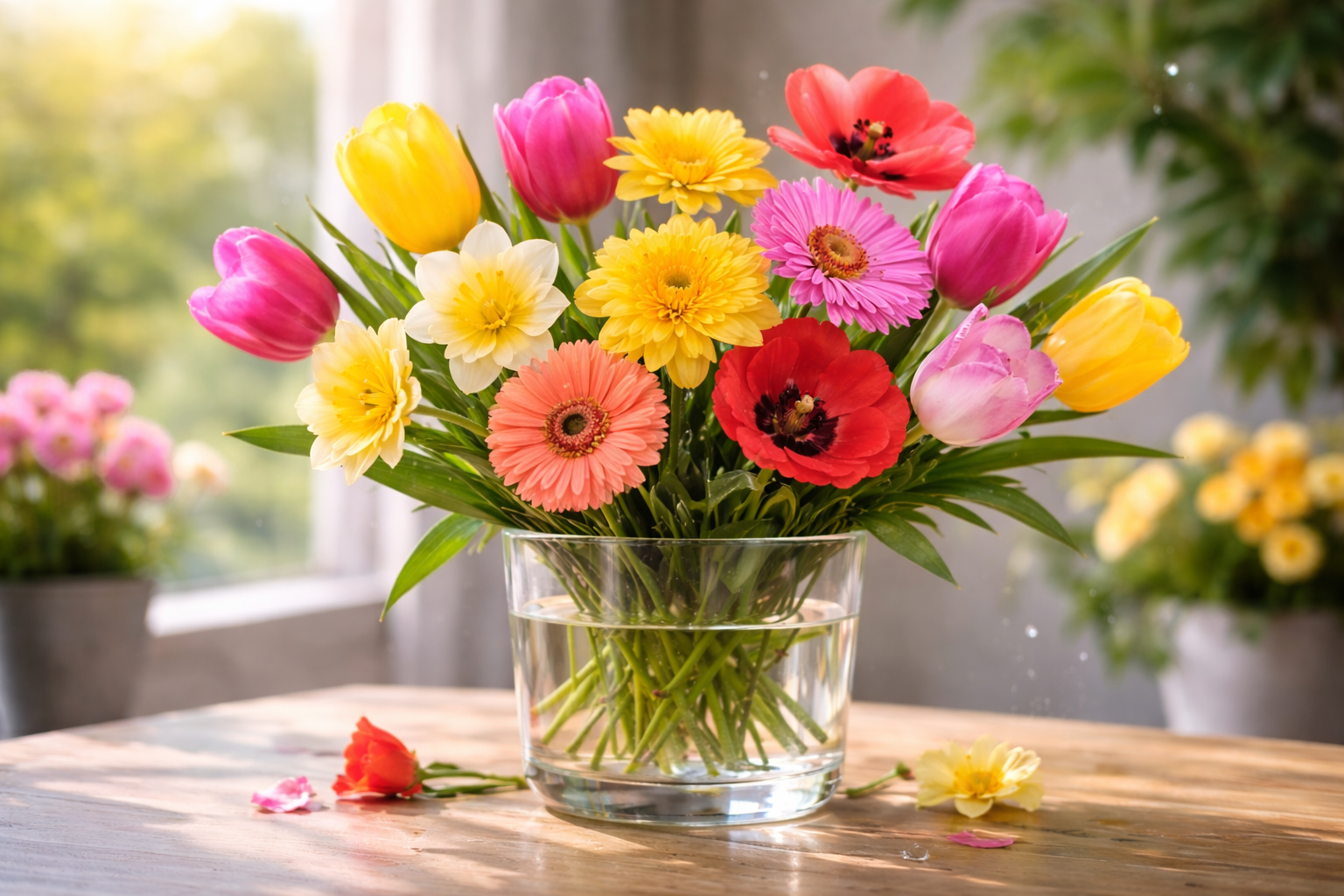
Those same problematic flowers due to their stems that can wilt quite quickly: tulips, daffodils, poppies, gerberas.
By the way, flowers are far more complex organisms than they seem: for example, scientists have discovered that plants can “communicate” with each other, transmitting stress signals. But that’s not about flowers in a bouquet.
How to Extend the Life of Flowers in a Vase Without Additives
A few simple techniques can significantly extend the lifespan of flowers:
- Cut the stem at an angle before placing the flowers in water
- Change the water every 1–2 days
- Remove leaves below the water level
- Keep the bouquet away from radiators and direct sunlight
Another useful fact: cool water is often better than warm water, because it slows down the plant’s respiration and bacterial growth.
Ultimately, a bouquet’s longevity is not magic or “chemistry,” but ordinary biology. If you choose the right flowers and provide them with simple conditions, a bouquet can last nearly twice as long, even without special additives.
By the way, water for plants is not only a source of life but also a potential threat. Scientists have found that even ordinary rain can spread microbes across leaves, which is why plants react to it as a form of stress.