On the morning of April 7, the market had a moment of panic: Chinese insider Fixed Focus Digital reported that the first foldable iPhone was experiencing serious production issues, and the release could be delayed. Given that we had previously learned what the iPhone Fold would look like, this seemed very strange. A few hours later, Mark Gurman from Bloomberg published a rebuttal: the foldable iPhone is still on track and will launch in September 2026 alongside the iPhone 18 Pro and Pro Max. What exactly is happening behind the scenes and whether any of these leaks should be trusted — we break it down below.
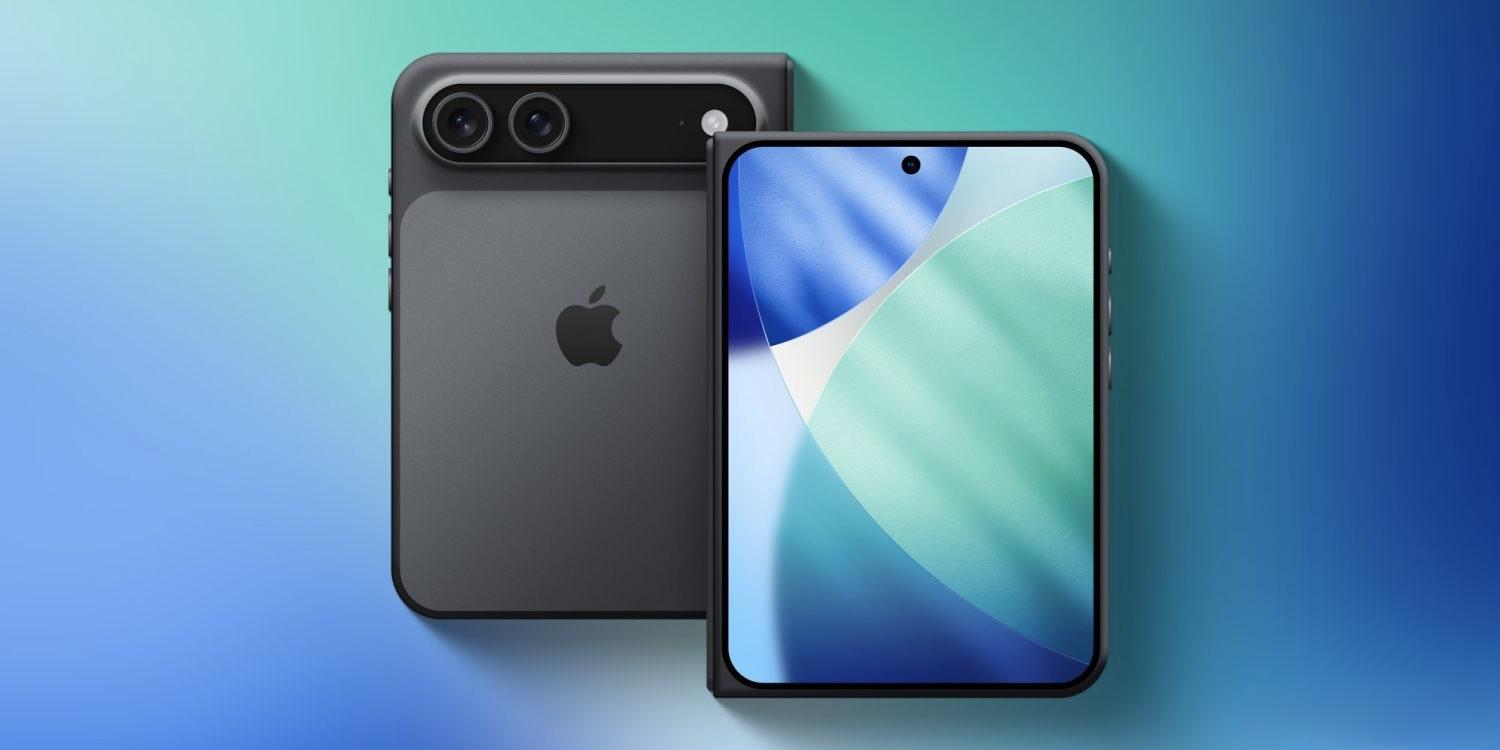
Unexpected problems arose during foldable iPhone production
Foldable iPhone Release Date
According to Bloomberg’s sources within Apple, the foldable iPhone will be unveiled in September 2026 at the standard fall presentation alongside the iPhone 18 Pro and Pro Max. Sales, following Apple’s tradition, should begin the week after the announcement.
Gurman makes an important caveat: the complexity of the new display and materials could limit initial shipments for several weeks. This means the device may not appear in stores simultaneously with the regular iPhone 18 Pro models, but slightly later — still within the same fall window, rather than being pushed to the end of the year or 2027.
Gurman himself adds another caveat: the release is still six months away, mass production hasn’t started yet, so the final timeline isn’t locked in.
iPhone Fold Production Problems
Earlier that same day, Chinese insider Fixed Focus Digital reported via Nikkei Asia that Apple had encountered two problems — and both were not where expected. Not the screen, not the cameras, not the chips.
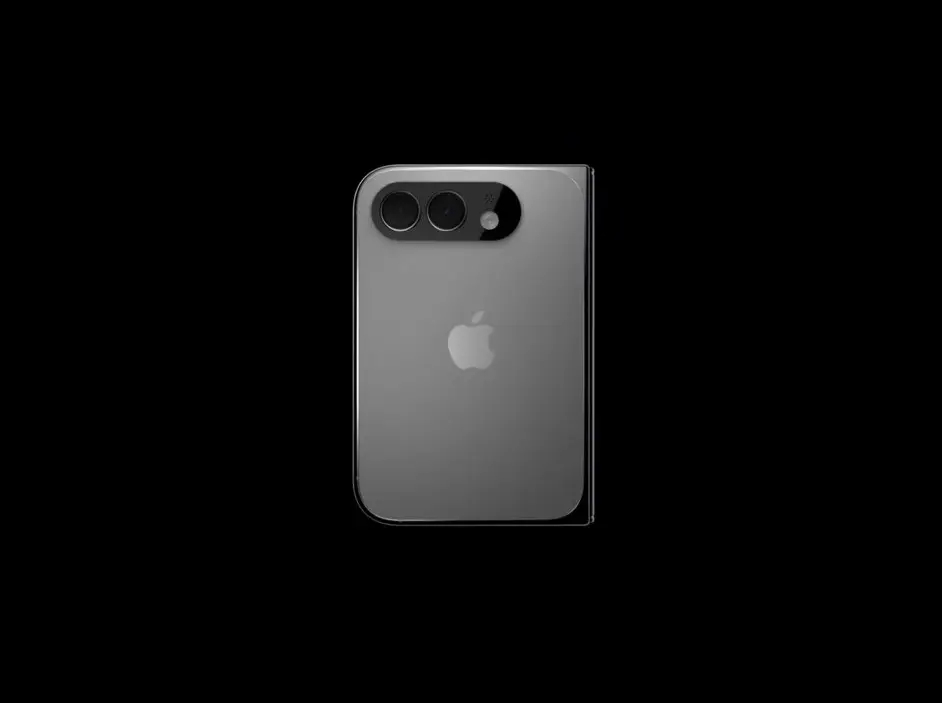
Apple can’t decide on the hinge for iPhone Fold
The first issue is choosing the material for the hinge, the main mechanical component of a foldable smartphone. Apple is still deciding between two options:
- Liquid metal — an amorphous alloy that Apple has already used in small components like the SIM ejection tool. It’s stronger than conventional alloys and could reduce the visibility of the crease on the screen.
- 3D-printed titanium alloy — a technology Apple has already employed in the iPhone Air for the USB-C port.
Back in March 2025, analyst Ming-Chi Kuo claimed that Apple had settled on liquid metal. According to new data, the decision still hasn’t been made. The insider expects the choice will be finalized during the final production verification test (PVT) stage in July–August — this is the last moment when such a change is still technically possible for a launch before the end of the year.
The second problem involves pricing negotiations with the assembly partner. Details aren’t disclosed, but for a device in the $2,000–2,500 category, the margins at every stage are critical.
What We Know About the Foldable iPhone Fold: Key Specs
Interestingly, both leaks appeared on the same day. First, the pessimistic report tanked Apple’s stock, then sources within the company promptly “leaked” a reassuring version to Gurman. This is a typical scenario where Apple controls the narrative through trusted journalists.
That said, Fixed Focus Digital is no random anonymous source. This insider was the first to report that the fourth-generation iPhone SE would be called iPhone 16e, which was later confirmed. Gurman, meanwhile, is the most influential Apple journalist, with sources directly inside Cupertino.
Most likely, the truth is somewhere in between: the production challenges are real but not catastrophic. Apple indeed hasn’t resolved all questions regarding the hinge and assembly, but the company is confident it will make it by September — albeit with limited initial shipments.
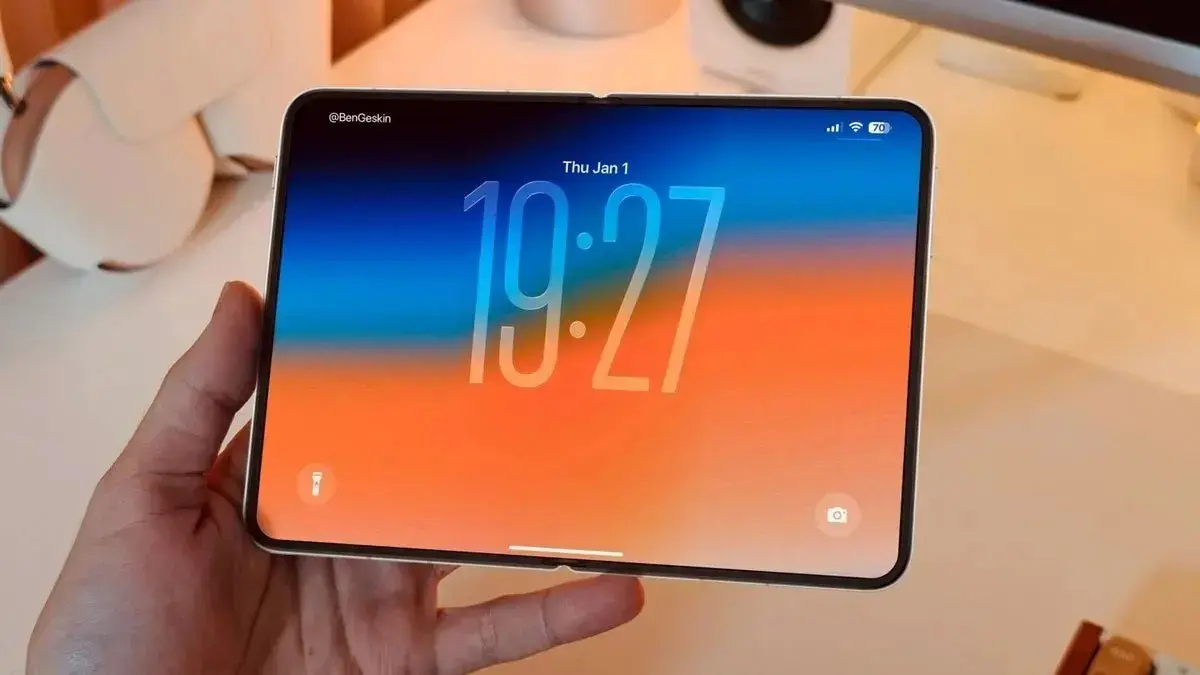
The foldable iPhone in its unfolded state
Based on the latest leaks, the iPhone Fold looks like this:
- Book-style form factor — it opens like a book rather than folding in half like a flip phone
- Main screen when unfolded — 7.8 inches (roughly the size of an iPad mini)
- External display — 5.5 inches
- Two rear cameras and one front camera
- Touch ID in the power button (not Face ID)
- Thickness when unfolded — approximately 4.5 mm, when folded — 9–9.5 mm
According to Ming-Chi Kuo, the foldable iPhone will be priced from $2,000 to $2,500. The version with maximum storage (1 TB) could approach $3,000.
iPhone Fold Form Factor: Book or Flip
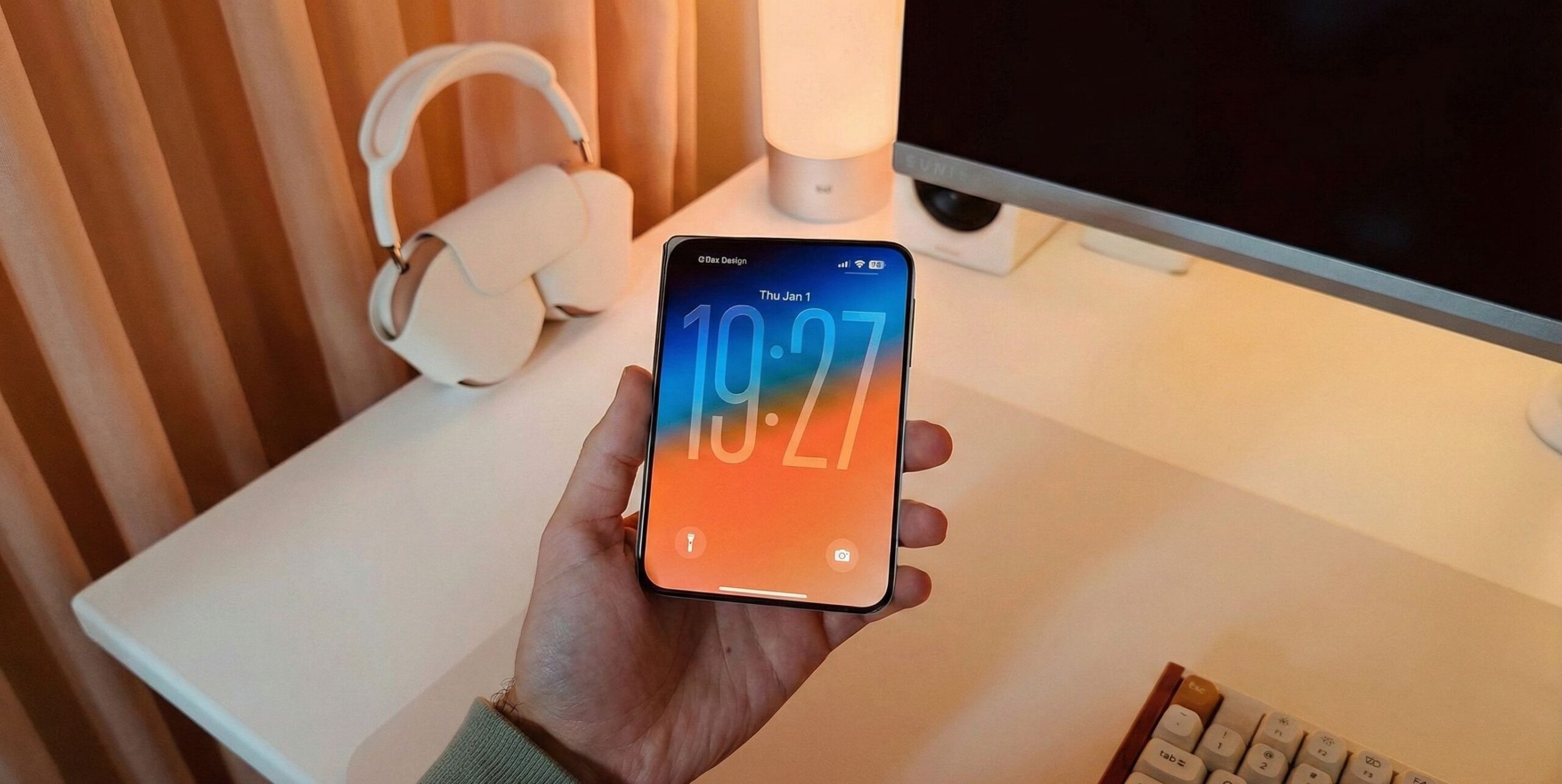
When folded, it becomes a fairly compact device
It was previously reported that Apple had also considered a vertical flip design (like the Samsung Galaxy Z Flip) but abandoned the idea. According to insider Instant Digital, the flip format doesn’t have a sufficiently compelling use case: the only advantage is compactness when folded. Meanwhile, the crease in the middle of the screen limited internal space and battery capacity.
The book format offers a fundamentally different use case — the phone transforms into a mini tablet. This explains both the iPad mini-sized screen and the premium segment positioning.
Should You Wait for the Foldable iPhone Fold
If you’re considering purchasing a foldable smartphone right now, you might want to wait — Apple, by all indications, will indeed present its version this fall. However, postponing a new iPhone purchase in favor of the foldable model only makes sense for those willing to spend over $2,000 and who genuinely need a larger screen in their pocket.
For most iPhone 15 or 16 owners, the foldable iPhone is a niche device priced at two iPhone 17 Pro Max units. Following the news is interesting, but expecting the device to become mainstream in its first year isn’t realistic — even Gurman himself warns about limited initial shipments.