Pavel Durov has accused WhatsApp (owned by Meta, which has been recognized as extremist and banned in Russia) of reading users’ personal messages and sharing them with third parties. It’s a bold statement, especially considering that the notorious MAX openly declares its right to share data with third parties, yet the creator of Telegram isn’t concerned about that at all. With WhatsApp, apparently, it’s a different conversation. Let me break down exactly what Durov said, what the accusations are based on, and whether they should be believed.
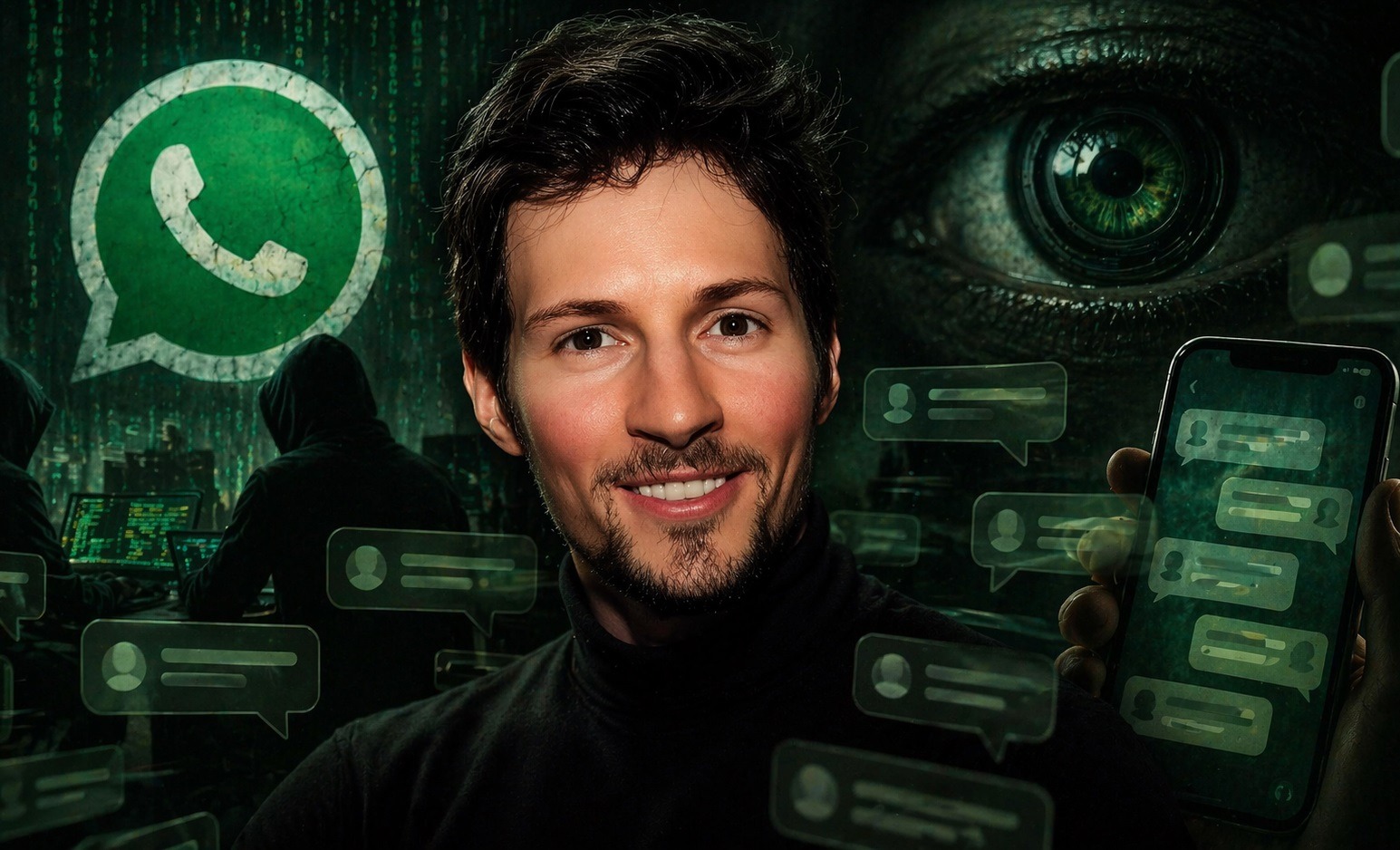
Durov once again accused WhatsApp of all sins
Is WhatsApp Messenger Safe
On April 10, 2026, Pavel Durov published a post on his Telegram channel where he called WhatsApp’s encryption “the biggest case of consumer fraud in history.” Here is his full quote:
Despite its claims, the app reads users’ messages and shares them with third parties. Telegram has never done this and never will.
According to Durov, WhatsApp is misleading billions of its users. As proof, he attached a screenshot of a publication about a lawsuit against Meta Platforms — WhatsApp’s parent company.
This is not the first time the Telegram founder has attacked his competitor. In 2022, he called WhatsApp a surveillance tool. In January 2025, he wrote that only, quote, “really stupid” people could believe the messenger is secure. Durov talks about WhatsApp regularly and always in the same vein. At least in that, he remains consistent.
WhatsApp Reads Chats — True or Not
As evidence, Durov referenced a lawsuit filed in January 2026 by an international group of plaintiffs against Meta Platforms. The plaintiffs claim that the American messenger and its parent company “store, analyze, and can access virtually all supposedly private WhatsApp messages.” The documents mention a “backdoor” — an intentionally built-in algorithm flaw through which company employees or third-party contractors can allegedly bypass end-to-end encryption and read private conversations.
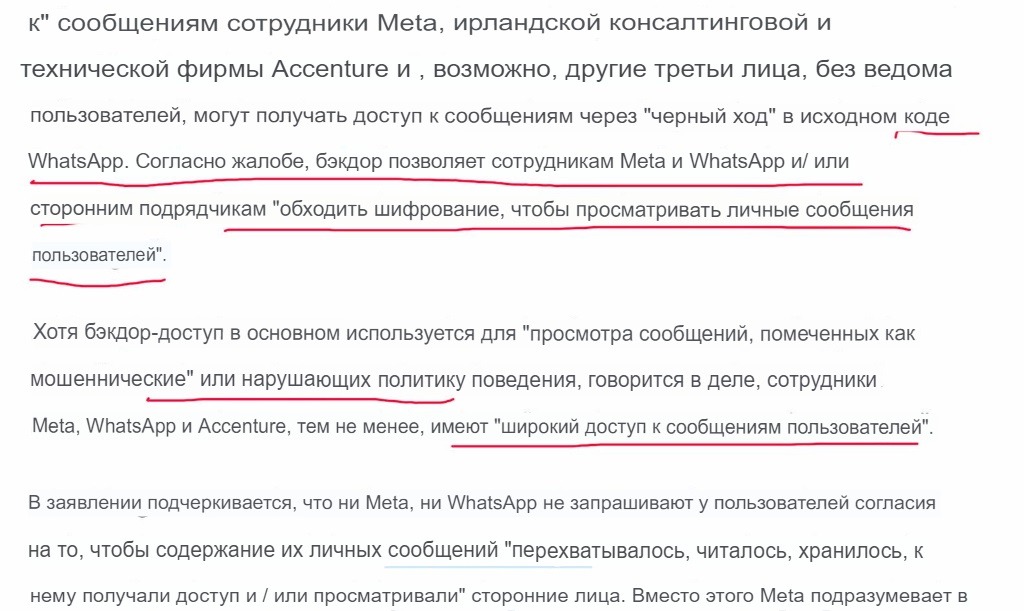
The lawsuit text attached by Durov
It’s important to pause here and say directly: the lawsuit itself is not proof of guilt. A lawsuit is an accusation, not a verdict. Any person or group of people can sue anyone, including the world’s largest corporations. The trial, examination of evidence, and the ruling — all of that is still ahead. Whether WhatsApp is dangerous or not is a question that cannot be answered based on a single lawsuit. Especially when that lawsuit is actively cited by the founder of a competing messenger.
End-to-End Encryption in WhatsApp
To understand the essence of the accusations, we need to understand what end-to-end message encryption is and how it works. End-to-end encryption (E2E) means that a message is encrypted on the sender’s device and decrypted only on the recipient’s device. No one in between (neither company servers, nor the internet provider, nor potential attackers) can read the content. Encryption keys are stored only with the conversation participants.
In WhatsApp, end-to-end encryption of calls and messages has been enabled by default for all chats since 2016. This is not an optional feature that you need to find in settings. Now let’s compare with competitors:
- Telegram: end-to-end encryption only works in secret chats. Regular cloud chats (which the vast majority of users use) are encrypted at the server level. This means Telegram technically has access to your regular conversations.
- MAX: there is no end-to-end encryption at all. In any form. This is not speculation — WhatsApp itself criticized the MAX messenger for lacking encryption. About how dangerous MAX is and who can actually read conversations there, Durov notably didn’t say a single word.
The result is an amusing picture. Durov criticizes WhatsApp for an alleged encryption breach that has not yet been proven by anyone. At the same time, his own messenger protects regular chats worse than WhatsApp, and the state-backed MAX, which is gaining popularity in Russia through blocking competitors including Telegram, Pavel ignores entirely.
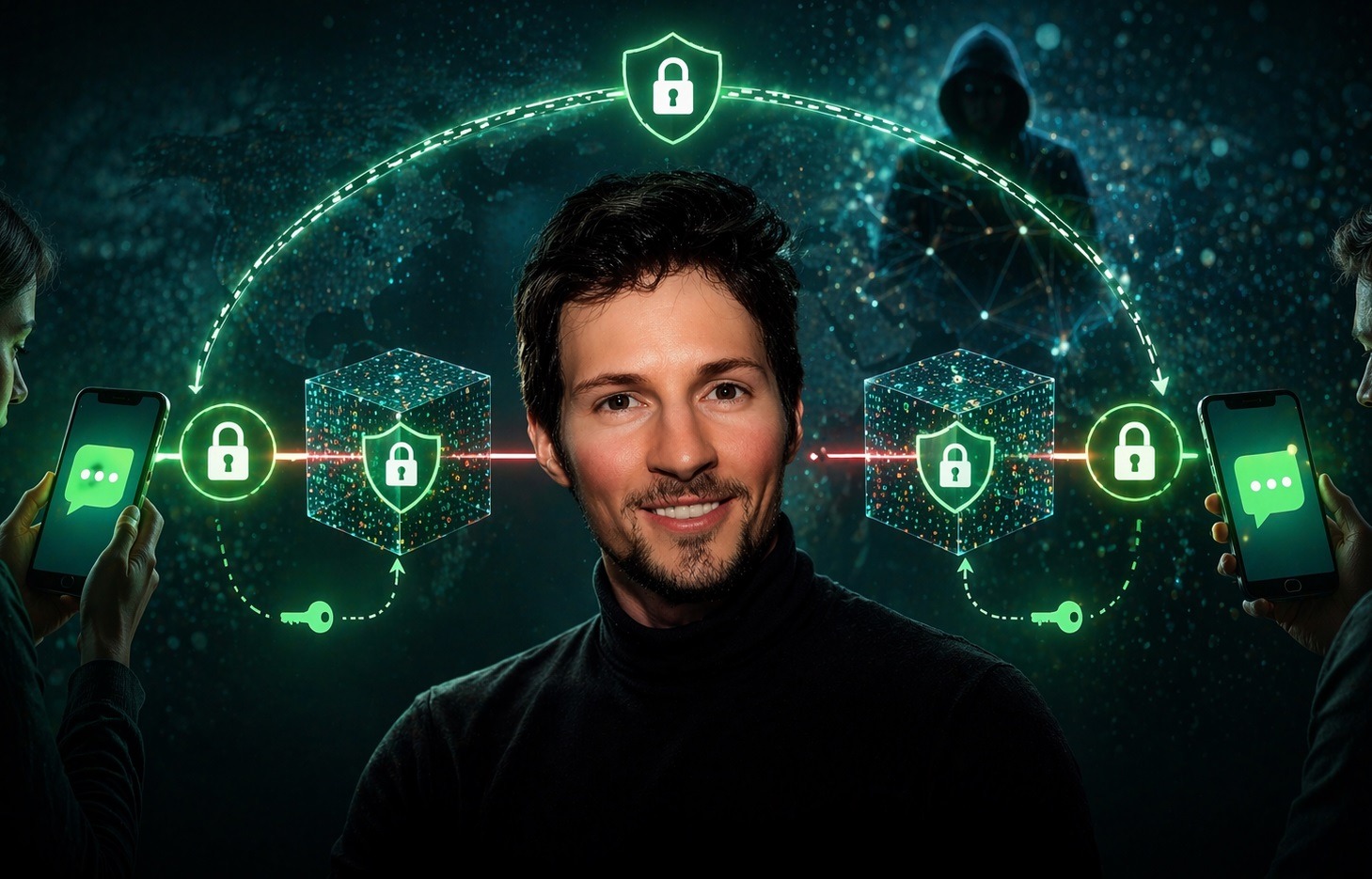
Durov doesn’t believe in WhatsApp’s end-to-end encryption
Theoretically, end-to-end encryption can be compromised — but not through the company’s server. Rather through vulnerabilities on the user’s device, malicious apps, or WhatsApp mods that can intercept data before encryption. The E2E technology itself, when properly implemented, cannot be cracked.
Should You Use WhatsApp
Let’s look at the situation soberly. It cannot be said that Telegram is safer than WhatsApp. Here are the facts:
- no confirmed cases of mass leaks of personal conversations from WhatsApp have been recorded;
- the lawsuit against WhatsApp is so far only an accusation, not a proven fact;
- Durov attacks WhatsApp regularly and consistently over many years, always without specific technical evidence;
- at the same time, Telegram protects data in regular chats worse than WhatsApp, and end-to-end encryption in MAX is completely absent.
Durov is a brilliant PR specialist. Every attack he makes against WhatsApp simultaneously reminds the audience of Telegram’s existence and creates the illusion that his product is the gold standard of security. Whether to use WhatsApp or not is your choice. But I wouldn’t make that choice based on the words of a competing messenger’s founder. That’s roughly like asking Pepsi whether Coca-Cola is safe.