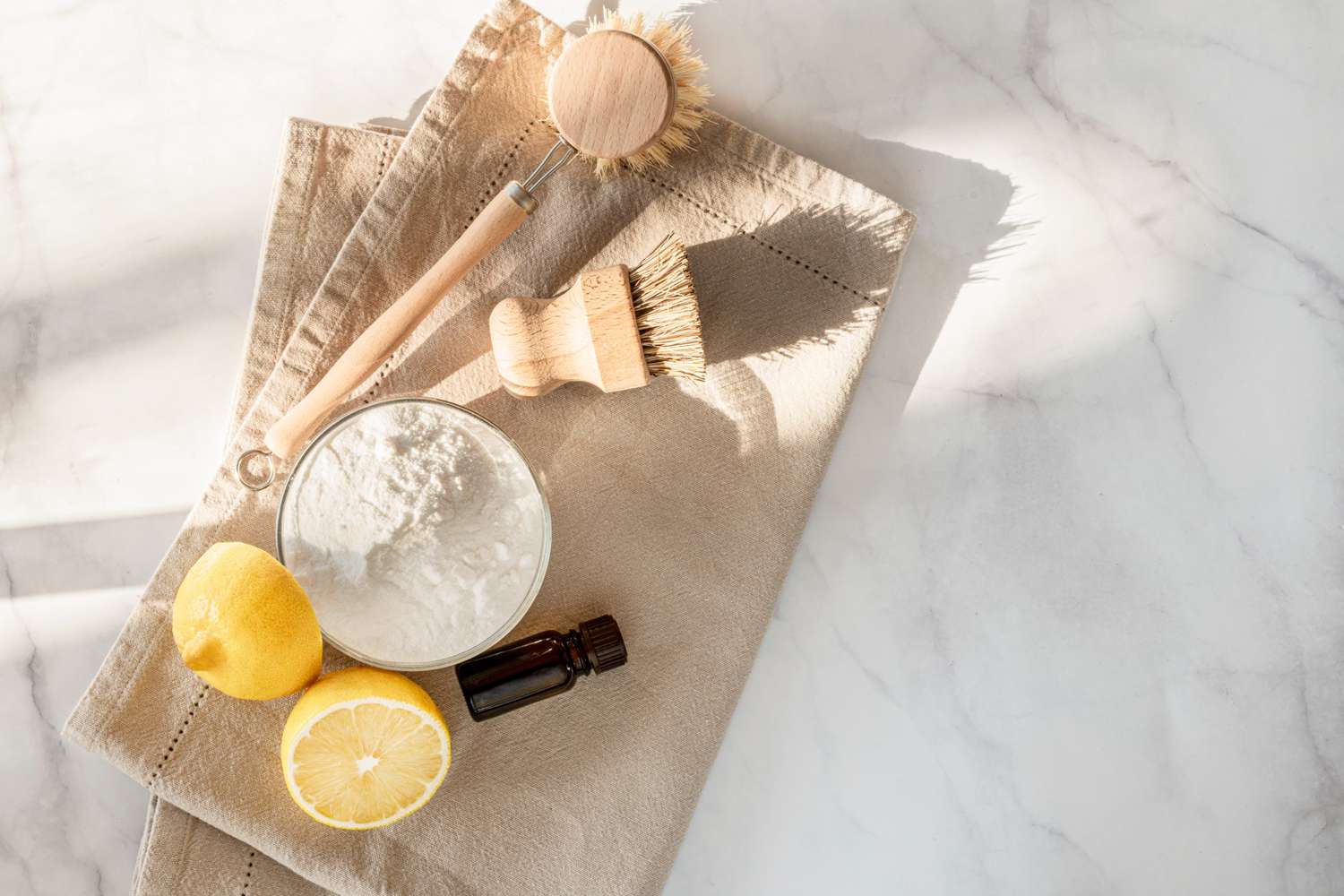
Baking soda cleans dirt well, but it’s not suitable for everything
Baking soda is a cheap and eco-friendly cleaning agent found in every kitchen. It’s used to scrub grease off stoves, freshen up refrigerators from unpleasant odors, and clean sinks. But baking soda has two properties that people often forget about: it’s a mild abrasive and a weak alkali. Because of this, some things cleaned with baking soda end up scratched, lose their shine, or change color — and the damage is irreversible.
How Baking Soda Cleans Dirt
Baking soda (sodium bicarbonate) is a fine crystalline powder with a pH of about 8. In water, it creates a mildly alkaline environment that effectively dissolves grease, organic contaminants, and neutralizes acids. The fine crystals also work as a gentle scrub, mechanically removing buildup. Baking soda is effective for most surfaces and is both economical and eco-friendly.
But it’s precisely these two qualities — abrasiveness and alkaline reaction — that become a problem when baking soda is used on the wrong materials. It scratches delicate coatings, and with certain metals and stones, it triggers unwanted chemical reactions. If the powder isn’t completely rinsed off after cleaning, a whitish residue remains on the surface, which can also cause damage.
What You Should Never Clean with Baking Soda
Although baking soda handles many stains, it’s powerless against certain types of dirt — for example, ink or stubborn dyes — where specialized products are needed. So before reaching for the box of baking soda, it’s worth checking the list below.
Aluminum Cookware
Aluminum is a soft and chemically active metal. It’s protected by a thin oxide film on its surface, but an alkaline environment destroys it. When you clean an aluminum pot or pan with baking soda, alkaline oxidation occurs: the top layer of the metal reacts, and the cookware becomes covered with dark spots and streaks.
For the same reason, you shouldn’t use baking soda to clear clogs in aluminum pipes. Usually, baking soda is recommended to be poured with vinegar to clear drains, but if the pipes are aluminum, this mixture can damage them from the inside.
What to use for aluminum? Warm soapy water and a soft sponge. If you need to remove darkening, try a paste of lemon juice and salt — but test it on an inconspicuous area first.
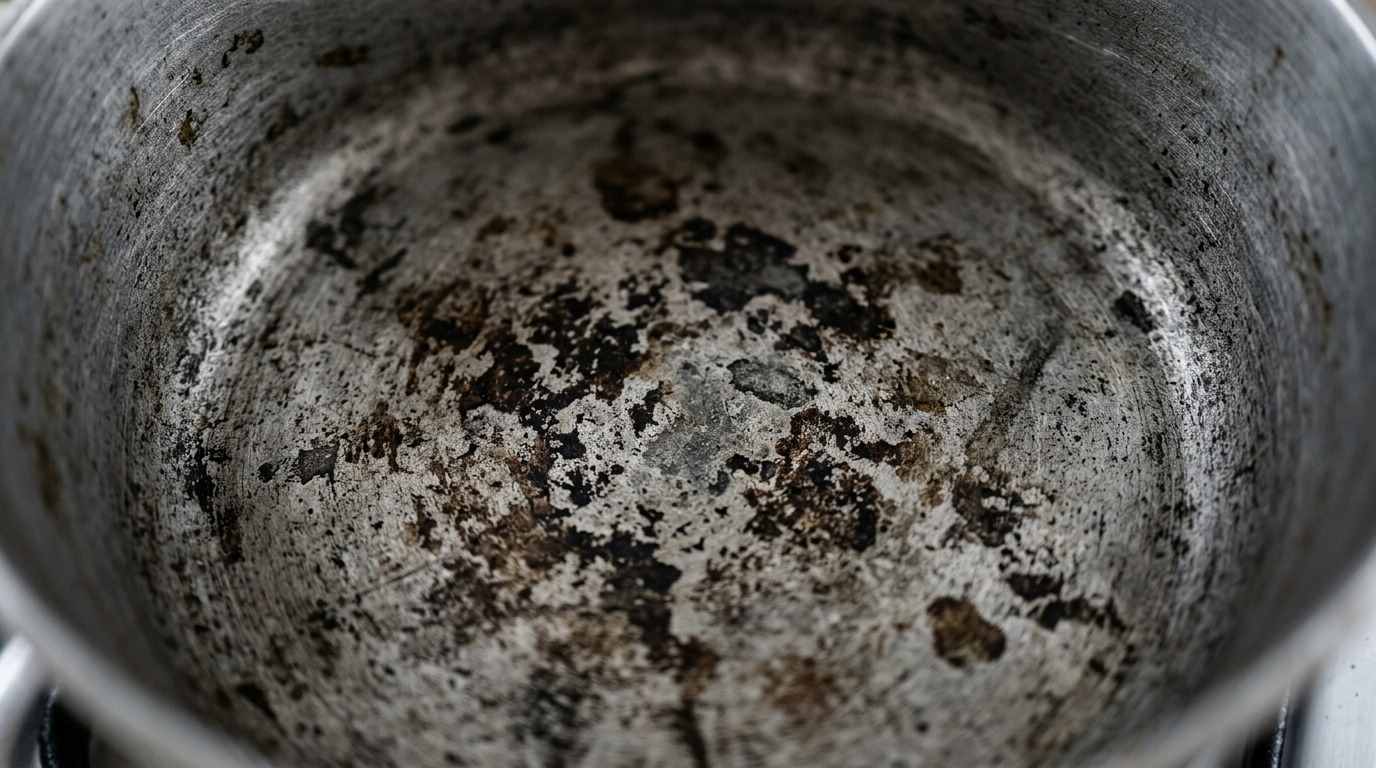
Dark spots on aluminum cookware — a typical result of cleaning with baking soda
Marble and Stone Countertops
Marble is a stone based on calcium carbonate. It’s softer than granite, more porous, and extremely sensitive to chemical exposure. Besides the risk of leaving scratches, baking soda has certain chemical properties that can react with marble. An alkaline paste with prolonged contact can damage the polished surface, causing the stone to become dull and lose its shine.
The same applies to other stone countertops, especially those with a polished finish. Some stone countertops may be susceptible to scratching from baking soda, so it’s best to check the manufacturer’s recommendations. The optimal product for marble is a solution of water with pH-neutral dish soap.
Cast Iron Skillets
Cast iron cookware is valued for its thin layer of polymerized oil, which makes the surface smooth and non-stick. If you clean cast iron with baking soda, this layer will simply come off.
However, there’s one exception: if heavy rust has appeared on the cast iron, baking soda can actually help remove it. But after that, the skillet will need to be re-seasoned with oil — rebuilding the seasoning from scratch.
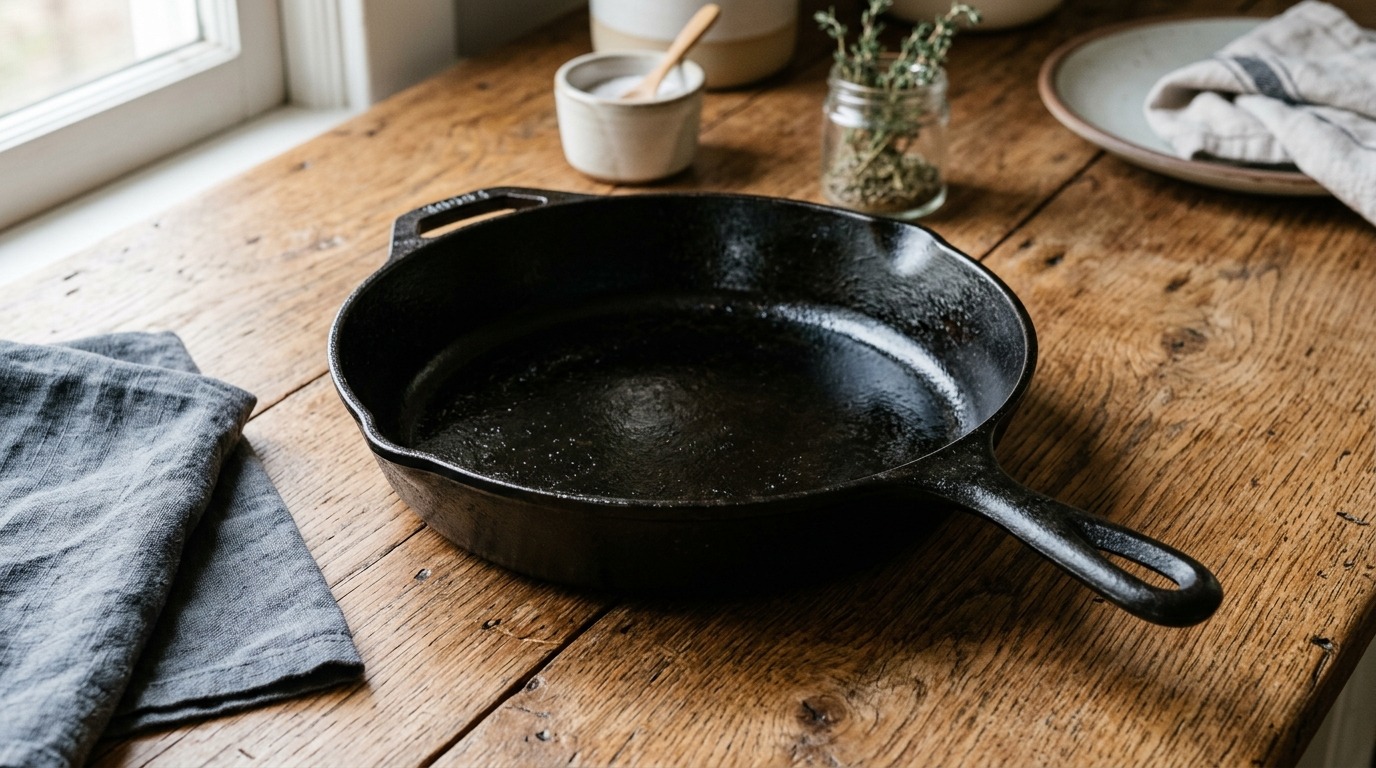
The non-stick layer of a cast iron skillet is easily damaged by baking soda
Electronics, Glass Ceramic, and Cooktops
Screens of smartphones, tablets, laptops, as well as glass and mirror surfaces — none of these should be cleaned with baking soda. Abrasive crystals leave micro-scratches on smooth coatings that become increasingly noticeable over time. Baking soda is not suitable for glass surfaces like mirrors and windows because you’ll most likely scratch them.
Smooth glass ceramic cooktops are a separate story. Although baking soda is safe for regular stoves, on glass ceramic it can leave both scratches and a whitish residue that won’t wash off. For such cooktops, it’s better to use special degreasing products without abrasives.
Gold and Silver
Many people clean silver with baking soda and foil, and in this case, an electrochemical reaction is at work, not mechanical friction. But if you simply rub gold or silver jewelry with baking soda powder, you risk damaging them. Baking soda is too abrasive for delicate jewelry, especially gold and silver: it can leave scratches or remove the protective coating. For jewelry, it’s better to use specialized products suitable for the specific type of metal.

Delicate gold and silver jewelry is best cleaned with specialized products
Wooden Floors and Furniture
Wooden floors are usually covered with varnish or special oil. Baking soda powder works like sandpaper: it removes the top layer of coating, after which the floor becomes dull and vulnerable to moisture and dirt. The same applies to waxed furniture and antiques — baking soda can scratch the wax and damage the original finish, which sometimes cannot be restored without a professional.
There are specialized cleaning products for wooden floors that clean without damaging the coating. Waxed furniture can simply be wiped with a soft cloth slightly dampened with water.
How to Avoid Ruining Things with Baking Soda
If you still want to try baking soda on an unfamiliar surface, there’s a simple trick: first apply the paste to a small, inconspicuous area and wait. If after a few minutes there are no scratches or color changes, you can continue.
Here’s a complete list of surfaces you shouldn’t clean with baking soda:
- Aluminum cookware and aluminum pipes;
- Marble and stone countertops;
- Seasoned cast iron skillets and pots;
- Electronics — smartphones, tablets, laptops;
- Glass surfaces — mirrors, windows;
- Smooth glass ceramic cooktops;
- Gold and silver jewelry;
- Wooden floors;
- Waxed furniture and antiques.
Also remember that baking soda should never be mixed with chlorine bleach or alcohol — these combinations can cause dangerous chemical reactions.
Baking soda remains an excellent cleaning helper, but only if you know its limits. It works great on ceramic tiles, stainless steel sinks, for removing odors from the refrigerator, and cleaning the oven. But for anything that shines, costs a lot, or is covered with a thin protective layer, it’s better to look for a gentler alternative.