April 1, 2026 has arrived, and it’s no time for jokes. Telegram is not working. This is no longer a local outage — it’s a new reality. Pavel Durov’s messenger won’t load messages, media files, or channels. A total Telegram block has begun, and with it comes a question many are thinking about but few say out loud: what will happen to MAX if the block is ever lifted? Fair warning: the answers will be uncomfortable for all sides.

A scenario from a parallel universe
Why People Use MAX
The honest answer to this question sounds unpleasant, but here it is: most users of the Russian messenger MAX came to it not because they wanted to, but because they were forced to. This is critically important to understand.
The Telegram block in Russia happened in stages: first calls were disabled in August 2025, then problems with loading verification codes began, then throttling. On April 1, 2026, Telegram stopped working completely. Under these conditions, switching to MAX isn’t a choice — it’s a forced measure. School group chats were moved to the Russian app because they were told to. Employers create corporate groups in the national messenger. Government services require MAX. This is called coercion, not organic growth.
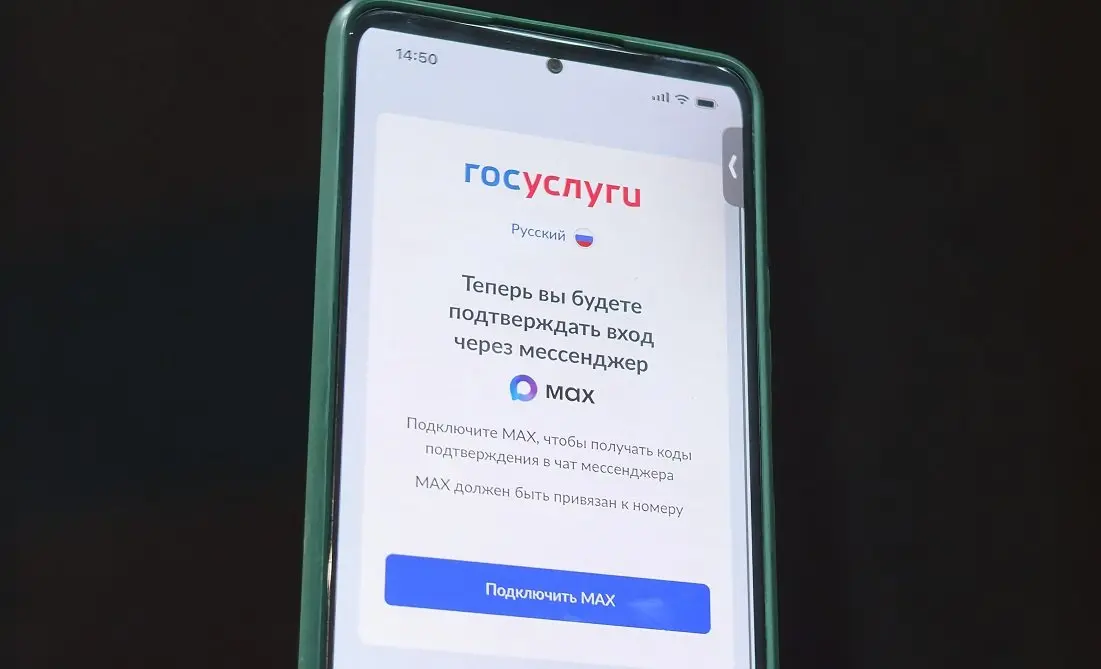
Millions of people would hardly have started using MAX without pressure
Telegram’s audience in Russia was organic: people came there on their own because everyone else was already there. The MAX app was created under federal law, promoted through government resources, and gains users not through convenience but by blocking the competition. That’s a completely different story. Remember this context. It’s important for understanding everything that follows.
What Will Happen If Telegram Is Unblocked in Russia
Most people will leave. And immediately — that very same day. This isn’t speculation but the behavioral logic of people who were backed into a corner and who, at the first opportunity, will return to where they were comfortable. Years of accumulated chats, channels, bots, message history — all of it is in Telegram, not in MAX.
Those who will stay are the ones forced to use the national messenger MAX to some degree: government employees, teachers in school chats, people whose work processes have already been migrated and who don’t want to explain to colleagues how to switch back. Only a small portion of users have genuinely gotten used to MAX — mostly those who don’t really understand alternatives and perceive Telegram’s throttling as a technical problem of the messenger itself, rather than regulatory action.
Mostly retirees will remain in the MAX messenger
Whether Telegram will be unblocked is a separate question, and I have no grounds to answer it optimistically. But if it happens, the national messenger’s audience will shrink to the level of Odnoklassniki during VK’s heyday: those who got used to it and those who have no other option will remain. The question of whether it’s worth switching from Telegram to MAX will lose all meaning the moment Durov’s app starts working again.
Where MAX Is Better Than Telegram
Honesty demands acknowledging: the national messenger got some things right. Here’s where MAX is better than Telegram right now:
- First — calls. They work without jumping through hoops or explaining to the other person why you can’t connect. For those not willing to deal with technical nuances, this is a real advantage.
- Second — integration with government services (Gosuslugi). Yes, the list of data MAX requests when creating a Digital ID is alarming. But functionally it works: showing your passport at a store checkout via your smartphone is convenient. Telegram can’t do this and never will.
- Third — accessibility. Telegram in Russia currently requires jumping through hoops. MAX opens immediately. For a significant portion of the audience, this is critical.
And that’s about where the real advantages end.
Where Telegram Is Better Than MAX
The list is longer. I’ll start with the obvious and end with what’s discussed less often:
- Infrastructure. Telegram has millions of channels, hundreds of thousands of bots, and communities built over years. MAX is relatively empty by comparison. Moving there means starting from scratch.
- Convenience. MAX’s interface is copied from Telegram but worse: slower, with more bugs, with less polished details. MAX lags where Telegram flies. This isn’t a subjective impression — it’s a regular complaint from users.
- Audience. Everyone is on Telegram. MAX has those who were forced to be there.
- Functionality. Bots exist in MAX, but there are orders of magnitude fewer of them. Channels exist, but their audiences are incomparable. Forwarded messages, reactions, group topics — everything is implemented worse.
And most importantly — security in MAX. Telegram uses end-to-end encryption in secret chats and claims decentralized data storage. MAX’s privacy policy explicitly states that the company may share user data with third parties. This isn’t speculation — it’s an official document.
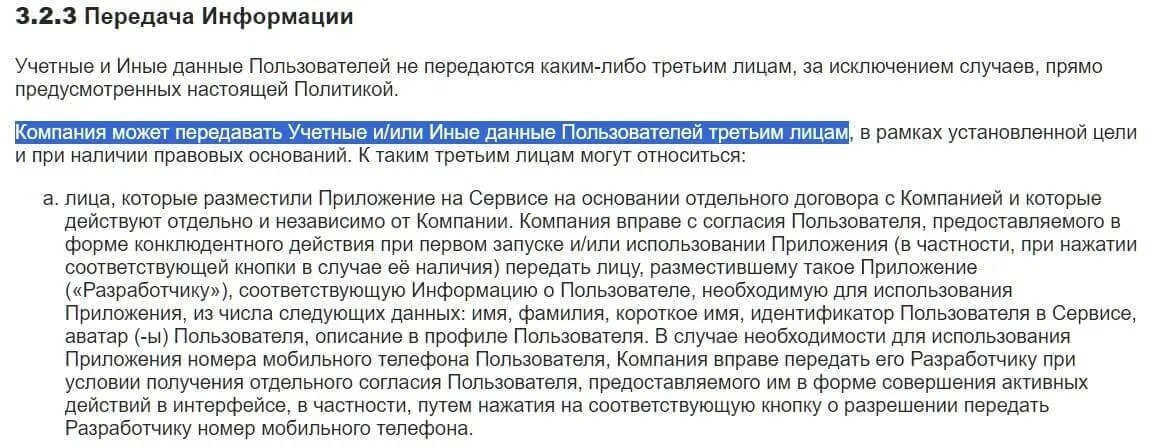
MAX doesn’t hesitate to share your data with third parties. Source: legal.max.ru
Considering how often data leaks occur at major Russian services, the consequences of such a policy can be very tangible. You can switch from Telegram to MAX, but you need to understand the risks in advance.
What the MAX Messenger Should Be Like
Theoretically, MAX has a chance to become useful without coercion. But for that, the developers need to do what they haven’t been doing so far:
- First, stop being a Telegram clone and come up with something original. Digital ID, integration with government services, the ability to pay fines and book doctor appointments — that’s where MAX has a real advantage. It’s a niche Telegram will never fill. Developing it is the right strategy.
- Second, seriously address the security issue. Not rewrite the privacy policy for PR purposes, but genuinely improve data protection practices.