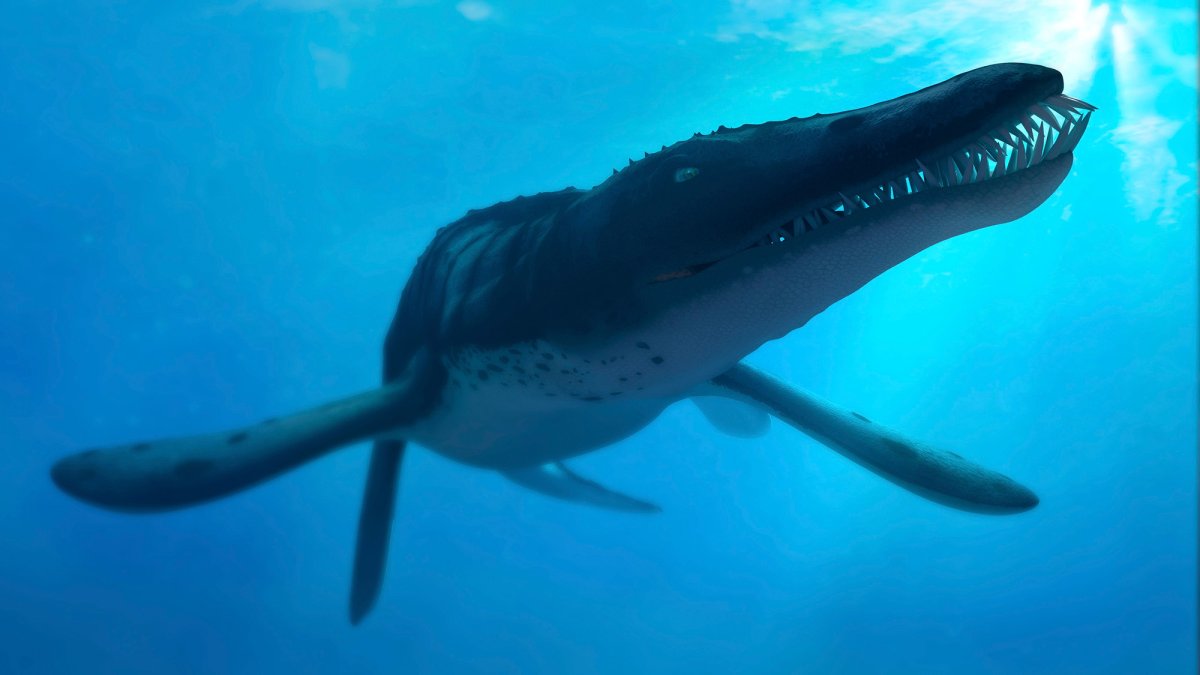
Underwater hydrophones captured the mysterious “Bloop” in 1997
In 1997, American oceanologists recorded a sound of unprecedented power in the southern Pacific Ocean — it was picked up by underwater microphones located more than 5,000 kilometers apart. When the recording was sped up 16 times to make it audible to humans, it sounded like a “bloop” — hence the nickname. This gave rise to one of the most enduring oceanic mysteries: what if the sound was produced by an unknown giant creature?
What Made the Bloop Sound So Astonishing to Scientists
In 1997, researchers monitoring underwater volcanic activity in the southern Pacific Ocean recorded a strange, powerful, and extraordinarily loud sound. Hydrophones — underwater microphones — placed more than 3,219 kilometers apart detected multiple instances of this noise, and they had never heard anything like it before.
According to Popular Science, the “Bloop” turned out to be an ultra-low-frequency and incredibly loud sound. For comparison: the blue whale, the loudest known animal, can be heard at a distance of about 1,600 kilometers from the source. That’s impressive, but it’s less than a third of the distance the “Bloop” traveled. If the sound had been made by a living creature, it would have had to be “far more powerful than any animal on Earth.”
But there was one detail that kept nagging: the character of the sound — rapid frequency oscillations — resembled signals produced by marine animals. It was precisely this circumstance that opened the door to the most fantastic hypotheses.
Why the “Bloop” Was Linked to a Sea Monster
NOAA oceanographer Christopher Fox, one of the first researchers to study the sound, suggested in a 2001 CNN interview that the source of the “Bloop” was calving ice in Antarctica. But in a subsequent interview in 2002, he acknowledged that the sound bore similarities to animal signals. Journalist David Wolman posed the question: could it be possible that a creature larger than any whale — or at least something that generates sound far more efficiently — lurks in the depths of the ocean?
CNN added fuel to the fire in 2002 by reporting one theory: that the sound could have belonged to a “deep-sea monster, possibly a giant squid with many tentacles.” The giant squid, while quite real, is not known as a sound-producing animal. Coincidence or not, the area where the sound originated is near Point Nemo — the most isolated place on Earth. And according to H.P. Lovecraft’s stories, that is precisely where the sunken city of R’lyeh, home of Cthulhu, is located. That fact alone was enough for the internet to latch onto the myth.
The “Bloop” became a symbol of how little we know about the ocean and firmly entered the world of cryptozoology — a discipline that studies creatures whose existence has not been confirmed. Cryptozoology is not considered a science because it typically does not follow the scientific method. But that doesn’t stop it from generating vivid imagery: if you Google “the Bloop,” search results will show numerous fantastical illustrations of monsters, and in the game Subnautica, fans even added a creature inspired by this sound.
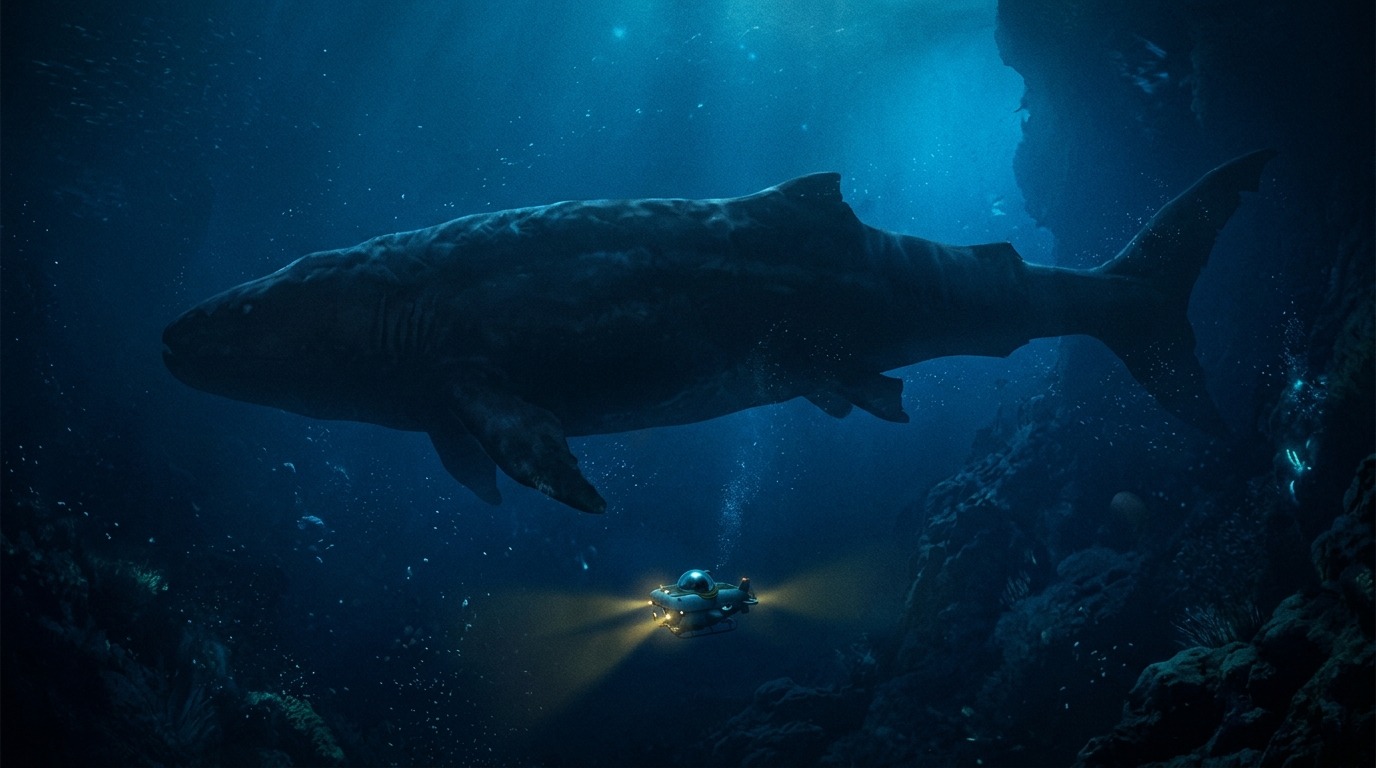
The mystery of the “Bloop” inspired artists to depict hypothetical oceanic giants
What Actually Caused the “Bloop” Sound in the Ocean
To solve the mystery, scientists from NOAA’s PMEL laboratory placed additional hydrophones closer to Antarctica. Between 2005 and 2010, researchers conducted acoustic surveys in the Bransfield Strait and Drake Passage, which showed that ice breaking and cracking is the dominant source of natural sound in the Southern Ocean. In short, the “Bloop” turned out to be an icequake.
An icequake (cryoseism) is a seismic event that occurs when a massive piece of glacier calves off and crashes into the water. The broadband sounds recorded in the summer of 1997 proved to be consistent with icequakes generated by large icebergs during cracking. NOAA hydrophones in the Scotia Sea recorded numerous icequakes with spectrograms very similar to the “Bloop.”
Final confirmation came in 2008: while observing the breakup of iceberg A53a near South Georgia Island, researchers recorded icequakes with amplitude sufficient for detection at distances over 5,000 kilometers, and with spectrograms analogous to the “Bloop.” The mystery was solved — but its practical implications turned out to be alarming.
Why the “Bloop” Sound Is Considered a Sign of Melting Ice
With global warming, icequakes are happening more frequently: glaciers are calving, cracking, and ultimately melting into the ocean. The “Bloop” was not an anomaly — it was an early signal of a process that is accelerating every year.
And it’s not just about ice — it’s about the animals that live nearby. A 2021 study on ocean noise in the Southern Ocean describes it as a form of pollution that can affect fauna from tiny zooplankton to enormous whales. Many marine animals rely on acoustic navigation for migration, communication, and hunting. Noise from collapsing glaciers can disrupt these vital processes.
Research on the ecological consequences of underwater noise remains limited, especially in Antarctica. The authors of the aforementioned study urge Antarctic Treaty participants to join efforts to manage this problem — and prevent its impact on polar ecosystems.
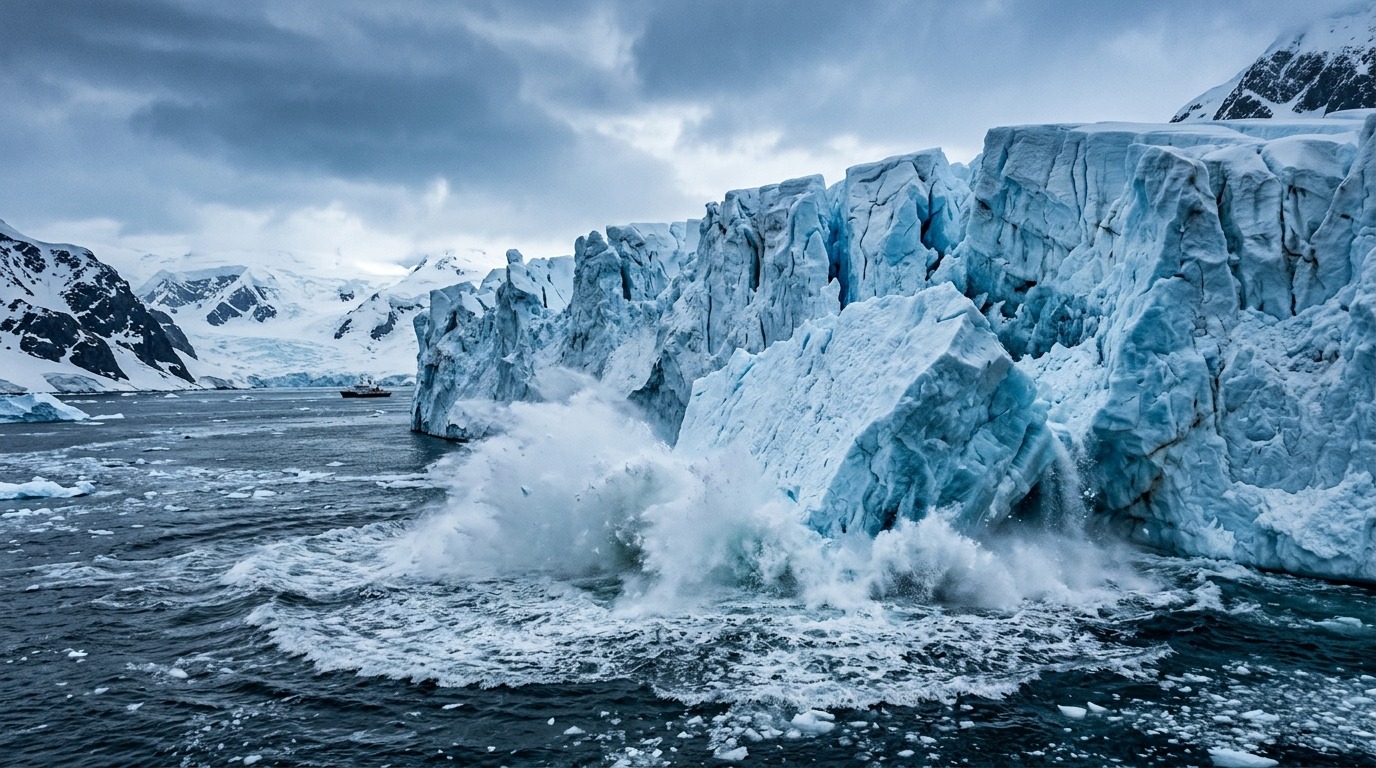
Glacier cracking — this process turned out to be the source of the mysterious “Bloop”
Which Mysterious Ocean Sounds Are Actually Made by Animals
If you’re disappointed that no sea monster was behind the “Bloop,” here’s some consolation: some mysterious ocean sounds do turn out to be animal voices — and from the most unexpected sources.
Since the 1960s, submariners and scientists have been recording a strange “quacking” sound in the Southern Ocean, nicknamed Bio-Duck. The origin of the sound remained “one of the biggest unsolved mysteries of the Southern Ocean” for decades — until 2014, when it was determined that Antarctic minke whales were responsible. Scientists attached sensors to the backs of two whales and recorded the characteristic “quacking” — this allowed them to definitively identify the source.
Another case is the “Biotwang” sound, first discovered in 2014 during an acoustic survey of the Mariana Trench. Researchers described it as “a low, resonant moan followed by a creaky mechanical echo — like a frog burping in space.” The answer came when the rarely studied Bryde’s whales were spotted near the Mariana Islands: in nine out of ten sightings, the “Biotwang” was simultaneously recorded. As NOAA oceanographer Ann Allen put it:
“Once is a coincidence. Twice is happenstance. Nine times is definitely a Bryde’s whale.”
The Loneliest Creature on the Planet
Among the ocean’s acoustic mysteries, some remain unsolved. In the northern Pacific Ocean, since the late 1980s, the voice of the so-called “52-hertz whale” has been detected — a creature of unknown species that emits a signal at a frequency of 52 hertz. The whale itself has never been seen — it is known only by its voice.
Blue whales and fin whales communicate at frequencies of 10 to 39 hertz and around 20 hertz respectively — meaning this whale’s voice sounds significantly higher than that of any known species. It has been dubbed “the loneliest whale in the world” because for a long time it was considered the only individual with such a voice.
However, since 2010, recordings of a second 52-hertz whale have occasionally been detected simultaneously in a different location. And according to Christopher Clark, director of Cornell’s Bioacoustics Research Program, this whale can probably be “understood” by other blue whales: given the diversity of dialects, its voice may not be so unique after all.
“This animal sings with many features typical of a blue whale song,” Clark said in 2015.