Every component of toothpaste plays an important role in cleaning teeth
Every day, from early childhood, we squeeze toothpaste onto our brush. We were told that we need to brush our teeth twice a day, and many of us follow this rule without question. But have you ever wondered, as you wake up and swallow minty saliva, what is actually happening at that moment? What kind of magic is hidden in that tube that keeps teeth from hurting and staying white?
How Toothpaste Came to Be
The number one task of every toothpaste is to prevent cavities and remove plaque. Task number two is to give you fresh breath so that people around you don’t faint. After all, we are the kind of creatures that don’t notice when we smell bad. Only those around us suffer from it.
These problems are not new. Cavities, gum disease, and halitosis (bad breath) plagued people even before the invention of the wheel. Believe it or not, between 3000 and 5000 BC, people cleaned their teeth with a paste made from eggshells, water, and pumice. The taste was probably something else, but the choices were limited. Then recipes changed, but the real breakthrough came thanks to Dr. Miller and his theory: he proved that bacteria in the mouth happily devour our food remnants and produce acid that leaches calcium from enamel. From that moment on, toothpaste stopped being just “flavored chalk” and became a weapon.
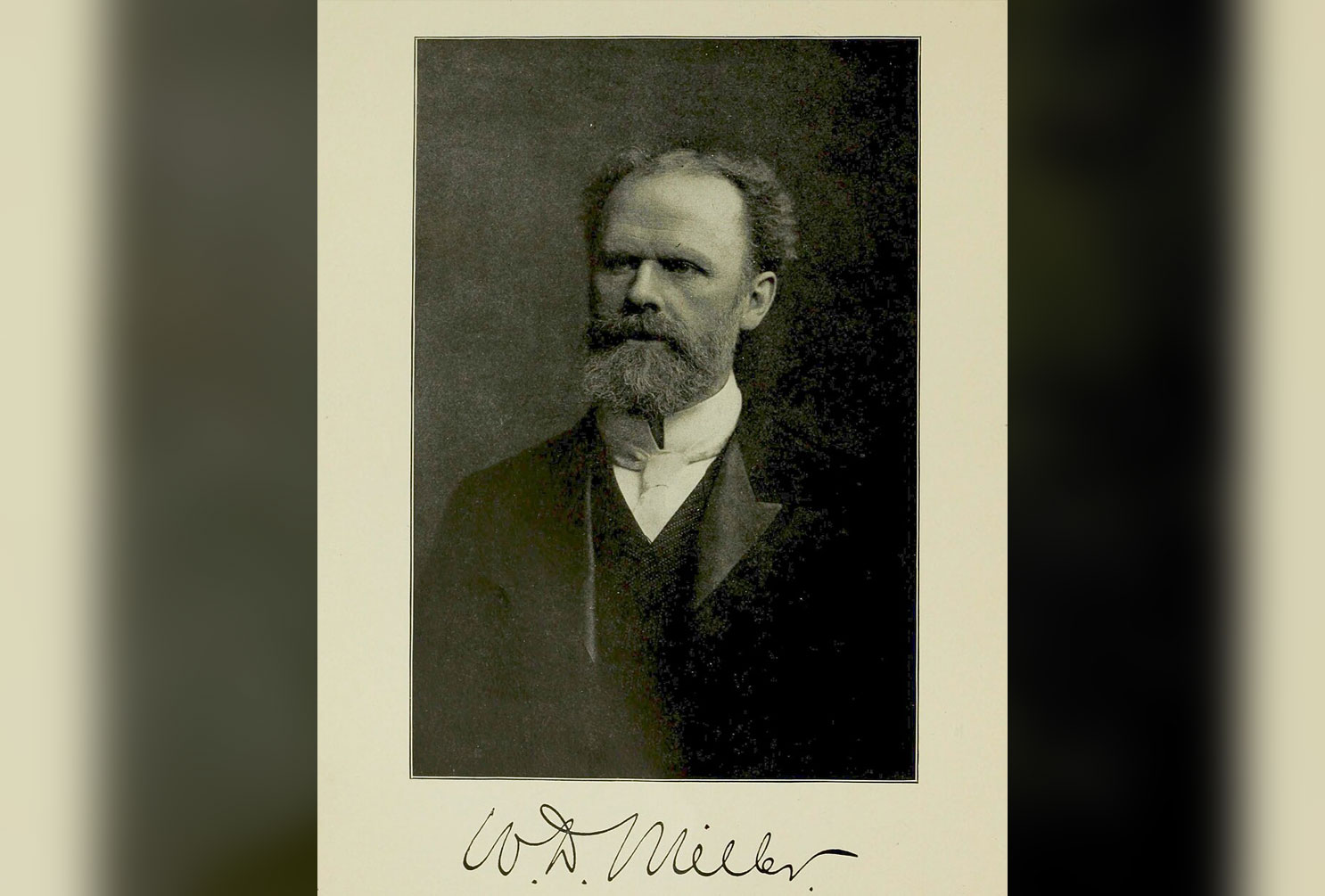
Willoughby Dayton Miller — the scientist who proposed the chemo-parasitic theory of caries development. Image source: wikipedia.org
How Toothpaste Cleans Teeth
Modern toothpaste is a cocktail of ingredients, each with its own role. No eggshells like in ancient times. Only scientifically proven substances. The authors of the website Science ABC explained this in detail.
What Is Fluoride For in Toothpaste
Fluoride in toothpaste is like concrete for a bridge. It does two things: it kills bacteria that build sticky plaque (the film on your teeth) and helps enamel “repair” itself. Imagine that your enamel is a wall made of bricks. Acid knocks out the bricks (calcium), and fluoride puts them back. This process is called remineralization. Toothpastes use special compounds like sodium fluoride or monofluorophosphate.
But there’s a nuance. Fluoride was first added back in 1914, but it took another 40 years before the American Dental Association officially declared it beneficial. Because if you swallow too much toothpaste, you can get poisoning (fluorosis). That’s why for small children who can’t spit yet, edible fluoride-free toothpastes were invented. However, research shows that they are less effective at fighting plaque, although they still combat microbes.
What Are Abrasives For in Toothpaste
The answer is simple: to scrub off plaque and food particles, tiny particles are mixed into the paste. It’s like a face scrub, but for your mouth. The role of these scrubbers is played by calcium carbonate, silicon dioxide, or magnesium carbonate. They firmly but gently polish teeth without scratching the enamel.
What Are Detergents For in Toothpaste
Yes, toothpaste contains actual soap. Or, in scientific terms, sodium lauryl sulfate. It’s needed so that the paste foams and glides across teeth, washing everything out of the gaps. Without it, the brush would just rub dry chalk on your teeth, and the effectiveness would drop dramatically.
What Are Thickeners For in Toothpaste
To keep the paste from drying out in the tube, humectants (sorbitol, glycerin) are added. To prevent it from separating into water and powder — thickeners. And so you don’t spit and curse in the morning, reminiscing about eggshells — flavorings. It’s precisely mint or fruit additives that make the process tolerably pleasant.
Is Toothpaste Harmful
Many people fear the chemicals in toothpaste, thinking it’s better to just use a brush without anything. But science says otherwise. Only when paired with toothpaste does mechanical cleaning become fully effective. For example:
- Fluoride genuinely reduces the risk of cavities and repairs enamel;
- If your teeth sting from ice cream, special toothpastes with stannous fluoride (0.454%) work wonders and reduce sensitivity;
- Triclosan (which people also fear) is excellent at reducing gum inflammation and eliminating bad breath.
Water or just a brush without paste won’t provide any of these benefits. So the chemistry in the tube is our friend — as long as you don’t decide to eat toothpaste by the spoonful, of course.