Tim Cook, during his visit to China, commented on the massive demand for Mac mini driven by the wave of AI agents. Even Perplexity is already preparing its own AI agent for Mac mini. According to him, Apple laid the groundwork for this ten years ago when it began embedding neural processors into Macs. The irony is that Apple’s own AI assistant — Siri — still isn’t impressive, yet Apple computers have turned out to be the ideal hardware for running third-party AI tools. Here’s what this means for those choosing a computer for AI tasks.
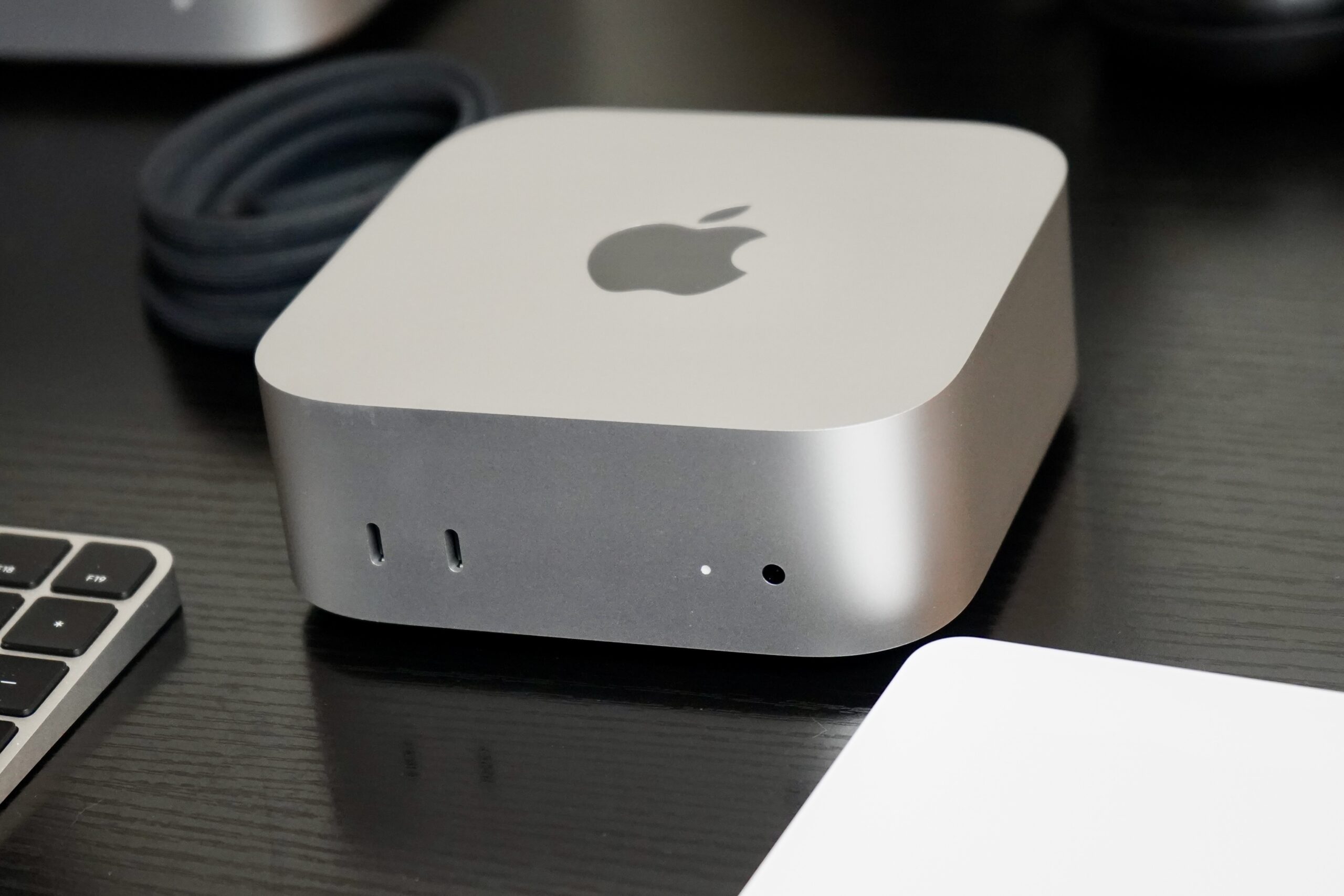
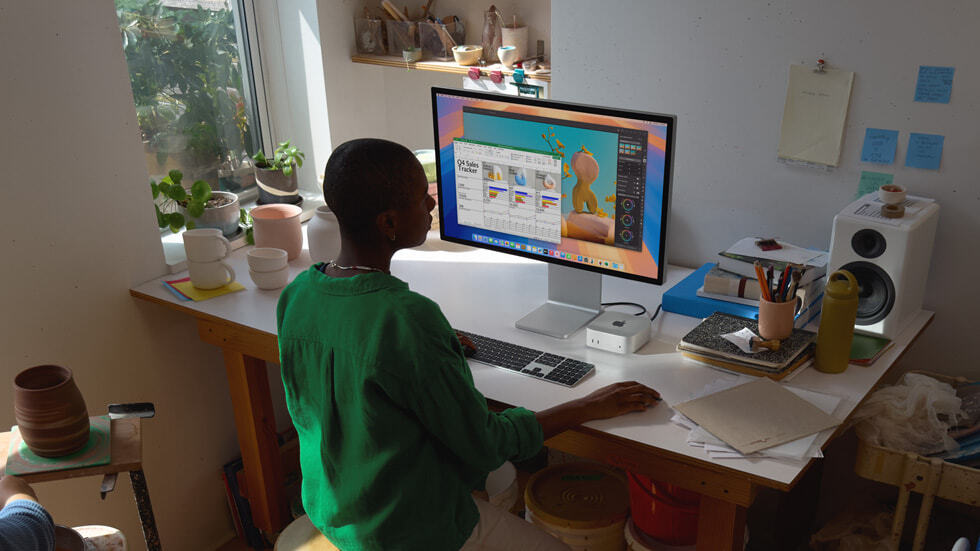
This little guy can do more than you think. Image: macworld.com
What Is OpenClaw and Why Is It Causing Mac mini to Sell Out
OpenClaw is a free open-source AI agent capable of performing virtually any task in the digital world. Unlike regular chatbots like ChatGPT, which taught people to talk to AI, OpenClaw showed that AI can not only respond but also act: manage files, send emails, monitor calendars, control smart home devices — all autonomously, without your involvement.
In one month, OpenClaw managed to change its name twice, gain 160,000 stars on GitHub, and drive a surge in Mac mini sales. The hype around OpenClaw is rapidly driving up prices and depleting Mac mini inventory in China, with the wait time for the base model in the official Apple Store increasing to at least a month.
Why Mac mini specifically? This compact desktop computer with Apple Silicon chips allows running AI agents around the clock without complex server infrastructure. Many developers dedicate a separate Mac mini entirely to OpenClaw so the agent doesn’t interfere with work on their main computer. The logic is simple: you give an AI agent access to email, files, and messengers — it’s better if this happens on a separate machine.
Claude Code — What It Is and Why It Needs a Mac
Claude Code is an AI programming tool from Anthropic that reads your codebase, edits files, executes commands, and integrates with development tools. It’s available in the terminal, code editor, app, and browser.
As of early 2026, Claude Code is considered the best AI tool for coding. It’s recommended to use macOS or Ubuntu — these systems have fewer issues. Mac with Apple Silicon chips is the natural choice: fast unified memory, quiet operation, stable macOS.
Cook stated in an interview that users can already train large language models directly on a MacBook Pro. Apple emphasizes that the combination of proprietary chips and software optimization turns the Mac into the best platform for AI tasks. Meanwhile, let’s recall, their own Siri still lags behind competitors. But for running third-party AI solutions, Apple hardware has indeed proven to be the best on the market.
Why Mac mini Is Better Suited for AI Agents Than a Regular PC or Cloud
The main advantage is memory architecture. Apple’s chip has one shared pool of memory for everything. The processor, graphics, and AI all use it simultaneously, so data doesn’t need to be shuttled back and forth, and everything runs faster without lag. This is exactly what’s needed for running AI models, and this is precisely what makes Mac mini an attractive option for local models and AI agents like OpenClaw.
Apple cites impressive performance figures for Mac mini on M4 compared to the Intel Core i7 model:
- Photo processing in Photomator — up to 33 times faster
- Performance in World of Warcraft — up to 13.3 times higher
- Number of plugins in Logic Pro — up to 2.8 times more
The size is just 1/20th of a typical desktop PC in the same price range. Quiet, compact, with a built-in power supply — you can put it on a shelf and forget about it while the AI agent works in the background.
Mac mini is 20 times more compact than a typical desktop PC
Which Mac mini to Choose for AI Agents and Claude Code
If you plan to use cloud AI services (Claude, GPT, and similar), the base Mac mini with M4, 16 GB memory, and 256 GB storage will handle it perfectly — it can manage cloud requests and small local models. All the heavy lifting happens on the AI provider’s servers, while Mac mini serves as a compact and quiet bridge.
The community consensus: 16 GB is enough for cloud services and small local models, but if you want to run AI directly on the device, upgrading to 24 GB is worth every penny.
Here are three main scenarios:
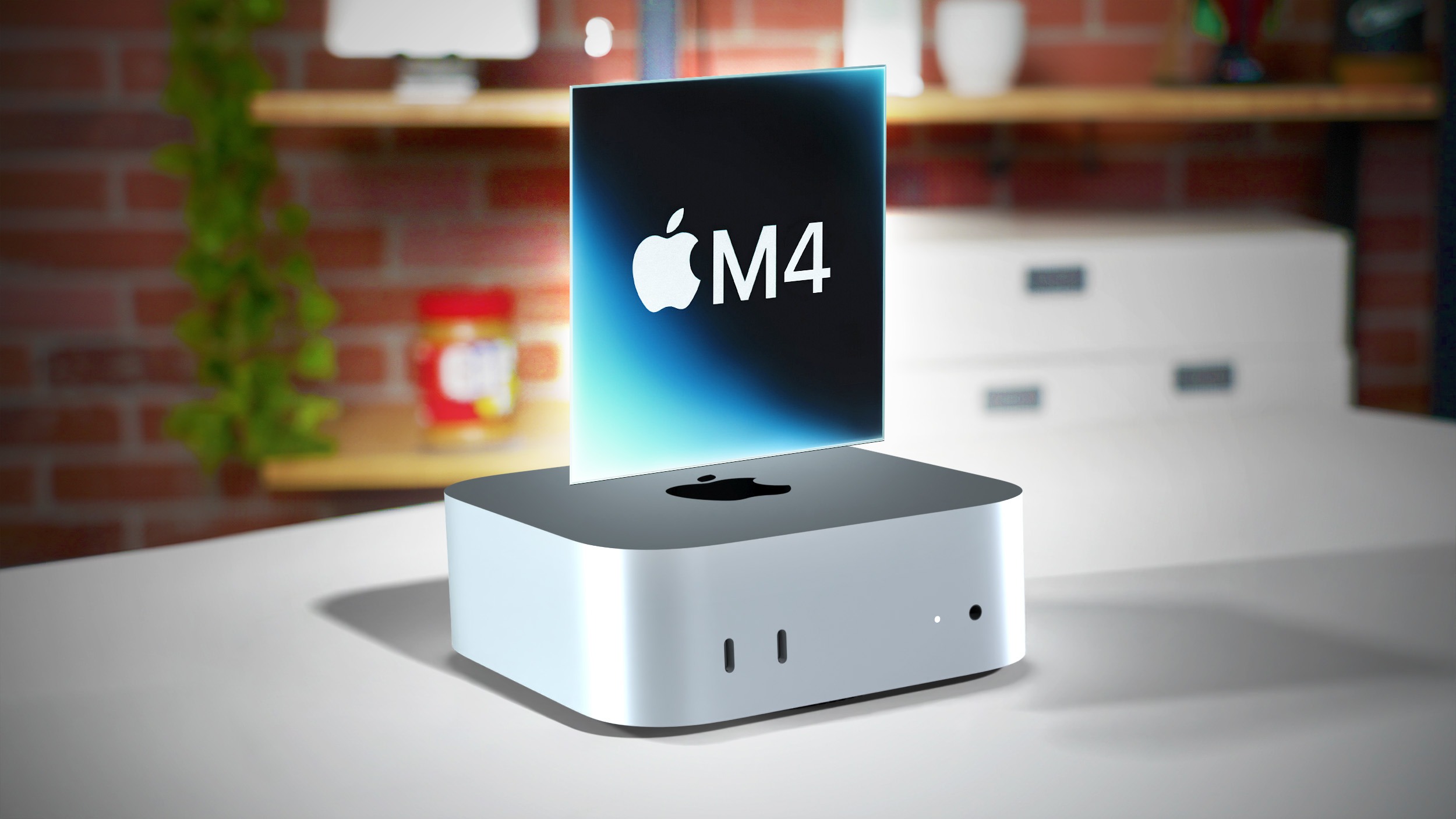
Look only at M4 and M4 Pro options. Image: ivedia.ru
- Mac mini M4, 16/256 GB — for cloud AI agents (OpenClaw via API, Claude Code). In Russia — around 50,000 ₽
- Mac mini M4, 24/512 GB — for running medium local models without internet dependency. Around 115,000–125,000 ₽
- Mac mini M4 Pro, 24/512 GB — for serious local AI work, rendering, and development. Around 170,000 ₽
The official price of the base model in China is 4,499 yuan. In Russia, the base Mac mini M4 16/256 GB can be found for approximately 51,000 ₽. For an Apple computer — that’s, frankly, pennies. Only a used MacBook Air is cheaper.
What to Consider When Buying Mac mini in Russia
The package typically includes only a power cable — you need to buy a monitor and peripherals separately. Some stores sell the China version, and the plug on the included power cable may be designed for Chinese outlets. Check this before buying — an adapter costs pennies, but it’s better to know in advance.
An important note for those planning to use foreign AI subscriptions: paying for them with Russian cards is often impossible, and this should be considered in advance. This applies to both the Claude Pro subscription (needed for Claude Code) and API keys for OpenClaw. Solutions exist — through intermediaries and foreign cards — but it’s an additional step.
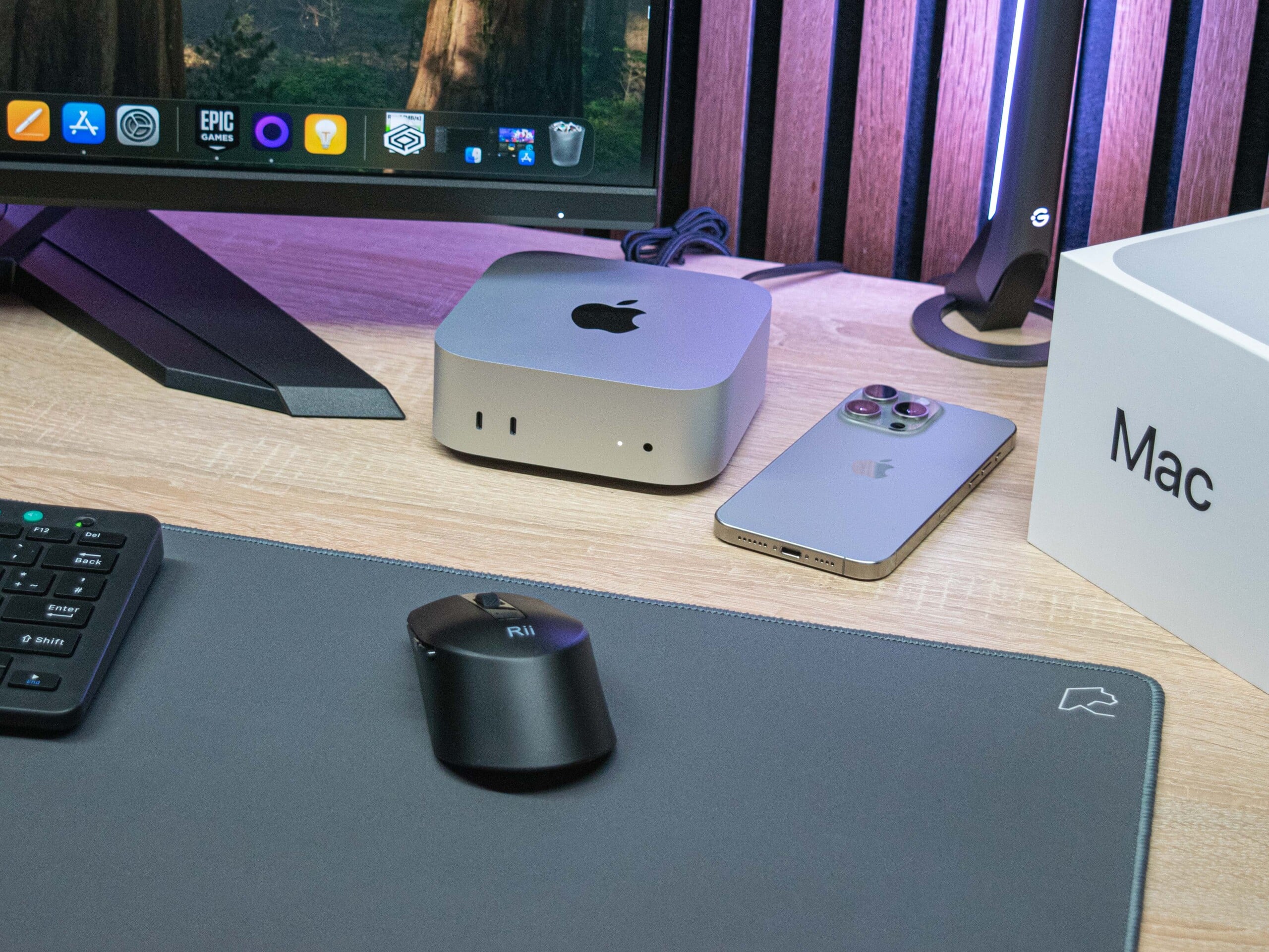
Mac mini can be placed on a shelf and left running in the background. Image: notebookcheck-ru.com
Another point: macOS is fully localized in Russian, but Apple Pay with Russian cards doesn’t work, and the warranty is typically only from the seller store.
Is It Worth Buying Mac mini for Claude Code and AI Agents in 2026
If you’re already in the Apple ecosystem, Mac mini on M4 is perhaps the most rational way to enter the world of AI agents. For 50,000 ₽ you get a quiet, compact computer with 16 GB of unified memory that can be left running around the clock. Power consumption is minimal — about 20W in normal mode.
It’s a funny situation: Apple still can’t release a truly smart Siri, yet they’ve made the world’s best hardware for running AI agents. Cook, of course, says this was planned ten years ago. Whether to believe it or not — that’s up to you. But the fact remains: no other computer in this price range combines such performance with compactness and silence.