
The Heimlich maneuver has already saved millions of lives
Every year, thousands of people find themselves in a situation where an ordinary dinner or even a sip of water turns into a fight for life. We rarely think about it, but choking on food or water can happen anywhere: in the quiet of your own kitchen when you’re home alone, or in a noisy café surrounded by strangers. The most frightening thing is that a person has only 3–5 minutes to restore breathing, otherwise the brain begins to die from lack of oxygen. The Heimlich maneuver can save someone from death in such cases. And everyone needs to know how to perform it.
You may have seen the Heimlich maneuver in movies, especially American ones. But it must be done skillfully and extremely carefully. Otherwise, you can harm a person rather than save them.

Scene from the movie “Groundhog Day”
When to Perform the Heimlich Maneuver
Before grabbing and shaking a person, you need to make sure the Heimlich maneuver is even necessary. If the choking person can speak, wheeze, or cough—don’t touch them, let them try to cough it out on their own.
But there is a universal sign of choking that is immediately visible: the person silently clutches their throat with both hands. They cannot make a sound, they turn blue, and their eyes are filled with terror. At this moment, every second counts because oxygen is no longer reaching the brain.
How to Perform the Heimlich Maneuver
When a person clutches their throat and turns blue, there is no time to hesitate. You need to act clearly and quickly. Stand behind the victim and wrap your arms around their waist. Then follow these steps:
- clench one hand into a fist and press your thumb against the abdomen—strictly in the center, in the hollow between the navel and the ribs;
- with your other hand, firmly grasp the fist from above to create a tight lock;
- make a quick, powerful movement: sharply press your fist into the abdomen and immediately pull upward, as if trying to slightly lift the person;
- don’t stop after one attempt, repeat the thrusts six to ten times until the airway is cleared.
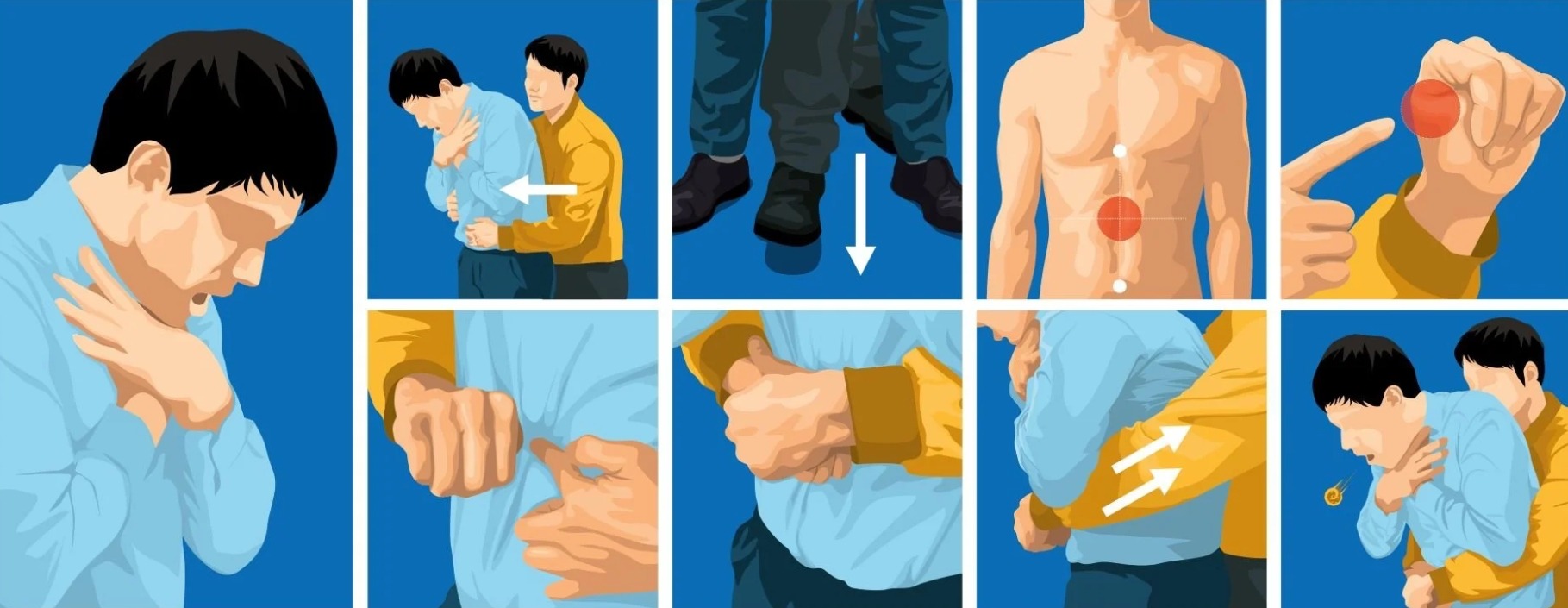
How to perform the Heimlich maneuver illustrated. Source: squarespace.com
How to Perform the Heimlich Maneuver on Yourself
The worst thing about choking when alone is panic. But you have the same 3–5 minutes, and during this time you can save yourself if you don’t lose your head. Here’s a simple instruction that works:
- clench one hand into a fist and press your thumb against the abdomen—in exactly the same spot as when saving someone else: between the navel and where the ribs end;
- with your other hand, firmly grasp the fist from above and sharply press inward and upward. The movement should be strong and thrusting, as if you want to squeeze air out of your lungs;
- if you can’t do it or don’t have enough strength, look for any hard object at waist level: the back of a chair, the edge of a table, a sink, or a railing. Lean your abdomen against it right at that same spot and sharply press down with your entire body weight downward and forward to create pressure;
- repeat the sharp compressions until the piece comes out. Usually 5–10 attempts are enough.
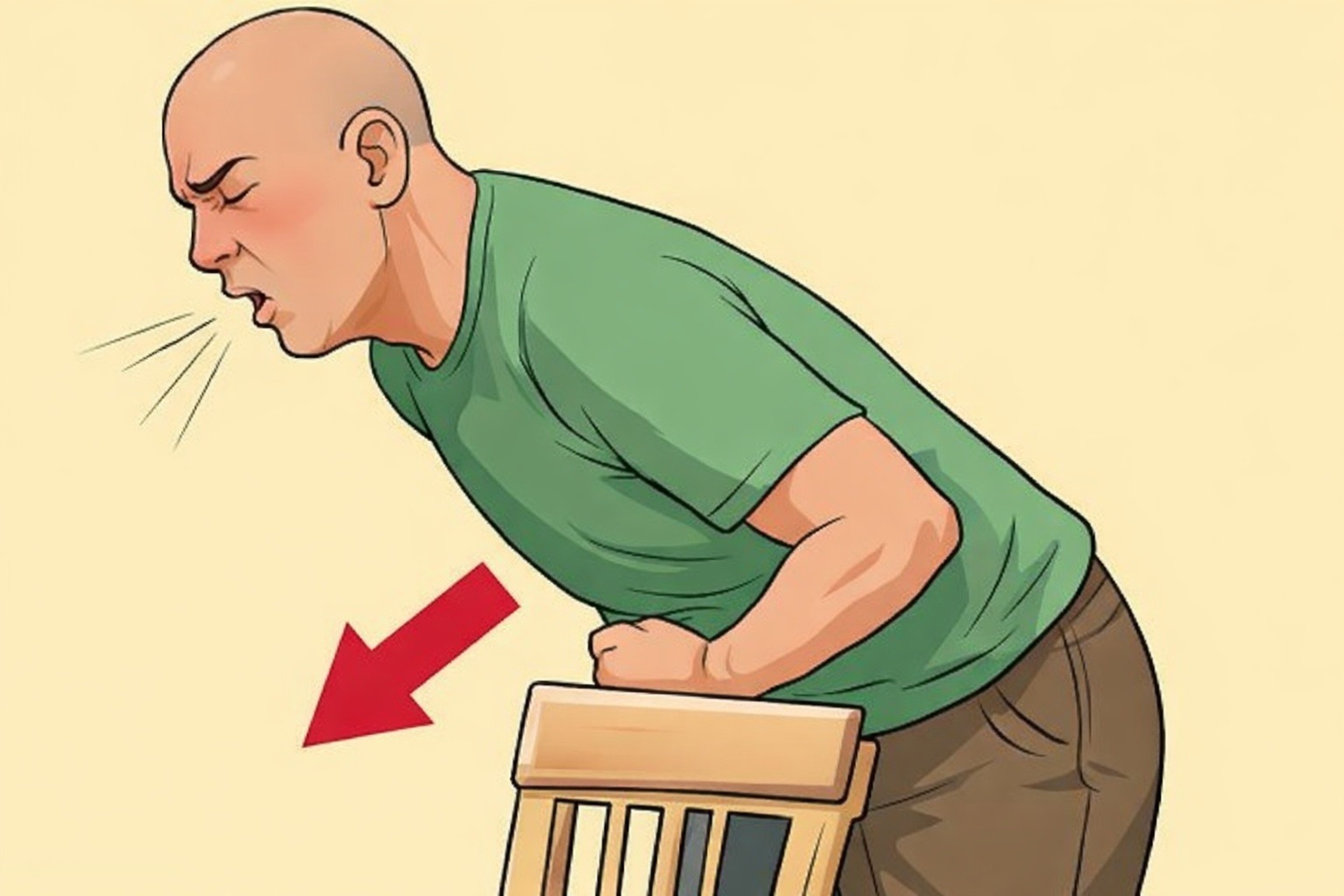
How to perform the Heimlich maneuver on yourself
What to Do After the Heimlich Maneuver
It’s important to remember that the Heimlich maneuver is a forceful technique, and it rarely passes without consequences. Even if you did everything correctly and the piece of food flew out, internal organs may have been injured. A person may have bruises or even organ rupture, broken ribs or a fractured xiphoid process.
Therefore, the rule is ironclad: after a life has been saved, the victim must definitely go (or you should go yourself) to the hospital for an examination to rule out hidden injuries.