Yandex has done what the market has been talking about for a long time — launched a new taxi app called Fasten. This is not a new tariff within Yandex Go, but a standalone service. At first glance, it might seem like there’s almost no difference. But if you look closer, the logic behind the launch is quite clear. Let’s figure out how Fasten differs from Yandex Go, who it’s best suited for, and whether you can really save significantly on rides with this service.

Yandex has released a new Fasten app for ordering taxis
Fasten from Yandex Taxi and How It Differs from Yandex Go
Fasten is a standalone taxi app. No food delivery, no scooters, no extra tabs. Open it — order — go. Fasten has already started operating in more than 300 cities across Russia. Plus, the app runs faster, which is useful for less powerful smartphones. Inside, the familiar ride classes are available:
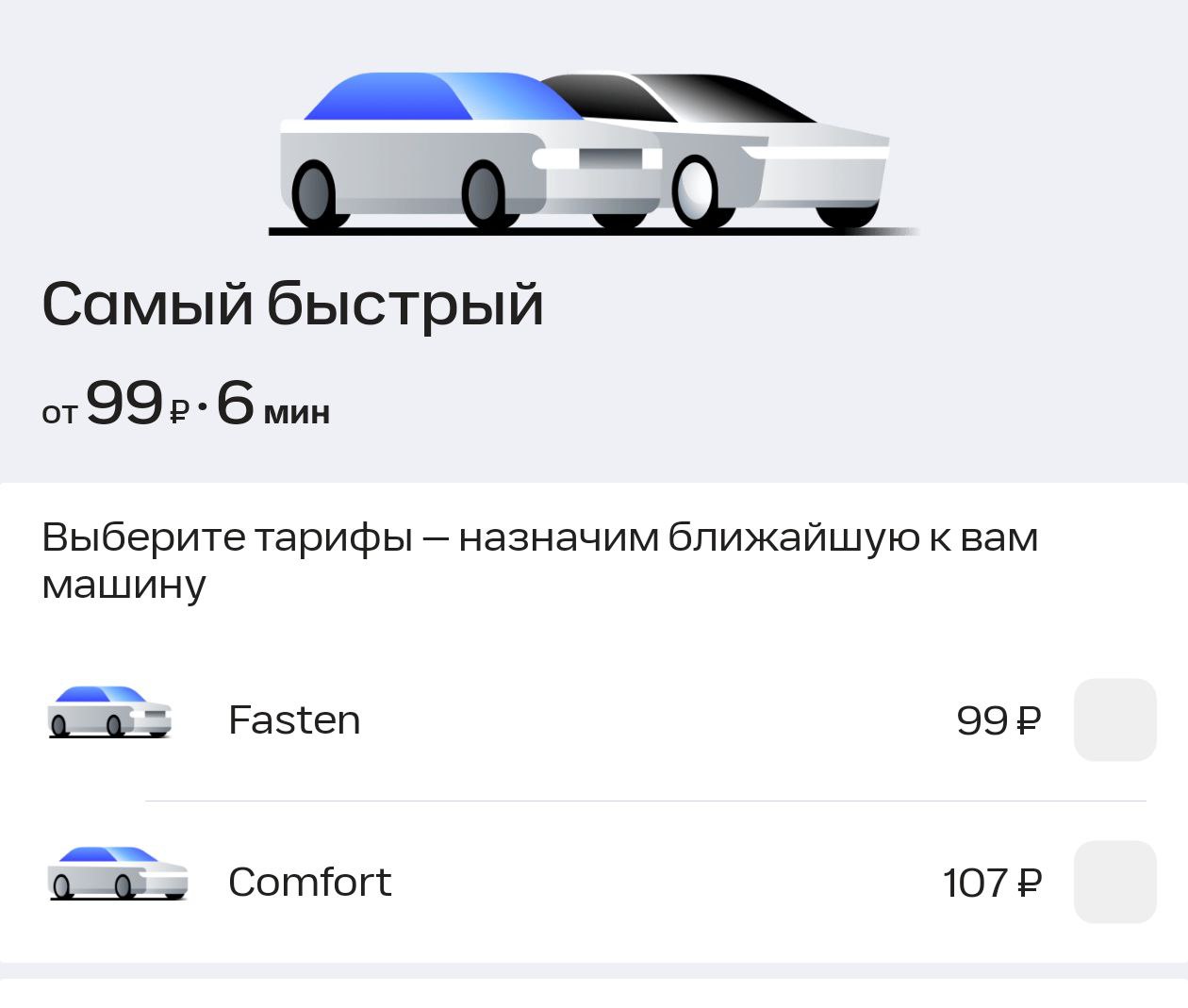
In smaller cities, Fasten offers Comfort as the maximum tier — just like Yandex Go
- Basic for everyday routes.
- With a fellow passenger.
- Comfort, Comfort+ and Business.
So in terms of vehicle level and service, everything remains familiar, but the interface and positioning are simplified. And in general: Yandex has rebranded the Russian Uber — at least, when you open the app, this name pops up. But let’s talk about something else.
How Fasten Differs from Yandex Go
The main difference is the format. In Yandex Go, you see dozens of services: taxi, food, delivery, rentals, shopping. Fasten is only taxi. Essentially, Yandex has focused on simplicity and price. In essence, this is an attempt to segment the audience: keep Yandex Go as a big super app with everything at once, and Fasten as a simple and straightforward app just for rides.
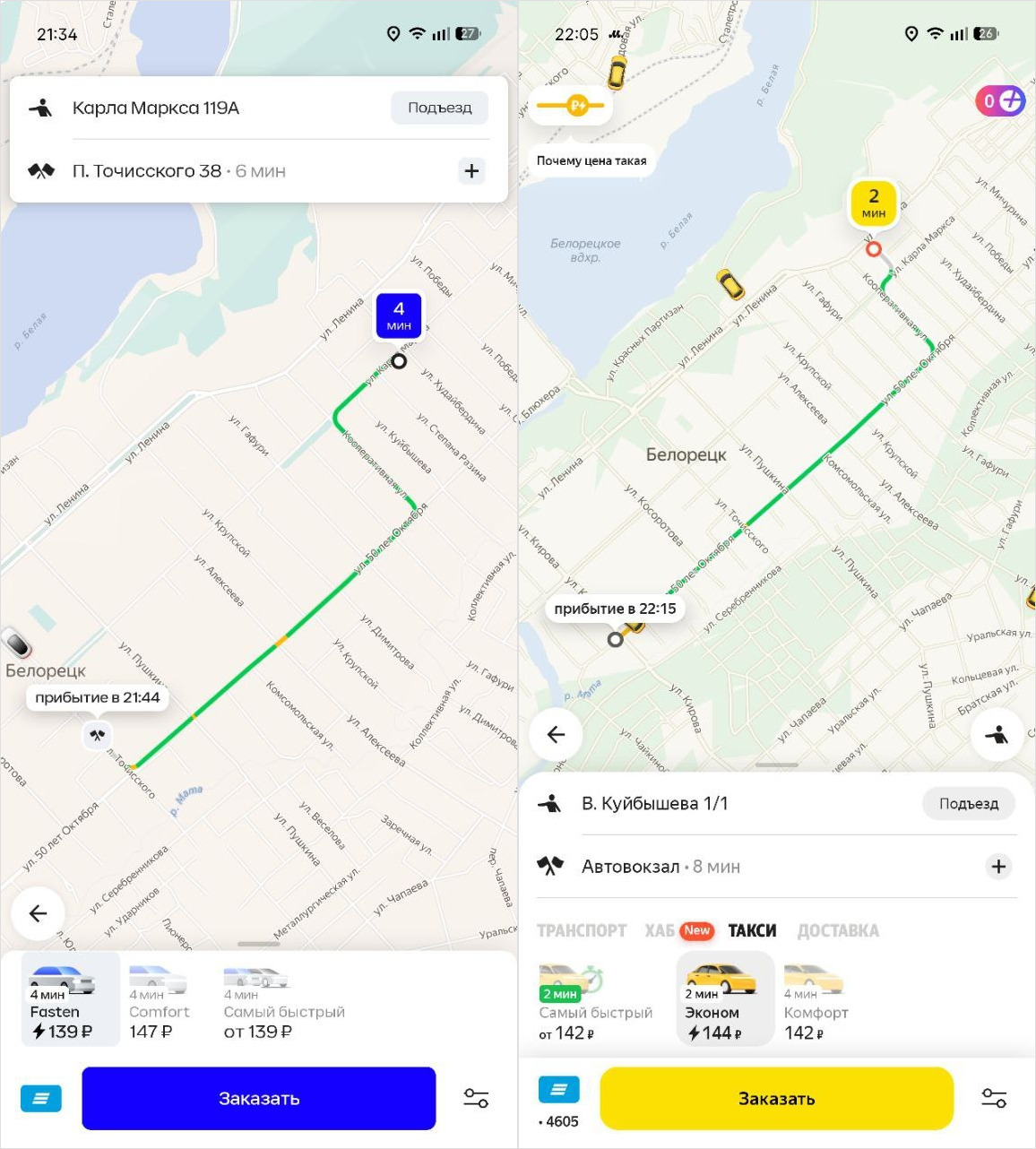
Do you see a difference in price? Neither do we
The second point is the cost of rides in Fasten. In Moscow, the price starts at approximately 170 rubles: this includes the first 3 minutes and 1 km. After that, it’s standard billing at 11.7 rubles/km based on time and distance. Prices are formed dynamically, depending on demand and the number of available drivers — just like before.
The order distribution algorithms remain the same. Requests go to the same drivers who work in Yandex Taxi. This means it’s not a new fleet of cars, but the same existing infrastructure. And the same familiar faces. Personally, I noticed no difference at all in smaller cities: rides were about 100 rubles around town before, and they remain the same.
Is Fasten from Yandex Taxi Actually Uber?
Looking at the facts, Fasten is the same Uber Russia that many people had forgotten about. The app is distributed with the identifier ru.yandex.uber, and orders are routed through the same infrastructure and the same drivers as Yandex Taxi. Moreover, in launch materials for Fasten, it’s placed alongside Yandex’s existing apps — Yandex Go, Uber, and Vezet. And the App Store icon kind of hints at it too.
Fasten is simply a rebranded Uber Russia
In terms of how it works, algorithms, and dynamic pricing, nothing has changed — what differs is primarily the storefront: a separate app, a simplified interface, and new positioning. This is not the return of global Uber, but a rebrand within the existing system.
Who Benefits from the New Fasten Service
Who is Fasten for? First and foremost, it’s convenient and simple for passengers. If you use the app exclusively for taxi rides and don’t want to navigate a large number of features, a dedicated service is genuinely simpler. It’s also clearly suited for older people who find it hard to figure out smartphones.
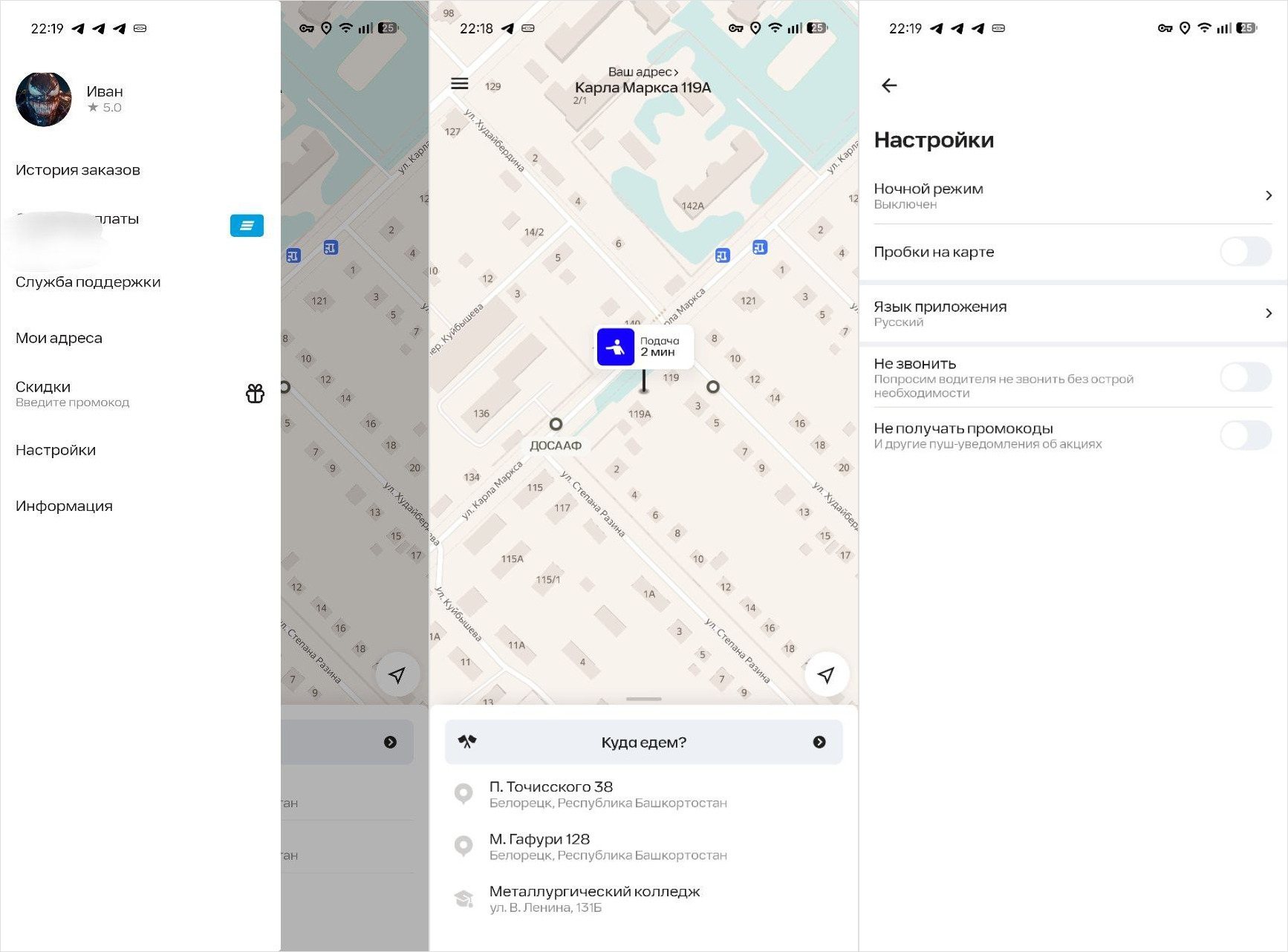
Fasten has no ads and no notifications from Yandex Market
For drivers, there are no significant changes — orders are distributed through the existing system, and requirements for vehicles and ratings remain the same. However, a separate Yandex Taxi app might be confusing: these are two services with similar functions and no obvious differences.
Is the Fasten Taxi Service Worth Using
Fasten doesn’t change the fundamental principles of the taxi market. High demand for rides during rush hours isn’t going anywhere. In remote cities, car availability will depend on the number of active drivers. Essentially, this isn’t something new — it’s pure marketing. In essence, they’ve given us back a healthy version of Yandex Taxi — without ads and intrusive notifications about products from Yandex Market.
In the end, it all comes down to a simple question: do you need a separate interface just for rides? If yes, Fasten looks like a logical option. If you’re already used to Yandex Go, there are no compelling reasons to switch. In both cases, you spend roughly the same amount.