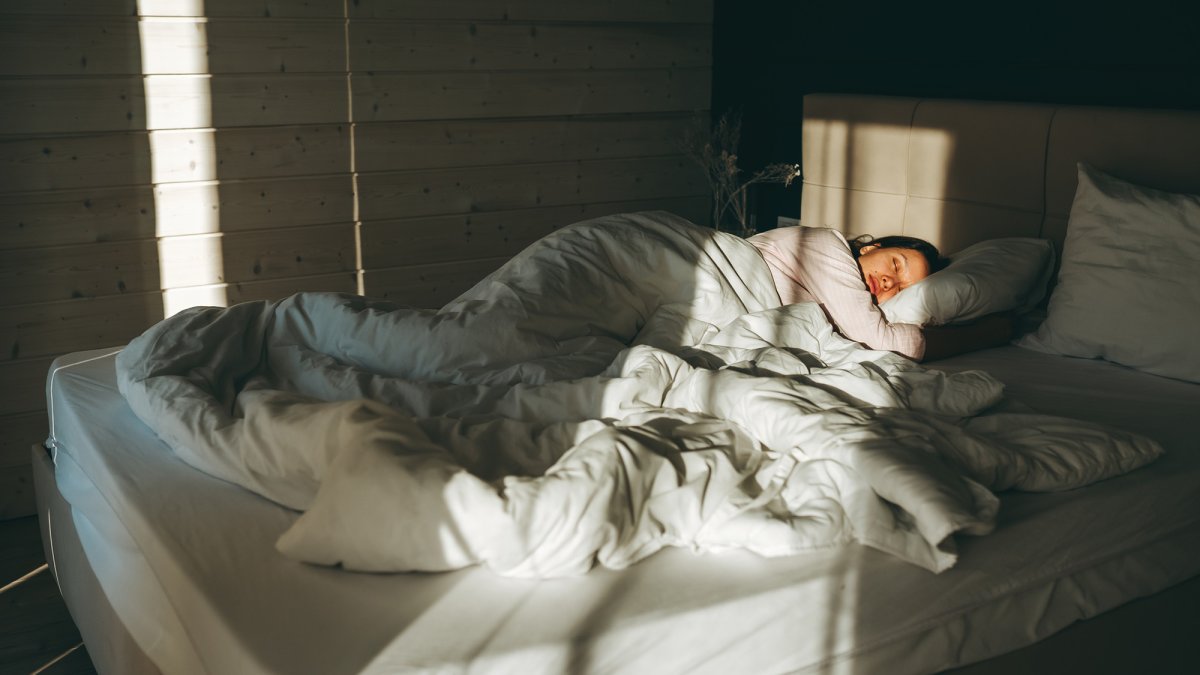
Side sleeping is one of the most common and physiologically sound positions
It turns out that the perfect sleeping position doesn’t exist. It can vary and depends on your health — from breathing to circulation and brain function. Dr. John Saito, a representative of the American Academy of Sleep Medicine, explained why there is no single answer, but there is a set of principles that can help you choose the optimal sleeping position specifically for you.
Pros and Cons of Sleeping on Your Back
You might think science should have long since given a clear answer: sleep on your back or on your side, and you’ll be healthy. But according to Dr. Saito in a conversation with Popular Science, it all depends on the context. For example, sleeping on your back with a good supportive pillow that keeps your neck and spine in a neutral position allows the airways to remain clear, and that’s an excellent option.
However, if you have sleep apnea — a condition in which the throat muscles relax excessively and block the upper airways — sleeping on your back can be dangerous. As Saito explains, the tongue can fall toward the back of the throat and block breathing. Instead of deep sleep, you get interrupted breathing and constant micro-awakenings.
For infants, the recommendations are completely different: pediatricians advise placing babies on their backs to reduce the risk of sudden infant death syndrome (SIDS).
Benefits of Sleeping on Your Right Side
Dr. Saito notes that lying on your right side can improve blood flow and reduce pressure on the heart. The reason is anatomical: the heart is located inside the mediastinum — a flexible space between the lungs that holds the heart in place. When you lie on your right side, the heart ends up slightly elevated, which eases its workload and venous blood return.
But if you switch to the left side, another advantage appears — perhaps an even more unexpected one.
Benefits of Sleeping on Your Left Side
Sleeping on your left side may be better for the glymphatic system — a specialized brain waste-clearance network. It’s essentially the brain’s “sewage system”: during sleep, cerebrospinal fluid flushes through brain tissue and carries away harmful metabolic waste, including proteins linked to Alzheimer’s disease.
A 2015 study confirmed that in rodents, glymphatic transport was most efficient in the lateral position compared to lying on the back or stomach. Scientists used MRI to track how posture affects the removal of amyloid-beta from the brain. However, it’s important to note that these findings were obtained in animals, and researchers caution that the results still need to be verified in humans.
Nevertheless, the fact that the side-lying position is the most popular among humans and most mammals suggests to scientists that this posture may have been reinforced through evolution specifically for more efficient brain toxin clearance.
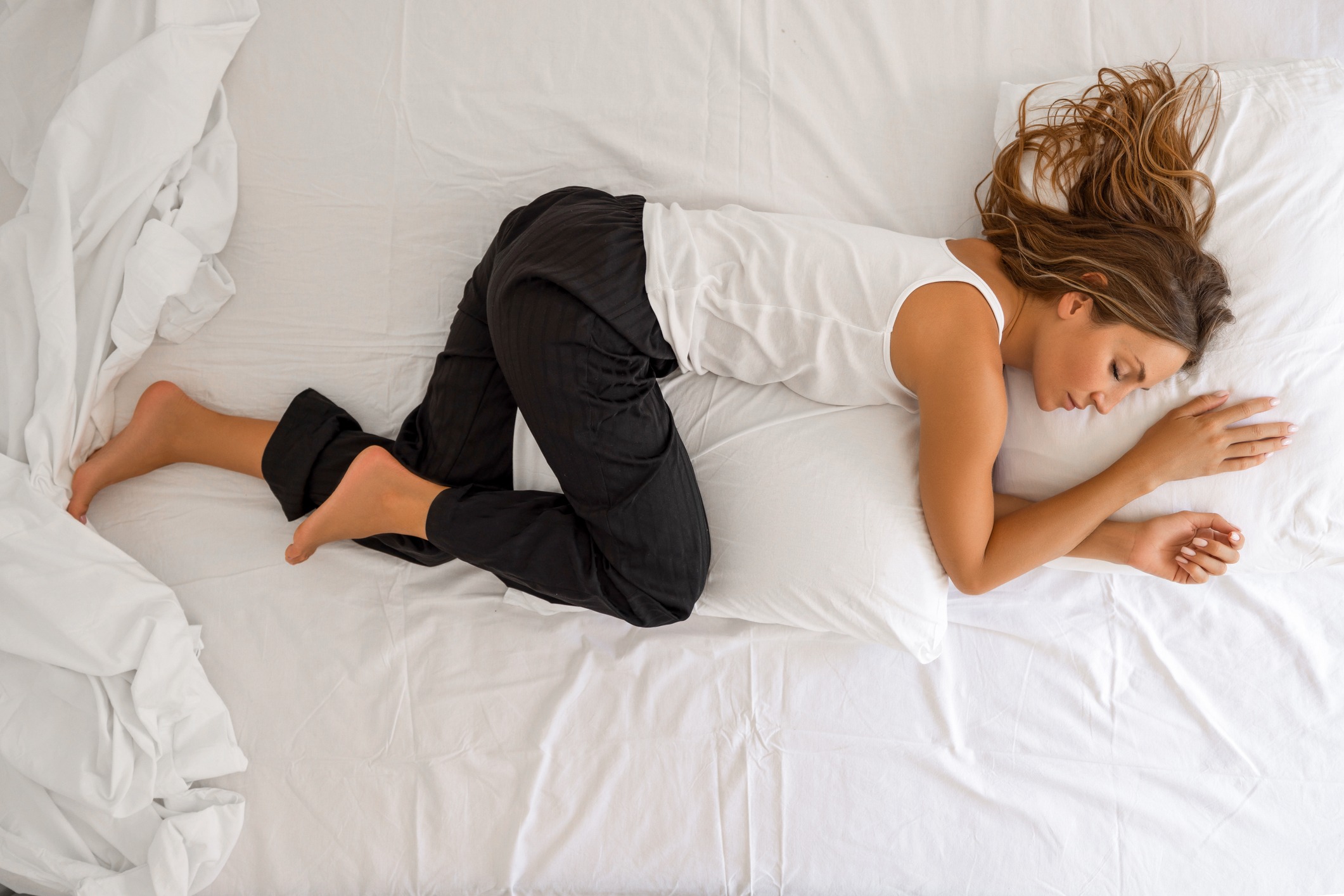
It seems that sleeping on your side is beneficial for health in any case
How to Sleep with Lower Back Pain
There is a fundamental difference between the “curled up” position and a stretched-out side-lying position. If you sleep on your side with a relatively straight body, it helps align your spine. Moderate leg bending in a position resembling the “fetal” pose works well for relieving lower back pain.
But if you curl up too tightly, pressing your knees to your chest like a baby, you can compress the diaphragm and chest, making breathing difficult. As with many things, balance is key here.
Dr. Saito gives a telling example: ask a person with back pain to lie on their back — and they’ll curse you. Even if their airways are perfectly open in that position, their bones and joints will ache unbearably. That’s why there are no universal prescriptions here.
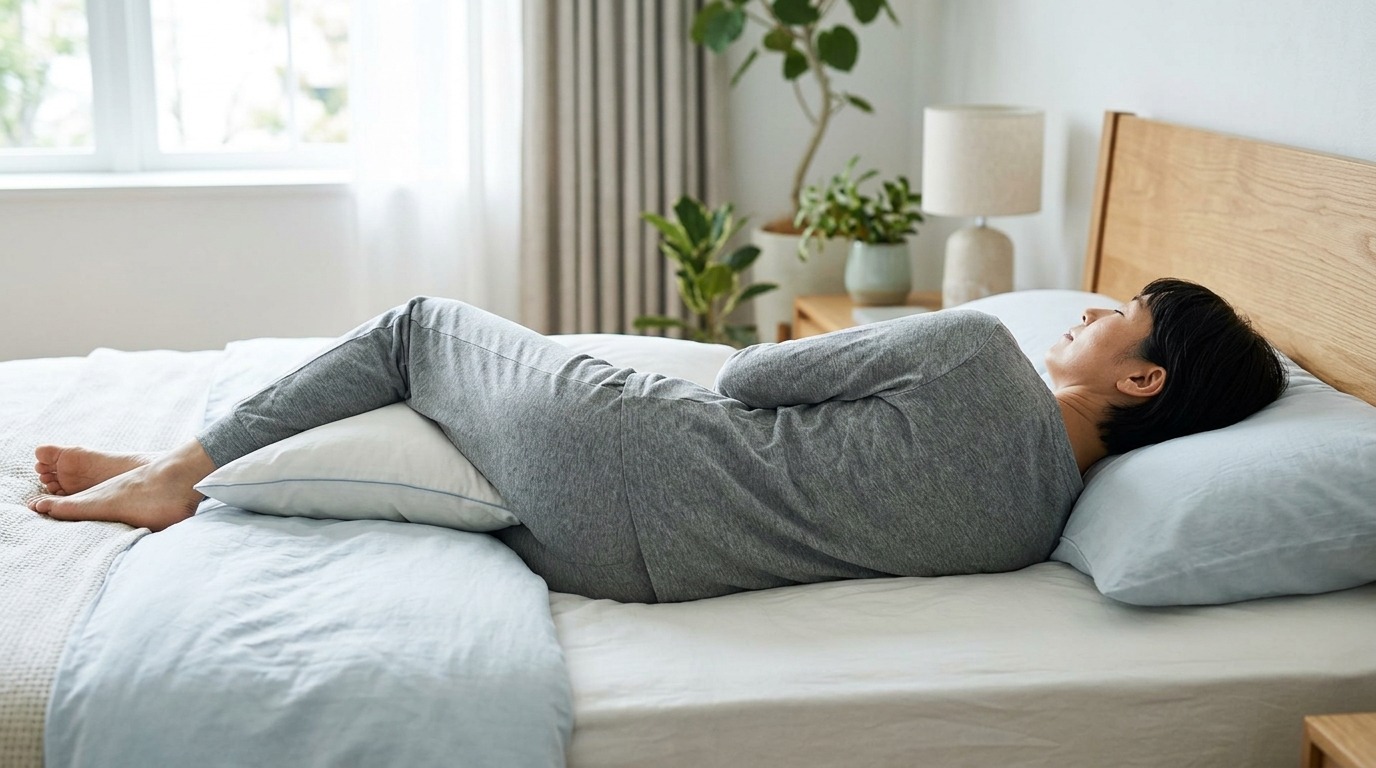
A pillow between the knees helps align the spine when sleeping on your side
How to Choose the Best Sleeping Position
Instead of chasing one “perfect” position, Saito suggests following the ABC principle from respiratory therapy:
- A (Airway) — airways: they should be clear
- B (Breathing) — breathing: it should be easy and unobstructed
- C (Circulation) — circulation: blood should flow freely
If you have allergies and a stuffy nose, or you suffer from apnea, the main goal is to find a position where the airways are as open as possible. If your back hurts, the priority becomes a position that’s gentle on the spine. If you have heart problems, it’s worth considering the effect of your posture on blood flow.
How to Improve Sleep Quality
It’s important to note the difference between normal movement during sleep and restless tossing. Nobody sleeps motionless all night. You fall asleep in one position and change your posture several times throughout the night — that’s completely normal. But if you’re moving too much and can’t find a comfortable position, that’s a signal that something is wrong.
Here are some specific recommendations that can help make your sleep higher quality:
- If you sleep on your side — place a pillow between your knees to align your head, neck, and hips;
- If you sleep on your back — place a pillow under your knees to support your lower back;
- If you sleep on your stomach — a thin pillow under your hips will reduce the strain on your spine;
- Choose a mattress that supports the natural curve of your spine.
Proper body positioning isn’t just about comfort. A neutral posture can ease breathing and lead to deeper, more restorative sleep.
There Is No Universally Good Sleeping Position
The doctor’s main conclusion sounds honest and pragmatic:
There is no single best sleeping position that suits everyone.
The optimal position depends on many factors — pregnancy, back pain, apnea, snoring, heart problems, and even how well your brain functions during sleep.
The ultimate goal is to find a comfortable, relaxed position that allows you to sleep well. And in the end, the position that truly feels comfortable for you will be the best one — simply because it will give you proper rest, and therefore support your overall health.
But knowing exactly how each position affects breathing, circulation, and the brain’s toxin-clearance process helps you make a more informed decision. Especially if you’ve long felt that you wake up exhausted in the morning and can’t find a comfortable position at night — perhaps it’s worth starting with something simple: repositioning your pillow.