
Diagram of the digestive system: gravity helps food move downward
Eating standing over the sink, snacking at the counter, or having lunch on the go — for many, this has long become the norm. But gastroenterologists warn: the problem isn’t so much the position itself, but the fact that when standing, we almost always eat fast. And rushing at mealtime triggers a whole chain of unpleasant consequences — from bloating to unnoticed overeating that stretches the stomach.
How Body Position Affects Digestion: Standing, Sitting, or Lying Down
When it comes to habits for healthy digestion, specialists emphasize: the key is to work with gravity, not against it. As long as you’re in an upright position — sitting or standing — gastric juices and food move downward, just as nature intended. Overall, an upright body position during meals is better for digestion because gravity helps push food from the stomach into the intestines. And that’s only part of the process: much of digestion is triggered even at the moment when we feel hunger.
But the worst thing you can do is lie down right after eating or eat while lying down. As practicing clinical gastroenterologist with advanced training in nutritional science Carolyn Newberry explains, stomach acid produced for digesting food can splash back into the esophagus if you’re not using gravity to your advantage. This is exactly how heartburn occurs.
Normally, food stays in the stomach for anywhere from half an hour to two or three hours before moving into the duodenum for further enzymatic processing. That’s why doctors don’t recommend lying down for two to three hours after a meal — the stomach needs time to do its job.
Why We Overeat and Eat Faster When Standing
If the standing position itself isn’t that dangerous for the stomach, then why do doctors still caution against it? The answer is simple: when standing, we almost always eat on the run, and rushing is the main enemy of digestion.
Eating while standing is closely linked to a faster pace of eating. And quickly devouring a meal triggers several unpleasant processes at once. The faster you eat, the more air you swallow, leading to excess gas in the stomach. Rapid chewing and insufficient mastication also cause cramps and abdominal discomfort because the stomach needs more time to break down large pieces.
Dr. Newberry emphasizes that the digestive process begins in the mouth — with salivary enzymes that initiate the breakdown of macronutrients. If you swallow without barely chewing, you’re essentially transferring the mouth’s job to the stomach, which isn’t always prepared for that workload.

Snacking while standing at the kitchen counter — a familiar scene for many
If you don’t chew your food properly, the digestive organs experience increased strain, and fewer nutrients are absorbed. In other words, you not only risk bloating but also miss out on the benefits of what you’ve eaten.
Why You Shouldn’t Lie Down After Eating: Heartburn and Reflux
If eating while standing is more about rushing, then eating while lying down and late-night snacks are about real physiological harm. The American College of Gastroenterology recommends not lying down for at least two hours after eating, and there are compelling reasons for this.
When you assume a horizontal position, stomach acid that is actively mixing food can easily splash back into the esophagus. This causes heartburn and a sour taste in the mouth — symptoms of gastroesophageal reflux disease (GERD). GERD slightly increases the risk of developing more serious conditions, including Barrett’s esophagus and esophageal cancer.
A separate topic is the harm of eating at night. A late dinner or midnight snack means you’ll likely go to bed while your stomach is still full. Doctors advise not eating 3–4 hours before sleep so the digestive system has time to complete its main work. When you fall asleep with a full stomach, your body is busy digesting instead of recovering — and it does so less efficiently than during the day. This also affects sleep quality.

Late-night snacking while lying in front of the TV — one of the worst habits for digestion
A curious detail: ancient Romans ate in a semi-reclined position and considered it a sign of luxury. In ancient Rome and Greece, eating while lying down was a privilege of the upper classes and symbolized wealth. Today we know that this is one of the worst positions for digestion.
How Long Does the Brain Need to Feel Full
There’s another reason why fast eating — standing, on the go, at a counter — leads to problems. It’s related not to the stomach but to the brain. On average, the body needs about 20 minutes to send the brain signals that you’ve eaten enough.
How does this work? When food enters the stomach and small intestine, satiety hormones are produced — cholecystokinin (CCK), peptide YY, and glucagon-like peptide-1 (GLP-1). At the same time, levels of ghrelin — the “hunger hormone” — decrease. But these substances travel through the blood, not through nerves, so they reach the brain with a noticeable delay.
The roughly 20-minute delay is explained by the fact that the body needs time to adjust the production of hunger-related hormones, and hormones transmit information to the brain more slowly than nerve impulses. Electrical signals from the GI tract travel along nerves to the brain almost instantly, while hormones travel through the bloodstream.
Simply put, if you wolfed down an entire lunch in 7 minutes, your brain hasn’t even started receiving the “enough” signal yet. The result — you eat more than you need and feel heaviness after you’ve already left the table. Dr. Newberry advises eating at a pace that allows you to feel satiety — and to stop in time.
How to Eat Properly When You’re Short on Time: Tips Instead of Eating on the Go
The reality is that not everyone has the opportunity to calmly sit down at a table for 20–30 minutes in the middle of the day. What should you do if lunch on the run isn’t a whim but the only option?
Gastroenterologist Carolyn Newberry offers a practical solution: if you’re forced to eat quickly, replace one full meal with several small high-protein snacks. Small portions are easier to digest, and protein provides a longer-lasting feeling of fullness.
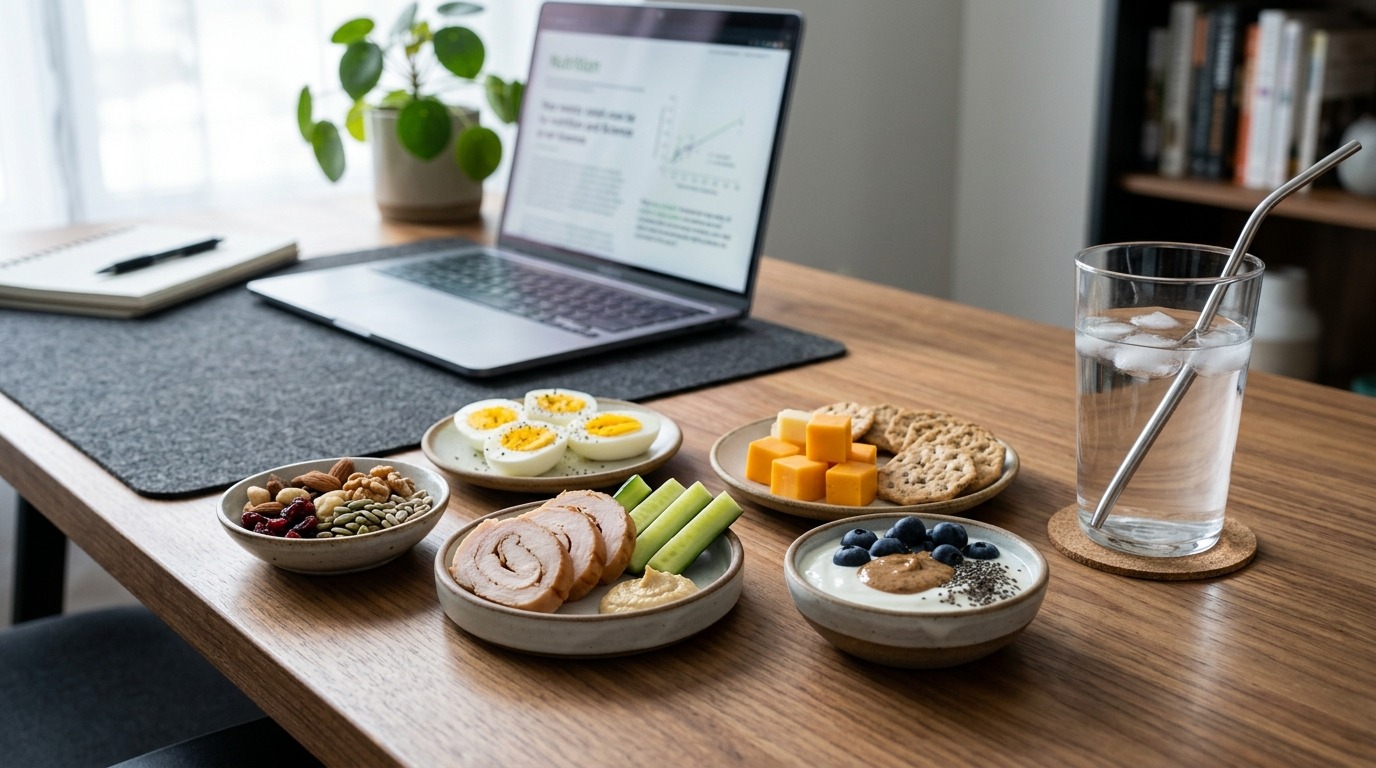
Small high-protein snacks — a good alternative to a heavy lunch on the go
In addition, specialists recommend several simple rules for those who frequently eat standing or on the go:
- Take small bites and chew each one thoroughly — this reduces the strain on your stomach
- Don’t lie down for at least two hours after eating to avoid heartburn
- Avoid heavy food before bed — fatty meat and rich dishes take up to 4–5 hours to digest
- Put your phone away during meals — distraction makes you eat faster and more
- If you experience bloating or discomfort after eating while standing, try sitting down more often — eating while seated is usually associated with longer meals and a sense of calm
Research shows that stress disrupts the functioning of the gastrointestinal tract. A calm environment and an unhurried pace of eating activate nervous system mechanisms that support normal digestion. So it’s not only about what you eat but also about how you eat it.
In summary: the standing position itself is not a death sentence. The difference between how you digest food while standing versus sitting is negligible, and eating habits play a much greater role in regulating digestion.