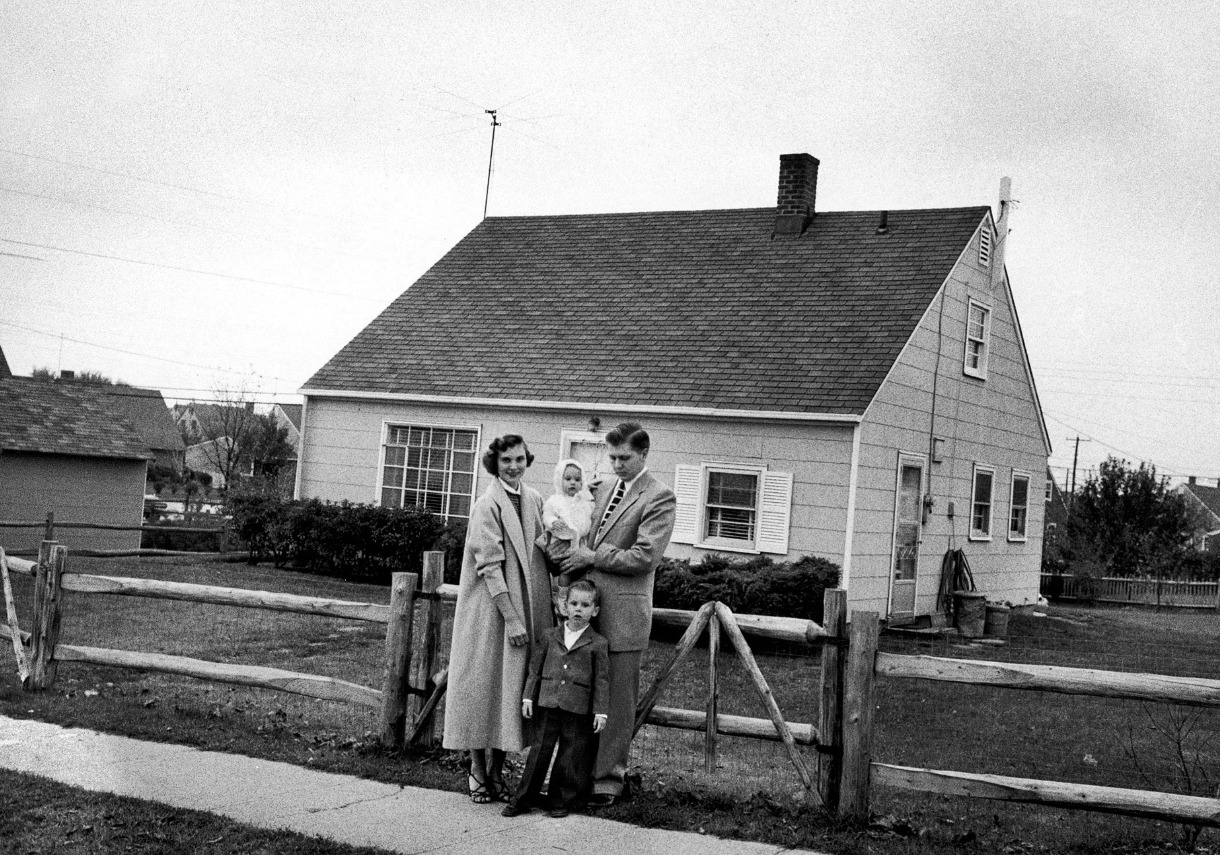
Standard housing in the USA didn’t look the way we imagine. Image source: businessinsider.com
Did you know that in the 1960s, the USA also built cheap standardized housing? Some buildings resembled our Stalinist-era apartments and Khrushchyovkas, but they didn’t last long. For example, in the city of St. Louis there was a neighborhood called Pruitt-Igoe, consisting of 11-story standardized buildings. But these dwellings were quickly demolished. So why didn’t Americans like their equivalents of our panel buildings?
The USA indeed had its own “Khrushchyovkas.” But while ours became a symbol of the long-awaited move out of communal apartments, in the States they were despised and ultimately wiped off the face of the earth.
Why the USA Built Standardized Housing
After World War II, America faced the same problem as the USSR — millions of people, primarily soldiers returning from the war, needed somewhere to live. In the USA, these were 3.5 million young veterans with families.
Unlike the USSR, the USA chose a fundamentally different path to solving this problem. Instead of multi-story “human anthills,” Americans bet on their main trump card — space. This is how the idea of affordable single-story suburbs was born.
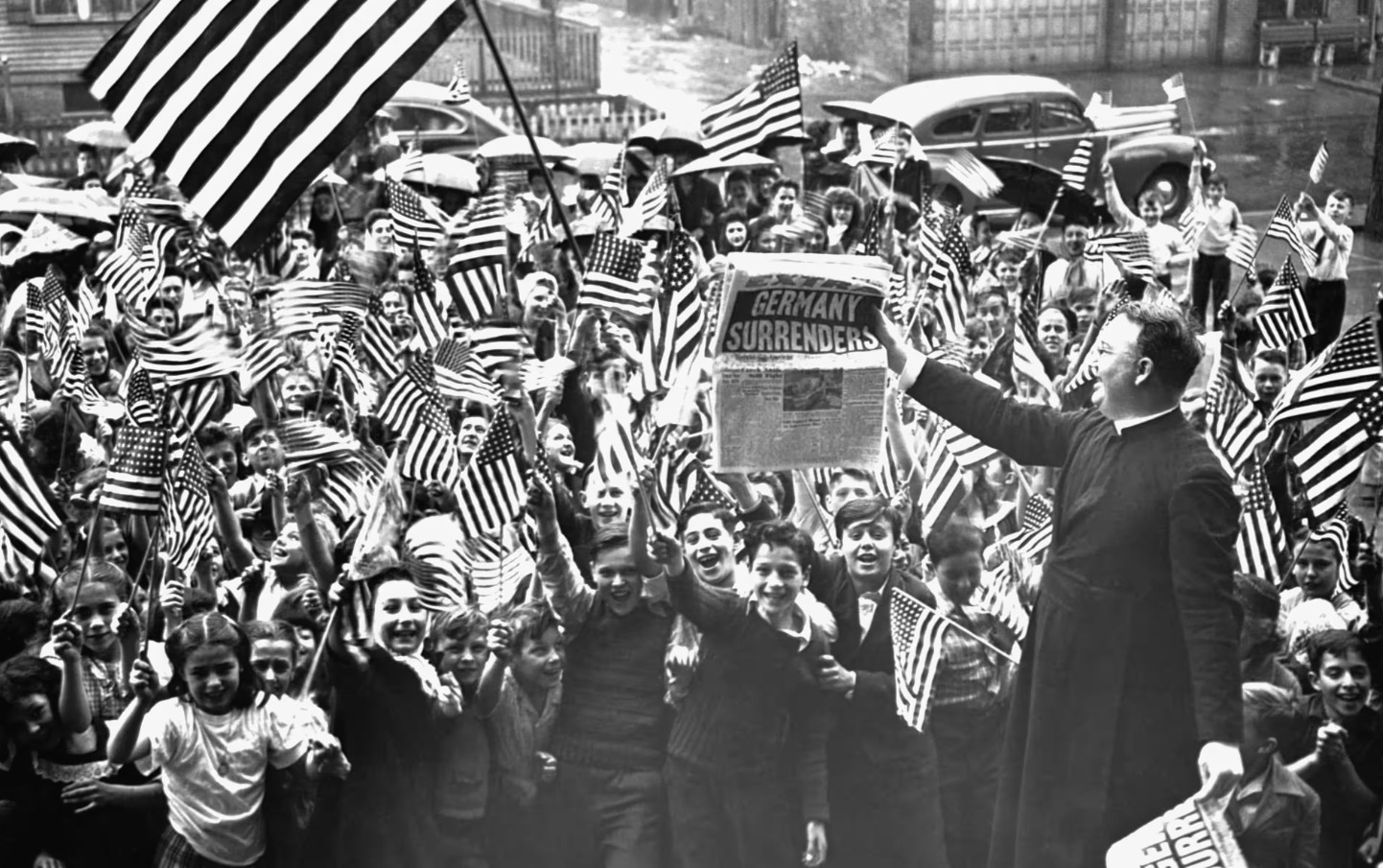
After World War II, millions of Americans with families needed housing. Image source: history.com
Levittown: America’s Equivalent of the Khrushchyovka
If you’re looking for a house in the USA that resembles a Khrushchyovka, you’re most likely imagining a high-rise. And you’d be wrong. The most mass-produced and successful equivalent is the so-called Levittowns.
According to Business Insider, in 1947, the company “Levitt & Sons” applied an assembly-line approach to construction. Crews of workers simply moved from lot to lot, assembling up to 32 absolutely identical houses per day!
What did they look like? These were small single-story homes for one family. Inside — two bedrooms, a living room, a kitchen, and a bathroom combined with the kitchen to save on plumbing.
Why does this resemble a Khrushchyovka? It’s the same idea: a standardized design, cheap and cheerful. Only instead of panels — a frame, and instead of a foundation — a slab.
What happened to them? Unlike our Khrushchyovkas, these houses still stand today. Of course, they’ve long been remodeled, re-sided, and had second stories added. But if you peek into the old neighborhoods of the suburbs of Philadelphia or New York, you’ll see those very “boxes” where the famous American dream began for millions of people.
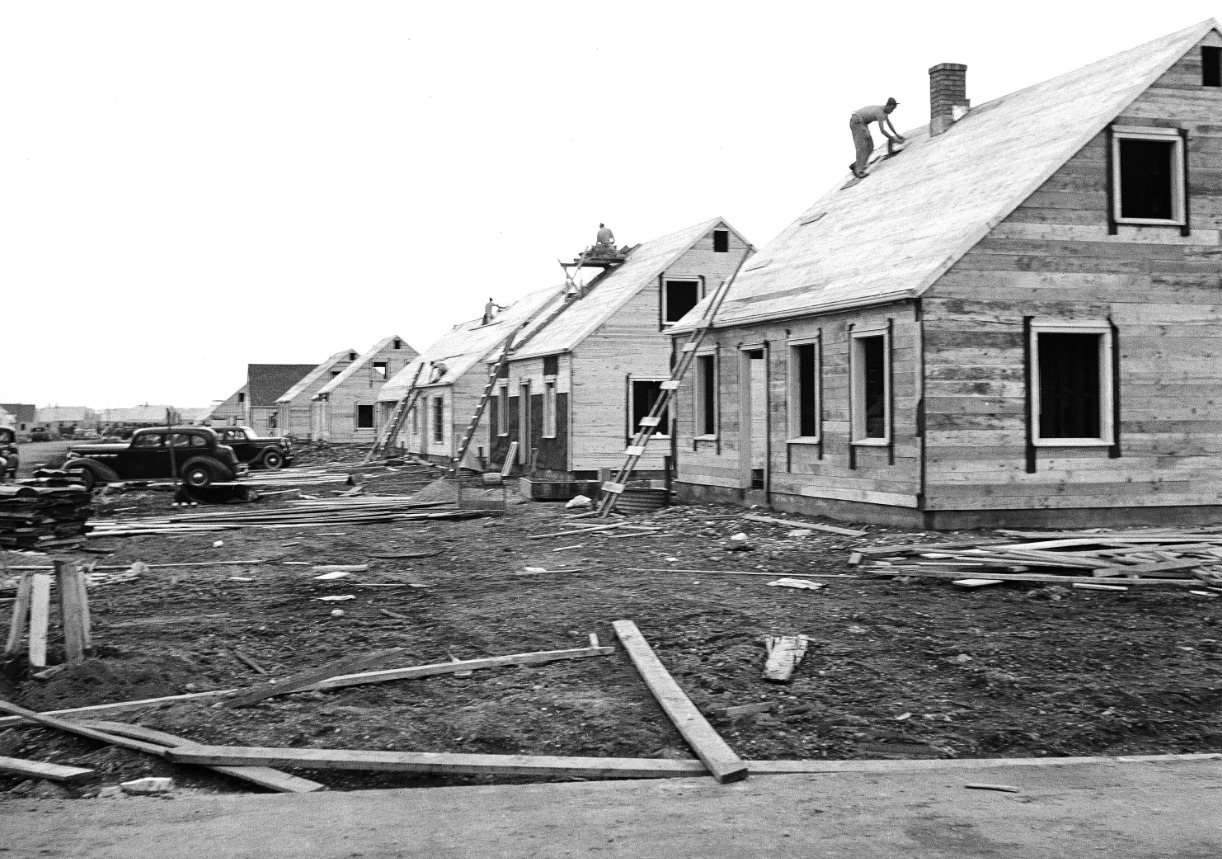
Construction of Levittowns in the USA. Image source: businessinsider.com
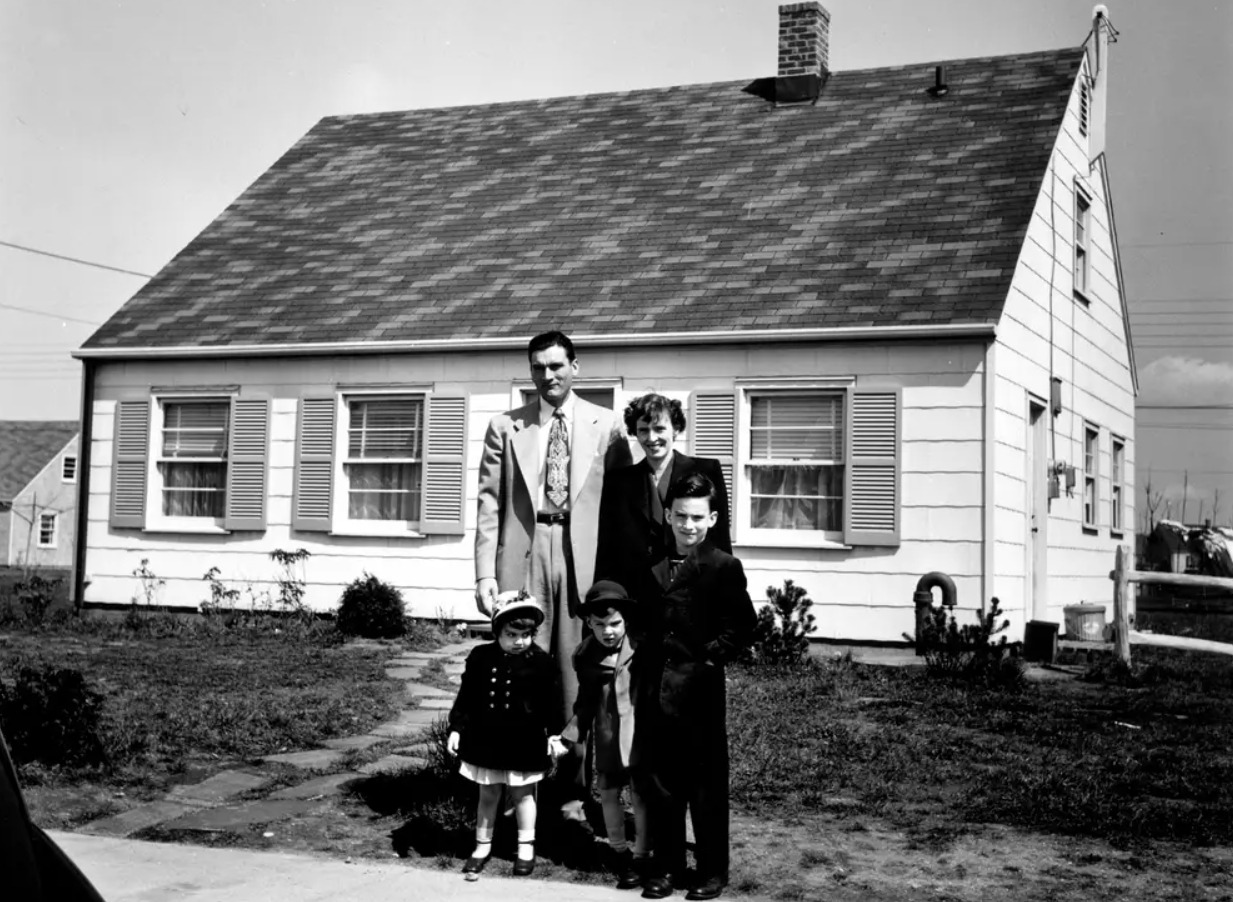
A family near their new Levittown home. Image source: businessinsider.com
The Pruitt-Igoe Housing Complex in the USA
But there was also an attempt in US history to build something visually indistinguishable from our high-rises. And this experiment failed spectacularly.
In 1956, the Pruitt-Igoe housing complex opened in St. Louis, Missouri. It was a city within a city: 33 eleven-story buildings, built according to a single standardized design, intended for 12,000 people. Sounds familiar, right? Just like our Khrushchyovkas, which were built from the top down.
The architect of this marvel was Minoru Yamasaki — the very same person who would later design the World Trade Center towers in New York. And his idea was beautiful: take the poor from the slums and resettle them in clean, modern apartments.
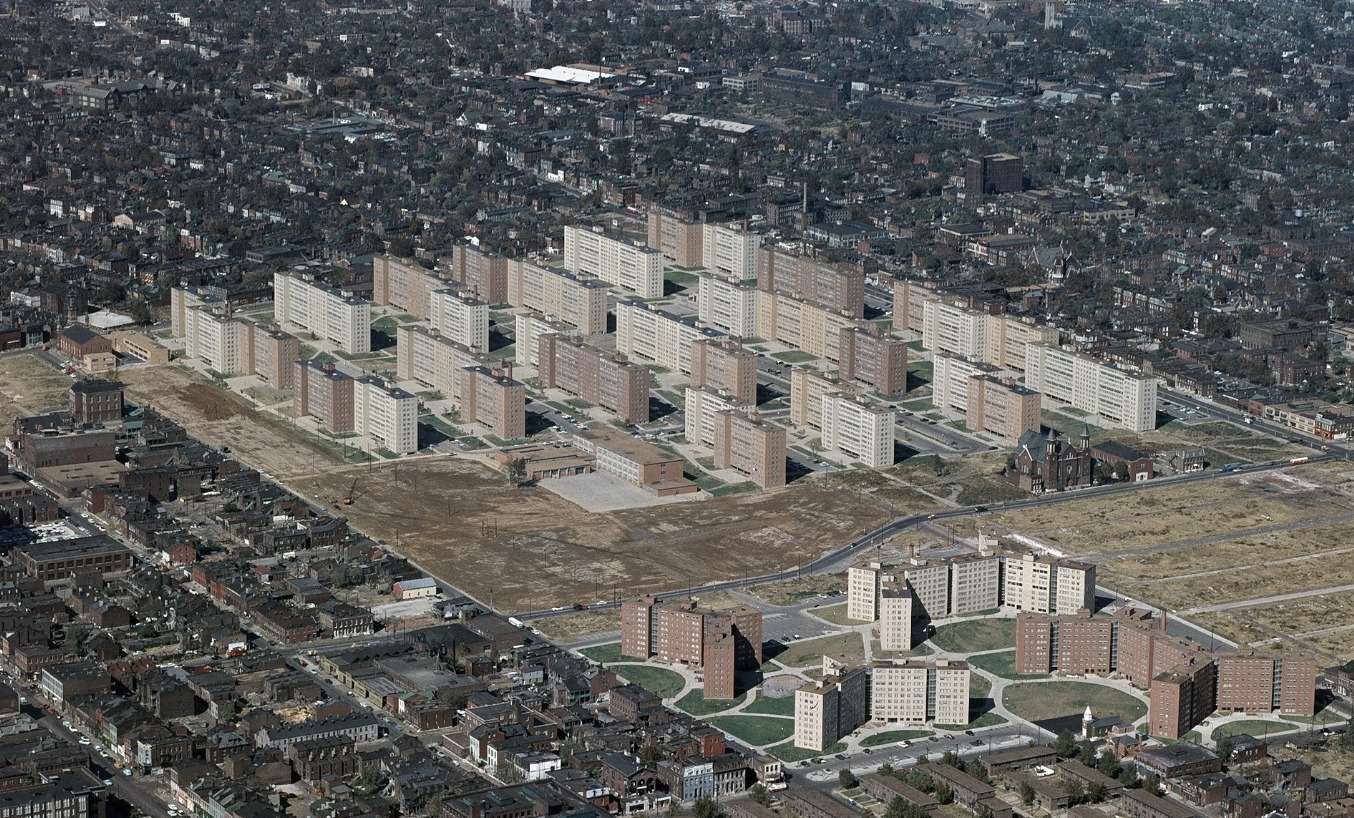
Aerial view of Pruitt-Igoe. Image source: wikipedia.org
Demolition of Pruitt-Igoe Buildings
The Pruitt-Igoe housing complex proved unviable for two reasons:
- Segregation. Initially, the buildings were divided into “white” and “black.” Then racial segregation was abolished, and the neighborhood began to be settled chaotically.
- Social explosion. Just a year after opening, the complex began turning into a nightmare. Residents simply didn’t know how to live in such buildings. Elevators were broken, stairwells were piled with garbage, windows were smashed. Janitors stopped cleaning, and police were afraid to enter the area.
As a result, by 1970, Pruitt-Igoe was declared a disaster zone, and in 1972, demolition began. This was the first case in the USA where social housing was demolished before its intended lifespan had expired. The famous demolition of the 33 buildings became a symbol of the collapse of the standardized high-rise housing concept in America.
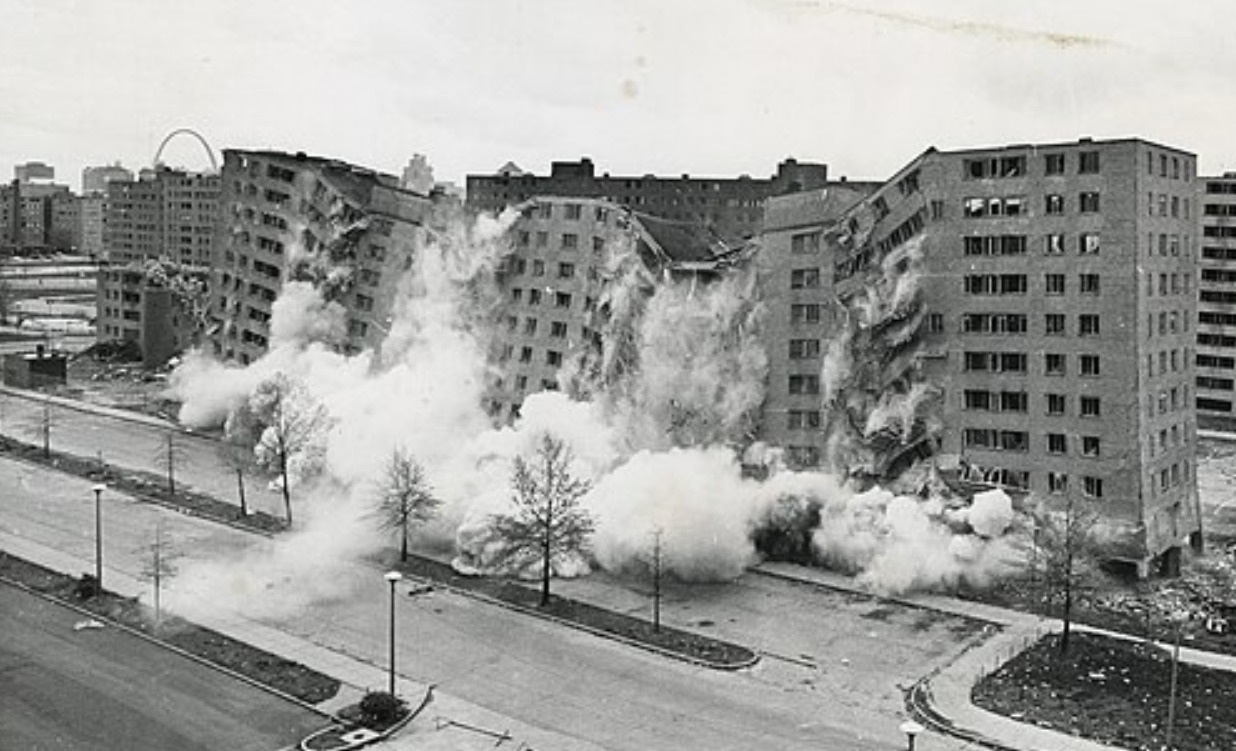
Demolition of one of the Pruitt-Igoe buildings. Image source: wikipedia.org
Why the USA Has No Panel Buildings
So why, when we ask “are there buildings in the USA similar to Khrushchyovkas,” do we mostly hear stories about demolished neighborhoods and barely surviving Levittowns?
First and foremost, such buildings didn’t take root because of mentality. An American, unlike a Soviet citizen, always wanted to own their own land, even a tiny patch of lawn. The idea of “my apartment is my castle” doesn’t work when you share a staircase with a bunch of unpredictable neighbors.
Secondly, Khrushchyovka-type buildings didn’t catch on due to the available space. In the USA, there was room to expand. It was easier to build a cheap house on an empty field than to stack people vertically.
The quality of homes also played a role. American standardized housing (like Levittown) was designed with growth in mind. People bought a basic box and gradually improved it. Our Khrushchyovkas were originally built as temporary housing meant to last 25 years — yet they still stand today.