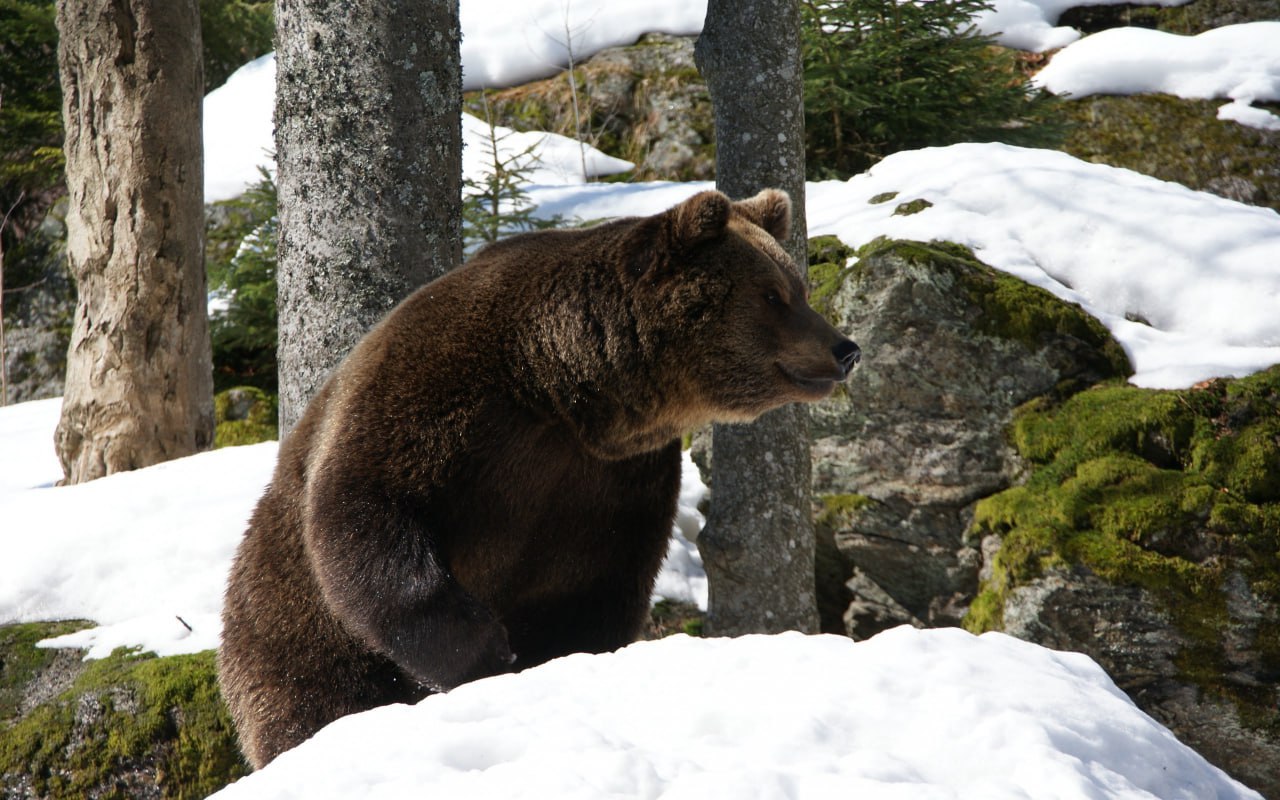
What a bear eats after leaving its den: the surprising spring diet of the forest’s most dangerous animal. Image source: amur.info
After winter hibernation, a bear wakes up not just hungry — its body is in a state of severe exhaustion. Over several months without food, the animal loses up to a third of its body weight, and its digestive system works slowly and cautiously. Therefore, right after leaving the den, the bear doesn’t rush for prey, as many people think. Its first meals are quite modest, but they are exactly what helps restore strength. Despite the exhaustion, bears after winter can be especially dangerous. And understanding what a bear eats in spring is important not only for biologists but also for the safety of people who live near forests or enjoy visiting them.
What a Bear Eats After Coming Out of Hibernation
After winter, a bear’s stomach is not ready for heavy food. During winter hibernation, a bear’s metabolism slows down significantly, and the intestines barely function. If the animal were to eat a lot of meat right away, its body simply might not be able to handle it.
That’s why in the first days, bears choose soft and easily digestible food:
- last year’s grass, leaves, and plant roots;
- young shoots;
- moss and lichens;
- insects and larvae;
- carrion remains, if easily accessible.
This diet helps to gradually restart digestion and restore strength without health risks.
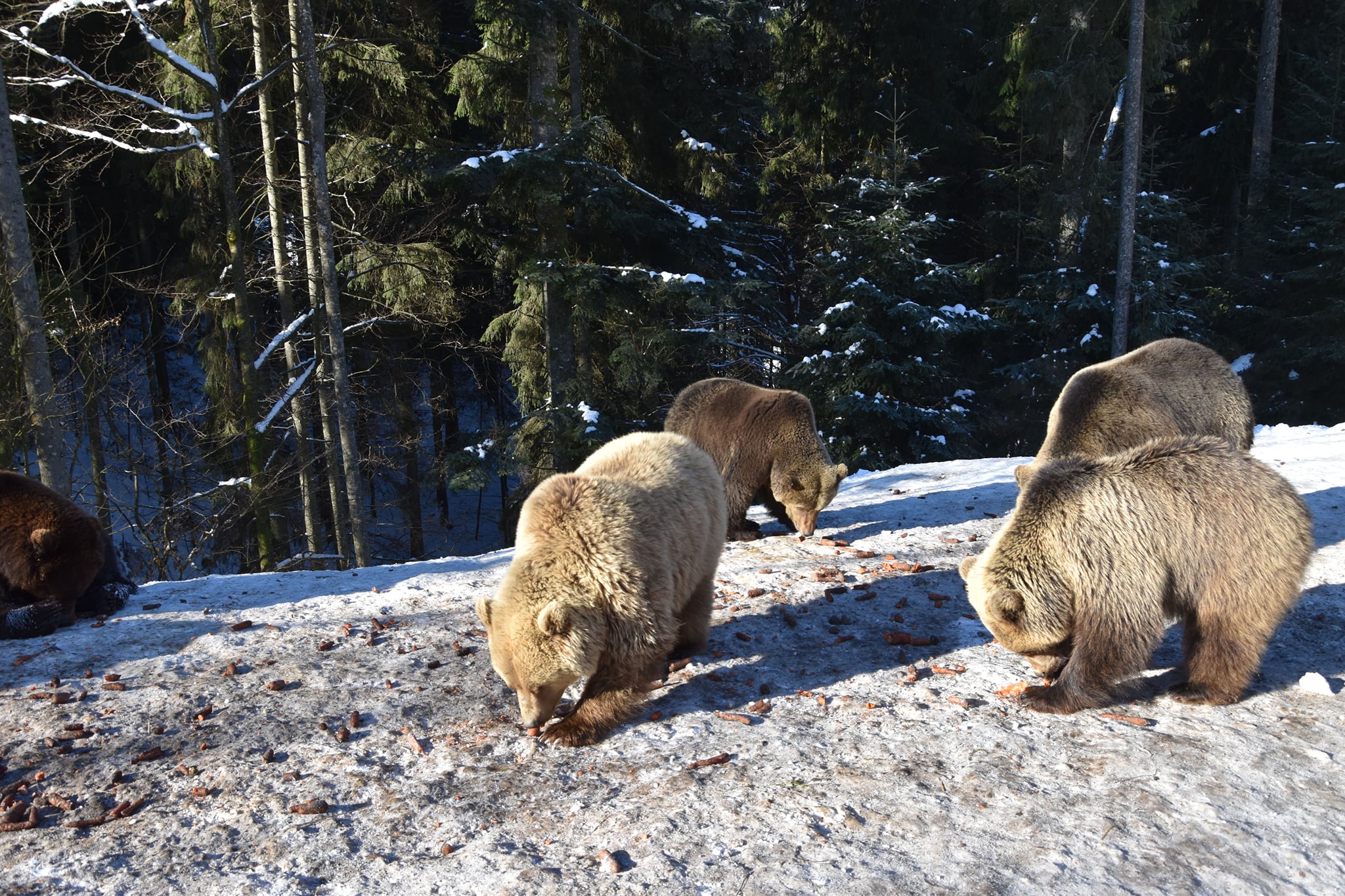
In early spring, bears often eat young vegetation, roots, insects, and carrion, and the spring diet generally depends on the region and food availability. Image source: telegra.ph
What a Bear Eats in Spring in the Forest After Leaving the Den
In spring, the diet depends on the region, but there are foods that bears almost always seek out. The most common items on the menu include:
- ants and their larvae — a source of protein;
- roots and tubers — provide energy;
- young grass — easy to digest;
- berries, if they survived from autumn;
- carcasses of dead animals.
In the first weeks after hibernation, bears feed intensively and search for food because their bodies need to quickly replenish the lost fat.
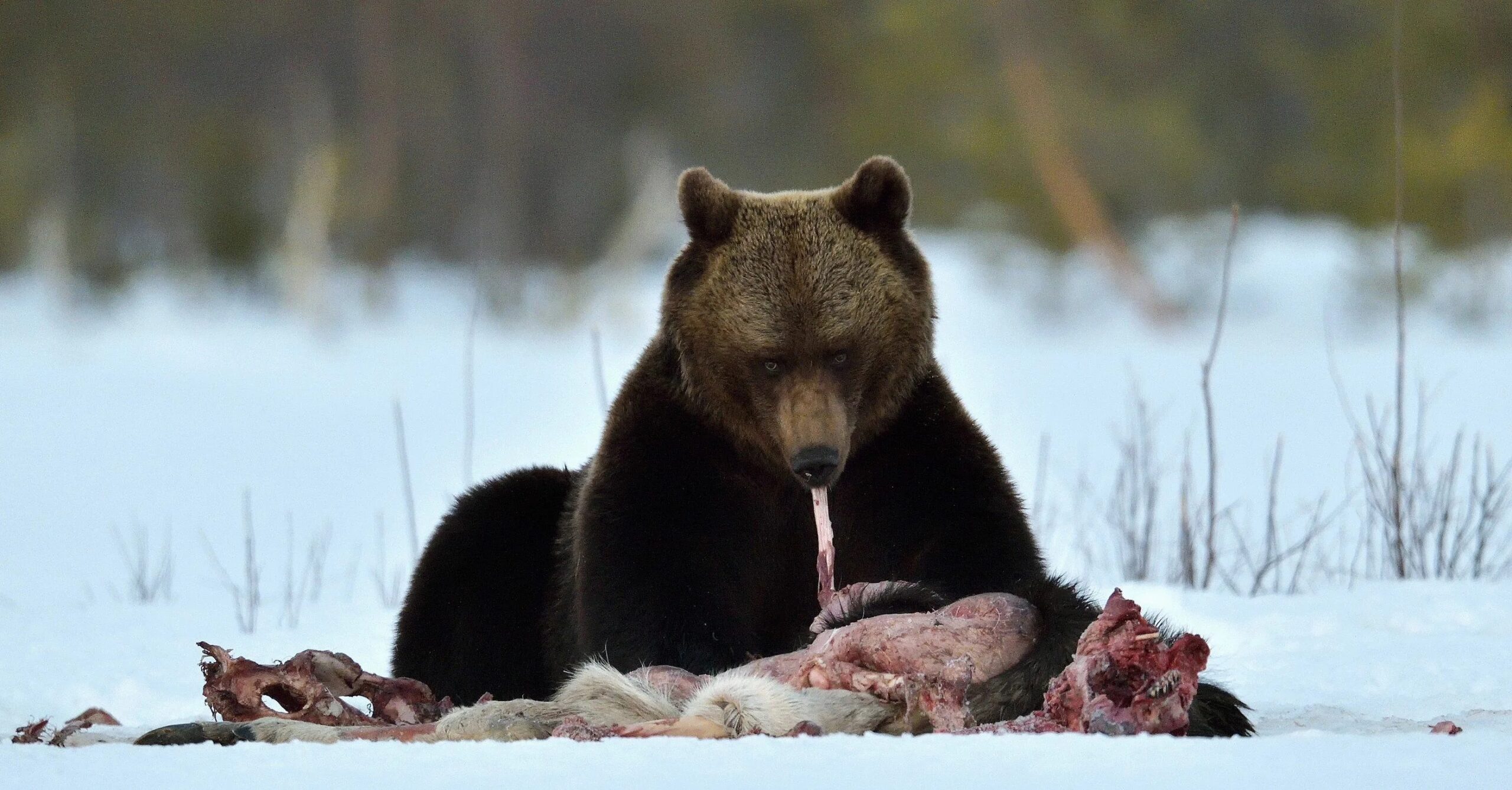
A bear leaves its den severely exhausted and begins actively searching for food to recover lost body mass. Image source: en.35photo.pro
Why Bears Approach Human Settlements After Hibernation
In spring, there is little calorie-rich food in the forest, so bears may search for food near homes, at landfills, or on rural properties. This doesn’t mean the animal has become aggressive — most often it is simply hungry and usually avoids conflict with humans.
To reduce the risk of an encounter:
- don’t leave food waste near your home;
- don’t store animal feed outdoors;
- avoid walks in the forest in early spring, especially alone;
- make noise while moving through the forest so the animal leaves in advance.
The first weeks after leaving the den are considered the most unpredictable period in bear behavior: they can be dangerous near carrion and more aggressively defend their feeding areas.
Understanding what a bear eats after hibernation helps explain its behavior. In spring, it is not a predatory hunter, as commonly believed, but rather a cautious forager trying to recover after a long winter. And the fewer reasons it finds near people (and people near it), the safer it will be for everyone.