Have you ever tried to photograph something far away — a sign on another building, a bird on a branch, a moment at a concert from the back rows — and ended up with a mess of pixels? It’s not something you’re doing wrong. It’s digital zoom, which simply enlarges and blurs the image. But today’s top smartphones have a different tool — and if you haven’t figured out why a periscope camera changes everything in mobile photography, now is the time.
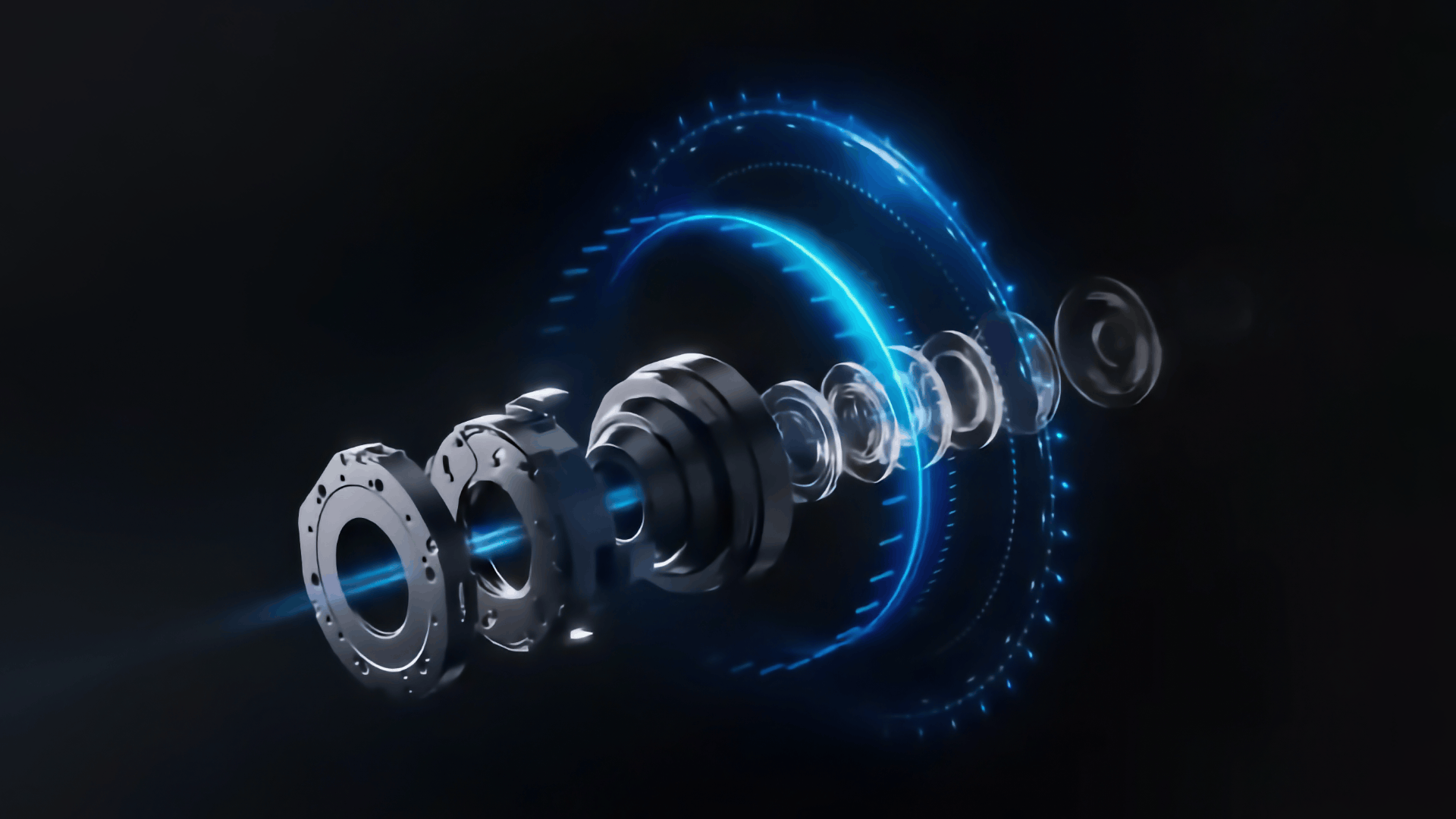
Zoom in a smartphone comes in different types — only two of them are optical. Image: mi.com
The periscope zoom technology was first shown in 2017 at the MWC exhibition in Barcelona. The pioneer was OPPO, which presented a concept with a periscope module. But the first to hit the market was the Huawei P30 Pro with 5× optical zoom. It was, of course, a shock for the market.
Then everyone caught up: Samsung, Xiaomi, Vivo. Apple, however, held back for a long time and only added a periscope in the iPhone 15 Pro Max — with 5× optical zoom. Before that, the maximum on iPhones was 3×. Now the periscope module is present in all iPhones in the Pro series.
What Is a Periscope Module in a Smartphone
A regular smartphone camera is simple in design: the lenses are positioned vertically, light passes through them and hits the sensor. Everything works as it should until you need strong zoom. The more powerful the magnification, the longer the optical system needs to be, which means a thicker body. In the case of dedicated cameras, this problem is solved with specialized optics. But in smartphones, adding zoom is difficult — even the protruding camera island on modern models doesn’t help.
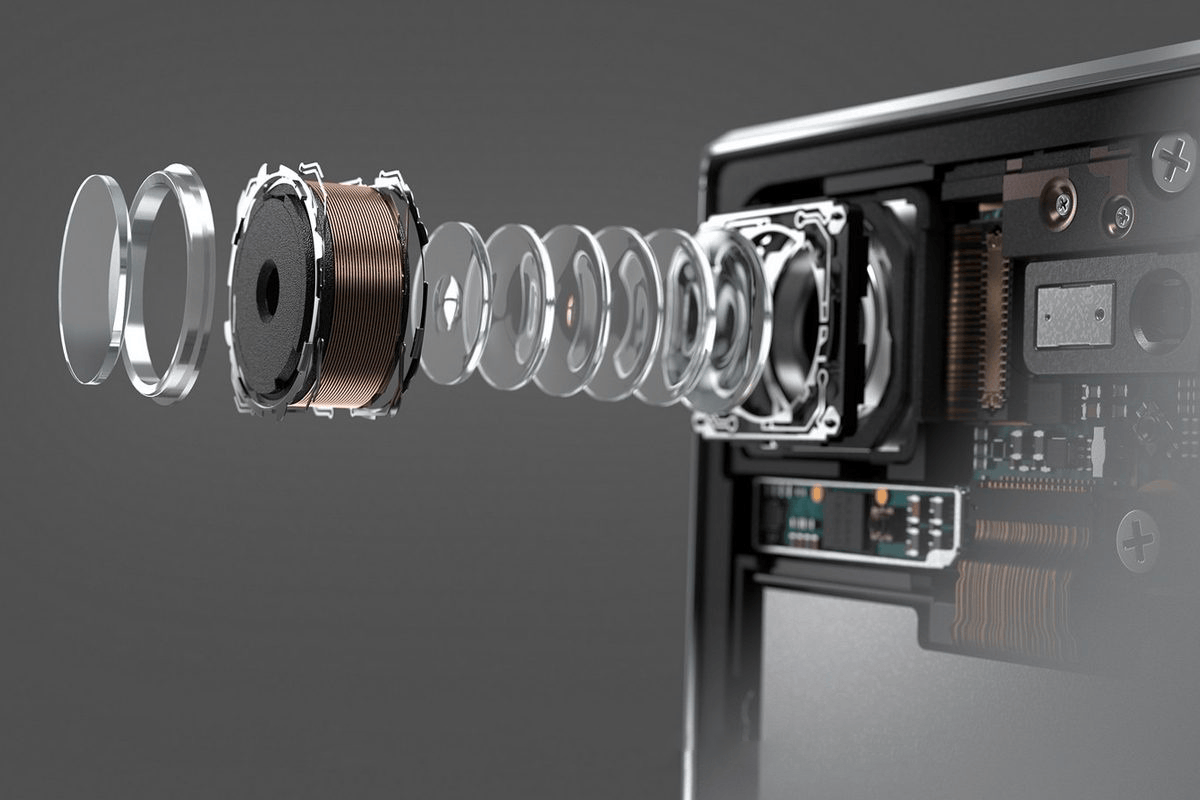
Classic zoom — all lenses are aligned on the same axis as the camera sensor. Image: realme.com
The periscope module solves this problem cleverly. Inside the body, a prism or mirror is placed at an angle of 45–90 degrees. Light enters through a rectangular “window” on the side of the camera block, reflects, and travels not inward but horizontally — along the phone’s body. Then it hits the sensor. The result is an L-shaped optical path hidden inside a thin smartphone.
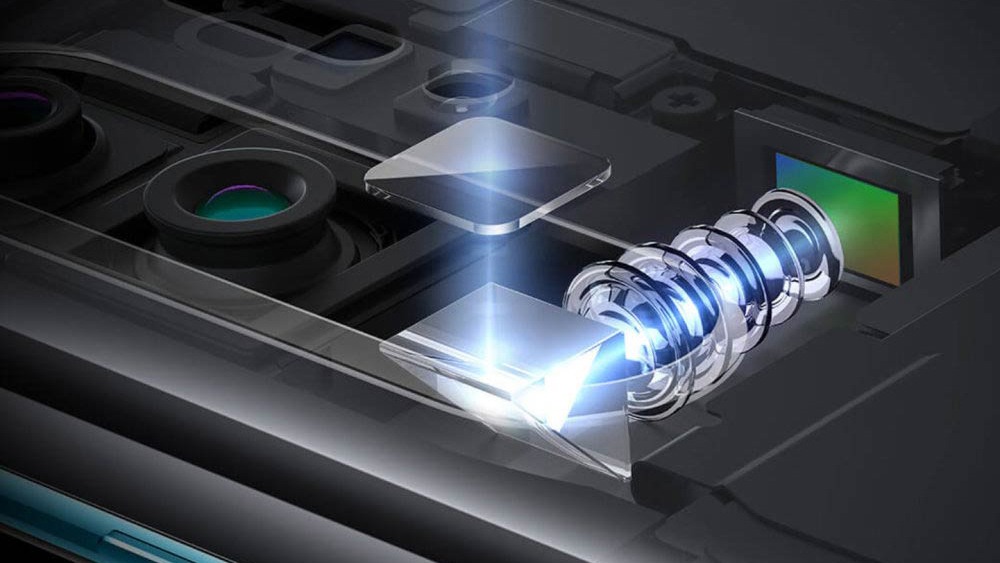
This is what a periscope module looks like in a smartphone. Image: digitalcameraworld.com
That’s exactly why a periscope camera looks different from the other lenses on the back panel: it’s not a round lens but a rectangle. You’re looking not at the lens itself but at the prism.
The Difference Between Digital and Optical Zoom
Digital zoom is just a crop. The phone takes a portion of the image and stretches it, as if you did it yourself on a computer in a photo editor. Quality drops proportionally to the magnification. At 10× — it’s already a blurry mess.
Optical zoom is physical magnification through lenses. The smartphone doesn’t crop the image but actually “sees” farther, like through binoculars. Quality remains high.
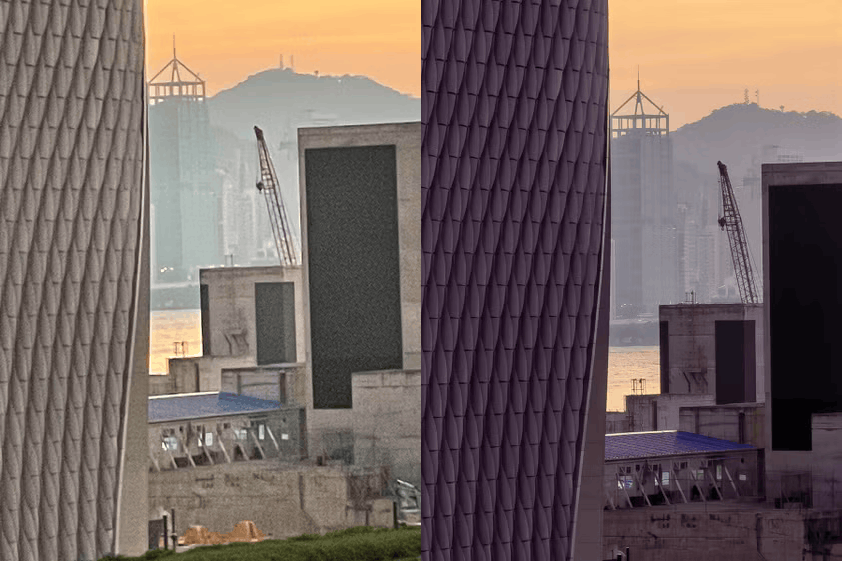
A clear difference between digital zoom (left) and optical zoom (right). Image: xda-developers.com
Without a periscope lens, smartphones can deliver a maximum of 2–3× optical zoom. With a periscope — 5×, 10×, and even more without loss of detail.
Why Samsung Removed the Periscope in the Galaxy S26 Ultra
Samsung has been building its flagships around a powerful zoom system for several generations now. For example, the Galaxy S25 Ultra has four rear cameras:
- 200 MP — main camera, with optical quality equivalent to 2×
- 50 MP — periscope telephoto lens with 5× optical zoom
- 10 MP — second telephoto lens at 3×
- 50 MP — ultra-wide camera
The periscope module here is responsible for long-range shots. But zoom beyond 5× is still digital, although thanks to the high-resolution sensor and AI algorithms, the results remain decent up to 10–20×. The maximum here is 100× via Space Zoom technology, but that’s more marketing and entertainment than a real photography tool.
In practice, 5–10× zoom in everyday shooting is genuinely useful. A bird in a tree, a bus number in the distance, a friend’s face through a crowd at an event — all of this can now be captured cleanly, with pleasant background blur like professional cameras.
And here comes an unexpected twist. International journalists at GSMArena, testing the Galaxy S26 Ultra, discovered that Samsung for the first time since 2020 removed the periscope module from its flagship. Instead, there’s now a regular telephoto lens where light hits the sensor directly, without a prism.
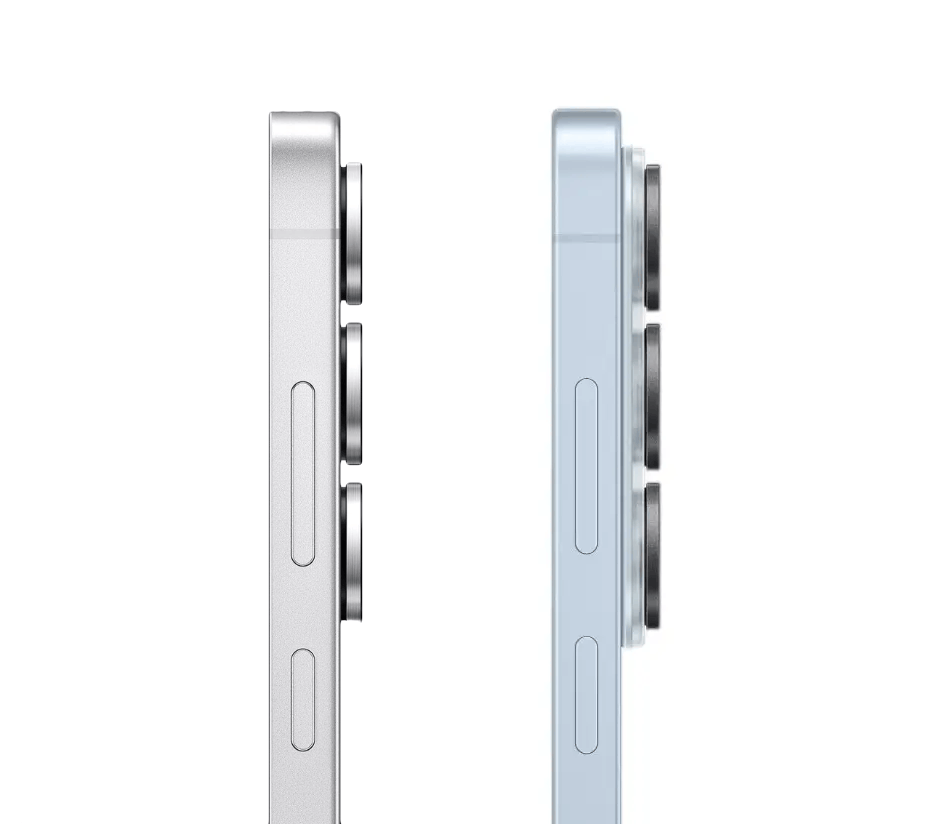
Without the periscope, the camera module protrudes more on the Galaxy S26 Ultra (right). Image: Samsung
What this means in practice:
- Downside — the minimum focusing distance doubled. In the S25 Ultra, the telephoto focused from 26 cm; in the S26 Ultra, it’s now from 52 cm. So capturing something close with this module is no longer possible.
- Upside — the optics became faster, now at f/2.9 instead of f/3.4 (+34% more light). Night and evening shots on the telephoto come out cleaner. The bokeh character also changed: light sources now produce round, beautiful circles instead of the angular rectangles typical of a periscope.
Early test results also suggest: the replacement turned out to be mixed — better in some ways, worse in others.
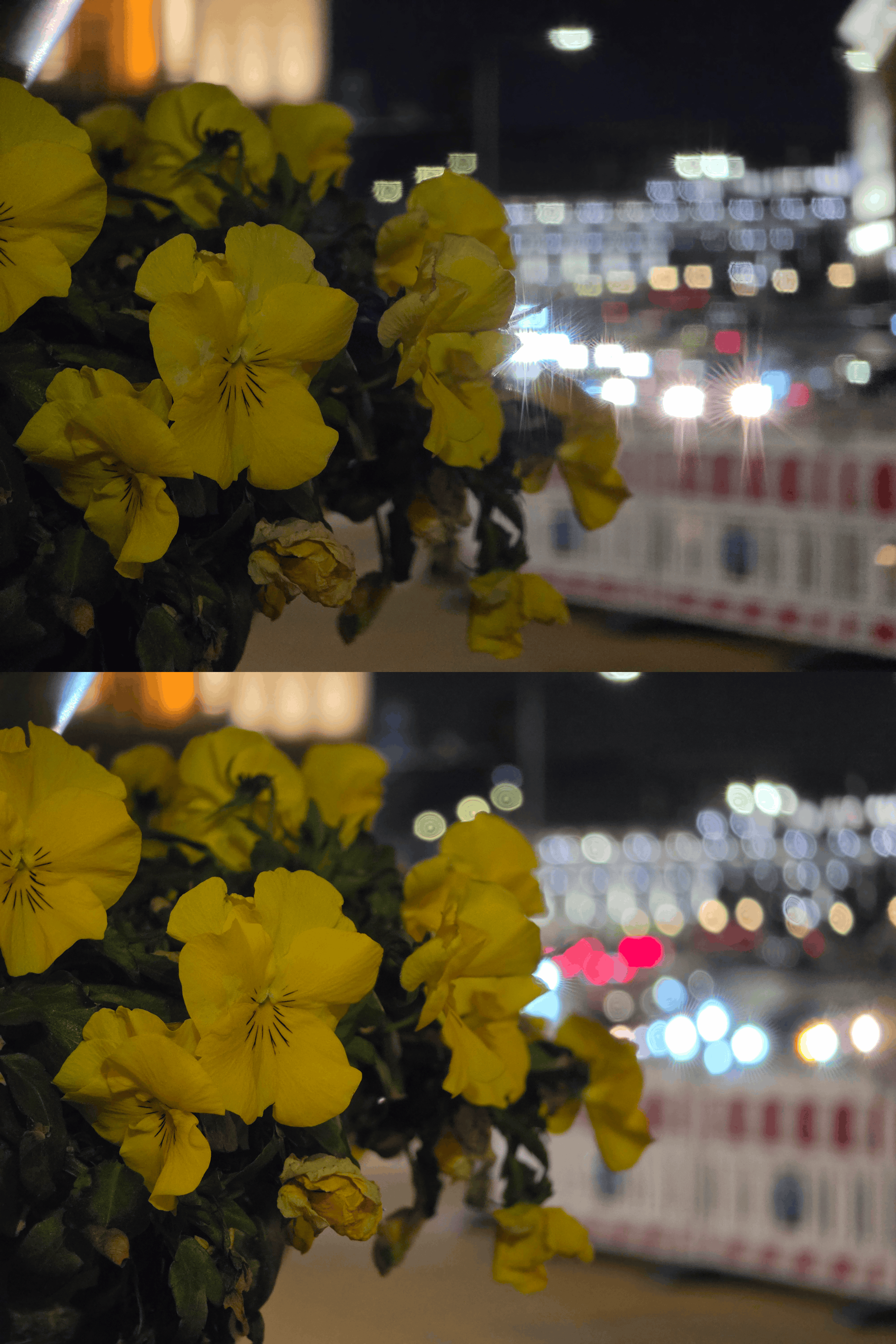
You can see the new camera has become faster and produces normal blur. Image: gsmarena.com
Samsung has not officially explained the reason for the change. Apparently, it was a deliberate choice in favor of faster aperture and better background blur quality — at the expense of the ability to shoot at close distances. This is surprising, as the periscope module has long been a hallmark of the Ultra series since the Galaxy S20 Ultra.
What Periscope Zoom Is For
Portraits. The long focal length of the periscope (equivalent to 110–120 mm on flagships) is ideal for portrait photography. The background is blurred optically, not through software. Facial proportions aren’t distorted like when shooting up close with a wide-angle lens. The difference is immediately noticeable.
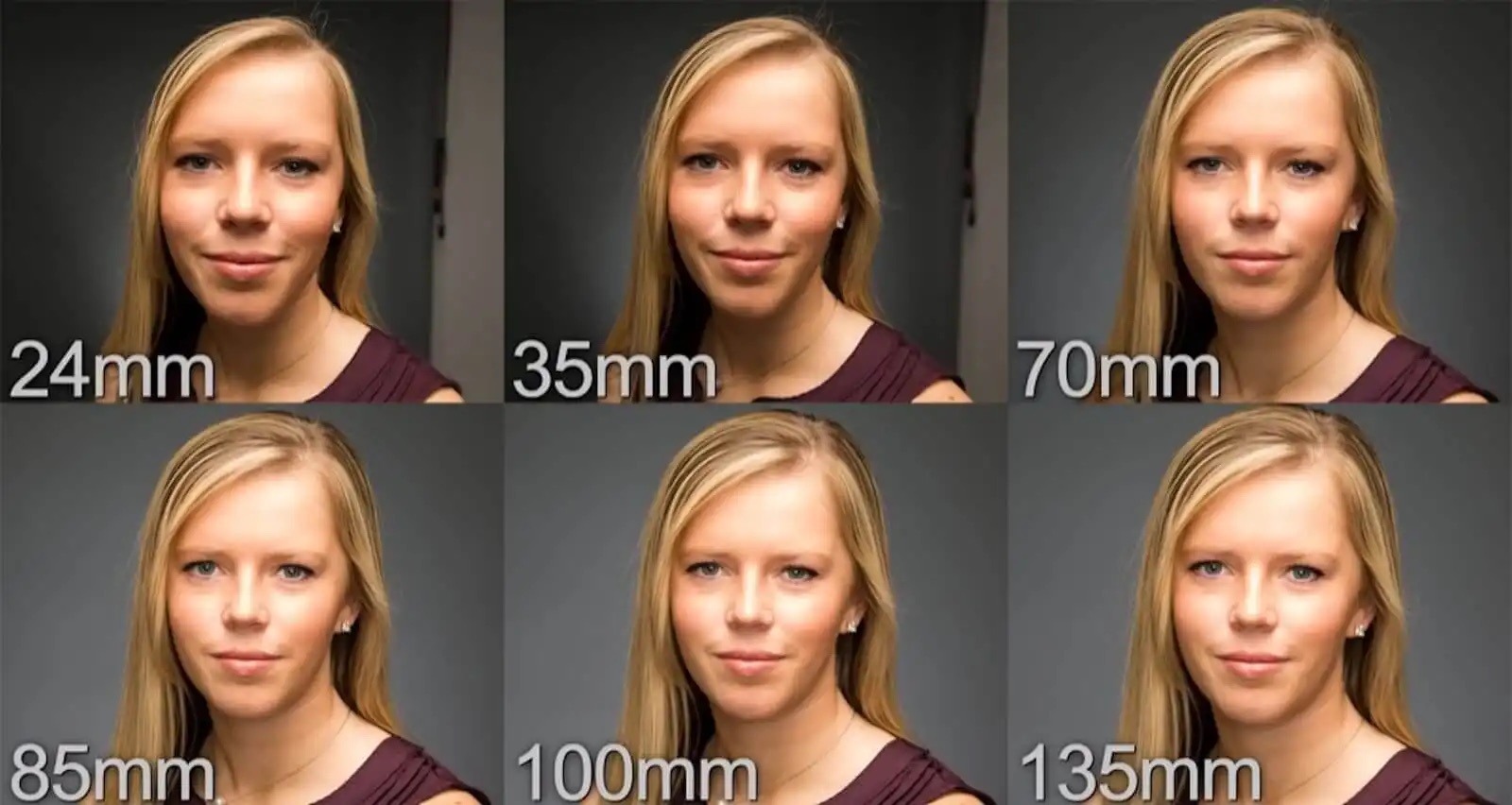
You’ll agree, at 135 mm the woman looks much more flattering than at 24 mm. Image: mi.com
Shooting at concerts and theaters. From the back rows, a regular camera captures tiny figures. A periscope lets you zoom in on the stage and get readable shots without noise or blur.
Travel. Architectural details you can’t make out from below. Mountain peaks. Signs on buildings. All of this can be captured without needing to get close and losing depth in the shot.