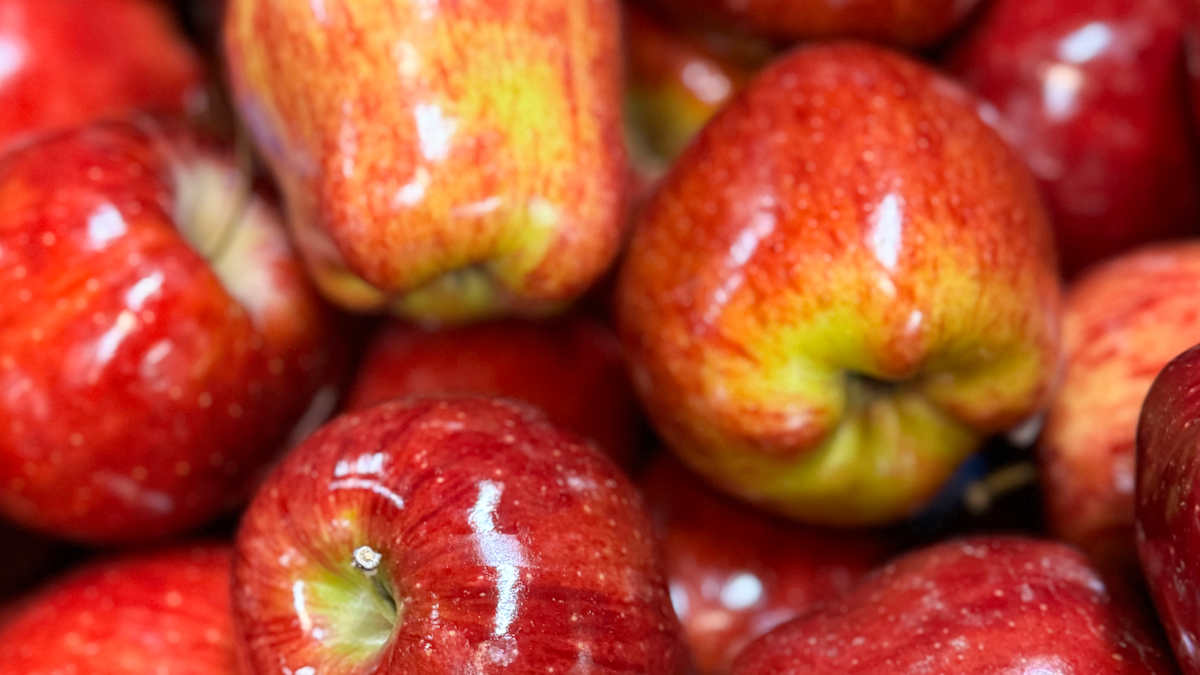
Before being shipped to stores, almost all apples undergo processing. Image source: mentalfloss.com
Apples in the store look as if they’ve been polished to a mirror shine, and that’s no illusion. They are indeed coated with a thin layer of wax. But don’t be alarmed, because behind that shine is a perfectly safe technology that has been used for over a hundred years. Let’s figure out what exactly is on your apple, why it’s needed, and what to do about it.
Wax Treatment of Apples
Few people think about it, but apples are naturally covered with their own protective wax. All apples contain a natural wax produced by nature that coats the surface of their skin. As the fruit ripens, a barely noticeable film appears on its surface that helps retain moisture, protects the fruit from pests, and prevents dirty water from penetrating. This is why an apple straight from the tree has a slightly matte, subdued shine — that is the natural wax.
The problem arises after harvesting. The wax on the surface of fruits doesn’t mask spoiled fruit — it replaces the apple’s natural protective layer, which is washed away during industrial cleaning. Apples are thoroughly washed to remove dirt, pesticide residues, and debris, but the natural wax coating is removed along with them. Without it, the apple begins to lose moisture, becomes soft, and looks less appetizing.
That’s why after washing, a new, artificial layer of wax is applied to the apples. This isn’t a marketing whim: wax has been used on fruits and vegetables since 1924, when researchers first discovered that it excellently prevents moisture loss. In other words, the technology has existed for over a century.
What Is Apple Wax Made Of
The composition of the coating depends on the manufacturer and market, but three main components are most commonly used:
- Carnauba wax — obtained from the leaves of a Brazilian palm tree. This is the same wax used, among other things, in automotive polishes and cosmetics;
- Candelilla wax — extracted from the candelilla succulent plant that grows in desert regions;
- Shellac — a natural resin secreted by the lac beetle found in India. Yes, this is the same substance that was once used to coat furniture, but in its food-grade form it is safe and has long been used to glaze candies and confectionery products.
There are two main types of food-grade wax applied to apples — carnauba-based and shellac-based. Thanks to their glossy properties, carnauba wax and shellac are also used in other food products, including chocolate and confectionery items.
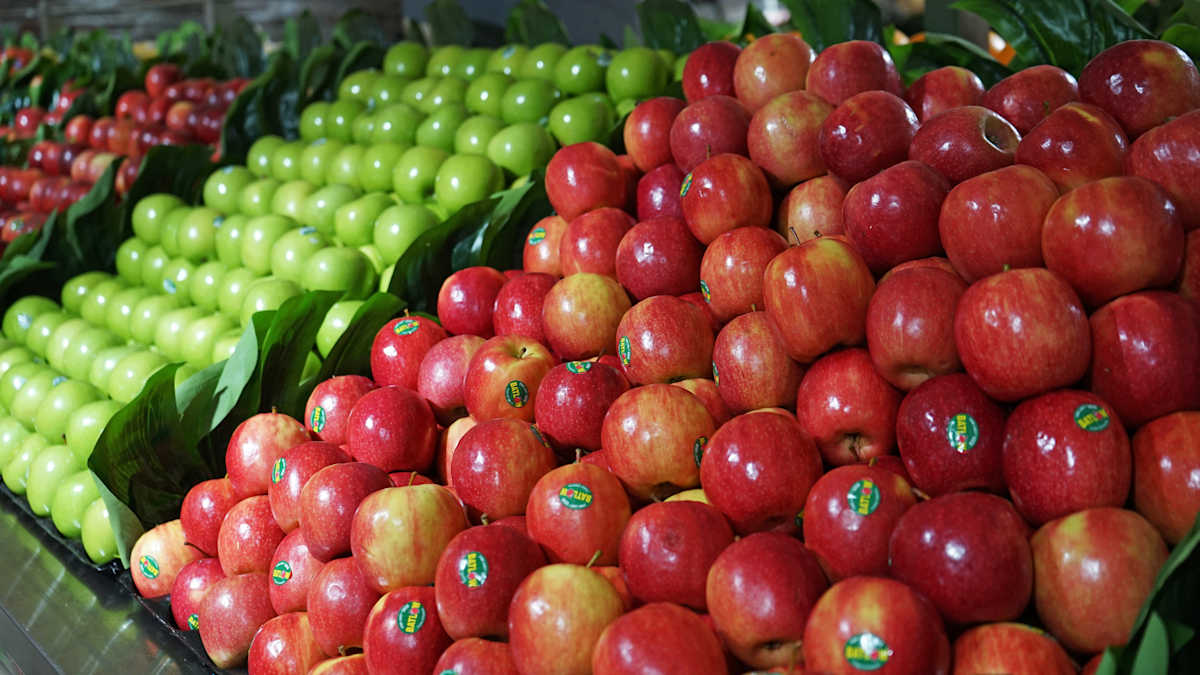
Glossy apples on a supermarket shelf
Safety of Wax on Apples
This is the main question that concerns shoppers. The short answer: according to regulators — yes. The substances used to coat apples are non-toxic and approved for use by regulatory agencies.
Food-grade waxes have been safely consumed for decades. They are not digested but simply pass through the digestive system without being absorbed. The amount of wax on a single apple is negligible: only about 450 grams of wax is used for 160,000 pieces of fruit — no more than two drops per apple.
An important detail: washing an apple before eating removes pesticides from the surface, and the wax itself does not get absorbed into the fruit’s flesh. Waxing fruit is not dangerous for consumer health, but it is recommended to thoroughly rinse fruits under running water before use.
However, the FDA advises against using soap, detergents, or commercial produce washes to clean fruits, since fruits have a porous structure and soap can be absorbed by them despite thorough rinsing, which may cause health problems.
Removing Wax from Apples Before Eating
If you still prefer to eat apples without wax coating, there are several methods:
- Rinse under warm water — the simplest method: wash purchased fruits under warm or even hot water, since wax melts at higher temperatures;
- Scrub with a brush — a special vegetable brush helps mechanically remove most of the coating while also removing dirt and bacteria;
- Use baking soda — baking soda provides a mechanical effect on the skin and helps clean it of bacteria and other microorganisms;
- Peel the skin — a radical option, but you’ll lose a significant portion of the beneficial nutrients found specifically in the skin.
IMPORTANT TO REMEMBER: simply washing with water does not completely remove wax, but it effectively removes bacteria and contaminants from the surface.
The Right Way to Store Apples
The wax coating, by the way, also plays an important role after purchase — it helps the apple stay fresh longer. But at home, the apple’s main ally is the refrigerator. Apples can and should be stored in the refrigerator because this preserves their beneficial properties and significantly extends their shelf life. The optimal temperature is between 0 and +4 degrees Celsius.
In the refrigerator, apples can last up to four to six weeks. At room temperature, apples will only last one to two weeks and will become soft much faster. It’s better not to wash apples before storing them, because moisture on the surface promotes mold. Wash the apple right before you plan to eat it.
Another important detail is that the packaging should not be completely airtight, since even a picked apple continues to breathe and release ethylene. It’s best to avoid placing apples near products with strong odors, as well as near other fruits that release ethylene.
So, the wax coating on apples is not a marketing trick or an attempt to hide a low-quality product. It is a preservation technology proven over decades and approved by regulators worldwide. The wax does not get absorbed into the flesh, is not metabolized by the body, and is present on the apple in microscopic amounts. If it still bothers you — simply wash the apple well with warm water or use a brush. But you definitely shouldn’t give up apples, as they remain one of the most beneficial and affordable fruits.