Just a couple of years ago, VPN in Russia was something like an invisible background feature: install the app, press the button, use it. Today the situation has changed dramatically. VPN blocking in Russia has become systematic. And what used to work on its own now requires more effort, money, and technical knowledge. What’s happening, why VPN doesn’t work on familiar devices, and what to do about it — I’ll explain without technical jargon. I’ll also explain why all of this is directly related to why Telegram and other familiar services stopped working.
Explaining why VPN won’t load
Can You Use VPN in Russia
Formally — yes. A VPN ban in Russia in the full sense of the word has not yet been introduced. No law directly prohibits an ordinary citizen from using such an application on a smartphone. The official rhetoric remains ambiguous: lawmakers say a complete ban is not being discussed, and the Ministry of Digital Development states it opposes fines for using VPN.
But there’s a catch. The VPN prohibition law in its current form prohibits such services from helping users access resources blocked in Russia. In other words, the tool itself is not banned, but using it for its intended purpose is already a gray area. In practice, this means the following:
- hundreds of VPN apps have been removed from the Russian Google Play at the request of Roskomnadzor;
- remaining apps work unstably or don’t work at all;
- telecom operators use deep packet inspection systems to detect VPN connections;
- major platforms are starting to block users with VPN enabled.
In effect, infrastructural and economic barriers are being created without a formal ban. The result is roughly the same as a direct ban — just without the loud headlines.
Why VPN Doesn’t Work
VPN in Russia doesn’t work for several reasons, and each deserves a separate explanation. Many people think that such services make traffic completely invisible to the provider. That’s not true. The operator doesn’t see the content of your packets, but it does see the fact of tunneling. For this purpose, a deep packet inspection system is used, installed on operator equipment at the state’s request. It analyzes:
- IP addresses and traffic direction (if a smartphone communicates with a single foreign server for a long time, that’s suspicious);
- characteristic “signatures” of VPN protocols during the connection establishment phase;
- packet statistics (a VPN tunnel looks different from regular web traffic).
This is exactly why VPN doesn’t work on mobile internet even for those who previously had no issues. Operators have learned to recognize most popular protocols and block them at the infrastructure level.
In parallel, in February 2026 Roskomnadzor began mass VPN blocking through the national domain name system: YouTube and several other major resources disappeared from it. This is a cruder but cheaper method — it doesn’t require fine-tuning and hits broadly. Add to this the fact that Google removed popular VPN clients from the Russian Play Store at Roskomnadzor’s request. Already installed apps continue to work, but without updates they gradually degrade.
Will There Be a Complete VPN Block in Russia
A complete ban on VPN use doesn’t exist yet, but starting May 1, 2026, the situation is changing. At a meeting with the head of the Ministry of Digital Development Maksut Shadaev, telecom operators, and major platforms, three areas of restrictions were agreed upon.
There’s no complete block yet, but VPN still doesn’t work
The first concerns mobile internet. Operators have been offered to introduce charges for using more than 15 GB of international traffic per month. If the VPN server is located abroad, all traffic through it counts as international. For each gigabyte over the limit — 100 to 150 rubles. With active YouTube viewing, the bill could run into thousands of rubles per day.
The second concerns platforms. Services from the “white list” (Yandex, VK, Ozon, Wildberries, banks) are required to block users with VPN enabled. Otherwise, they risk being removed from the list, which means losing traffic from millions of users. The third — the most unpleasant. Shadaev did not rule out the possibility of introducing administrative liability for VPN use. For now, it’s only a discussion, but…
VPN That Won’t Be Blocked in Russia
The answer to the question of which VPN in Russia definitely won’t be blocked sounds paradoxical: one that doesn’t provide access to banned websites. This is precisely the logic behind what’s happening. The state is not against VPN as a technology — it’s against using it to access resources from the blacklist. This means only a service operating strictly within permitted boundaries will survive.
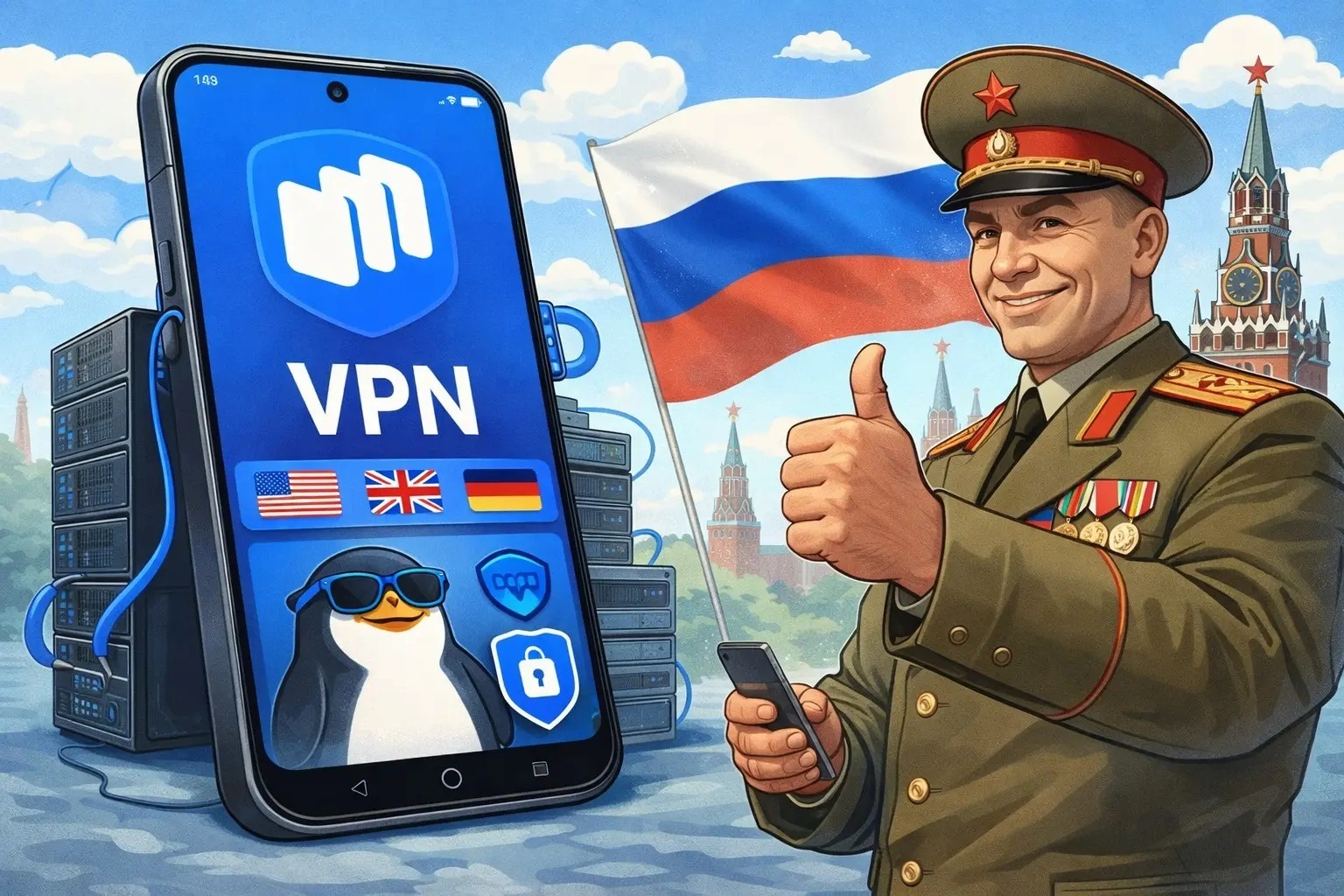
RuStore is making a “proper” VPN
This is exactly the model RuStore is exploring. A legal VPN for Android is planned as a service with two tiers: a free one for Russian resources and a paid one for approved foreign platforms like ChatGPT, Figma, and Notion. At the same time, Telegram, YouTube, and other blocked services won’t work through it. This is not a flaw. This is the condition for such a service to exist.
Regular VPN for Android with access to everything will continue to be blocked, removed from stores, and made costly through international traffic limits. A few tips for those who aren’t ready to give up their familiar tools just yet:
- don’t keep VPN enabled all the time;
- avoid free apps from app stores;
- watch your international traffic limit after May 1;
- for access to AI services, consider Russian aggregators.
Russian VPN in the traditional sense is arriving gradually — not through an instant ban, but by creating conditions where using a regular VPN becomes inconvenient, expensive, and risky. The VPN tax in Russia through international traffic limits is part of this same logic. The technology isn’t being banned — it’s just becoming less and less accessible for the average user.