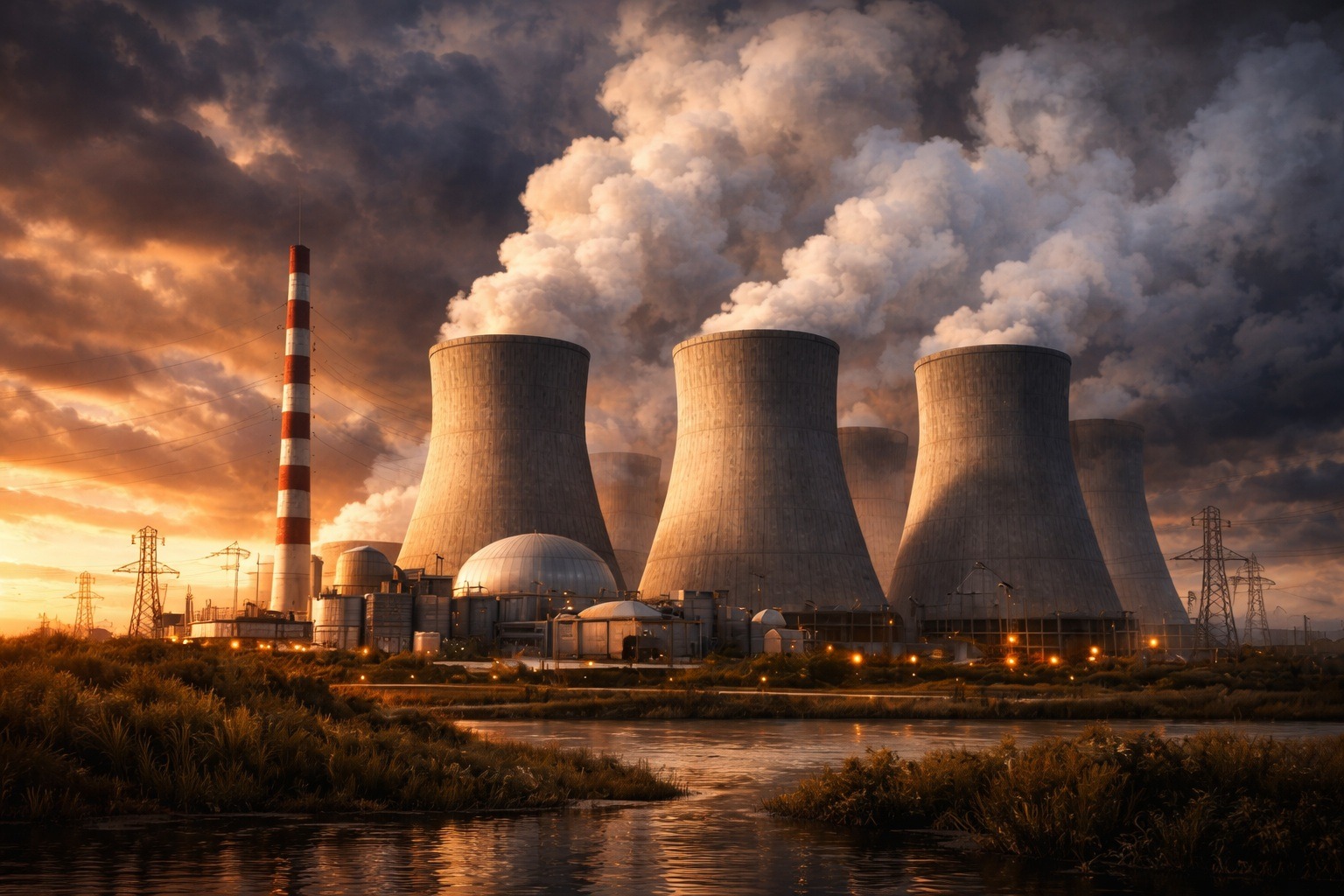
Working with molten metal and uranium is quite a challenge for engineers, but the result is worth it
Nuclear energy has been operating on the same principle for decades: uranium rods are loaded into a reactor, they gradually burn out, and then they are replaced with new ones. It would seem the system works and there’s no reason to change it. But engineers in the US decided otherwise and created a fuel in which uranium literally flows. The new type of liquid-metal nuclear fuel allows extracting twice as much energy from uranium particles compared to traditional solid-state assemblies.
What’s Wrong with Conventional Nuclear Fuel
To understand why anything needs to change, it’s worth understanding how modern reactors work. The fuel in them consists of ceramic pellets made of uranium dioxide, pressed and placed in long metal tubes — fuel elements (fuel rods). They are assembled into cassettes and stand motionless inside the reactor core.
The problem is that the uranium in these pellets burns unevenly. The outer layers “work” more actively, while the inner ones remain underutilized. Over time, fission products accumulate in the fuel, absorbing neutrons and hindering the chain reaction. As a result, the rods have to be replaced long before all the uranium in them is exhausted. The typical fuel burnup rate in modern reactors is only about 5% — meaning 95% of the potential energy simply remains in the spent fuel.
For comparison, it’s like filling up a full tank of gas, driving 50 kilometers, and draining the remaining gasoline because “it’s not the same anymore.” Wasteful, to put it mildly.
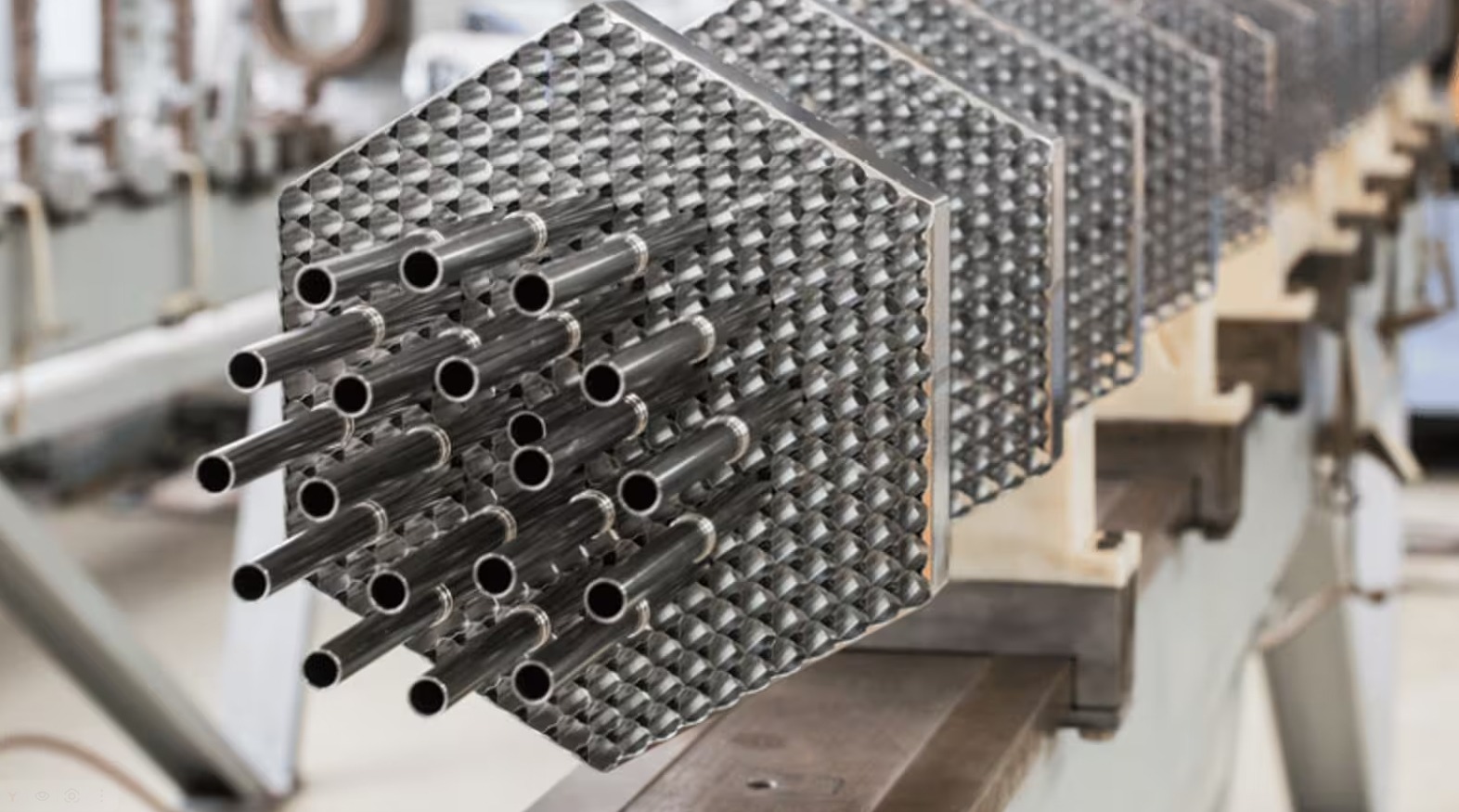
Fuel elements. Image source: www1.ru
How Liquid-Metal Nuclear Fuel Works
American researchers from national laboratories proposed a fundamentally different approach. Instead of fixing uranium particles in a ceramic matrix, they placed them in a liquid metal carrier. Simply put, tiny uranium microspheres float freely in molten metal, which simultaneously serves as a coolant.
The main advantage of this design is that the fuel is constantly mixed. Uranium particles don’t stay in one place but slowly circulate inside the reactor core. This means that each particle is uniformly irradiated by neutrons from all sides and burns much more completely than in a static rod.
In addition, fission products that poison the reaction in conventional fuel are partially removed from the zone along with the flow. It turns out that this effect is precisely what allows doubling the amount of energy extracted from the same volume of uranium. In other words, the reactor operates longer on a single fuel load and produces less waste.
Why Flowing Fuel Is Safer Than Solid Fuel
When it comes to nuclear energy, the first question is always the same: is it safe? In the case of liquid-metal fuel, the answer is quite optimistic.
The thing is that the liquid metal carrier has excellent thermal conductivity. It efficiently removes heat from uranium particles, reducing the risk of localized overheating — and fuel overheating was one of the key problems during nuclear power plant accidents. In traditional reactors, if cooling is disrupted, the ceramic pellets begin to melt, and the situation spirals out of control.
In the new system, the liquid metal acts as a built-in safety fuse. When the temperature rises, it expands, reducing the density of uranium particles in the reaction zone, and the chain reaction automatically slows down. This is so-called passive safety, requiring no electronics, pumps, or operator intervention.
There’s another bonus: since the fuel is used more efficiently, significantly fewer highly radioactive wastes are produced. And it’s precisely the problem of nuclear waste disposal that remains one of the main arguments of nuclear energy opponents.
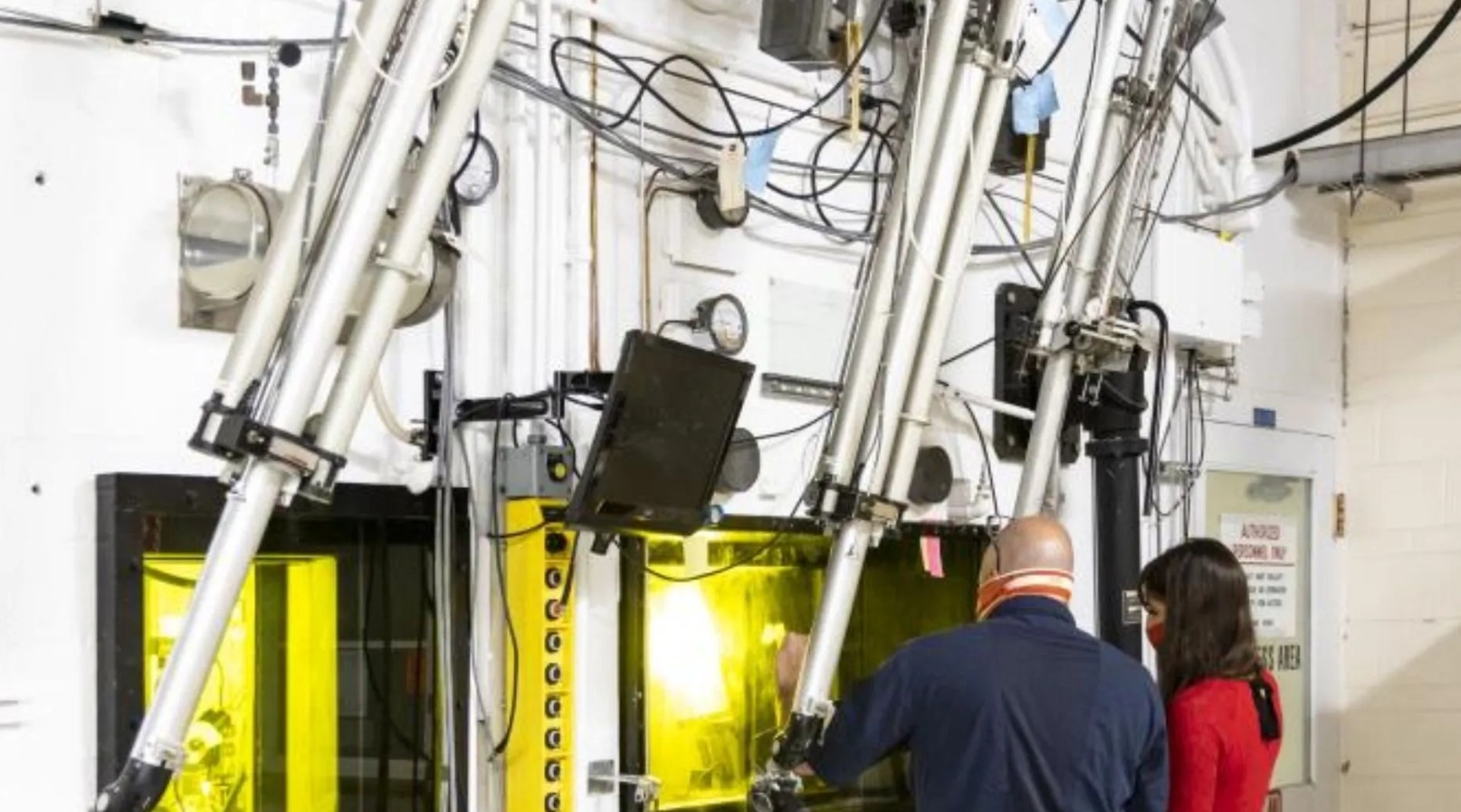
Nuclear power plants of the future could become not only more powerful but also significantly “cleaner” in terms of waste. Image source: interestingengineering.com
When Will Liquid-Metal Reactors Appear in Practice
Of course, the distance from laboratory experiments to a working power plant is enormous. The technology is currently at the testing and modeling stage. Engineers still need to solve a whole range of issues: how to ensure the durability of structural materials in contact with aggressive molten metal, how to control the flow of uranium particles with the necessary precision, and how to scale the system to industrial dimensions.
But there’s a nuance. The liquid fuel concept is not new — back in the 1960s, Oak Ridge National Laboratory experimented with molten salts. At that time, the project was shut down for political and economic reasons, not because of technical shortcomings. Now, as the world desperately searches for low-carbon energy sources, interest in such technologies is returning with renewed vigor.
According to developers’ estimates, the first prototypes of liquid-metal fuel reactors could appear within the next 10–15 years. If tests confirm the calculated characteristics, this will change the economics of nuclear energy: less uranium input, less waste output, and more electricity per kilogram of fuel.
Nuclear energy is often perceived as something frozen — a technology from the last century that hasn’t changed in decades. But liquid-metal fuel proves otherwise: even in the most conservative industry, it’s possible to find a solution that changes the rules of the game. All that’s left is to wait for the uranium to actually flow.