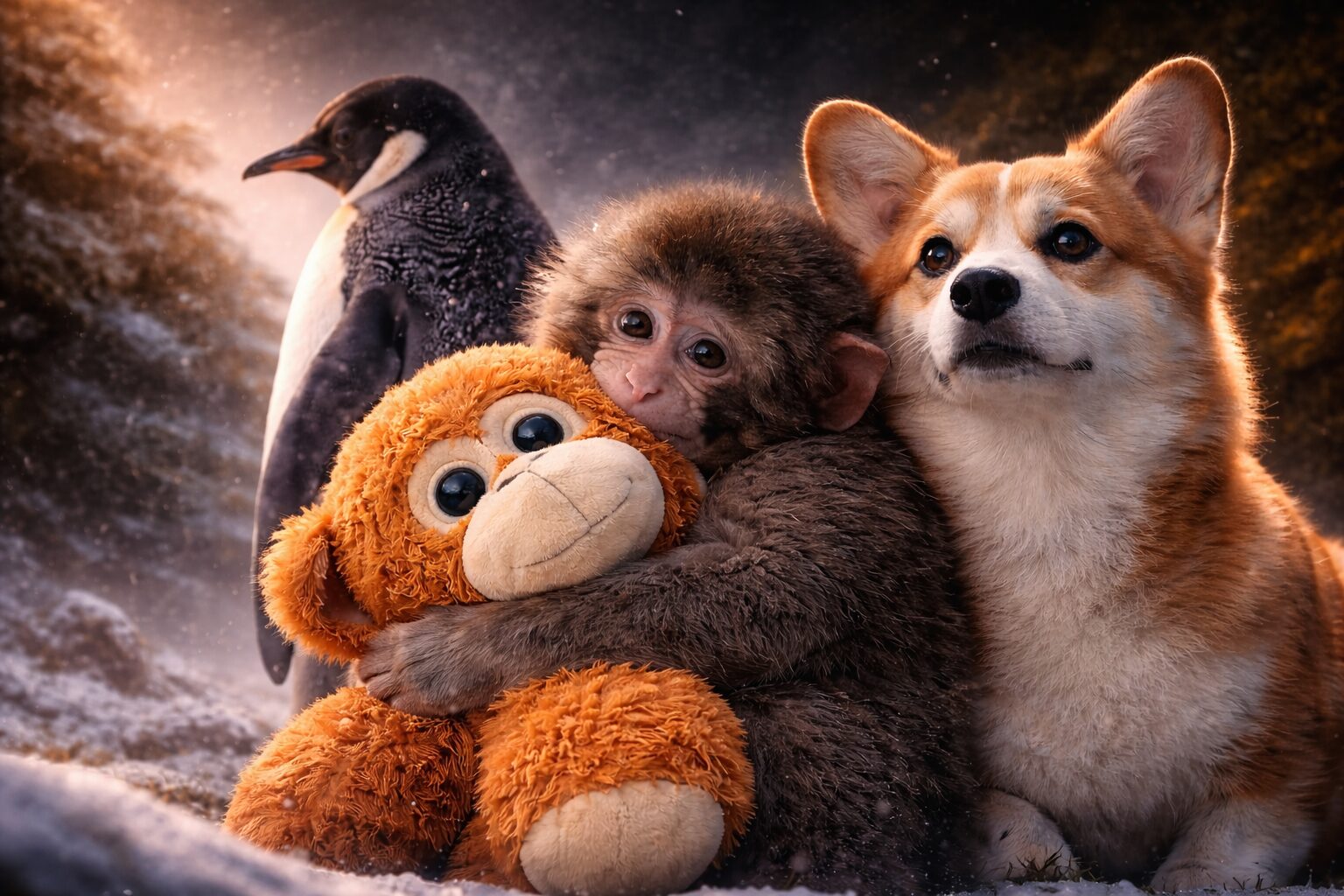
Animal stories that touched millions and went viral: a penguin, a baby monkey, and a corgi
In early 2026, the internet was swept by three animal stories — so different and so powerful that each garnered hundreds of millions of views. A lone penguin walking into icy mountains against all instinct. A tiny monkey rejected by her own kind, hugging a stuffed toy like a mother. A short-legged corgi leading a pack of dogs that escaped slaughter on their journey home. Behind each story lies not just cuteness and animal memes, but real drama, biology, and behavioral mysteries. And each one impresses, captivates, and surprises more and more, so read to the end.
The Nihilist Penguin: Why a Penguin Left Its Colony in Antarctica
Imagine the icy shore of Antarctica. The howl of wind, the crunch of snow underfoot, and thousands of penguins moving in unison — toward the ocean. Food, life, and a chance to survive await them there. And amid this perfectly coordinated flow, a glitch occurs. One penguin stops. Stands still for a long time, as if “thinking.” Then turns around — and takes a step in the opposite direction. Such behavior looks almost like a narrative symbol, though in reality animals can also experience serious behavioral disruptions.
At first, it’s barely noticeable. But after a few seconds, it becomes clear: he hasn’t simply lost his step. He is leaving. Alone. Toward where there is nothing. The penguin heads deep into the continent — toward dark Antarctic mountains barely visible on the horizon. They are dozens of kilometers of icy wasteland away. No food, no shelter, no other animals. Only wind, cold, and emptiness.
The strangest thing is — he’s not rushing. Not running. Not panicking. He walks evenly, calmly, and confidently, as if he knows exactly where he’s going. And that’s precisely what makes the scene unsettling. This moment was captured in the film “Encounters at the End of the World,” where director Werner Herzog observes the lives of Antarctic animals.
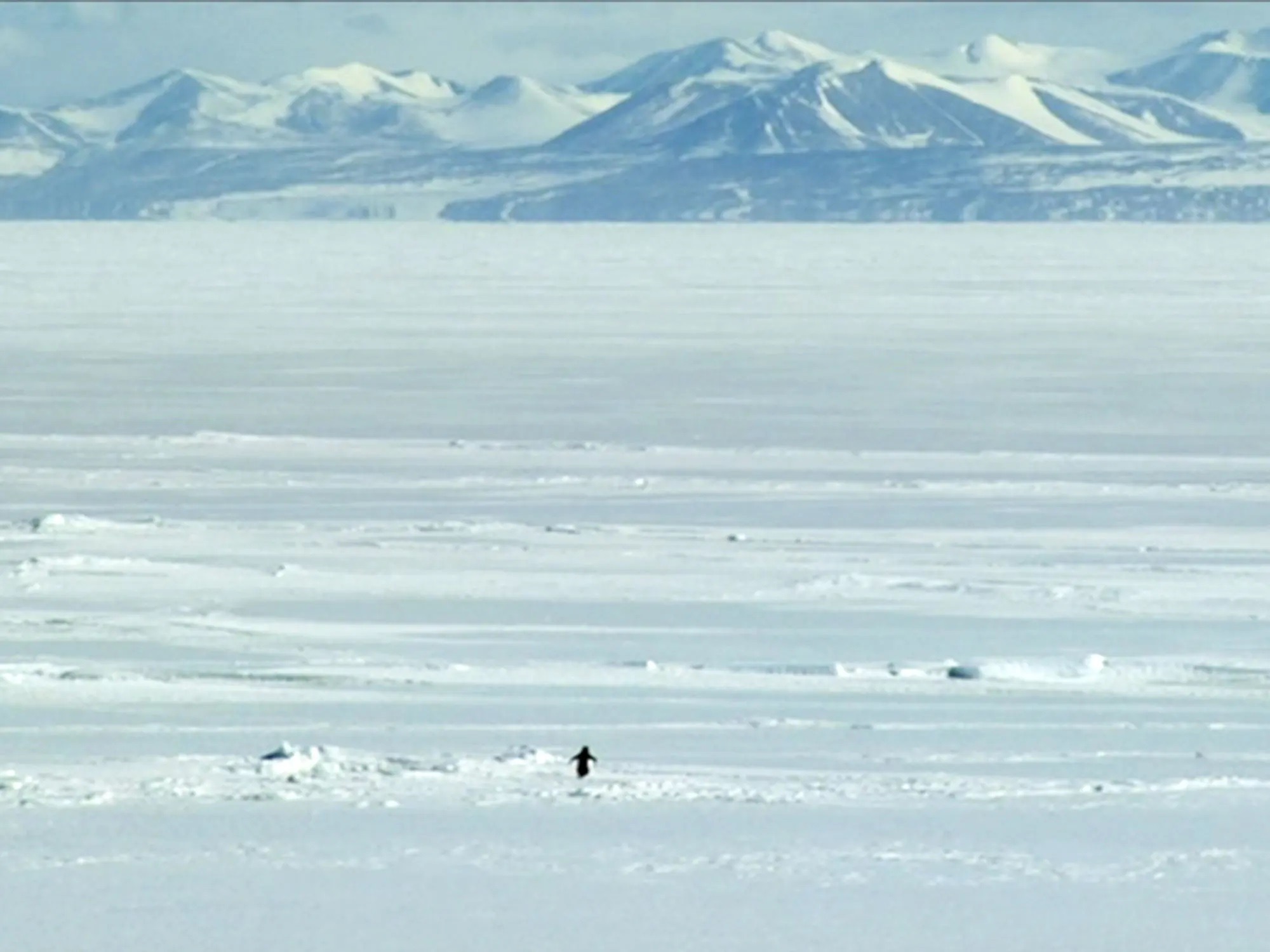
A still of that very penguin from Werner Herzog’s “Encounters at the End of the World.” Image source: lwlies.com
Herzog notices this penguin and asks the scientists to look at it. But they just shrug: yes, it happens. The director continues observing anyway. His calm, almost cold voice narrates off-screen: he speaks of “a penguin who for an unknown reason decided to head toward the mountains” and calls it “a march toward certain death.” It’s precisely this tone — not panicked, but philosophical — that made the scene so special. The camera records the bird gradually turning into a tiny dot against the endless white expanse. It moves farther and farther from the colony — toward a place from which there is no return.
Nearly 20 years later, in January 2026, this clip unexpectedly went viral. A TikTok user took the original footage with Werner Herzog’s narration, overlaid an organ version of L’Amour Toujours — and the video exploded. Millions of people saw in this penguin not a strange animal but a symbol: a person tired of rules, systems, and expectations who simply walked “into nowhere” because they couldn’t do it any other way. The clip, under which people began adding captions, stories about quitting hated jobs, and images of personal searching, became the top viral trend of early 2026. Thus was born the “nihilist penguin” — a meme hero and a symbol of a state that’s hard to put into words.
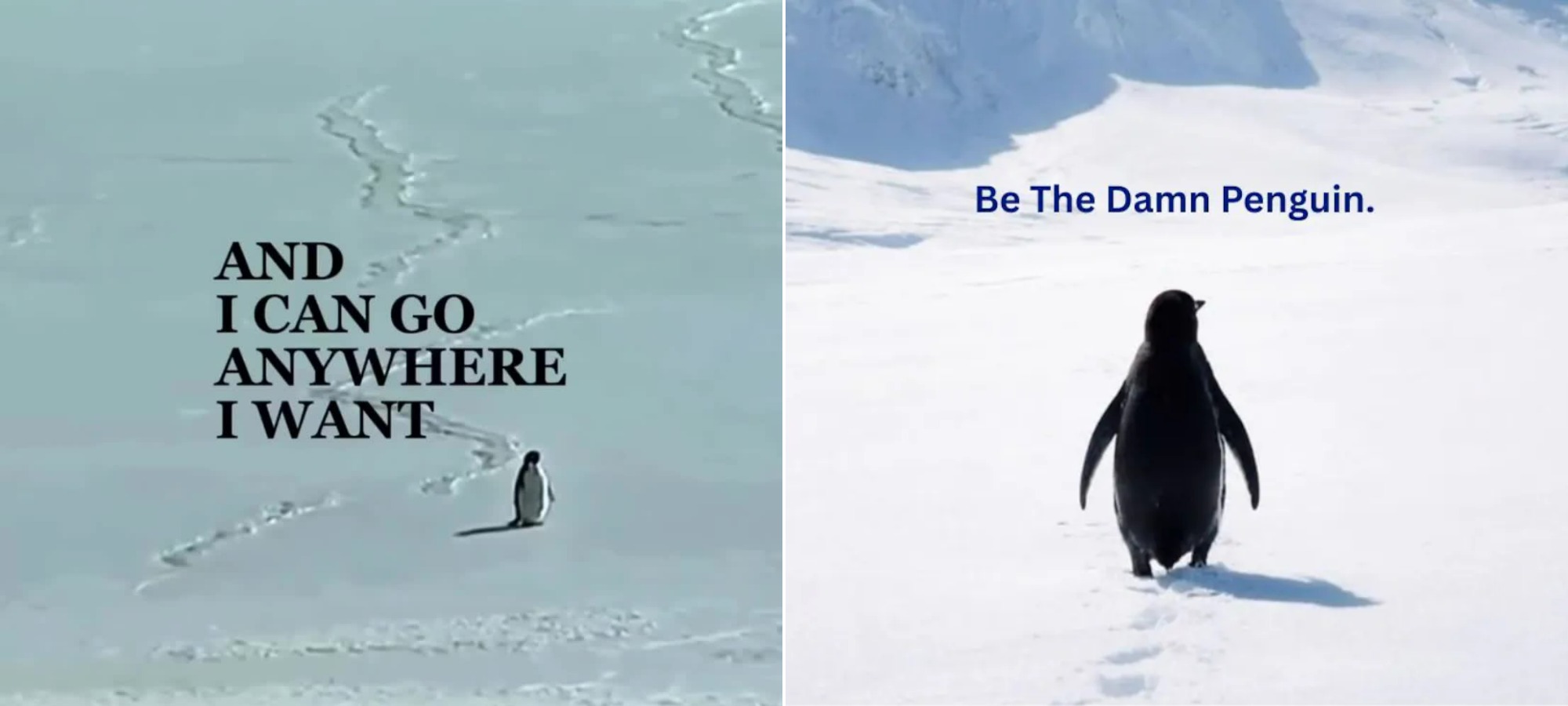
Memes that became symbols of unyielding will. Image sources: psychologies.ru, ndtv.com
Why Penguins Leave the Colony and Walk Into Nowhere
Reality, as it often is, is less romantic — but no less strange. Adélie penguins almost never leave the colony without reason. Their lives are built on strict routes: to the water and back. Any deviation is already an anomaly.
Scientists working in Antarctica note that sometimes individual penguins do indeed leave the group and head deep into the continent. The reasons can vary — from illness to navigation malfunctions. But the important detail is something else.
Such penguins don’t stop. Even if you turn them around and return them to the colony, they may walk off in the same direction again. As if something inside them has already “broken” and stopped pointing the way to survival.
And therein lies the main paradox of this story. We see confident, almost deliberate forward movement. But most likely, it’s movement without purpose. Not a choice — but a loss of bearings. And perhaps that’s exactly why this penguin struck a chord with millions of people: in his strange, quiet departure, everyone saw something of their own — even if in reality there was no meaning at all.
Punch the Monkey from a Japanese Zoo: Why He Hugs a Toy Instead of His Mother
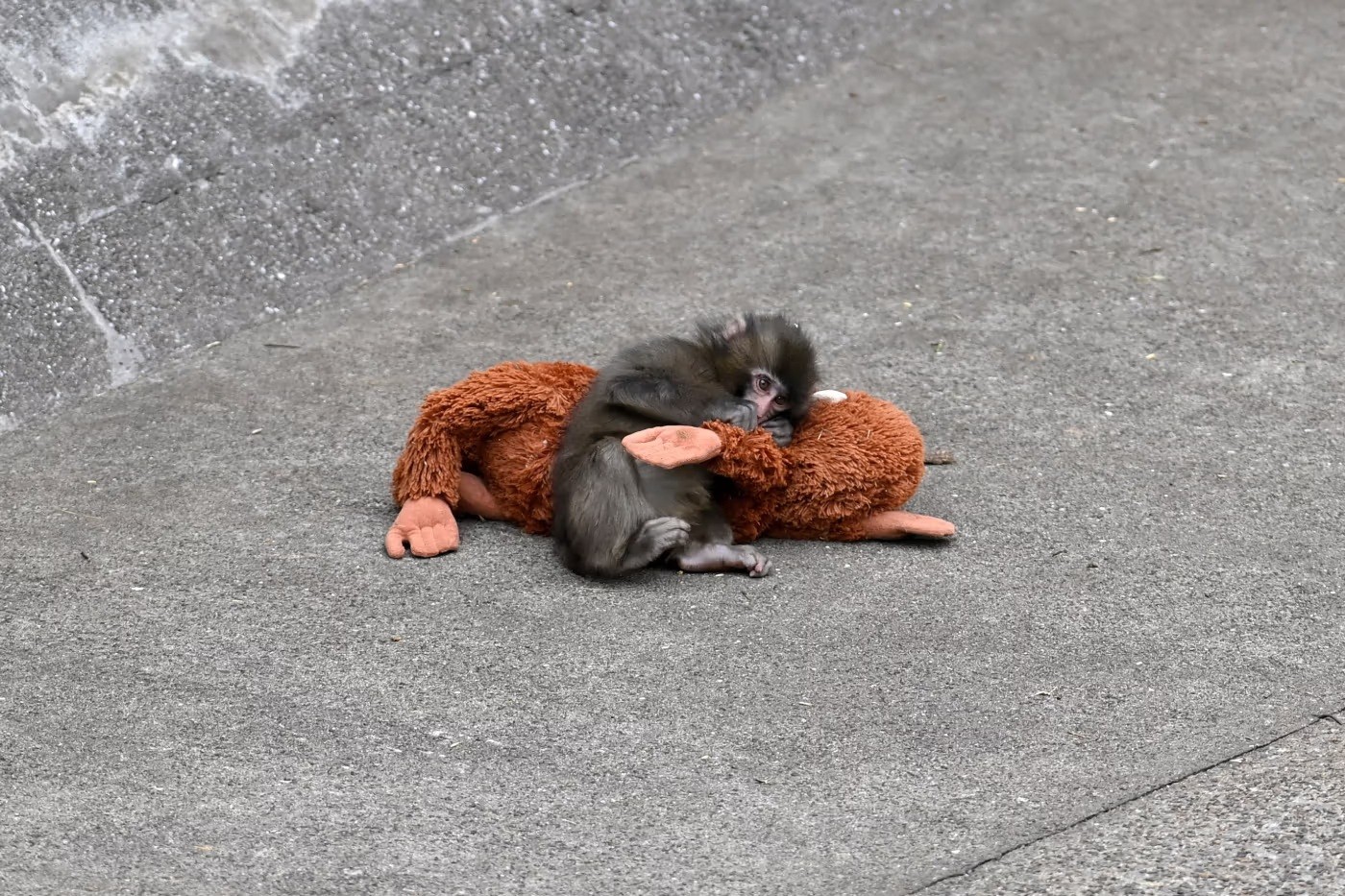
A touching photo of Punch with his plush “mom.” Image source: pravmir.ru
If the penguin became a symbol of solitary rebellion, then the monkey named Punch became a symbol of fragility and the need for closeness. The baby Japanese macaque nicknamed Punch-kun (or simply Punch) was born at the Ichikawa City Zoo, near Tokyo, on July 26, 2025, weighing just 500 grams.
The baby was named after the famous manga artist Monkey Punch. His mother, for whom this was her first birth, showed no interest in him — specialists believe the cause was inexperience and severe stress due to the summer heat. Staff members took Punch, bottle-fed him, and nursed him to health.
Baby Japanese macaques normally cling to their mothers — this is essential for developing muscle strength, a sense of security, and understanding hierarchy. Without a mother, Punch began showing signs of anxiety and isolation. Zookeepers tried various solutions — rolled-up towels of different thicknesses, other soft toys. Ultimately, they settled on a plush orangutan from IKEA. Punch, craving tactile contact, immediately bonded with the toy, began carrying it everywhere, and cuddled with it during sleep.
The toy, which was named “Ora-mama,” never left his paws — it became a substitute for maternal care. For primates, physical contact is not just a pleasant nicety but a vital necessity. Without it, a baby literally cannot develop normally.
Why Baby Monkey Punch Was Rejected by the Group and What Happened Next
In January 2026, the decision was made to return Punch to the shared enclosure. About twenty other macaques lived there. The risk was enormous. And the fears proved justified. His birth mother had abandoned Punch, so he was raised outside the group, and joining the collective turned out to be far from easy — one of the monkeys even beat the little one.
The video of that moment spread around the world: an adult monkey roughly dragged Punch across the ground, and the frightened baby, once free, immediately ran to his plush “mom,” pressing his whole body against the toy. Internet users launched a flash mob with the hashtag #HangInTherePunch, and enormous lines of supporters began forming at the zoo’s entrance.
On February 5, the Ichikawa Zoo shared Punch’s story on social media. The post garnered over 4 million views and turned the baby macaque into a genuine internet star. After the viral videos, IKEA, which sold the plush orangutans, experienced a real boom — sales of the toy skyrocketed, and the product is out of stock in some countries, including Japan and the USA.
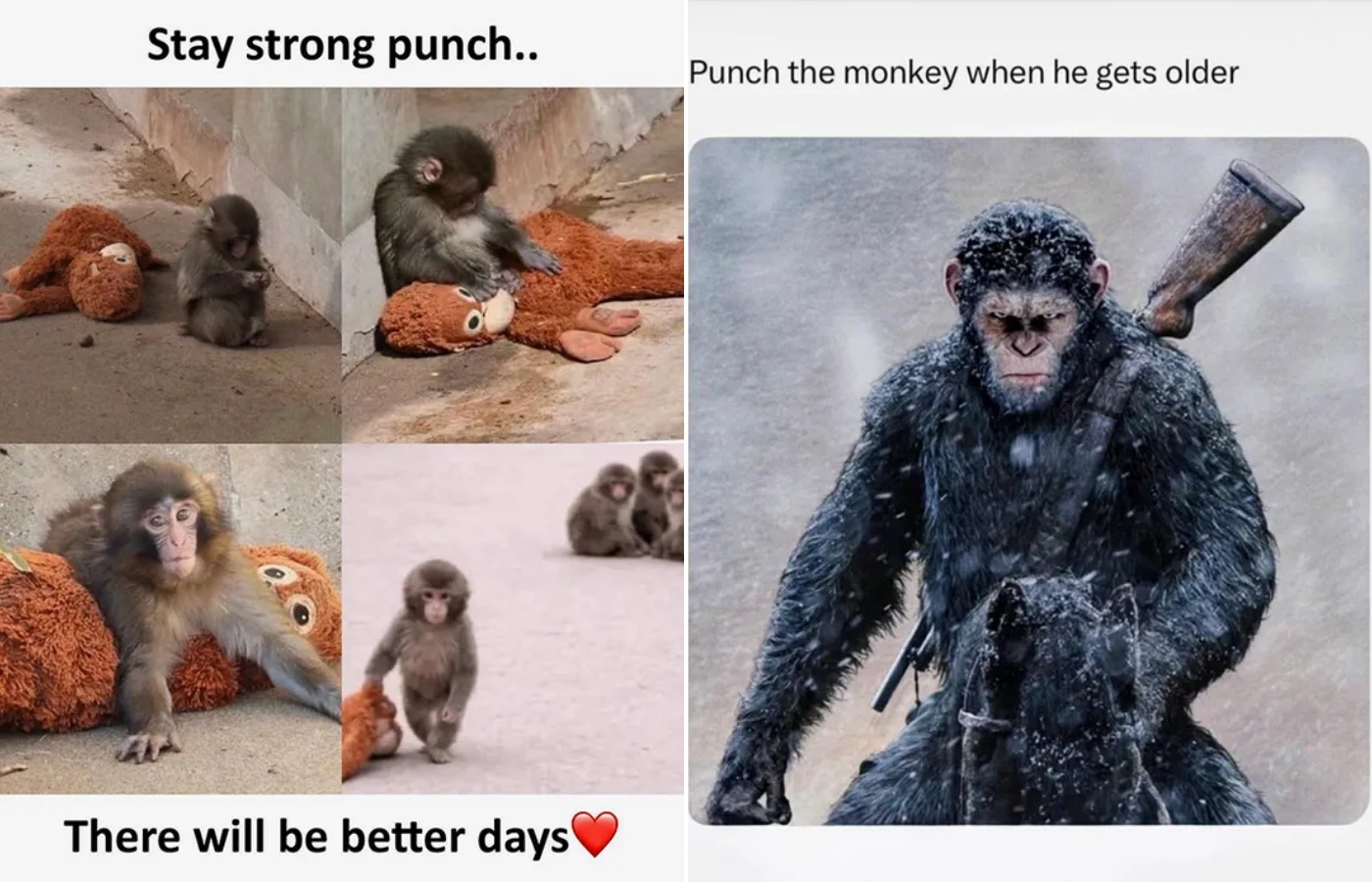
In early February 2026, Punch became famous worldwide. Photos and sad videos went viral on social media, showing the baby being ignored, pushed away, and even beaten. Image source: t-j.ru