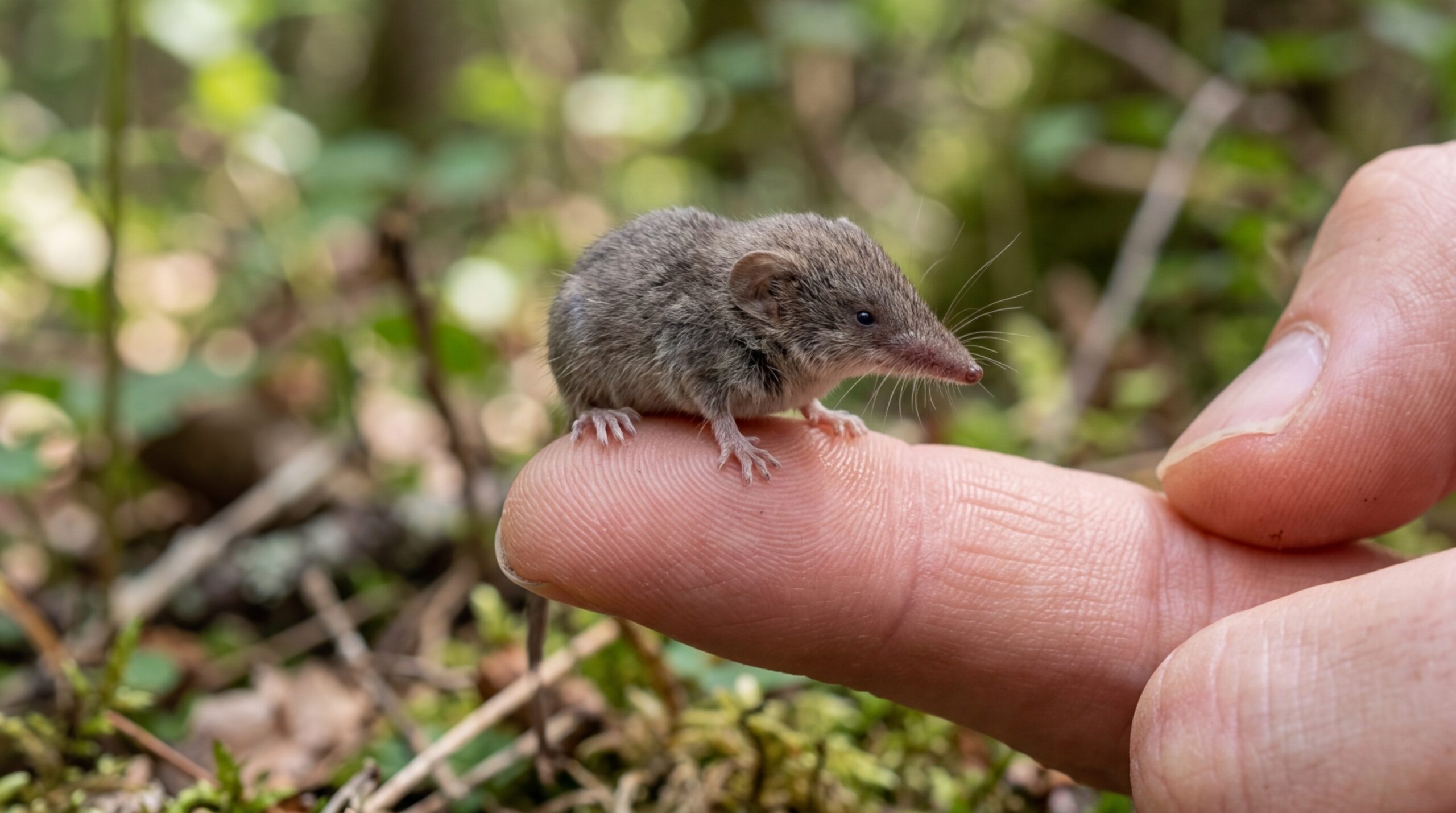
Etruscan shrew on the tip of a human finger — the smallest mammal on the planet.
The smallest mammal on Earth — the Etruscan shrew — weighs about 1.8 grams and fits on a fingertip. Although there once existed an even smaller creature in history, it went extinct 53 million years ago. One might think evolution could have gone even further and created a creature the size of a fly. But no: there is a rigid physical limit below which a warm-blooded animal simply cannot survive. And the Etruscan shrew is living proof that nature has approached this boundary as closely as possible.
Why Mammals Cannot Be Very Small
To understand why mammals cannot be arbitrarily small, we need to remember one simple thing: all warm-blooded animals must maintain a constant body temperature. And this is where a trap arises, related to the ratio of volume to surface area.
Imagine two cubes — one with an edge of 1 centimeter, the other with an edge of 2 centimeters. The volume of the larger cube is 8 times greater, while the surface area is only 4 times greater. The same principle applies to animals: the smaller the body, the greater its surface area relative to its volume, which means it loses heat faster. For a large mammal like a bear, this is not a problem at all — it cools down slowly. But for a tiny shrew, heat loss becomes catastrophic.
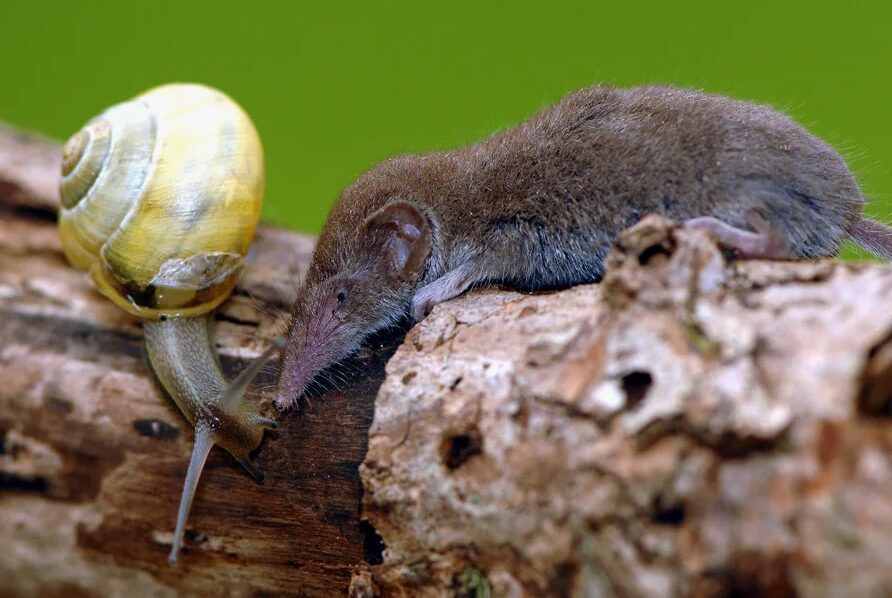
Etruscan shrew and a snail. Image source: liveinternet.ru
To compensate for this loss, the body must produce a colossal amount of energy. And the smaller the animal, the higher its metabolic rate must be — literally at the limit of what cell biochemistry allows. Below a certain size, no metabolism can overcome heat losses, and the animal will simply freeze to death.
Body size also depends on the habitat: biologists describe this relationship between environmental temperature and body size through Bergmann’s rule.
Why the Smallest Shrew’s Heart Beats 1,200 Times per Minute
The Etruscan shrew (Suncus etruscus), also known as the Etruscan pygmy shrew, is not just a small animal. It is an organism operating at absolute maximum capacity. Its heart contracts at a rate of up to 1,200 beats per minute — for comparison, the human resting heart rate is approximately 60–80 beats. It takes about 900 breaths per minute. Its body temperature stays at about 37 °C, just like ours.
To maintain such a frantic pace, the shrew needs to eat roughly 1.5–2 times its own body weight in food per day. It eats almost continuously and can die of starvation in just a few hours if it cannot find food. In essence, its life is a constant race for calories, and any pause can be fatal.
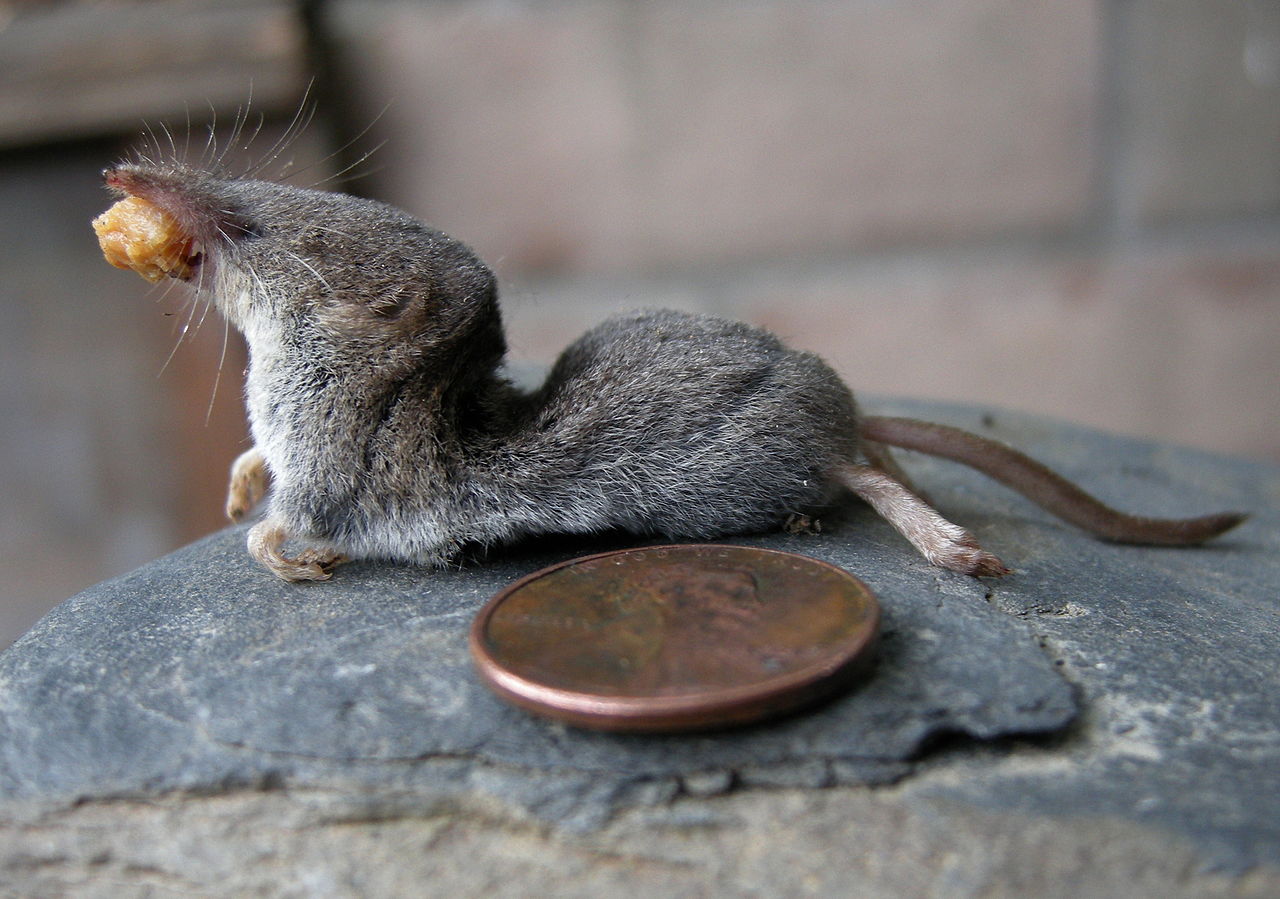
The shrew must constantly eat to stay alive. It feeds up to 25 times a day, eating more than its own weight each day. Image source: en.wikipedia.org
This is the price of miniaturization. Every system of the body — cardiovascular, respiratory, digestive — is pushed to the limit. The shrew’s muscles contract at record speed among mammals. The nervous system also operates at the edge: to coordinate movements at such a pace of life, neurons must transmit signals as quickly as possible.
What Is the Minimum Size of Warm-Blooded Animals
The Etruscan shrew weighs an average of 1.8 grams, and its body length is about 3.5–4 centimeters (excluding the tail). There is another contender for the record — the smallest bat, which also balances on the edge of what is possible. This is Kitti’s hog-nosed bat from Thailand (Kitti’s hog-nosed bat), which weighs approximately 2 grams (adults reach 2.5 grams).
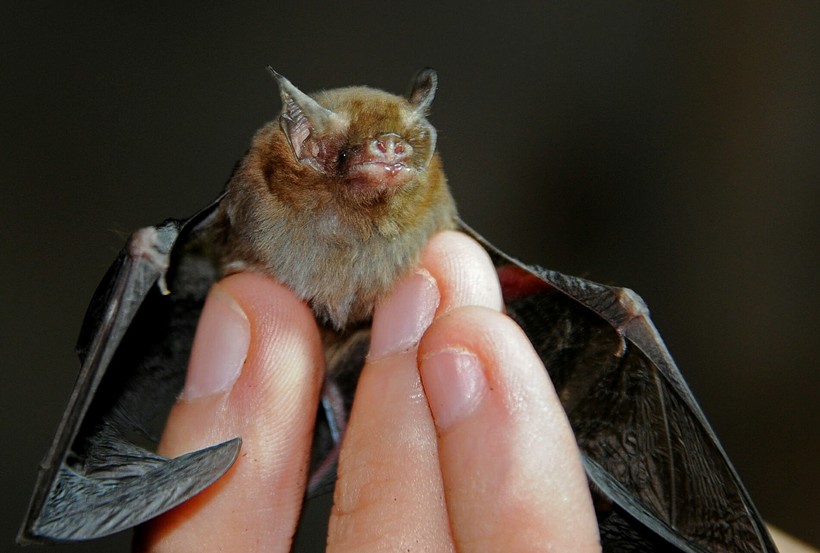
This harmless miniature bat is no more than three centimeters long, about half of your finger, and is considered a very rare species. Image source: travelask.ru
Physics sets several barriers that prevent mammals from shrinking indefinitely:
- Thermodynamic barrier — below a certain size, heat losses through the body surface exceed the maximum metabolic output. The animal cannot produce enough heat.
- Energy barrier — the time it takes for the animal to die without food shrinks to just a few hours. Finding and digesting that much food in such a short time becomes physically impossible.
- Neural barrier — the brain cannot shrink indefinitely while retaining sufficient complexity to manage behavior, hunting, and navigation. Neurons have a minimum size determined by cell biology.
- Mechanical barrier — bones, muscles, and organs cannot scale proportionally. Miniaturization creates structural problems: the heart and lungs must operate at unimaginable frequencies, and the digestive tract must extract energy from food almost instantly.
All of these limitations converge at a single point: approximately 1.5–2 grams — this is the physical minimum for a warm-blooded animal on our planet.
Why Insects Can Be Tiny but Mammals Cannot
Here a fair question arises: if physics forbids warm-blooded animals from being so small, why can insects easily weigh fractions of a gram? The answer is simple — they are cold-blooded. Insects do not spend energy maintaining a constant body temperature. Their metabolism operates in a completely different mode: it depends on the ambient temperature. When it’s cold — the beetle slows down; when it’s warm — it speeds up.
In addition, insects have a fundamentally different respiratory system — a tracheal system, without lungs. Oxygen is delivered directly to cells through a network of tiny tubes. This is efficient at tiny sizes but does not scale upward — which is precisely why giant insects don’t exist either (except during certain periods in Earth’s history when atmospheric oxygen concentration was significantly higher, and insects really were gigantic). So both miniaturization and gigantism have their own physical ceilings and limits — they are simply different for each group of animals.
Could a Mammal Smaller Than the Shrew Ever Appear
The Etruscan shrew is the result of millions of years of evolution trying to squeeze a mammal into the smallest possible size. And the fact that out of thousands of mammal species, not a single one has dropped below the one-and-a-half-gram mark speaks volumes: evolution found the threshold and stopped.
This is a good illustration of a general principle: biological evolution is incredibly inventive, but it operates within the framework set by physics and chemistry. You can change body shape, diet, behavior, reproductive strategy — but you cannot override the law of heat dissipation or the minimum size of a functional neuron.