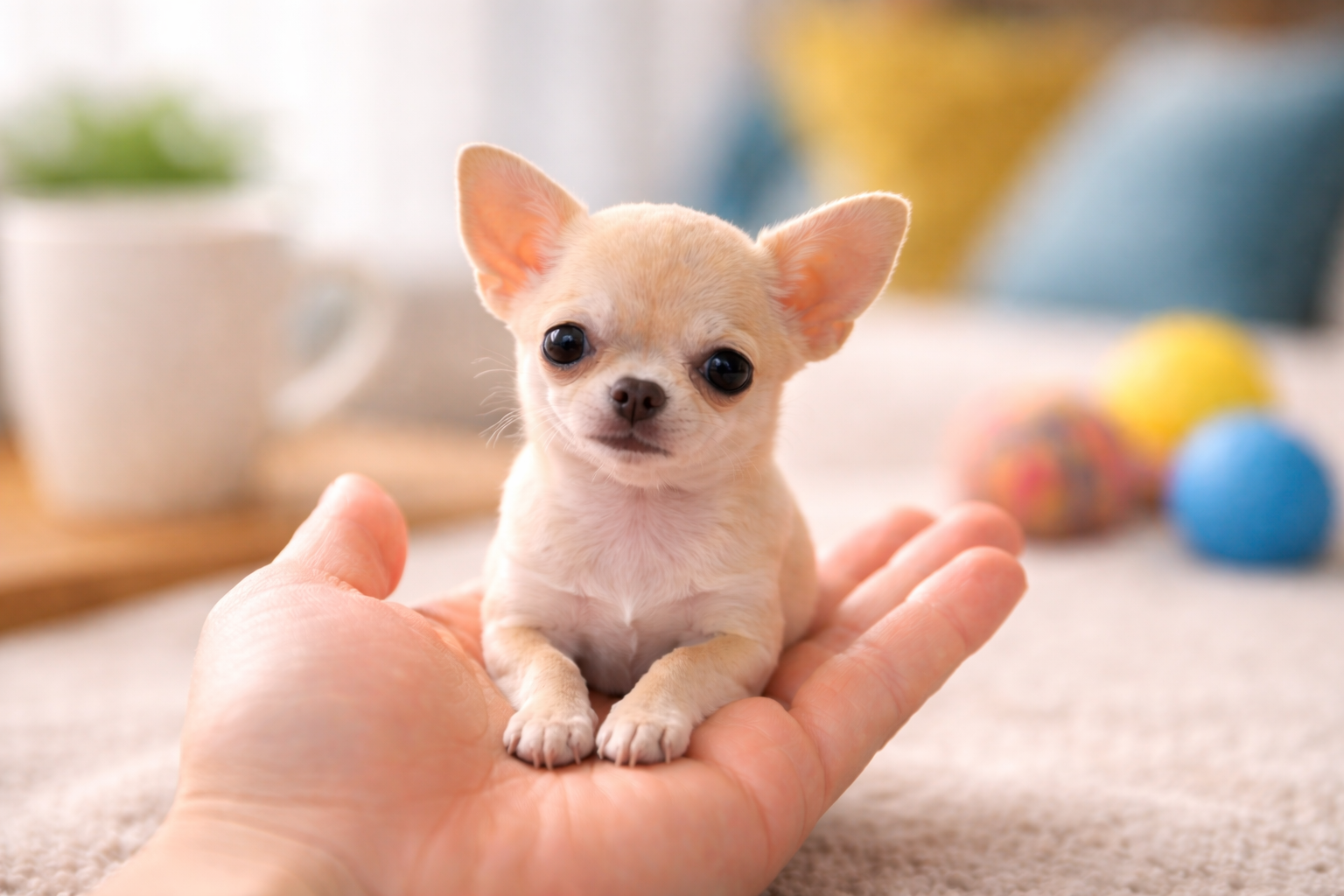
15 teacup dog breeds will fit even in the smallest studio apartment and change your life.
A miniature dog is not just a “small format” — it’s a whole different philosophy of pet ownership. These pets take up little space, easily adapt to apartment living, and often live 10–16 years or more. Unlike large breeds, teacup dogs are long-livers, and that’s an important criterion when choosing a furry friend for many years to come. But behind the trend for “teacup size” there are often health risks. That’s why you should choose not the tiniest puppy, but a breed with stable genetics and clear growth and weight parameters. Below are 15 teacup breeds and key facts about each.
Teacup Dog Breeds for Apartments: Size, Weight, Temperament, and Lifespan
Before buying, it’s important to consider not only dimensions and average lifespan, but also activity level and temperament. Size affects a dog’s character, and often not for the better.
- Pomeranian — height up to 18–22 cm, weight up to 3.2 kg. Bold, alert, owner-oriented. Lifespan: 12–16 years.
- Toy Poodle — height up to 24–25 cm, weight 2–3 kg. Very intelligent, active, barely sheds, making it suitable for allergy sufferers. Lifespan: 8–15 years.
- Beagle (mini format) — height up to 33–38 cm, weight 7–11 kg. Energetic, pack-oriented, requires activity. Lifespan: 12–15 years.
- Maltese — height up to 18 cm, weight 2–3 kg (teacup versions 0.9–1.8 kg). Affectionate companion, low activity. Lifespan: 12–15 years.
- Teacup Pomsky — a cross between a Siberian Husky and a Pomeranian, height up to 25 cm, weight up to 4 kg. Active, sociable hybrid. Lifespan: 10–15 years.
- Yorkshire Terrier — height up to 18 cm, weight up to 3.2 kg (mini 0.9–1.3 kg). Bold, vocal, loyal. Lifespan: 7–9 years (teacup), 13–16 years (toy).
- Bichon Frise — height up to 25 cm, weight up to 5.5 kg. Playful, friendly, moderately active. Lifespan: 12–15 years.
- Chihuahua — height up to 13 cm, weight up to 2.7 kg. The smallest breed, energetic and attached to the owner, but needs proper training and socialization. Lifespan: 15–20 years.
- Teacup Pug — height up to 25 cm, weight up to 6 kg. Lifespan: 6–10 years (teacup) and 13–15 years (toy). Calm, sociable, but prone to breathing problems, which is why this breed and other brachycephalic breeds are being banned from breeding in some countries.
- Shih Tzu — height up to 23 cm, weight up to 4 kg. Affectionate, requires attention and coat care. Lifespan: 10–16 years.
- Teacup French Bulldog — height up to 28 cm, weight from 2.3 to 6.4 kg. Sociable, apartment-friendly format, may have breathing problems like pugs. Lifespan: 10–12 years.
- Papillon — height 20–28 cm, weight 2.7–4.5 kg. One of the smartest among decorative breeds, active. Lifespan: 14–16 years.
- Miniature Dachshund — height 13–15 cm at the withers, weight up to 5 kg. Playful, friendly, and cheerful dog, yet stubborn and independent. Lifespan: 12–16 years.
- Pekingese — height 15–23 cm, weight 3–6.3 kg. Independent, loyal, sensitive to heat, has breathing problems like all brachycephalic breeds. Lifespan: 12–14 years.
- Brussels Griffon — height 18–25 cm, weight 3.5–5.5 kg. Smart, playful, sometimes stubborn, dislikes being alone. Lifespan: 12–15 years.
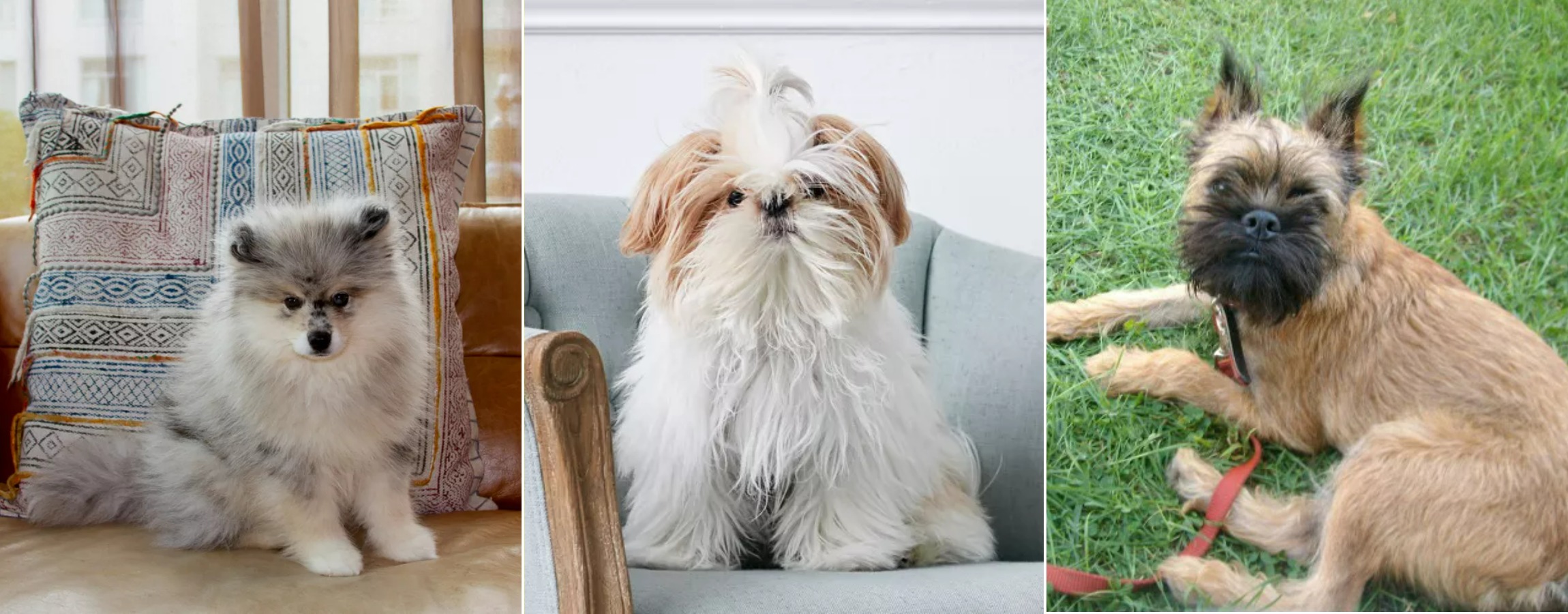
Breeds: Pomsky, Shih Tzu, and Brussels Griffon. Image source: thesprucepets.com
Health Issues in Teacup Dogs: Main Risks and Diseases
Dwarfism is often achieved by breeding the smallest puppies in a litter. This increases the likelihood of congenital problems. The most common include:
- Hypoglycemia — a sudden drop in blood sugar, life-threatening.
- Portosystemic liver shunt — a congenital condition that manifests at an early age.
- Bone fragility — a high risk of fractures even from falling off a couch.
How to Choose a Healthy Teacup Breed Puppy
The best option is a puppy at the lower end of the breed standard, not an extremely “teacup” format. Checking documents, a veterinary examination, and avoiding breeders offering suspiciously small dogs without a confirmed pedigree are essential. A teacup dog is a long-term responsibility.