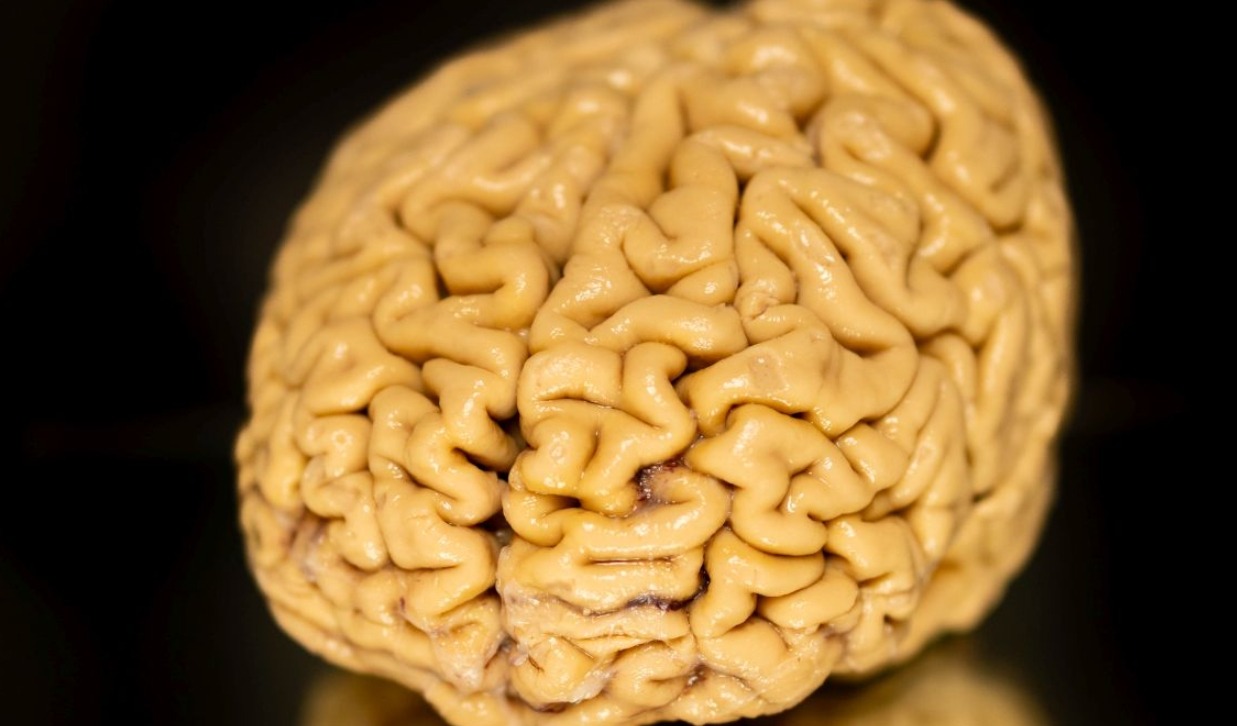
Superagers’ brains are donated to science voluntarily. It is precisely thanks to such donations that this discovery was made. Image source: sciencealert.com
Some people at 80 solve crossword puzzles faster than their grandchildren, remember events from half a century ago in the finest detail, and don’t lose their mental sharpness. Scientists call such people “superagers.” For a long time, it was believed they were simply lucky with their genetics, but new research shows that the secret lies in the brain’s ability to grow fresh neurons even in advanced old age. And this discovery could change our approach to preventing dementia and Alzheimer’s disease.
Who Are Superagers
The term “superager” appeared in scientific usage relatively recently. It refers to people over 80 whose memory functions at the level of 50–60-year-olds, or even better. These aren’t just “energetic retirees” — we’re talking about people who pass standard cognitive tests with results typical for people 20–30 years younger.
It would seem that with age, the brain inevitably loses volume, neurons die, and connections between them weaken. This is indeed the case for most people. But superagers somehow bypass this pattern. Their cerebral cortex is thinner than in youth, yet the hippocampus — the memory center — remains noticeably larger than in peers with typical cognitive aging.
American scientists set out to understand what exactly makes the brains of superagers so resilient. To do this, they studied 38 human brains donated for scientific research after the death of their owners. Among the samples were brains of superagers, people with typical aging, and patients with Alzheimer’s disease, which destroys the brain.

Superagers are people over 80 whose cognitive functions remain at the level of 50–60-year-olds. Image source: newsbytesapp.com
Why the Adult Brain Creates New Neurons
For a long time, a strict dogma prevailed in neurobiology: the brain you were born with is the brain you’ll live with your entire life. No new neurons appear in an adult human. Period. But in 1998, a revolutionary paper was published that overturned this notion. Researchers discovered that fresh nerve cells are indeed born in the hippocampus of the adult human brain. This process is called neurogenesis — the formation of new neurons.
Since then, the scientific community has been engaged in heated debates. Some teams confirm neurogenesis in the adult brain, while others question the results. The problem is that immature neurons are extremely difficult to detect — they exist in a transitional state and quickly either mature or die.
A new study, the results of which were published in early 2026, provided a powerful argument in favor of neurogenesis. Scientists used special markers for immature neurons — proteins found only in cells at early stages of development. And here’s what they discovered: in the brains of superagers, there were approximately twice as many immature neurons as in people of the same age with typical aging.
Simply put, the brains of superagers don’t just better preserve old neurons — they actively create new ones. This isn’t about luck, but about a biological mechanism that can be studied and, possibly, stimulated.
What Happens to the Brain in Alzheimer’s Disease
If superagers showed elevated levels of neurogenesis, then patients with Alzheimer’s disease presented the exact opposite picture. The number of immature neurons in their hippocampus turned out to be significantly below normal. And this discovery is extremely important.
The fact is that Alzheimer’s disease remains one of medicine’s greatest mysteries. It is known that amyloid plaques and tau proteins accumulate in the brains of such patients, damaging nerve cells. But scientists still cannot definitively understand what triggers this process and why some people develop the disease while others don’t.
The new data add an important element to this picture. It turns out that neurogenesis may play the role of a kind of “shield.” As long as the brain actively creates new neurons, it compensates for the death of old cells. As soon as this process slows down, cognitive decline accelerates.
This is a big step forward in understanding how the human brain processes information, forms memories, and ages, — notes neuroscientist Orly Bhatt Lazarov from the University of Illinois at Chicago.
According to her, if researchers can determine why some brains age more healthily than others, it will help develop therapies for dementia prevention and cognitive resilience.
In fact, this is not just academic interest. According to WHO data, more than 55 million people worldwide live with dementia, and approximately 10 million new cases are recorded each year. If neurogenesis proves to be a key protective mechanism, this will open the path to an entirely new class of drugs.
How to Preserve Memory in Old Age
Here is the main question that concerns not only scientists but everyone who wants to maintain mental clarity as long as possible. If superagers owe their memory to neurogenesis, can this process be stimulated?
There is no definitive answer yet, but there are encouraging signs. Animal studies show that neurogenesis is enhanced under several conditions:
- Physical activity — especially aerobic exercise like running, swimming, and walking;
- Intellectual stimulation — learning new things, solving complex problems;
- Social interaction — communication, emotional connections;
- Healthy sleep — it is during deep sleep that the brain “services” itself;
- Mediterranean diet — rich in omega-3, antioxidants, and polyphenols.
But there’s a nuance. It’s one thing — mice in a laboratory, and quite another — the human brain. Scientists cannot yet say precisely which factor most strongly influences neurogenesis in humans. Perhaps it’s the combination of all the listed habits. Perhaps genetic predisposition plays a more significant role than lifestyle.
Nevertheless, the very fact that the brain of an 80-year-old person is capable of creating new neurons changes everything. It means that brain aging is not a sentence, but a process that can theoretically be influenced.