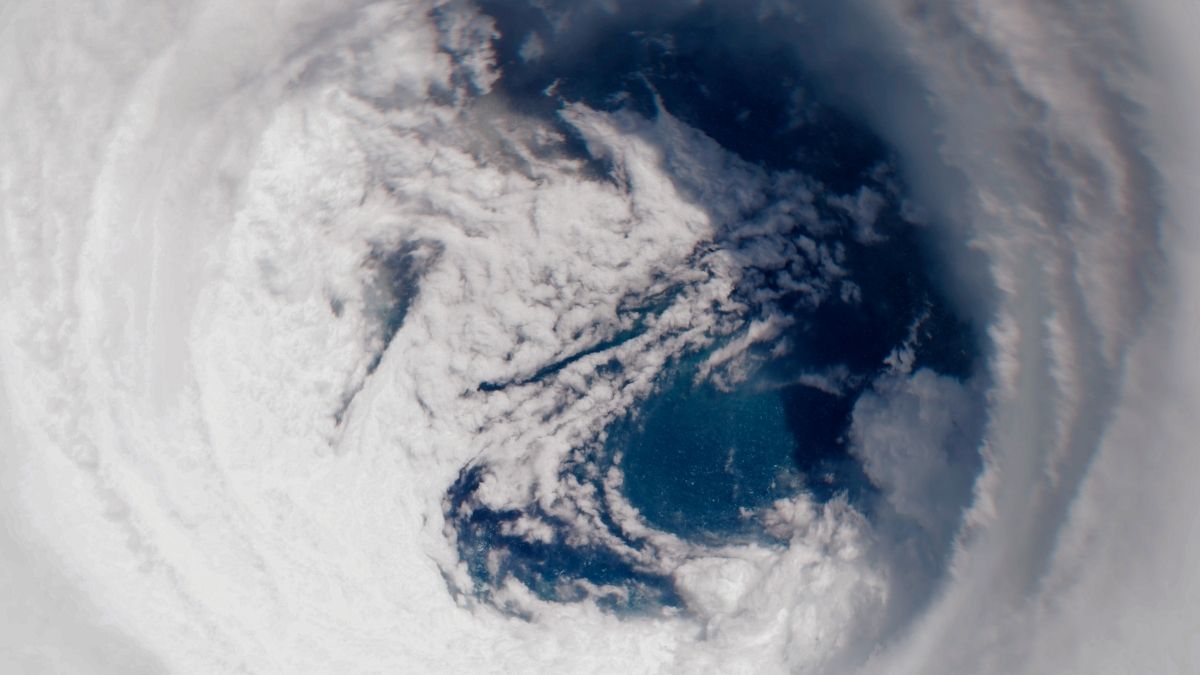
Thermal map of Earth: the ocean absorbs more than 90% of the planet’s excess heat.
In 2025, the world’s ocean accumulated a record amount of heat in the entire history of observations — and this record has been broken for the ninth consecutive year. The World Meteorological Organization (WMO) published its annual “State of the Global Climate” report, confirming that the period 2015–2025 was the hottest in the entire history of instrumental measurements, and Earth’s climate is more unbalanced than ever before. In essence, this is no longer just about rising temperatures, but about a broader process — climate change.
What the WMO Report on Global Warming 2025 Revealed
The State of the Global Climate 2025 report was published on March 23, 2026, on World Meteorological Day. This is the WMO’s annual flagship report, based on data from national meteorological services, regional climate centers, UN agencies, and dozens of independent scientists worldwide.
The main conclusion: Earth’s climate system is in a state of emergency. All key climate indicators — greenhouse gas concentrations, surface temperature, ocean heat content, water acidity, sea level, glaciers, and sea ice — continue to move toward records.
For the first time in history, the WMO report included a new indicator — Earth’s energy imbalance. In simple terms, this is the difference between the amount of solar energy our planet receives and how much heat it radiates back into space.
In a stable climate, these values are roughly equal. But greenhouse gases act like a blanket: energy comes in but cannot escape back out. The gap between “input” and “output” is at a record high for the entire observation period.
Why the Ocean Absorbs 91% of the Planet’s Excess Heat
Where does all this trapped energy go? It is distributed unevenly. According to the WMO report, only 1% of excess heat remains in the atmosphere. Another 5% accumulates in the soil. About 3% goes toward melting glaciers and ice sheets. And the remaining 91% is absorbed by the ocean. That is why the temperature of the world’s ocean is becoming one of the most accurate indicators of the climate crisis.
In essence, the ocean functions as a giant thermal buffer, protecting us from even faster temperature rises on land. But this protection comes at a high cost: the water heats up, and the consequences of this warming are increasingly difficult to ignore.

Ocean waters absorb solar heat, penetrating to depths of up to 2,000 meters.
In 2025, ocean heat content (in the upper 2,000 meters of depth) reached an absolute maximum over 66 years of continuous observations, beginning in 1960. Compared to 2024, the increase was approximately 23 zettajoules — that is 23 followed by 21 zeros. To put this in perspective: this is equivalent to approximately 37 years of global energy consumption or, by another analogy, the energy of 12 atomic bombs dropped on Hiroshima — every second, every day, all year long.
Consequences of Global Warming: Storms, Rising Waters, and Ecosystem Collapse
Ocean heating is not an abstract number in a scientific report. Warm water directly fuels extreme weather events. The warmer the ocean surface, the more moisture evaporates into the atmosphere, and the more powerful tropical cyclones, hurricanes, and heavy rainfall become. In 2025, the world faced Hurricane Melissa, tropical cyclones Senyar and Ditwa, powerful typhoons in Vietnam and the Philippines — and all of them were fueled by anomalously warm water.
Additionally, when heated, water expands — this is called thermal expansion. Together with glacier melting, it leads to rising sea levels. Sea level is now approximately 11 cm higher than at the beginning of satellite measurements in 1993, and the rate of rise has accelerated since 2012.

Coastal areas increasingly suffer from flooding due to rising sea levels.
About 90% of the ocean surface in 2025 experienced at least one marine heatwave — and this despite La Niña conditions (an oceanic and atmospheric phenomenon) that usually cool surface waters. Marine heatwaves kill coral reefs, destroy plankton, and disrupt food chains on which millions of people depend. More than 3 billion people on the planet rely on marine and coastal resources.
How Ocean Acidification Threatens Plankton and Marine Life
The ocean absorbs not only heat but also carbon dioxide. According to the report, over the past decade (2015–2024), the ocean absorbed about 29% of anthropogenic CO₂ emissions. When carbon dioxide dissolves in water, it forms carbonic acid, making the water more acidic. This process is called ocean acidification.
Over the past 41 years, the average pH of the ocean surface has been steadily declining, and the oceans are becoming increasingly acidic. According to the IPCC (Intergovernmental Panel on Climate Change), the current acidity level is unprecedented for at least the last 26,000 years.
For marine organisms, this is a catastrophe. Many species of plankton (tiny organisms that form the base of the marine food chain) build their shells and skeletons from calcium carbonate. In more acidic water, building and maintaining such structures becomes much more difficult, and in particularly acidic conditions, shells literally begin to dissolve. The same applies to corals.
Furthermore, the mass die-off of fish and other organisms during marine heatwaves leads to additional greenhouse gas emissions during their decomposition — creating a vicious cycle.
Scientists’ Forecast: How Global Warming Will Change the Climate After 2025
Modeling shows that even if humanity completely stopped greenhouse gas emissions right now, the Southern Ocean alone would continue to release accumulated heat and sustain global warming for at least another century. The ocean is a system with enormous inertia: the heat it has already absorbed will not dissipate quickly.
According to WMO scientists’ forecasts, neutral conditions in the Pacific Ocean are expected by mid-2026, and by the end of the year a new El Niño may develop — unlike La Niña, this phenomenon is associated with rising water temperatures in the Pacific Ocean. If this happens, 2027 could once again become an anomalously hot year.

Climatologists analyze ocean temperature data at a research center.
UN Secretary-General António Guterres, commenting on the report, stated: “When history repeats itself eleven times, it is no longer a coincidence. It is a call to action.” WMO chief Celeste Saulo emphasized that “human activity is increasingly disrupting the natural balance, and we will live with the consequences for hundreds and thousands of years.”