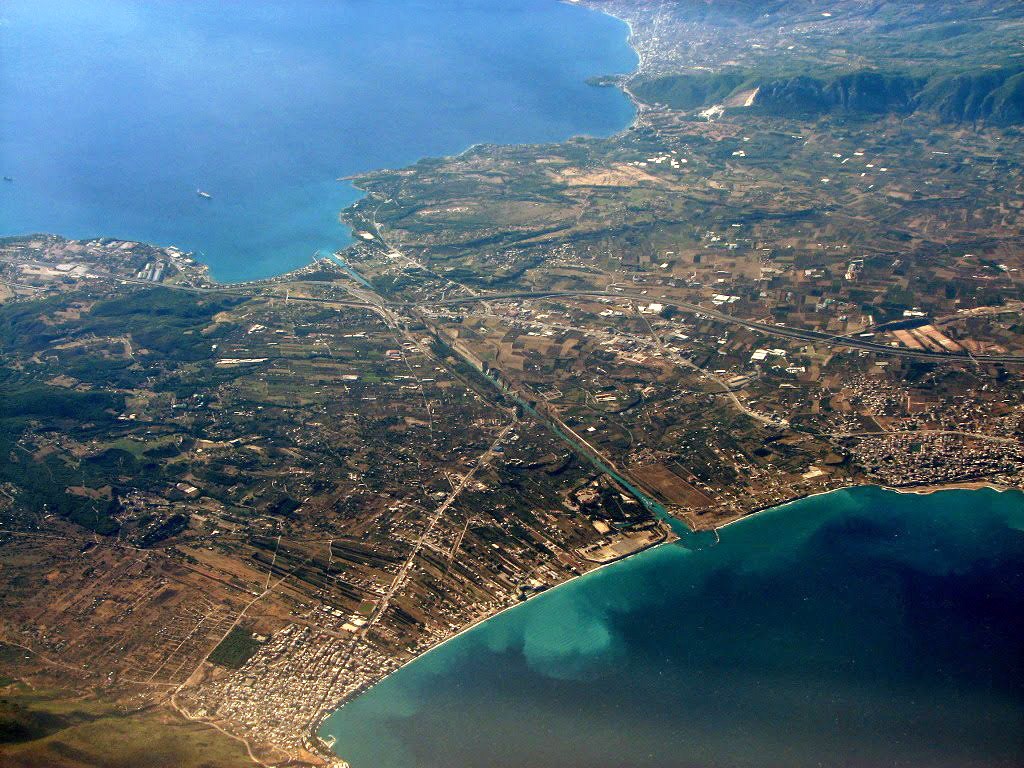
The Corinth Canal became an engineering marvel with an unexpected fate. Image source: masterok.livejournal.com
Sometimes it seems like modern construction projects drag on forever, but one of the most famous engineering projects in history had to wait over two millennia. The Corinth Canal in Greece was only opened 2,500 years after it was first proposed. During that time, empires rose and fell, technologies changed, and even the types of ships for which it was originally intended evolved. The history of this canal is a great example of how an idea can be far ahead of humanity’s capabilities. And at the same time — an example of how persistence eventually gets the job done, even if too late.
When Construction of the Corinth Canal Began and Why It Was Needed
The Isthmus of Corinth connects mainland Greece with the Peloponnese peninsula. Without a canal, ships had to sail around the peninsula, adding hundreds of nautical miles and making journeys more dangerous — especially in times when every sea voyage could be your last.
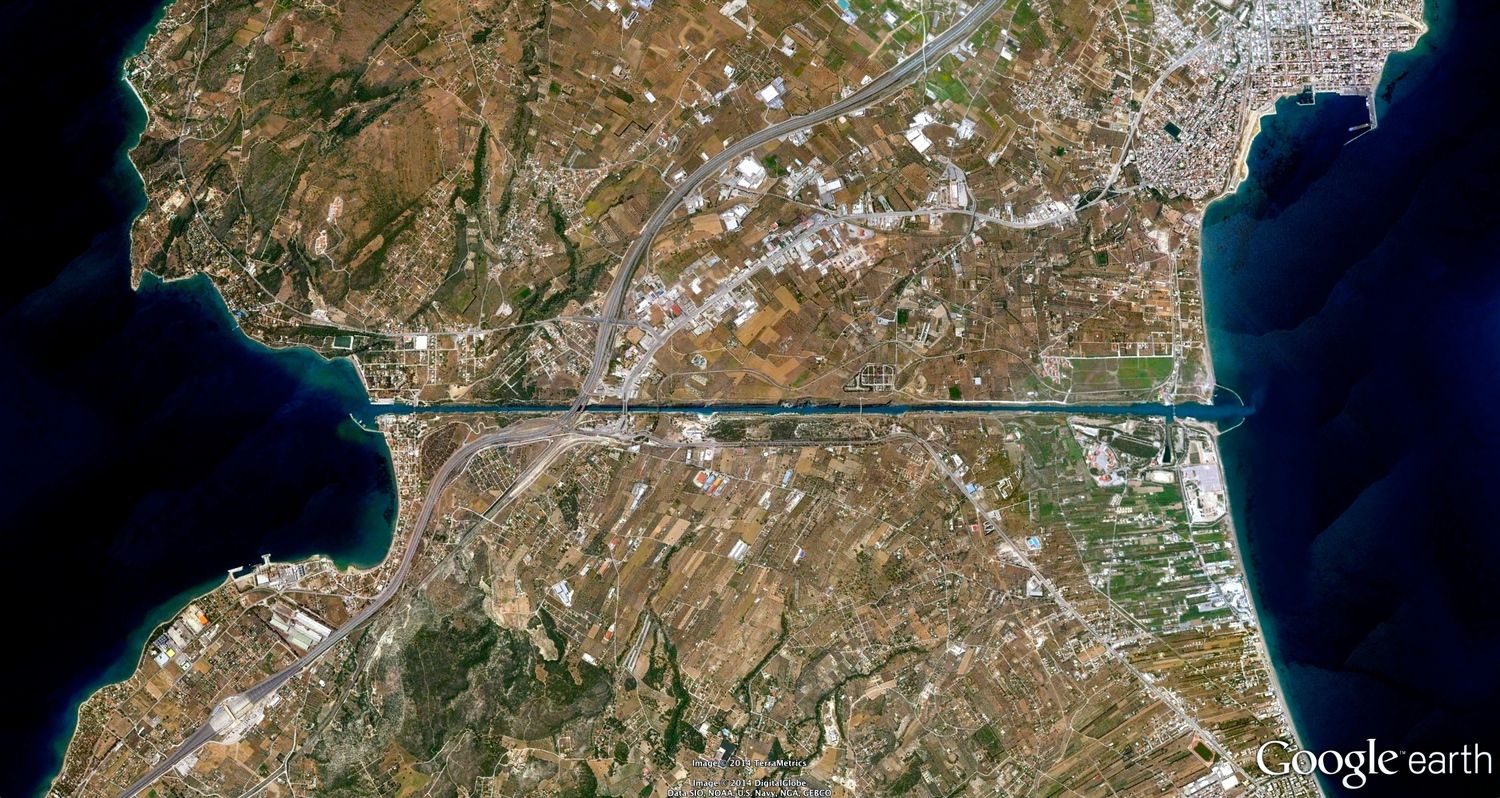
A lock-free navigable canal in Greece connecting the Saronic Gulf of the Aegean Sea and the Gulf of Corinth of the Ionian Sea. Cut through the Isthmus of Corinth, connecting the Peloponnese peninsula with the central part of Greece. Image source: ca.pinterest.com
Around 600 BC, the ruler Periander wanted to cut a canal here but quickly realized the task was too complex. Instead, a diolkos was built — a stone road with grooves along which small vessels were transported overland. Essentially, it was a kind of primitive railway long before real trains existed.
The idea of a canal never disappeared. Julius Caesar and Caligula considered it, and later the Romans returned to the project, whose engineering technologies were remarkably advanced for their time.
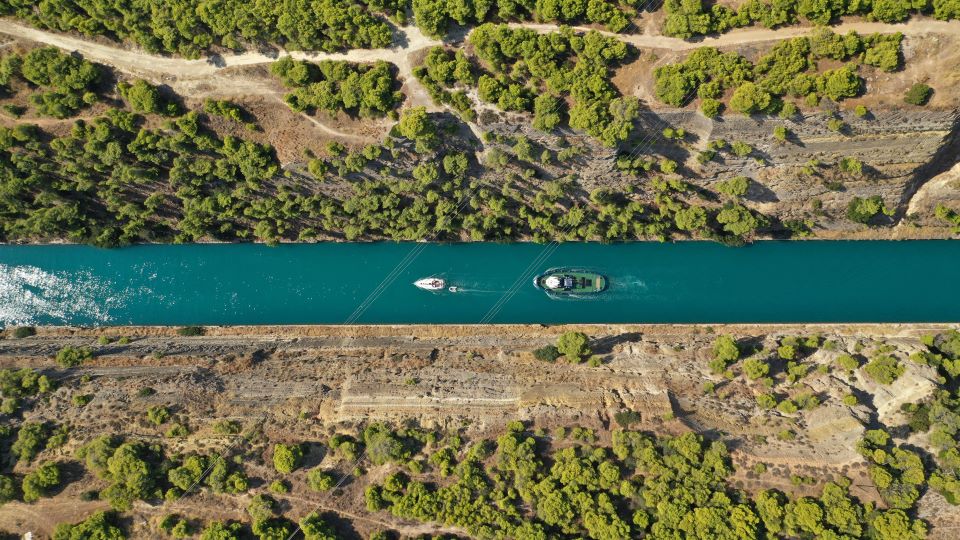
The Corinth Canal was named after the city of Corinth, located at the western end of the canal. Image source: kathimerini.gr
Why the Construction of the Corinth Canal Failed in Ancient Times
In 67 AD, Emperor Nero ordered construction to begin. Thousands of slaves and soldiers started digging a trench, and within a short time they managed to complete several kilometers.
But after Nero’s overthrow, the work stopped. The project proved too expensive, complex, and dangerous. One of the main problems was that ancient engineers could not accurately calculate water levels and rock stability. There was a risk that the canal would simply collapse or flood the surrounding area.
After that, construction attempts were postponed for nearly 18 centuries.
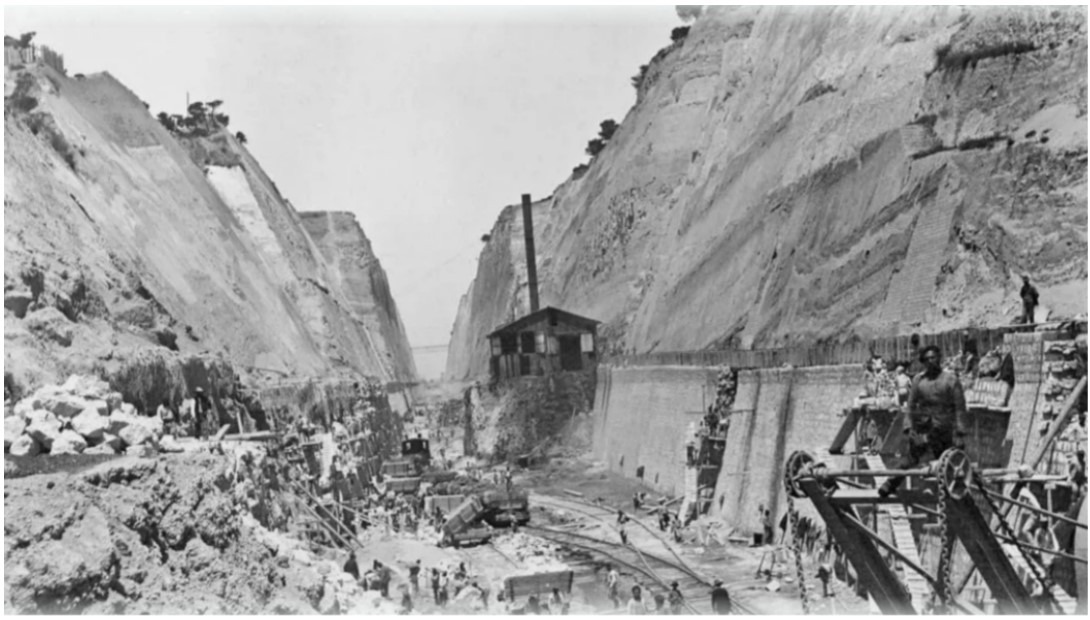
19th century — the beginning of the Corinth Canal construction. Image source: vistat.org
Why the Corinth Canal Was Only Completed After 2,500 Years
It was only in the 19th century, when dynamite, steam engines, and precise measurements became available, that the Greeks were able to finish the canal. It was opened in 1893, and it did indeed shorten the route between the gulfs.
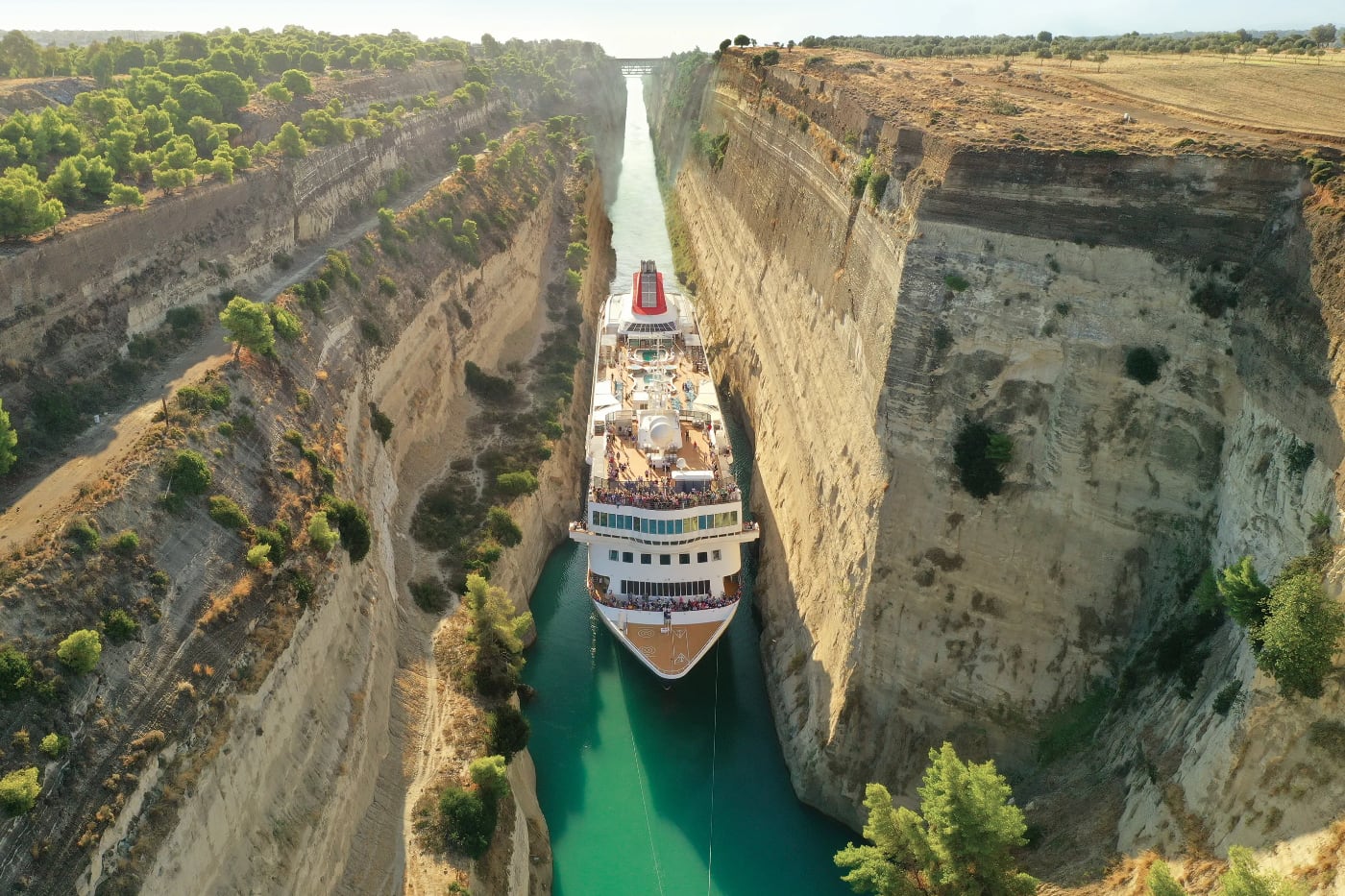
Tugboats guide larger vessels through the narrow strait. In 2019, the cruise liner M.S. Braemar became the largest ship to pass through here: with only 60 cm of clearance on each side. Image source: iphones.ru
But a new problem arose. While the canal was being built, ships had become much larger. The canal’s width is approximately 24.6 meters, and for many modern vessels, that simply isn’t enough.
As a result, it never became a major trade route and today is mainly used by tourist ships. Currently, about 15,000 vessels pass through it annually, and most of them are not cargo ships but excursion boats.