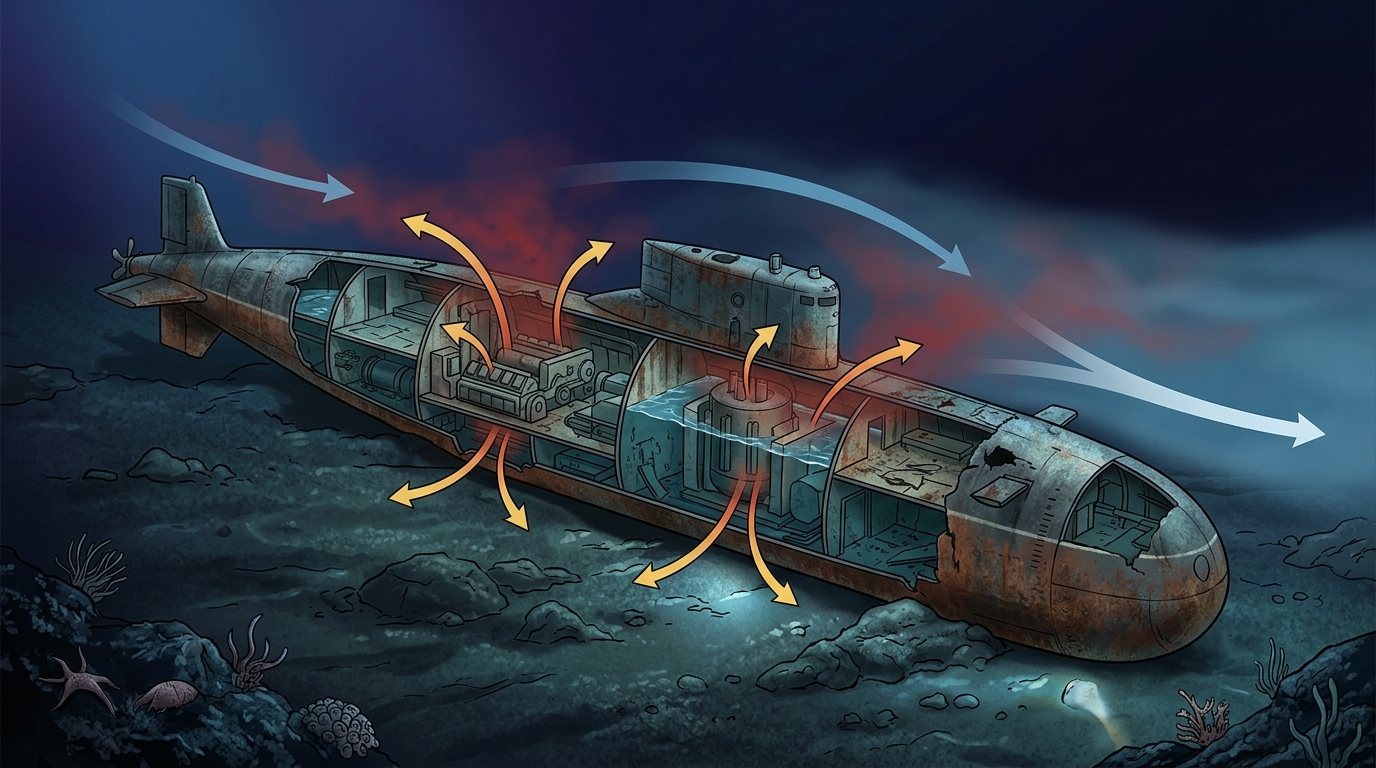
Schematic depiction of radioactive substance leakage from a sunken submarine.
The Soviet nuclear submarine K-278 “Komsomolets” sank in the Norwegian Sea 37 years ago — and is still releasing radioactive substances into the ocean. A new study published in the journal PNAS has for the first time provided a detailed assessment of the leak’s scale: cesium-137 concentrations near the submarine’s hull exceed background levels by 800,000 times. It sounds terrifying, but what does it actually mean?
Why the Nuclear Submarine “Komsomolets” Sank in the Norwegian Sea
K-278 “Komsomolets” was launched in 1983 and sank after an onboard fire in 1989. The submarine carried a nuclear reactor and two torpedoes with nuclear warheads. It was a unique vessel: in 1984, it set a depth record by diving to 1,020 meters. The secret lay in its titanium hull, which could withstand pressures at depths inaccessible to ordinary submarines.
On April 7, 1989, during a mission at a depth of about 335 meters southwest of Bear Island (Norway), a short circuit triggered a fire in the aft compartment. Despite the blaze, the submarine managed to surface and stayed afloat for about five hours before sinking. Of the 69 crew members, 42 died: nine during the accident and flooding, 30 from hypothermia in the icy water, and three aboard the rescue vessel.
The submarine went to the bottom along with its nuclear “cargo” — the reactor and two warheads. Since then, it has lain in perpetual darkness at a depth of 1,680 meters. At such great depths, research is nearly impossible without remotely operated vehicles.
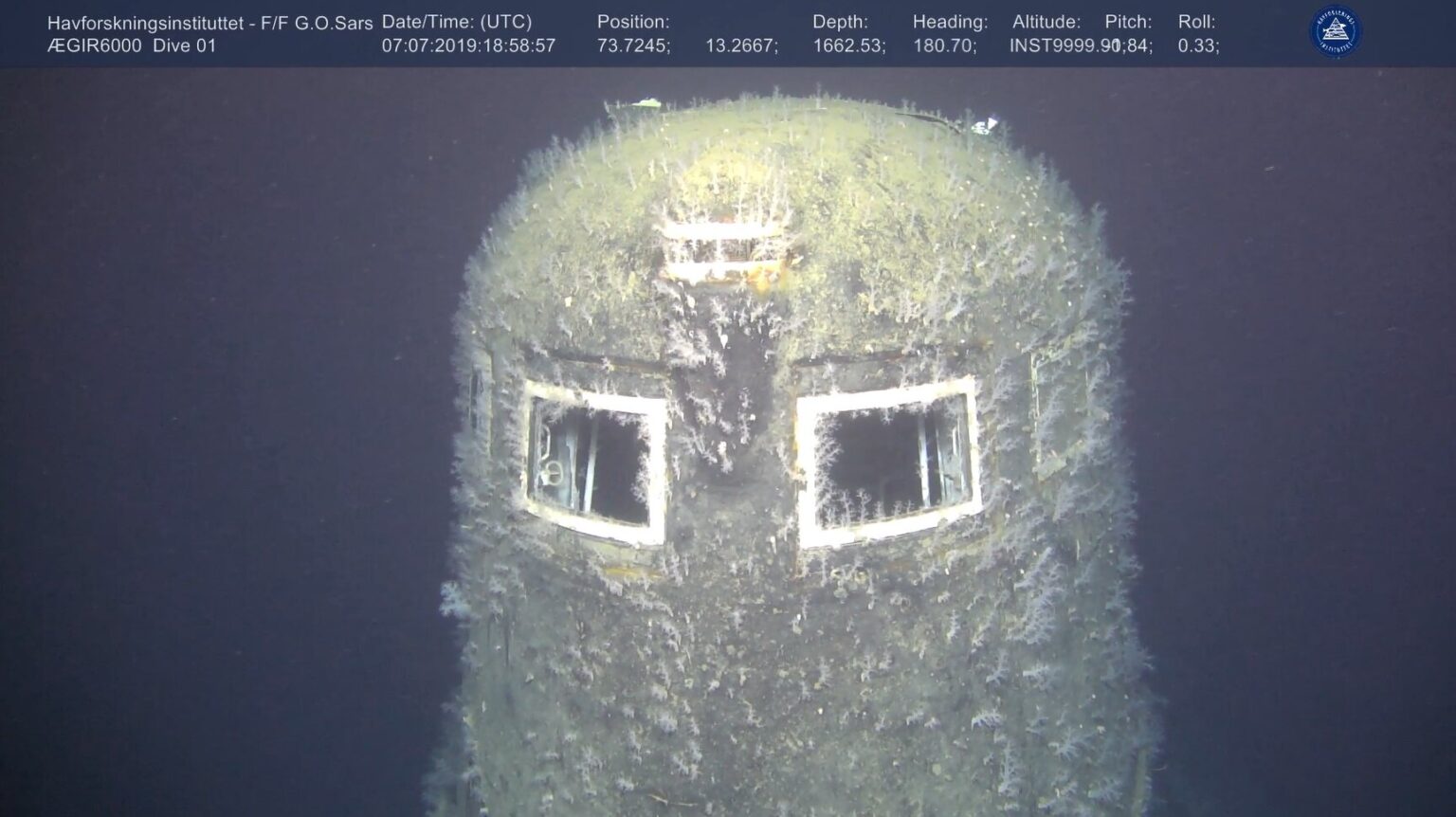
Conning tower of the sunken nuclear submarine “Komsomolets.” Image source: zmescience.com
What the New Study Revealed About Radiation Leaks from the Submarine “Komsomolets”
In 2019, scientists conducted a large-scale survey, sending the remotely operated vehicle Ægir 6000 to the submarine. Researchers used sonar, video cameras, and large 40-liter containers for collecting water samples for radioactive isotopes. Now the team, led by marine radioecologist Justin Gwynn, has completed the analysis of the collected data — and determined the scale of the leak, its source, and its impact on the benthic ecosystem.
The most alarming finding was an active leak of radioactive material from a ventilation pipe and an adjacent metal grate — sometimes the discharges were powerful enough to be visible on video.
Maximum concentrations of strontium-90 and cesium-137 in samples near the grate were 400,000 and 800,000 times higher than typical levels for the Norwegian Sea.
Cesium-137 and strontium-90 are radioactive isotopes formed during nuclear fission. Both have half-lives of about 30 years, and they remain the primary source of radiation in the Chernobyl exclusion zone. In simple terms, these are long-lived “markers” of nuclear fuel — if they are present in water near the submarine, it means the nuclear fuel is degrading.
The ratio of plutonium-240 to plutonium-239 isotopes in the samples conclusively confirmed that the leaks originate specifically from the reactor of “Komsomolets,” and that the nuclear fuel inside is corroding (breaking down, chemically decomposing).
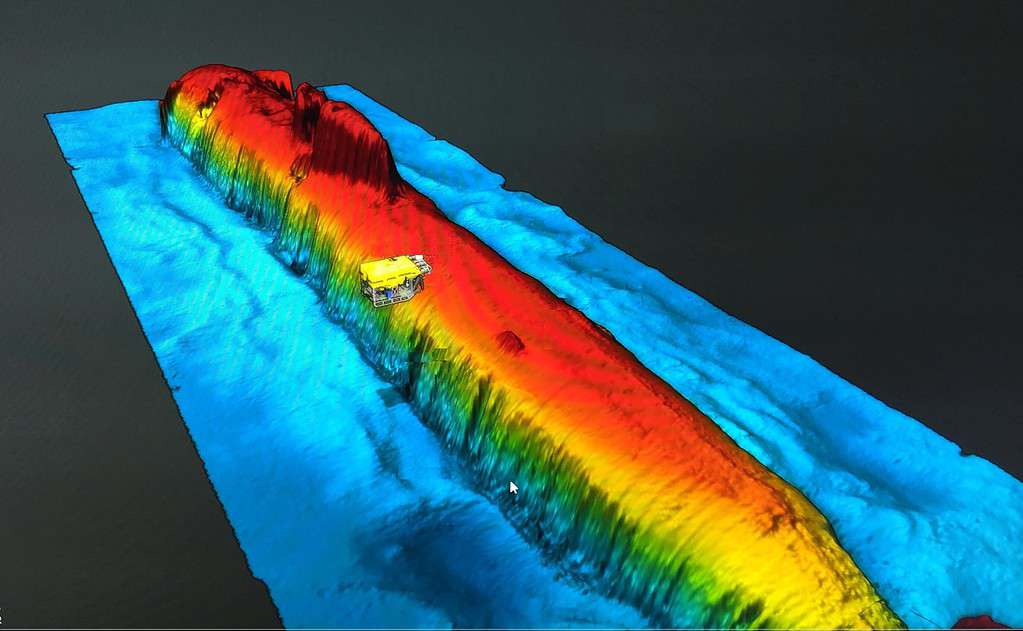
High-resolution sonar scan of “Komsomolets” on the seabed in the Norwegian Sea. The image also shows the Ægir 6000 vehicle during operations around the submarine. Image source: zmescience.com
How Dangerous Is the Radiation Leak from the Sunken Nuclear Submarine
The figure of “800,000 times” sounds frightening, but context is everything here. Just a few meters from the submarine’s hull, the radioactive contamination drops sharply — the enormous volume of Norwegian Sea water acts as a giant diluter. Imagine squeezing a drop of ink into a swimming pool: at the tip of the pipette the color is intense, but a meter away the water is already clear.
Samples of sponges, corals, and sea anemones growing directly on the submarine’s hull showed only a slight increase in radioactive cesium levels — and no signs of deformation or damage. The surrounding sediment is also virtually uncontaminated.
Although leaks from the reactor have been occurring for over 30 years, scientists found no significant accumulation of radionuclides in the environment around the submarine — radioactive substances are rapidly diluted by seawater. This doesn’t mean there is no problem — it means the ocean is coping for now.
Are the Nuclear Warheads on the Submarine “Komsomolets” Dangerous?
The most serious threat comes not from the reactor but from the two nuclear warheads in the submarine’s bow section. In 1994, when it became clear that seawater was in contact with the nuclear torpedoes, joint teams sealed the torpedo tubes with titanium plugs and patches.
For the early 1990s, this was almost unprecedented cooperation. Svetlana Savranskaya of the National Security Archive at George Washington University noted: “Gorbachev and Yeltsin wanted to appear as responsible international players. They learned the lessons of Chernobyl — that secrecy in such situations doesn’t help.”
The good news: the 2026 study confirmed that the 1994 repair work still holds. The nuclear warheads remain sealed, and no traces of weapons-grade plutonium have been detected in the surrounding environment. This is a rare example of how international cooperation during an economic crisis genuinely prevented an environmental catastrophe.
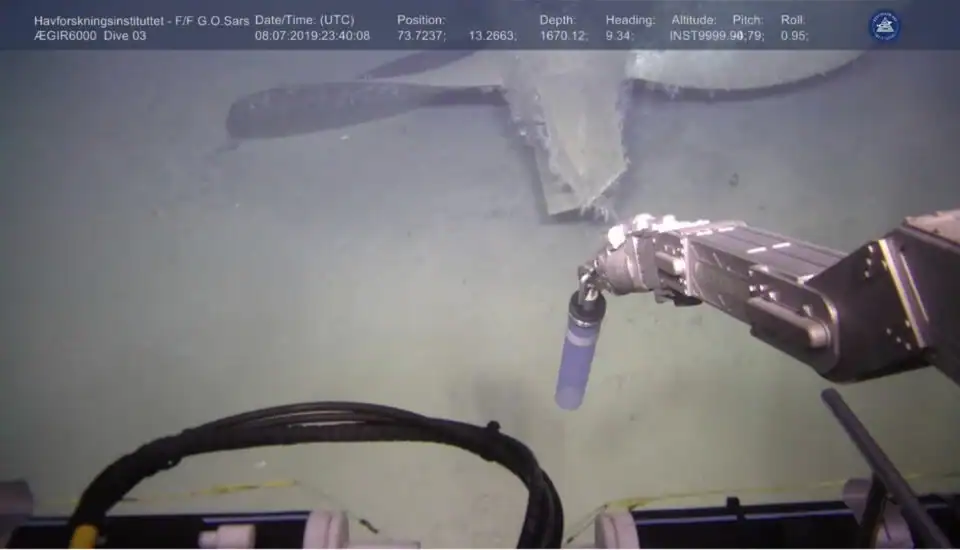
Photo from Ægir6000. Image source: zmescience.com
What Will Happen Next with the Sunken Nuclear Submarine “Komsomolets”
The titanium hull is incredibly strong but not eternal. Saltwater is slowly but relentlessly corroding it. The wrecked submarine on the seabed will only lose structural integrity over time, and the future of “Komsomolets” is a cause for concern. The seabed already harbors plenty of dangerous legacy, including 25,000 barrels of chemicals that have been rusting and poisoning the environment for decades.
One of the mysteries is why the leak does not occur continuously but in pulses: sporadic releases from specific locations along the hull, including the ventilation pipe and the reactor compartment area. The research team considers it a priority to understand why the leaks are intermittent rather than continuous — and whether they are accelerating as the reactor continues to corrode.
Back in the 1990s, Russian authorities concluded that fully raising “Komsomolets” would be too expensive and dangerous. Any attempt to disturb the wreckage could release radioactive material into the water column and even into the atmosphere. Six thousand tons of corroded nuclear metal that need to be hauled through one and a half kilometers of water — that is an engineering nightmare with virtually no margin for error.
The study’s authors insist on continued monitoring and new expeditions — to understand the leak mechanisms and the process of further degradation.