
Sugar is harmful, but not for children’s psyche
Most parents are convinced that the moment a child eats a piece of cake or a handful of candies, they’ll start “bouncing off the walls.” But science has been saying otherwise for several decades now. Large-scale studies have found no evidence that sugar causes hyperactivity in children. The real reasons behind wild behavior turned out to be far more interesting — and they’re related not to food, but to what’s happening around the child and inside the parent’s head.
Sugar and Hyperactivity in Children
Hyperactivity is increased motor activity that is often accompanied by impulsive actions, easy distractibility, and a short attention span. In young children, such behavior is largely normal: a two-year-old is usually far more active than a ten-year-old, and any child’s attention level strongly depends on whether or not they find an activity interesting.
According to New York Post, the idea that sweets make children unmanageable originated in the 1970s. The myth can be traced back to a series of studies from that era related to the so-called Feingold diet — a nutrition program for treating what we now call ADHD (Attention Deficit Hyperactivity Disorder). Pediatric allergist Ben Feingold claimed that food additives, including sugar, were linked to excitable behavior in children.
Since many products containing additives also had high sugar content, sugar became synonymous with all “harmful additives” in the public consciousness and over time became the prime suspect. Although the Feingold diet itself did not directly require eliminating sugar, subsequent studies showed that the methods of the early research were unreliable, and the real effect was observed in fewer than 2% of children, rather than the 75% Feingold had claimed.
The Effect of Sugar on Children’s Behavior
Over the past decades, researchers have conducted numerous experiments to establish or disprove the link between sugar and behavior. In 1995, a meta-analysis was published that combined data from 23 experiments across 16 scientific papers. The authors included only studies with placebo and “blind” designs. That is, neither the children, nor the parents, nor the teachers knew who received sugar and who received a substitute.
The conclusion was unequivocal: sugar does not affect either the behavior or the cognitive abilities of children, and the persistent belief of parents is most likely explained by expectations and simple associations.
“Especially sensitive” children were tested separately as well. In children whose parents described them as “sugar-sensitive,” no significant differences were found across any of the 39 behavioral and cognitive measures between three different diets. Later studies confirmed these findings: numerous placebo-controlled experiments showed that sugar has no significant effect on children’s behavior or attention.
It’s worth noting a caveat: it is not yet possible to completely rule out a small effect of sugar or its influence on specific subgroups of children. But even if such an effect exists, it is so small that it does not explain the dramatic reaction parents describe.

Studies of children’s behavior were conducted using rigorous scientific methods
The Myth About Sugar and Child Hyperactivity
If not sugar — then what? Scientists identify two main reasons why the myth is so persistent.
The first is the effect of parental expectations. In a 1994 experiment, researchers recruited 35 boys aged 5–7 whose mothers considered them “sugar-sensitive.” All children were given a placebo, but half of the mothers were told that their child had received a large dose of sugar. As a result, mothers in the “sugar expectation” group rated their children as significantly more hyperactive, controlled them more often, stayed closer to them, criticized them more, and talked to them more. In other words, parents saw hyperactivity where there was none, simply because they expected to see it.
The second reason is the environment itself. Children usually eat a lot of sweets at birthday parties, holidays, and at grandma’s house — that is, in places where everything is conducive to excitement even without candy: it’s fun, noisy, and the rules are more relaxed than usual. People confuse coincidence with causation. Yes, children may behave wildly around sweets, but the sweets don’t cause that behavior.
It’s important to remember that children are children, and what a parent interprets as hyperactivity is often just normal, healthy energy of a young body.
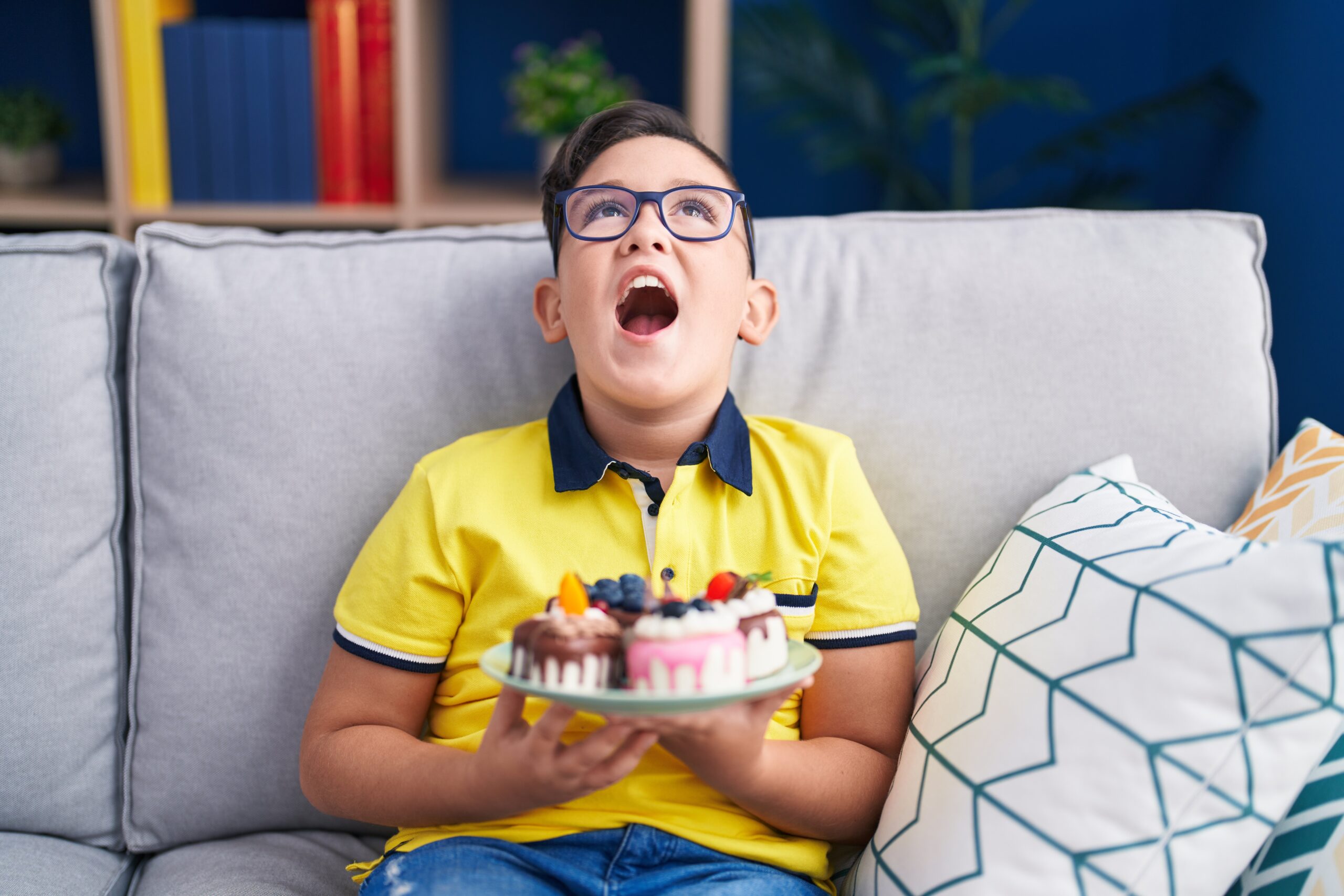
A festive atmosphere alone charges children with energy
What Actually Causes Hyperactivity in Children
Since sugar isn’t to blame, what should we pay attention to? Scientists and pediatricians identify several real factors:
- Sleep deprivation. Most often, hyperactivity in children is the result of poor sleep. While adults become drowsy and sluggish when sleep-deprived, children may actually behave overly actively. Such children are advised to practice good sleep hygiene: turn off electronics well before bedtime, create a suitable environment, and ensure that school-age children sleep 10–12 hours and teenagers 8–10 hours.
- ADHD. Attention Deficit Hyperactivity Disorder is a chronic condition in which a child’s behavior may look like simple hyperactivity. If parents suspect this condition, it’s worth seeing a pediatrician for diagnosis as early as possible, especially for school-age children.
- Caffeine. Some sweets like chocolate contain caffeine, which can indeed cause restlessness and increased heart rate. It’s entirely possible that a child’s behavior is related to caffeine rather than sugar.
- Stress, trauma, and overstimulation. Other factors include stress, psychological trauma, or simply an excess of stimulation.
Pediatricians recommend paying attention to when and where the child’s hyperactivity manifests, whether it coincides with sleep quality, and whether any behavioral disorder might be playing a role.
Why Sugar Is Actually Harmful for Children
The fact that sugar doesn’t cause hyperactivity doesn’t mean it can be consumed without limits. There are plenty of reasons to limit sugar intake beyond its effect on behavior. High sugar consumption is one of the leading causes of cavities, and sugary products tend to be low in vitamins and minerals.
Excessive consumption of processed sugar leads to childhood obesity, which in turn increases the risk of hypertension, diabetes, liver disease, and even mental health problems — both in childhood and in adult life.
The American Academy of Pediatrics recommends completely eliminating added sugar for children under two years old, and for children aged 2 to 18 — no more than 25 grams (about six teaspoons) per day. A single can of Coca-Cola contains 39 grams of sugar — that’s already one and a half daily allowances.
When children fill up on sweets and wash them down with sugary drinks, they simply have no appetite left for the more nutritious foods a growing body needs: fruits, vegetables, whole grains, and lean protein. So limiting sugar is worthwhile — just for different reasons, unrelated to behavior.
Why the Myth About Sugar and Hyperactivity Is Still Alive
It would seem that if science figured everything out long ago, why do millions of parents continue to believe in the “sugar rush”? The answer lies in several psychological mechanisms.
If a parent already believes in the connection between sugar and hyperactivity, they will notice it — even where it doesn’t exist. The brain literally filters reality, selecting facts that support an already existing belief.
The appeal of simple explanations also plays a role: it’s much more convenient to blame a candy than to sort through the complex causes of children’s behavior — from sleep deprivation to overstimulation and age-related characteristics. The idea is firmly rooted in public consciousness and is reinforced by personal experience — or rather, its subjective interpretation.
Caffeine adds further confusion: some sweets (hello, chocolate!) actually contain a stimulant that can cause restlessness. A parent sees the connection “candy = excitement” and draws a logical but erroneous conclusion about it.