Spring equinox: what makes this day unusual and why it’s not quite equal.
On this day, the Sun shines almost equally for all inhabitants of Earth, and the length of day and night becomes nearly equal. This phenomenon is called the equinox, and it is related not to the weather but to Earth’s position in space. It is precisely from this moment that astronomical spring begins in the Northern Hemisphere. But most interestingly, several unusual phenomena occur on this day that not everyone knows about.
When Is the Spring Equinox in 2026: Exact Date and Time
In 2026, the spring equinox will occur on March 20 at 14:46 GMT (17:46 MSK). At this moment, the Sun will be directly above the equator, and both hemispheres of Earth will receive nearly equal amounts of light.
Key facts:
- In the Northern Hemisphere, this day marks the beginning of astronomical spring
- In the Southern Hemisphere, it marks the beginning of astronomical autumn
- The next equinox will be on September 23, 2026
After the spring equinox, daylight hours begin to noticeably increase, and the Sun rises higher and higher above the horizon.
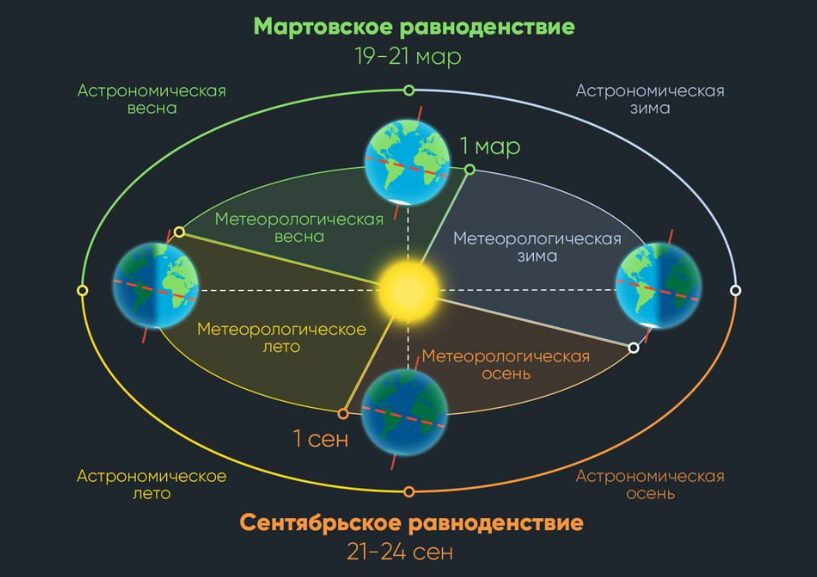
Astronomical and meteorological seasons in the Northern Hemisphere. Image source: starwalk.space
What Is an Equinox and Why Do Seasons Change
Earth rotates around the Sun not straight, but with an axial tilt of approximately 23.4°. Because of this, for most of the year one hemisphere receives more light than the other. This is precisely why seasons exist.
Twice a year, a special alignment occurs:
- Earth’s axis is not tilted toward the Sun
- The Sun is positioned above the equator
- Both hemispheres are illuminated almost equally
This moment is called the equinox. In astronomy, equinoxes are considered the boundaries between seasons, not calendar dates.
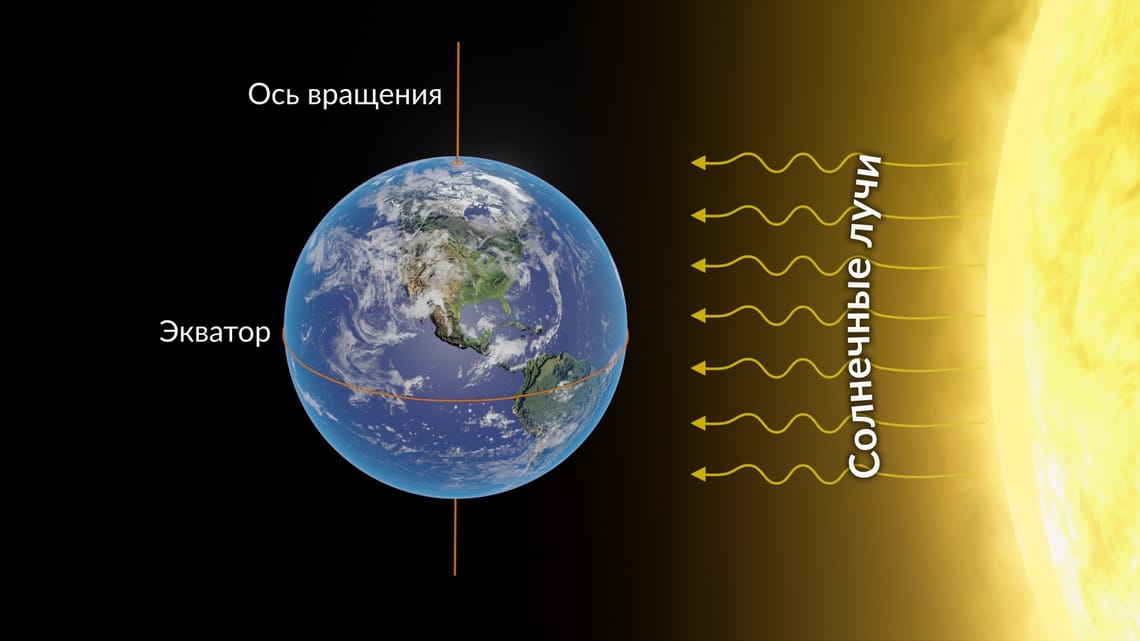
During the equinox, Earth is positioned so that its axis of rotation is perpendicular to the Sun’s rays. At these moments, the Sun is directly above the equator and equally illuminates both hemispheres. Image source: starwalk.space
Is It True That Day Equals Night on the Equinox
It is commonly believed that day equals night on the equinox, but this is not entirely true. In fact, the day is usually about 6–8 minutes longer even on the equinox.
There are two reasons:
- The atmosphere refracts sunlight, so we see the Sun earlier than it actually appears.
- Sunrise is defined as the moment when the edge of the Sun is visible, not its center.
What Happens on Earth During the Equinox
This day has several interesting features.
- The Sun rises exactly in the east and sets exactly in the west.
This only happens on equinox days. So if you want to verify cardinal directions in practice or simply learn to navigate by the Sun, the equinox is especially well-suited for this.
- The best time to observe auroras.
Near the equinoxes, Earth’s magnetic field interacts more strongly with the solar wind, so auroras occur more frequently. - You can see zodiacal light.
This is a faint glow in the sky caused by interplanetary dust. It is easiest to spot in spring and autumn. - The shortest sunsets of the year.
The Sun crosses the horizon at a steeper angle, so it disappears behind it quickly.
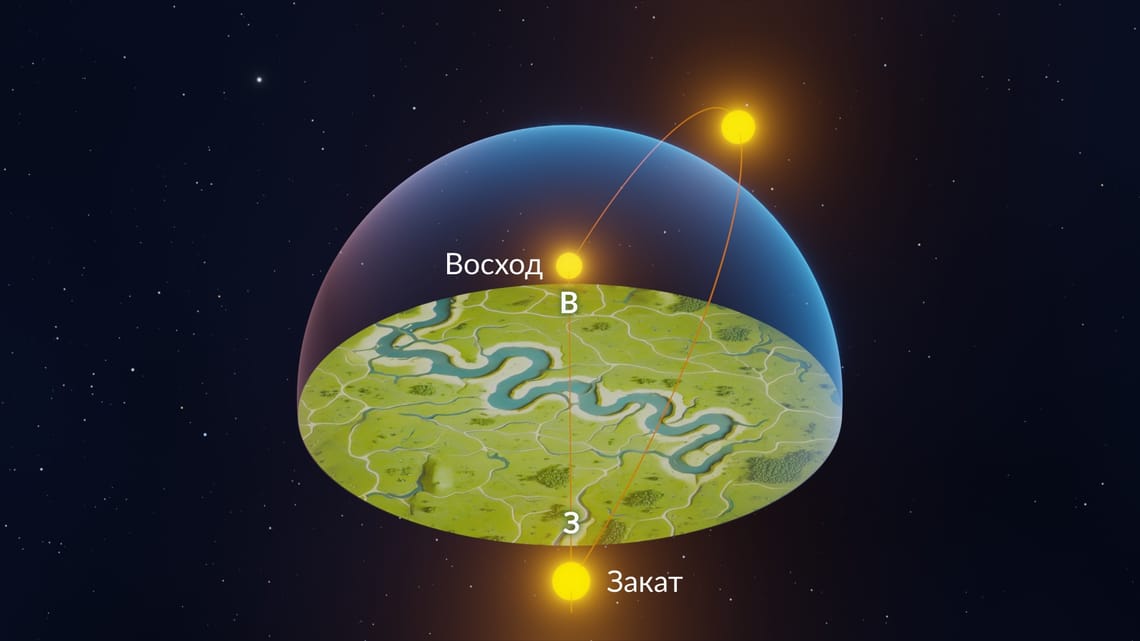
During equinoxes, the Sun rises exactly in the east and sets exactly in the west. Image source: starwalk.space
When Day Truly Equals Night and What Is an Equilux
There is another similar phenomenon — the equilux. This is the day when day and night are truly equal.
It occurs a few days before the spring equinox and after the autumn equinox, because the length of the day is affected by the atmosphere and geography. Therefore, the true “12 hours of day and 12 hours of night” usually does not fall on the equinox day itself.
Why the Spring Equinox Is Considered the Beginning of Spring
In astronomy, seasons are determined by Earth’s position relative to the Sun:
- equinox — the beginning of spring and autumn
- solstice — the beginning of summer and winter