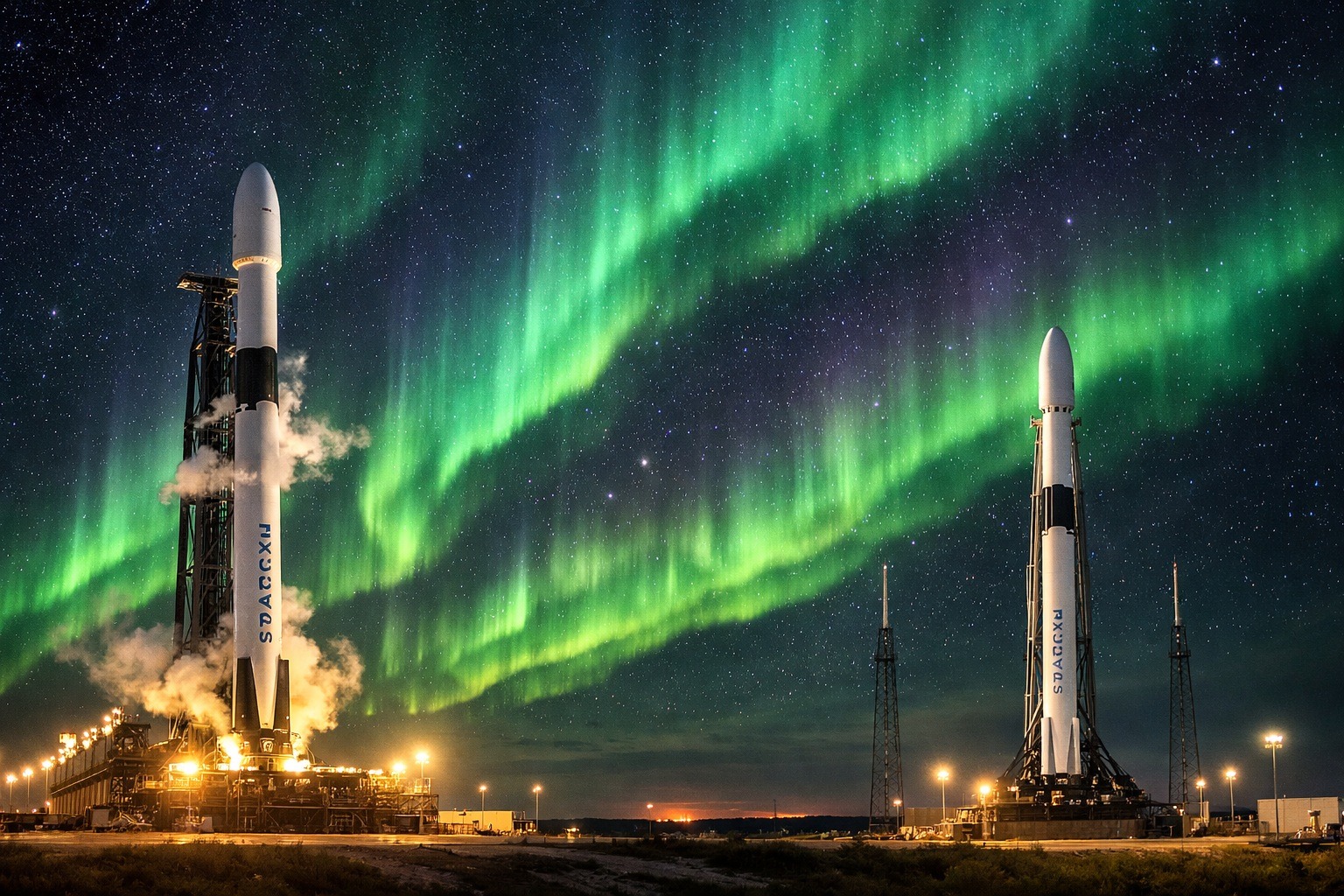
The atmospheric night glow can be seen with the naked eye, but only far from cities
You’ve probably seen photos on social media of a strange glow in the night sky after Falcon 9 launches. Many dismissed it as an optical illusion, reflections of city lights, or even auroras in the wrong place. But it turned out that SpaceX unintentionally helped scientists solve a mystery that astronomers had been puzzling over for more than a century — why the upper layers of the atmosphere sometimes begin to glow on their own.
What is atmospheric night glow
Back in 1868, Swedish physicist Anders Ångström noticed a faint glow in the night sky that could not be explained solely by starlight and scattered solar radiation. The atmosphere seemed to glow on its own — dimly, barely noticeably, but quite measurably. The phenomenon was called “airglow,” and it remained a subject of debate for decades.
The thing is, at altitudes of 80 to 300 kilometers, atoms of oxygen, nitrogen, and other elements exist in an excited state. During the day, the Sun’s ultraviolet radiation “charges” them, and at night they slowly release the accumulated energy in the form of photons. Hence the glow. But the specific mechanisms — exactly which reactions, under what conditions, and at what intensity — remained hypothetical. Scientists were particularly intrigued by the red component of the glow at a wavelength of 630 nanometers, associated with atomic oxygen. Its behavior did not always fit existing models.
How Falcon 9 launches create “artificial auroras”
Everything changed when SpaceX began launching rockets at an unprecedented rate — dozens of launches per year. After each Falcon 9 launch, the second stage dumps its remaining fuel at an altitude of about 200–300 kilometers. Hundreds of kilograms of water and carbon dioxide — combustion products of kerosene and liquid oxygen — are released into space.
And this is where it gets really interesting. These water molecules collide with atomic oxygen in the ionosphere. A series of chemical reactions occurs, as a result of which oxygen atoms transition to an excited state and begin emitting light — that very same red light at 630 nm. In essence, SpaceX conducted a massive chemical experiment in the upper atmosphere, entirely by accident.
Researchers from Boston University, who recorded these “red spots” using ground-based cameras, detected a glow with a radius of up to 300 kilometers that lasted from several minutes to half an hour after each fuel dump. Simply put, each Falcon 9 launch created a kind of artificial aurora in the night sky — only red in color and without any involvement of the solar wind.
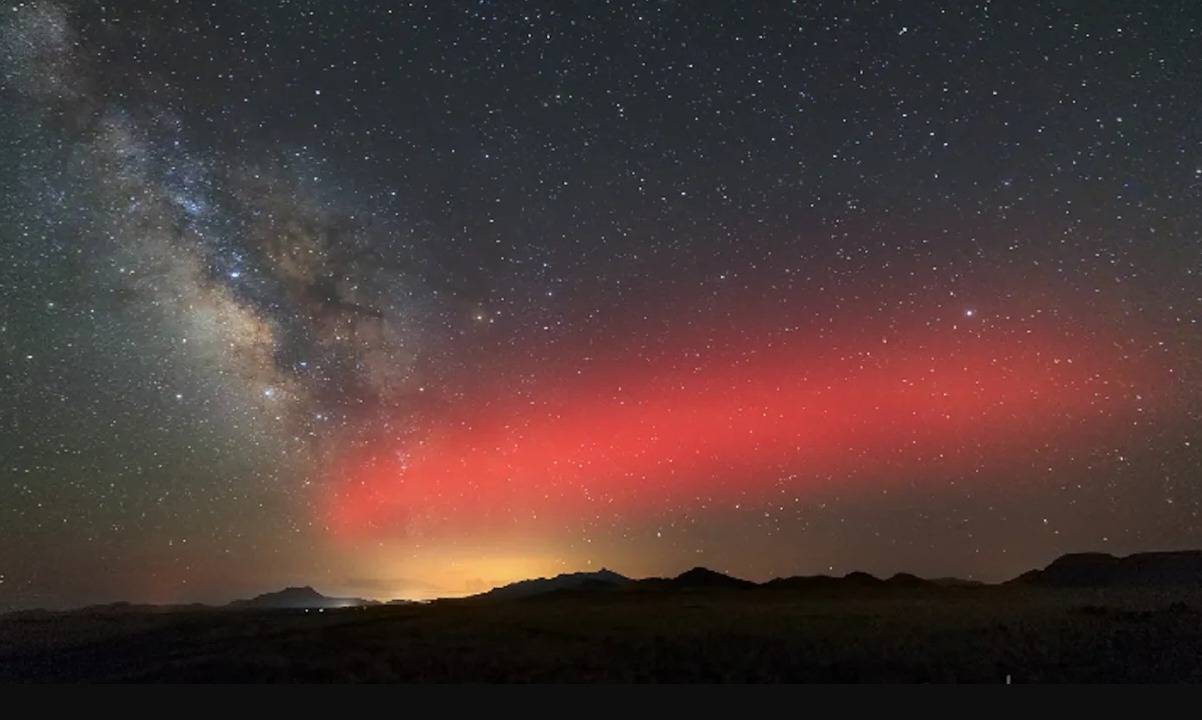
Red glow after a Falcon 9 rocket launch. Image source: yahoo.com
Why SpaceX specifically helped solve the century-old mystery
You might think scientists already knew about airglow without rockets. But here’s the nuance: natural airglow is incredibly faint and unpredictable. Studying it is like trying to understand how an engine works by listening to it through a wall. You hear something, but you can’t make out the details.
SpaceX launches essentially became a controlled experiment. Scientists knew exactly when and where the fuel dump would occur, what volume of substances would enter the ionosphere, and at what altitude. This allowed them to match the chemical “recipe” with the result — the brightness, color, and duration of the glow. For the first time, researchers could directly test theoretical models of airglow against real data.
The results confirmed that the key role is played by the interaction of water with atomic oxygen. H₂O molecules destroy ozone and trigger a cascade of reactions in which oxygen atoms transition to a metastable state — which is precisely what produces the red emission at 630 nm. This model had been discussed for decades, but there was no convincing experimental confirmation. Not until SpaceX started conducting “experiments” several times a month.
What this means for astronomy and space research
But that’s not all. The discovery also has a flip side. With the growing number of launches — SpaceX plans to increase the frequency to more than 150 launches per year — man-made glow could become a serious problem for ground-based astronomy. Red “spots” illuminate sections of the sky, interfering with observations by sensitive telescopes that operate precisely in the red and near-infrared range.
Researchers are already noting that the total light pollution from rocket launches has increased several times compared to a decade ago. And it’s not just about SpaceX — Chinese, Indian, and European launches contribute their share as well. In other words, the more actively humanity explores space, the harder it becomes to study that space from the Earth’s surface.
However, there is a positive aspect as well. Understanding the exact mechanisms of the glow makes it possible to develop correction algorithms — astronomers will be able to “subtract” man-made glow from telescope data. Additionally, new models will help more accurately predict the state of the ionosphere, which is important for satellite navigation and radio communications.
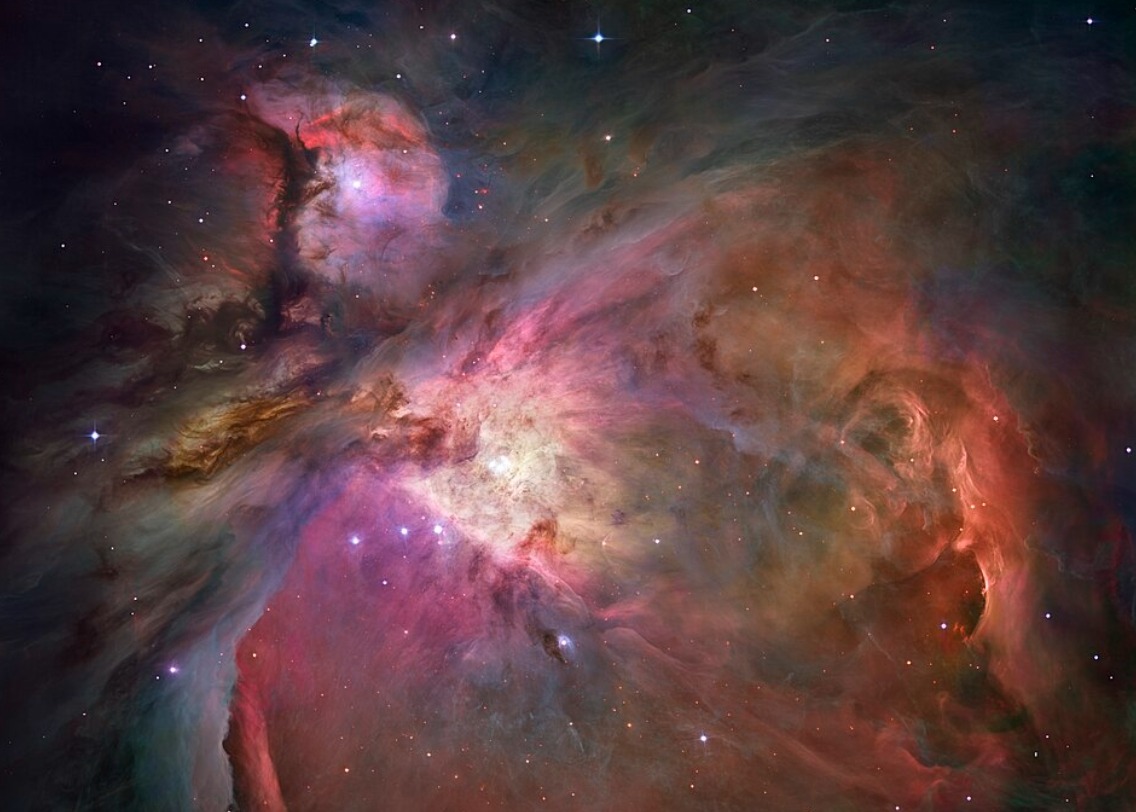
A paradox of our time: rockets that launch telescopes into space simultaneously interfere with those that remain on Earth. Image source: wikimedia.org
What scientists plan to do with this knowledge next
Now that the mechanism is clear, researchers want to go further. A group from Boston University, together with colleagues from MIT, has already proposed using rocket launches as a tool for probing the upper atmosphere. The idea is simple: if you know exactly how much water was released and what glow it caused, you can use reverse calculations to determine the concentration of atomic oxygen, temperature, and density of the ionosphere at a specific altitude.
This is cheaper than launching specialized probes and provides data regularly — essentially with every commercial launch. Each Falcon 9 becomes an incidental scientific experiment, completely free of charge for scientists. All that’s needed is a network of ground-based cameras tuned to the right wavelengths.
Furthermore, the results are important for understanding the atmospheres of other planets. Mars, for example, also exhibits airglow — it has been detected by orbital spacecraft. By knowing Earth’s mechanisms in detail, planetary scientists will be able to more accurately interpret Martian data and better understand the chemistry of its thin atmosphere.
Sometimes the most important scientific discoveries happen not in laboratories, but on launch pads — and entirely unintentionally. SpaceX wanted to put satellites into orbit, and in the process helped close a gap in atmospheric physics that had existed for a century and a half. Science knows how to extract value from the most unexpected sources — and that is perhaps one of its finest qualities.