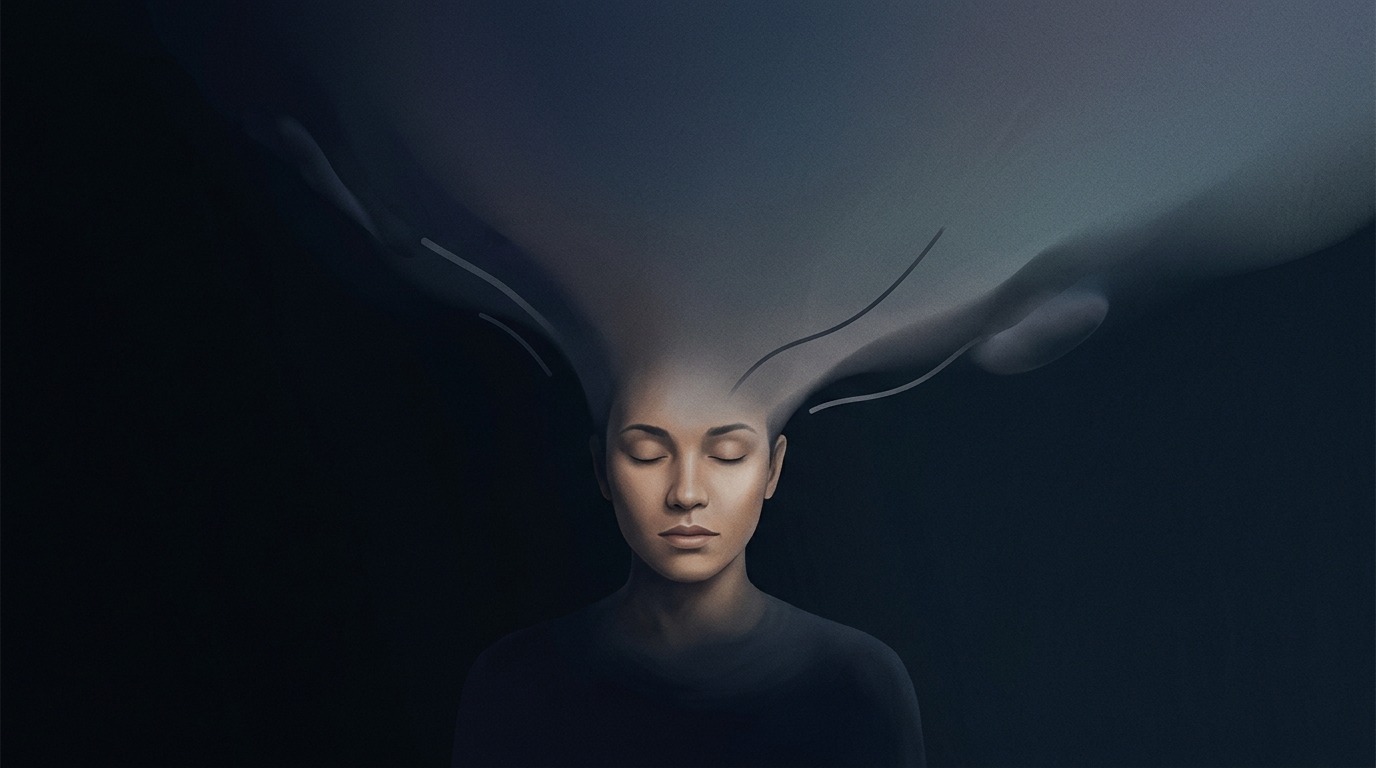
A person with aphantasia sees no images with closed eyes — only darkness
Try right now to close your eyes and imagine a red apple on a white plate. Most people will see at least a blurry picture — color, shape, maybe a glare on the skin. But approximately 2–5 percent of the world’s population won’t see anything at all — only darkness. This condition is called aphantasia, and science has only recently begun to understand how it works and why it occurs, as well as how the brain distinguishes reality from imagination.
Aphantasia: What It Is in Simple Terms and How It Manifests
Aphantasia (from the Greek “a” — absence and “phantasia” — imagination) is the inability to voluntarily create visual images in the mind. A person with aphantasia knows perfectly well what an apple looks like, can describe it in words, draw it from memory, and recognize it in a picture. But “seeing” it mentally — the way others see images with their eyes closed — they cannot.
It’s important to understand: this is not a disease or a disorder. Aphantasia is not associated with memory loss, reduced intelligence, or impaired vision. It’s more of a brain feature — a different way of processing information. Many people with aphantasia learn about their condition only in adulthood, when they accidentally discover that the phrase “imagine a beach” is not a metaphor for most people but a literal instruction. Although the brain itself is capable of dreaming and creating vivid internal scenes.
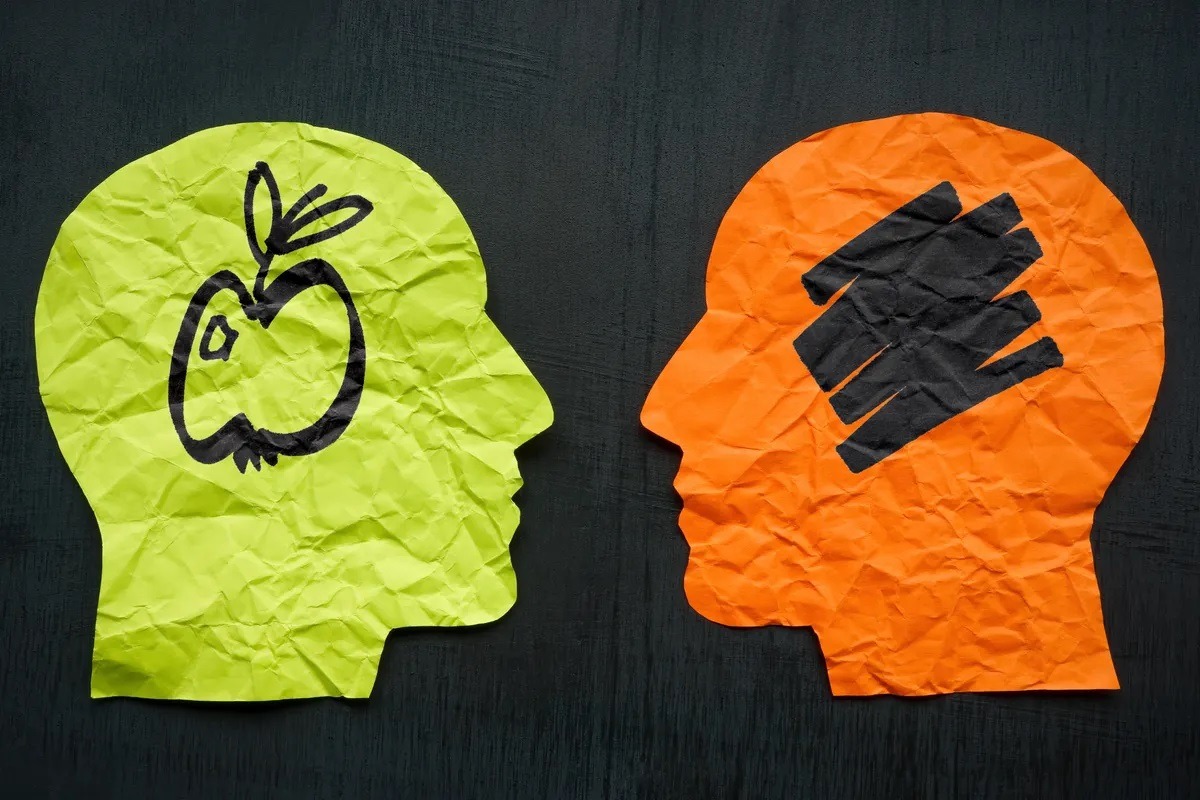
If someone asked you to mentally picture an apple, could you do it?
The term itself appeared quite recently. It was proposed in 2015 by British neurobiologist Adam Zeman from the University of Exeter, although the phenomenon had been described as far back as the 19th century by Francis Galton. It’s just that for a long time, nobody considered it worthy of scientific attention — after all, how do you even compare what one person “sees” in their head versus another?
Signs of Aphantasia: How to Know If There Are No Images in Your Head
The main sign of aphantasia is the absence of voluntary mental images. But this can manifest in different ways. Some people don’t see any pictures at all. Others can barely “catch” a very vague, fleeting image that disappears immediately. Still others don’t see visual images but can mentally hear music or imagine smells.
Here are several characteristic signs that people with aphantasia often describe:
- Inability to mentally picture the face of a loved one, even if you saw them five minutes ago
- Difficulty with “visualization” when reading fiction — text is perceived as information rather than a “movie in your head”
- Dreams without visual images or very rare dreams with pictures (though this doesn’t apply to everyone)
- Memories feel like a set of facts rather than a mental “reliving”
There is a simple test that neurobiologists often use in research — the Vividness of Visual Imagery Questionnaire (VVIQ). It asks you to imagine several scenes (a sunrise, a friend’s face, a shop window) and rate the vividness of the image on a scale from 1 to 5. People with aphantasia consistently give ones — “I see nothing.”

Left — a vivid mental image, right — how people with aphantasia “see” the world in their imagination
Causes of Aphantasia: Why the Brain Doesn’t Create Images
The exact causes of aphantasia have not yet been established — this is one of the youngest areas of neuroscience. But scientists have already figured out several important things.
Visual imagination engages the same brain regions as actual vision — primarily the visual cortex in the occipital lobe. When a healthy person imagines something, this area “activates” almost the same way as during real perception. In people with aphantasia, according to neuroimaging studies, visual cortex activity is noticeably reduced when they try to imagine something.
But this doesn’t mean the visual cortex is damaged. Rather, the connection between the frontal regions of the brain (which “command” the imagination to create an image) and the visual cortex (which is supposed to form that image) is disrupted. Imagine a director shouting “action!” but the camera operator can’t hear the command — the camera works, but recording doesn’t start. In a sense, this is the opposite situation compared to how the brain can create false memories and construct things that never actually happened.
There are two main types of aphantasia by origin:
- Congenital — the person has never had mental images. This is the most common variant
- Acquired — imagination disappears after a brain injury, stroke, or, in rare cases, after psychological stress
The genetic component is also being studied. Several small studies have shown that aphantasia may be more common among relatives, pointing to a possible hereditary predisposition. But large-scale genetic studies have not yet been conducted, so this question remains open.
Treatment of Aphantasia: Can Mental Images Be Restored?
This is one of the most popular queries on the topic — and the answer is ambiguous. Since congenital aphantasia is not considered a disease, talking about “treatment” in a medical sense isn’t entirely accurate. People with aphantasia generally don’t suffer from it. Many discover it by accident and are surprised mostly by the fact that other people actually do have pictures in their heads.
Nevertheless, researchers are studying whether visual imagination can be “trained.” Some experiments with neurofeedback (a method in which a person receives real-time feedback about their own brain activity) have shown encouraging preliminary results — participants reported the emergence of faint mental images. But these findings are still very early and have not been confirmed by large-scale studies.
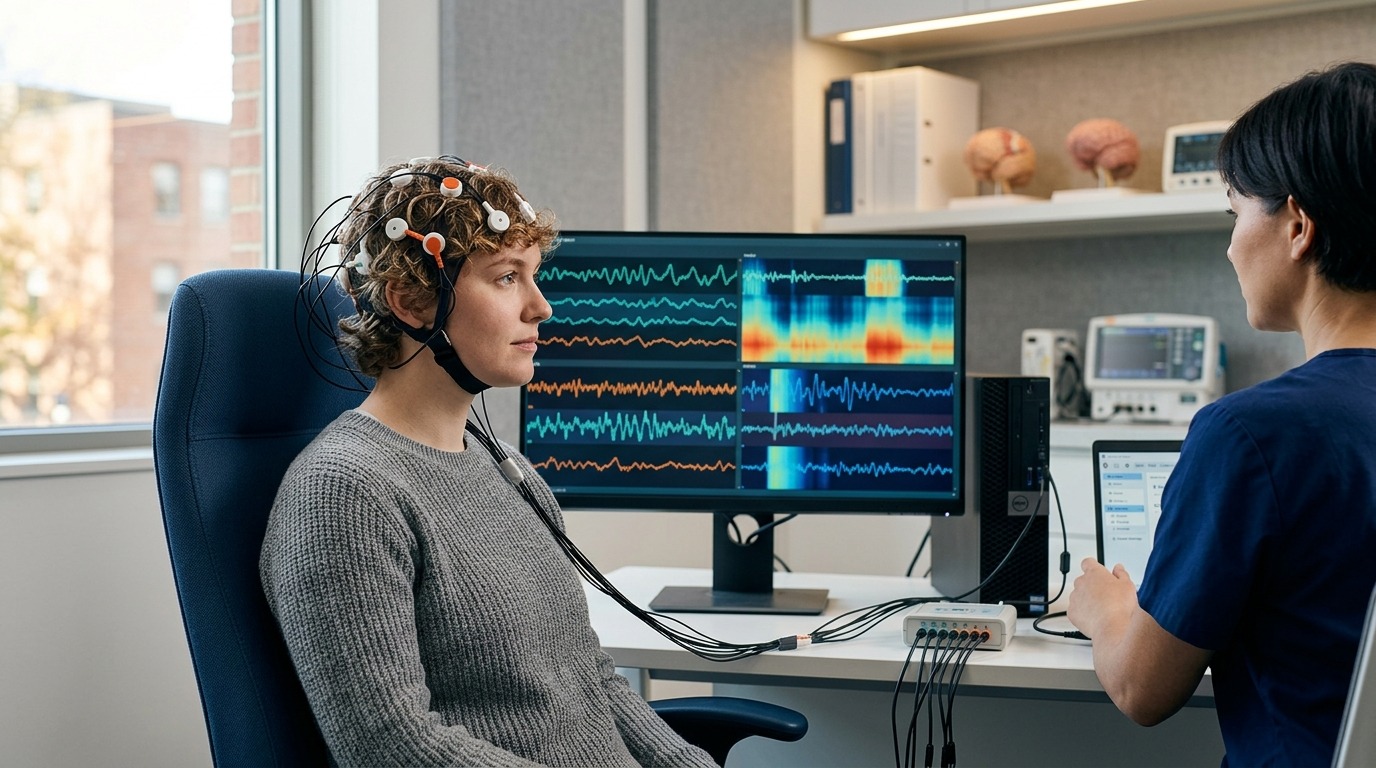
Neurofeedback is one of the experimental methods being studied in the context of aphantasia
For acquired aphantasia, the situation is different. If visual imagination was lost due to injury or stroke, its partial restoration is possible through neurorehabilitation, although no guarantees can be given.
How People with Aphantasia Live: Memory, Work, and Thinking
Perhaps the most interesting thing about aphantasia is how little it interferes with everyday life. Among people with aphantasia, there are artists, architects, writers, and scientists. Ed Catmull, one of the founders of Pixar — a studio that literally creates visual worlds — has publicly talked about his aphantasia.
How is this possible? The thing is, the brain compensates for the absence of visual images with other ways of processing information. People with aphantasia more often rely on:
- Verbal thinking — describing objects and scenes in words
- Spatial understanding — “knowing” where things are without needing to “see” them
- Abstract concepts and logical connections instead of image-based associations
Research also shows an interesting pattern: people with aphantasia are less likely to experience symptoms of post-traumatic stress disorder related to intrusive visual flashbacks. If the brain doesn’t generate images voluntarily, it apparently does so involuntarily less often as well. This doesn’t mean aphantasia protects against PTSD overall, but the nature of the experiences may differ.
There is also a flip side. Some people with aphantasia note that it is harder for them to recall details of past events, more difficult to “fuel” motivation by visualizing a future goal, and books for them are more of an intellectual exercise than an immersion in another world. But all of this is very individual.
Aphantasia doesn't prevent creative work — the brain finds other pathways