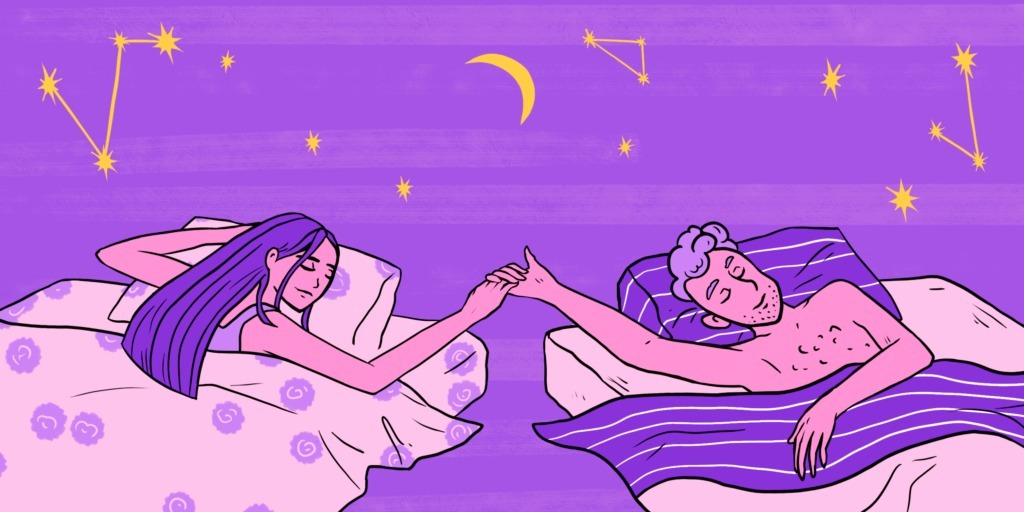
Sleeping apart means sleeping peacefully and getting enough rest. Image source: lifehacker.ru
A partner in the same bed can wake you up to six times a night — and you may not even realize it. Snoring, blanket-hogging, different daily schedules — all of this turns sharing a bed from something romantic into chronic sleep deprivation. The latest data shows that sleeping apart is not a sign of relationship problems, but a conscious choice in favor of health. And more and more couples are making this choice.
Why Your Partner Disrupts Your Sleep: Up to 6 Awakenings Per Night
We’re used to thinking that sharing a bed is an essential attribute of a strong couple. But reality turned out to be more complicated. Studies have shown that on average, partners wake each other up six times per night. If one person wakes up, there’s about a 20% chance the other will wake up too.
The reasons are mundane, but no less destructive to sleep:
- Snoring — the main irritant. Snoring is cited as the primary reason for sleeping apart, and up to 80% of women in surveys complain specifically about it. Moreover, sometimes it’s not just noise but a dangerous type of snoring associated with breathing pauses during sleep.
- Different chronotypes — when one is a “night owl” and the other is an “early bird”
- Blanket-hogging and tossing and turning
- The habit of looking at the phone before sleep
- Different comfortable bedroom temperatures
Interestingly, couples who go to bed at the same time wake each other up more often — especially in the first two hours after falling asleep and the last two hours of the night. In other words, the moment when you “fall asleep together” may actually make your sleep worse, not better.
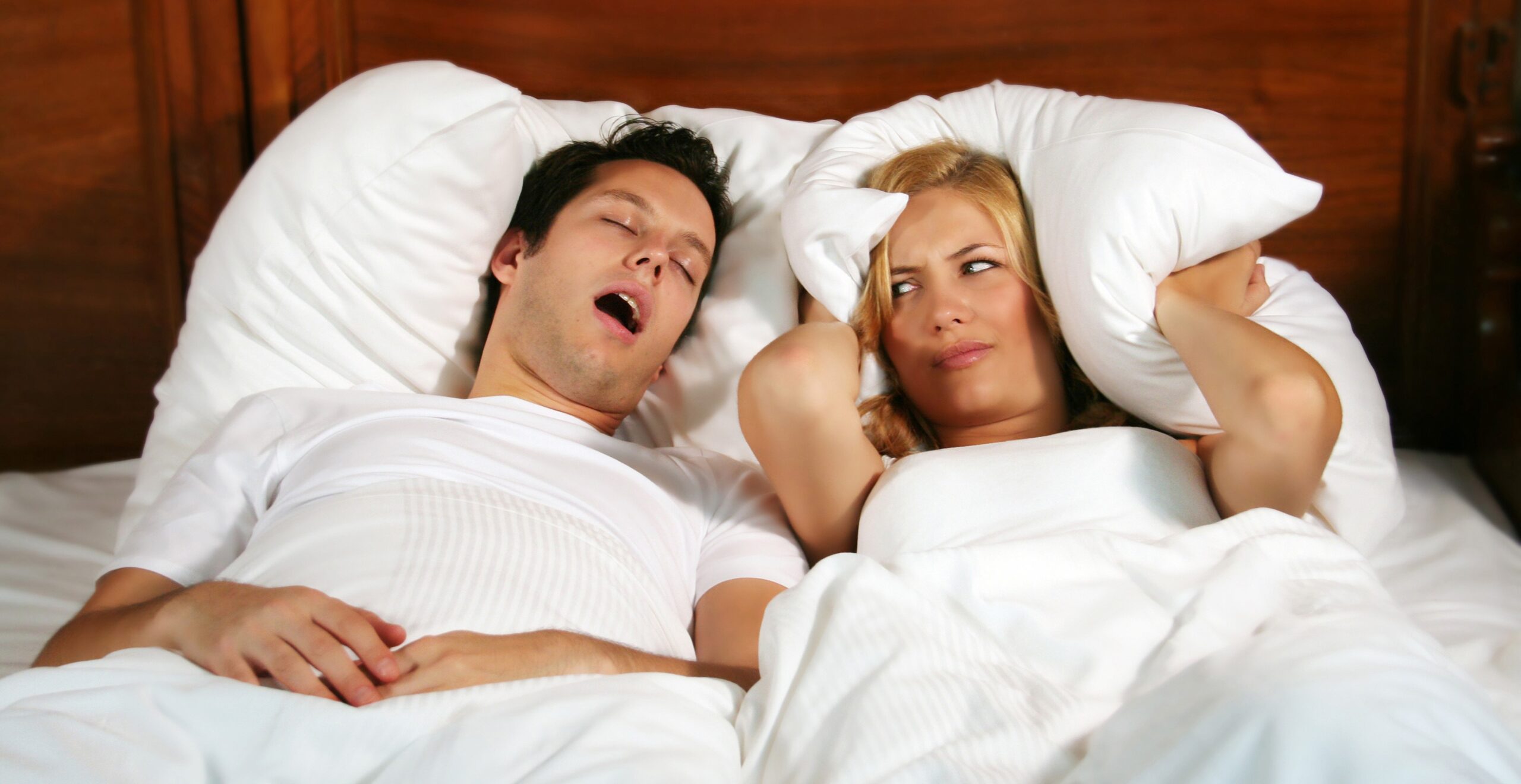
One partner can’t fall asleep because of the other’s snoring. Image source: storage.googleapis.com
Sleep Divorce: Why Sleeping Apart Is Becoming the Norm
The term “sleep divorce” (sleep divorce) sounds alarming, but behind it is a simple idea: a couple consciously sleeps in separate beds or rooms so both can get proper rest. According to a survey by the American Academy of Sleep Medicine (AASM), about 31% of adults have already switched to sleeping apart.
Among millennials, this figure is even higher — about 43%. Boomers, on the other hand, practice sleeping apart less frequently: only 22%. In Russia, similar statistics don’t exist yet, but the trend is making its way there too — as noted by both psychologists and ordinary couples on social media.
Neuropsychologist Svetlana Pulya points out that the term “sleep divorce” itself is inaccurate. Separate bedrooms for spouses were the norm in aristocratic homes in Europe, in pre-revolutionary Russia, and in Japanese culture. The habit of sleeping together only became established after the 1960s. So we’re not inventing something new — rather, we’re returning to common sense.
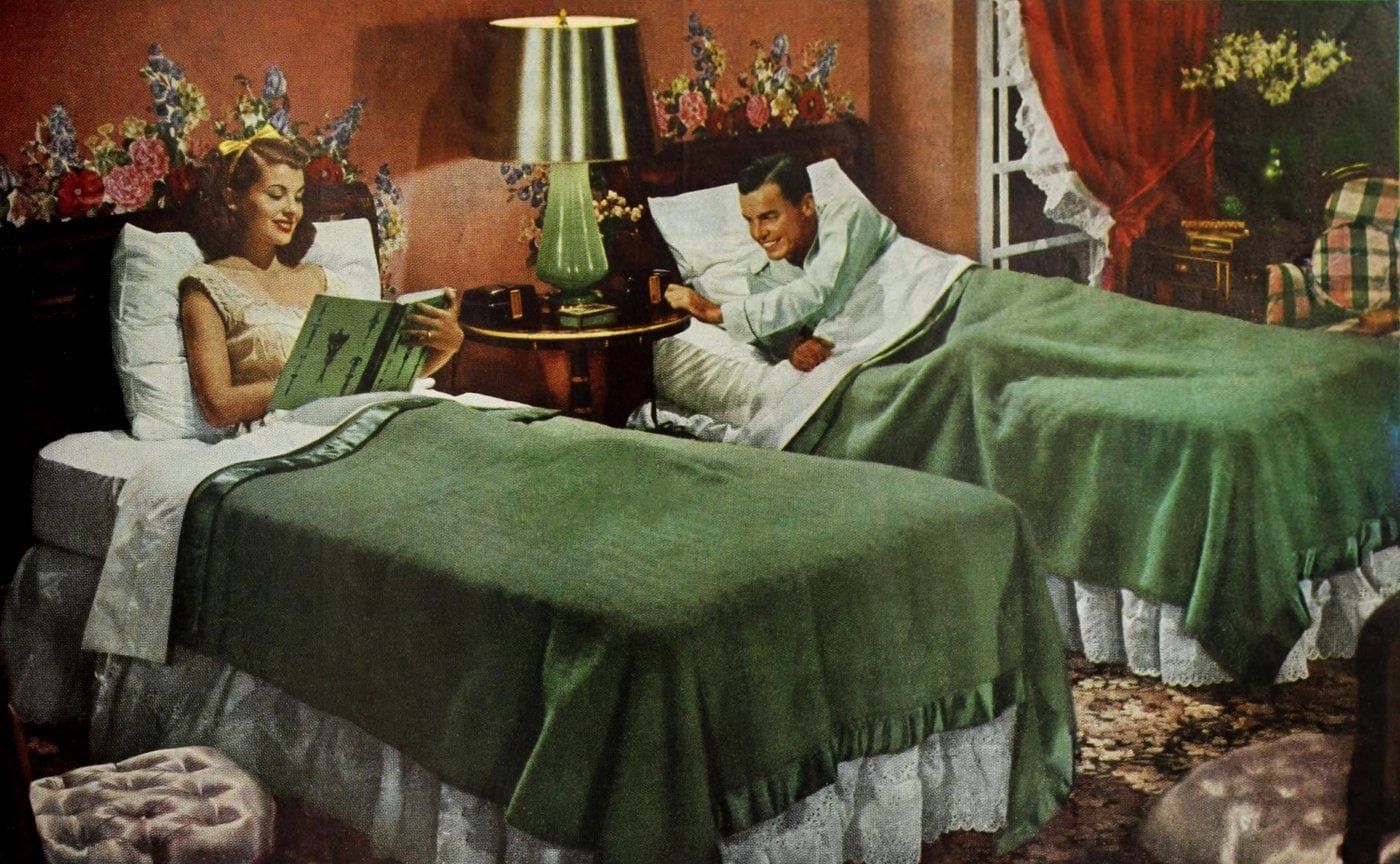
A separate bed or bedroom is not a luxury but a tool for healthy sleep. Image source: ru.pinterest.com
How Sleeping Apart Affects Relationships and Mental Health
The main fear: “If we sleep apart, it means we have problems.” But experts say exactly the opposite. Sleep problems negatively affect relationships in a couple, provoking hostility and conflicts. Research shows that after a sleepless night, husbands are more likely to have conflicts with their wives.
What negatively affects relationships is chronic sleep deprivation. Lack of sleep is a blow to the prefrontal cortex, which is responsible for patience, empathy, and the ability to control emotions. Simply put, when you haven’t slept enough, you snap at your partner not because they’re bad, but because your brain literally can’t cope with emotional regulation.
Surveys show: 59% of those who decided to sleep apart report reduced stress levels, and 60% report improved sleep quality. Moreover, those who switched to sleeping apart sleep an average of 37 minutes more each night.
But there’s an important caveat. Neuropsychologists identify two scenarios. The first is a conscious decision by both partners: the couple discusses the problem, maintains intimacy at other times, gets less irritated, and values shared moments more. The second is escape under a respectable pretext, when a person goes to another room not for the sake of sleep but to distance themselves from their partner. The difference is fundamental: in the first case, sleeping apart strengthens the relationship; in the second, it masks problems.
Chronic Sleep Deprivation in Couples: Health Consequences
If you think that extra awakenings are no big deal, here’s what happens to the body with regular sleep deprivation. Prolonged sleep disruption is a risk factor for developing diabetes, obesity, cardiovascular disease, hypertension, anxiety, depression, and weakened immunity.
After just 17–19 hours without sleep, brain function corresponds to a mild stage of alcohol intoxication — as if you had drunk 0.5 liters of beer. Now imagine this happening day after day because your partner regularly wakes you up.
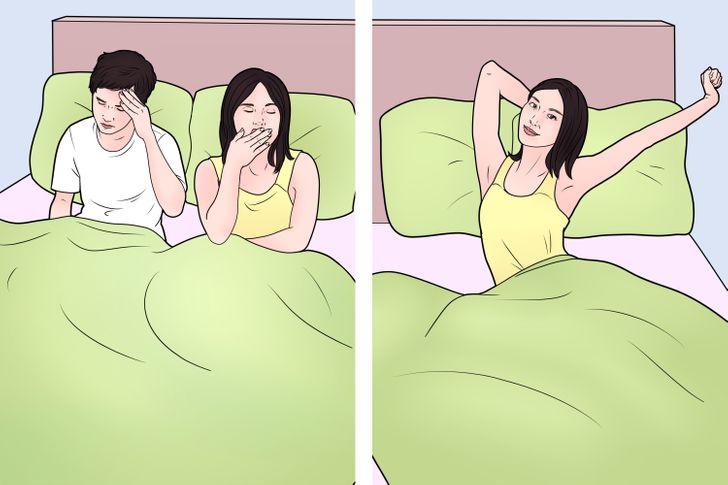
Chronic sleep deprivation affects well-being, mood, and appearance. Image source: brightside.me
Sleep is closely linked to appetite hormones. With chronic sleep deprivation, levels of ghrelin — the hunger hormone — rise, and levels of leptin — the satiety hormone — fall, causing a person to overeat. This is exactly why healthy sleep is important for weight loss. Additionally, chronic sleep deficit increases activity in the amygdala — the brain region responsible for fear, anxiety, and aggression. That’s where those morning arguments “out of nowhere” come from.
An adult needs at least 7 hours of sleep per day — this is exactly the duration that allows the body to fully recover. If sharing a bed systematically robs you of these hours, it’s worth considering what’s more important for your health — tradition or actual rest.
Sleeping Together or Apart: How to Choose Your Arrangement
Sleeping apart isn’t the only option. Sometimes small changes are enough to improve sleep quality as a couple without moving to separate rooms. Here’s what actually helps:
- Separate blankets. The simplest step: each person sleeps under their own blanket. This eliminates the blanket-hogging problem and lets each person choose a comfortable temperature.
- Earplugs or a white noise machine — if the problem is a partner’s snoring, these can muffle the sound.
- A wide bed. A mattress at least two meters wide reduces motion transfer. Memory foam mattresses are even better at isolating tossing and turning.
- If your partner snores with breathing pauses — this could be a sign of sleep apnea, and you need to see a doctor. Snoring isn’t just annoying — it can be dangerous.
- Agree on rules: put the phone away half an hour before sleep, because blue light from smartphones interferes with normal falling asleep, use blackout curtains or a sleep mask, and ventilate the room.
And if none of this helps — sleeping apart is not a catastrophe. Many experts believe that practicing sleeping apart from time to time is beneficial for relationships because it satisfies an important psychological need for personal space.
Well-rested partners get along better with each other
The main rule: if you decide to sleep apart, start with a conversation. Explain that you’re not leaving your partner but caring about your shared quality of life. Use “we” instead of “you” — not “you keep me from sleeping” but “we’re both not getting enough sleep because of our different habits.” And be sure to maintain intimacy — evening conversations, hugs, and shared time before bed.
Sleeping apart is not the end of intimacy. It’s a way to ensure that time spent together brings joy rather than irritation from chronic fatigue.