
The familiar cross-legged pose is one of the most discussed health myths
The habit of crossing your legs is one of those things we’ve been scolded for since childhood. You’ll ruin your posture, get varicose veins, destroy your knees — sound familiar? A group of physiotherapists recently analyzed what science actually says about crossing your legs. The short answer: for most people, it’s a completely harmless habit. But there are a couple of situations where leg position really does matter.
Why You Supposedly Shouldn’t Cross Your Legs
According to Science Alert, the idea that crossing your legs is harmful most likely grew out of old notions about posture. For a long time, “proper” sitting posture was part of upbringing — sitting up straight was considered a sign of discipline and good character. When social norms start sounding like medical recommendations, it becomes very hard to distinguish them from actual facts.
Another reason is that people confuse discomfort with damage. If you sit with crossed legs for a while, you may feel stiffness, tingling, or mild numbness. That familiar “pins and needles” sensation usually passes within a couple of minutes after changing position. It’s a signal from your body saying “time to move,” not a sign that you’ve injured something.
Modern science on pain and posture has long moved away from the idea of a single “ideal” pose. Physiotherapists from different countries, when asked to choose the “best sitting position,” gave completely different answers. Researchers concluded that ideas about ideal posture are largely shaped by tradition and professional culture rather than a solid evidence base.
Is Crossing Your Legs Harmful
Crossing your legs is often automatically classified as “bad posture,” as if it twists the spine and leads to back pain. But studies have not found any single ideal posture that protects everyone from back problems, nor any single everyday posture that reliably causes damage.
The back is a powerful and adaptive structure. It’s designed for a wide variety of positions. The real problem isn’t how exactly you sit, but that you sit too long in one position — whether with crossed legs, sitting ramrod straight, or hunched over a laptop. If crossing your legs is comfortable for you, there’s no reason to consider it dangerous.
Crossing Your Legs and Joints
A common concern is that sitting cross-legged supposedly “wears out” the knee or hip joints. However, there’s virtually no evidence for this. Your knees and hips handle far more serious loads every day: climbing stairs, getting up from a chair, running, walking with heavy bags.
Yes, when you cross your legs, the joint angles change briefly. But that’s far from the same as developing arthritis or chronic damage. Studies that directly link sitting cross-legged to long-term joint harm are extremely rare, and the available data doesn’t support the popular warning. Clinical recommendations for joint health emphasize physical activity, muscle strength, healthy weight, and overall load management — not avoiding one everyday habit.
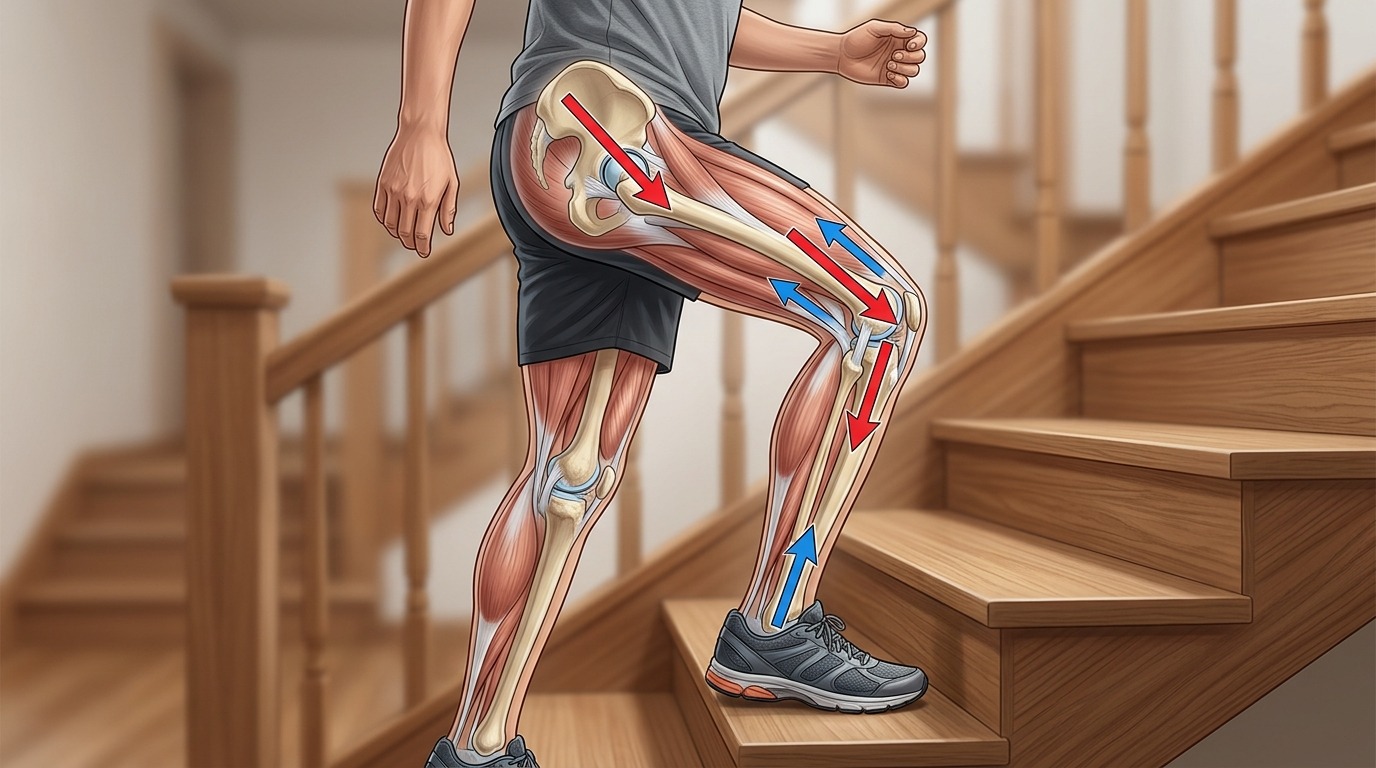
Knees and hip joints withstand far greater loads than sitting cross-legged
Does Crossing Your Legs Cause Varicose Veins
No. Varicose veins occur when valves inside the veins stop working properly and blood begins to pool. In most cases, the main cause of varicose veins is genetic predisposition. If close relatives have varicose veins, the likelihood of developing them is higher. The main risk factors include age, family history, pregnancy, excess weight, and prolonged standing.
Crossing your legs may briefly alter blood flow slightly, but that’s not the same as damaging veins. The external pressure from crossing your legs is minimal and insufficient to damage blood vessels. However, if varicose veins are already present, prolonged sitting in any position may worsen symptoms.
So varicose veins are about genetics and overall lifestyle, not about how you place one leg over the other.
Why You Shouldn’t Cross Your Legs When Measuring Blood Pressure
This is where crossing your legs actually has practical significance — but for an entirely different reason. One study showed that crossing your legs at the knees can temporarily raise blood pressure, but after changing position, the readings return to normal, and this doesn’t cause chronic hypertension.
According to various data, crossed legs can inflate blood pressure readings by 2–8 mmHg. And lack of support or an unnatural leg position can skew results by as much as 6–10 mmHg. For someone monitoring their blood pressure or taking hypertension medication, such an error could lead to incorrect drug dosing.
Therefore, when measuring blood pressure, it’s recommended to sit with your back supported against the chair, feet flat on the floor, without crossing your legs. This isn’t about the harm of crossing legs in general — it’s about the accuracy of a specific medical procedure.
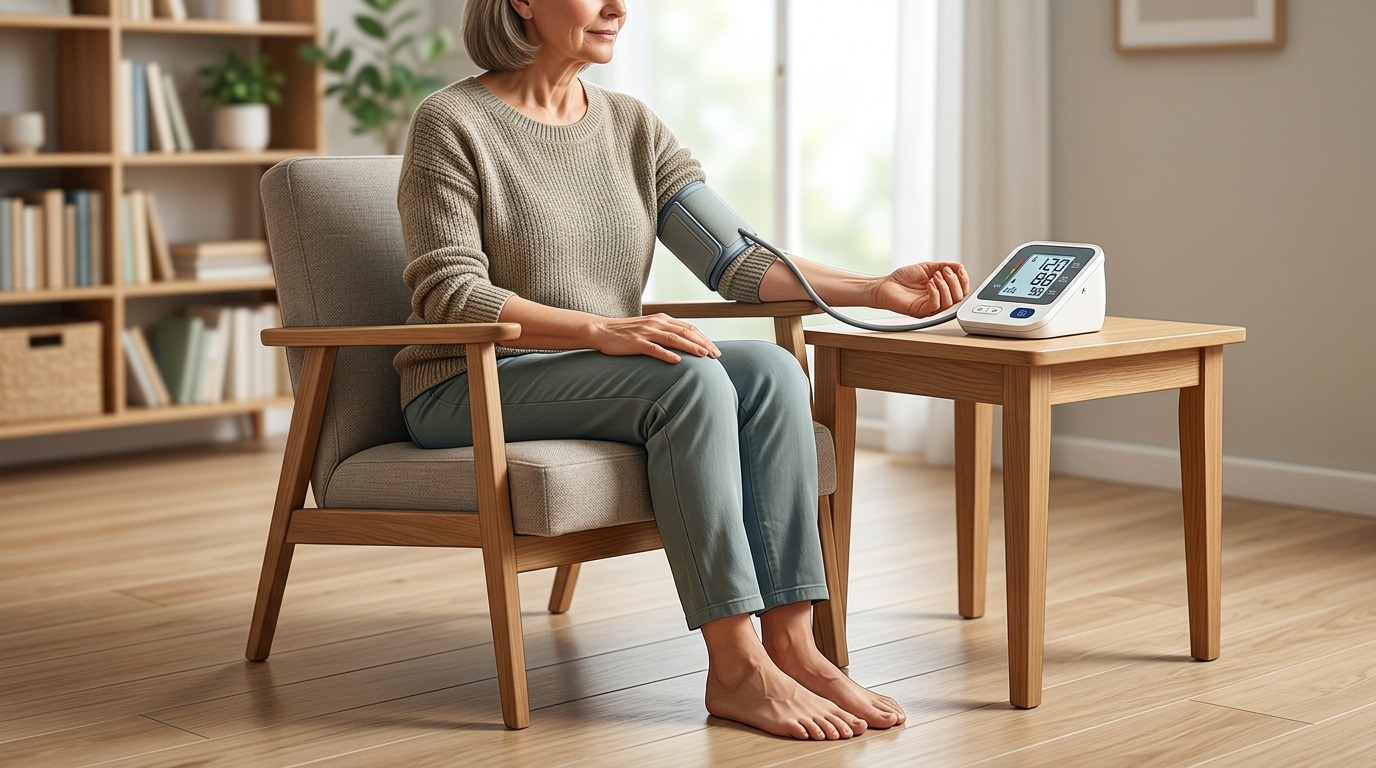
When measuring blood pressure, feet should be flat on the floor without crossing
Why You Shouldn’t Cross Your Legs After Surgery
Here’s another situation where the ban on crossing your legs is not a myth but an actual clinical recommendation. In the first weeks after hip replacement surgery, there’s a risk of subluxation, so doctors ask patients not to cross their legs and not to flex the hip beyond 90 degrees. This rule should be followed for at least six weeks or until the treating physician gives permission.
However, even here science is gradually reconsidering the approach. New research shows that some of these restrictions may be more cautious than necessary: in one clinical trial, lifting such precautions did not increase the risk of early dislocation. But until the doctor gives the go-ahead, these recommendations should be taken seriously, as they concern tissue healing around the new joint.
This is fundamentally different from the situation of a healthy person: the post-surgical restriction is a temporary measure for a specific clinical case, not a universal rule for life.
What Actually Affects Health When Sitting
The main takeaway from all research on posture and sitting is quite simple: movement variety matters more than the “right” posture. The body feels good when it has choices. Sit with crossed legs — then change position. Lean back. Stand up. Take a walk. Stretch.
The healthiest sitting posture is the one you don’t hold for the next hour. Move more often, change positions, and trust your body — it’s much stronger than we were once led to believe.