Whether an upgrade to the iPhone 18 Pro or iPhone 18 Pro Max makes sense depends on which Pro model you already own. The source author compares the new phones with Pro models from recent years. Their conclusion is that iPhone 17 Pro and 16 Pro owners gain little. iPhone 15 Pro owners would notice a real difference, and owners of the iPhone 14 Pro, 13 Pro and 12 Pro have strong reasons to switch. The comparison covers the display, cameras, cooling, memory, ports and batteries.
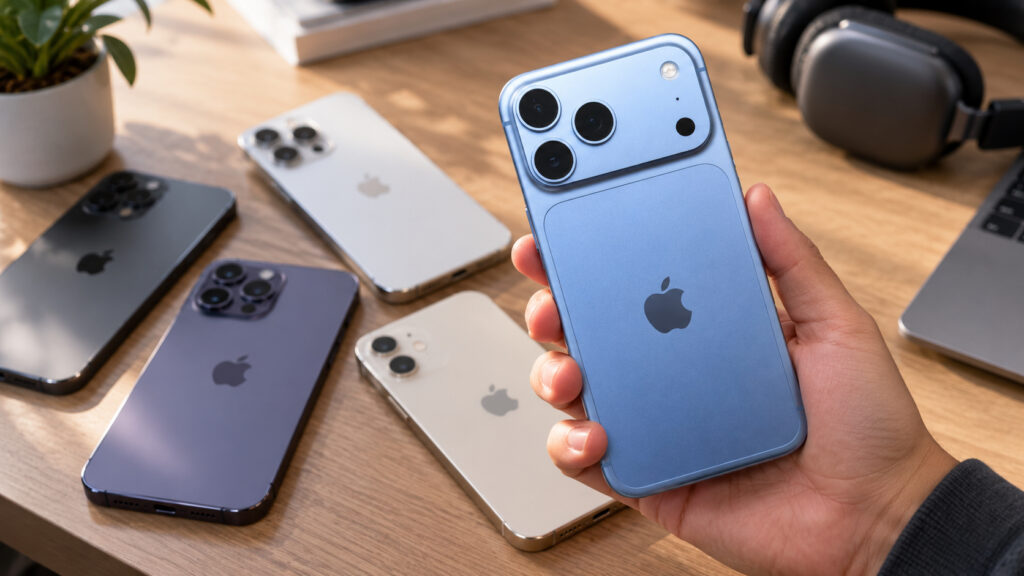
iPhone 18 Pro Max alongside older iPhones
What you need to know
- According to the source, the iPhone 17 Pro already shares the 18 Pro’s 3,000-nit screens, 48 MP telephoto camera, 12 GB of RAM and vapor chamber cooling. The main additions are a variable-aperture main camera, the A20 Pro chip and a smaller Dynamic Island.
- The iPhone 15 Pro lacks the vapor chamber. Its telephoto and ultra-wide cameras are 12 MP, compared with 48 MP on all three rear cameras of the 18 Pro.
- The iPhone 14 Pro and older models use Lightning instead of USB-C at 10 Gbit/s and have 6 GB of RAM, half the new model’s 12 GB.
- On the 18 Pro and 18 Pro Max, eSIM-only versions have larger batteries than versions with a physical SIM tray.
How the iPhone 18 Pro compares with older Pro models
The source author argues that comparing the new phone with a generic “older iPhone” is misleading. The standard Pro and the Pro Max differ in screen size and battery capacity, and in some generations they also had different telephoto cameras. The comparison is therefore split into two tables: the iPhone 18 Pro against earlier standard Pro models, and the iPhone 18 Pro Max against earlier Pro Max models. The iPhone 17 Pro and 16 Pro are covered separately below.
iPhone 18 Pro vs. iPhone 15 Pro, 14 Pro, 13 Pro and 12 Pro
| Specification | iPhone 18 Pro | iPhone 15 Pro | iPhone 14 Pro | iPhone 13 Pro | iPhone 12 Pro |
|---|---|---|---|---|---|
| Display | 6.3″, 120 Hz | 6.1″, 120 Hz | 6.1″, 120 Hz | 6.1″, 120 Hz | 6.1″, 60 Hz |
| Peak brightness | 3,000 nits | 2,000 nits | 2,000 nits | 1,200 nits | 1,200 nits |
| Cutout | Smaller Dynamic Island | Dynamic Island | Dynamic Island | Notch | Notch |
| Chip | A20 Pro | A17 Pro | A16 Bionic | A15 Bionic | A14 Bionic |
| RAM | 12 GB | 8 GB | 6 GB | 6 GB | 6 GB |
| Main camera | 48 MP, variable aperture f/1.5–4.0 | 48 MP, f/1.78 | 48 MP, f/1.78 | 12 MP, f/1.5 | 12 MP, f/1.6 |
| Ultra-wide camera | 48 MP | 12 MP | 12 MP | 12 MP | 12 MP |
| Telephoto | 48 MP, 4x (8x without quality loss) | 12 MP, 3x | 12 MP, 3x | 12 MP, 3x | 12 MP, 2x |
| Cooling | Vapor chamber | No vapor chamber | No vapor chamber | No vapor chamber | No vapor chamber |
| Port | USB-C, 10 Gbit/s | USB-C, 10 Gbit/s | Lightning | Lightning | Lightning |
| Storage | From 256 GB | From 128 GB | From 128 GB | From 128 GB | From 128 GB |
| Battery | 4,056 mAh (SIM) / 4,288 mAh (eSIM) | 3,274 mAh | 3,200 mAh | 3,095 mAh | 2,815 mAh |
| Weight | 211 g | 187 g | 206 g | 204 g | 187 g |
iPhone 18 Pro Max vs. earlier Pro Max models
The picture is similar for the larger models, with one camera caveat. Apple previously gave the Pro Max a better telephoto lens than the standard Pro. The 12 Pro Max had 2.5x against 2x on the 12 Pro, and the 15 Pro Max had 5x against 3x on the 15 Pro. In the 18 series, the Pro and Pro Max cameras are identical, so zoom comparisons with older Max models need more care. The new Pro Max is also the heaviest phone in this comparison.
| Specification | iPhone 18 Pro Max | iPhone 15 Pro Max | iPhone 14 Pro Max | iPhone 13 Pro Max | iPhone 12 Pro Max |
|---|---|---|---|---|---|
| Display | 6.9″, 120 Hz | 6.7″, 120 Hz | 6.7″, 120 Hz | 6.7″, 120 Hz | 6.7″, 60 Hz |
| Peak brightness | 3,000 nits | 2,000 nits | 2,000 nits | 1,200 nits | 1,200 nits |
| Cutout | Smaller Dynamic Island | Dynamic Island | Dynamic Island | Notch | Notch |
| Chip | A20 Pro | A17 Pro | A16 Bionic | A15 Bionic | A14 Bionic |
| RAM | 12 GB | 8 GB | 6 GB | 6 GB | 6 GB |
| Main camera | 48 MP, variable aperture f/1.5–4.0 | 48 MP, f/1.78 | 48 MP, f/1.78 | 12 MP, f/1.5 | 12 MP, f/1.6 |
| Ultra-wide camera | 48 MP | 12 MP | 12 MP | 12 MP | 12 MP |
| Telephoto | 48 MP, 4x (8x without quality loss) | 12 MP, 5x | 12 MP, 3x | 12 MP, 3x | 12 MP, 2.5x |
| Cooling | Vapor chamber | No vapor chamber | No vapor chamber | No vapor chamber | No vapor chamber |
| Port | USB-C, 10 Gbit/s | USB-C, 10 Gbit/s | Lightning | Lightning | Lightning |
| Storage | From 256 GB | From 256 GB | From 128 GB | From 128 GB | From 128 GB |
| Battery | 5,391 mAh (SIM) / 5,567 mAh (eSIM) | 4,441 mAh | 4,323 mAh | 4,352 mAh | 3,687 mAh |
| Weight | 249 g | 221 g | 240 g | 240 g | 226 g |
According to the source, the figures in both tables come from official specifications and describe new devices. The iPhone 18 Pro and 18 Pro Max have different battery capacities depending on the version. Models that support only eSIM have a larger battery, while versions with a physical SIM tray have a slightly smaller one. The author also notes that an older iPhone’s battery will already have degraded. Real-world battery life on a 13 Pro or 12 Pro is likely to be noticeably lower than the rated figures suggest.
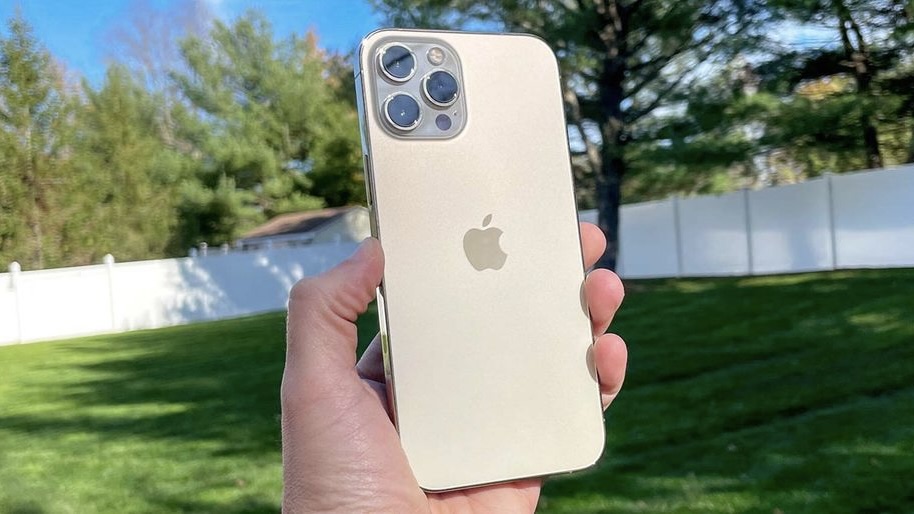
iPhone 12 Pro Max in hand
The main takeaway is that the gap widens gradually. Against the 15 Pro, the new model wins on display, cooling, telephoto camera and memory. The older the phone, the more differences there are: Lightning instead of USB-C from the 14 Pro back, 12 MP cameras and a notch on the 13 Pro and 12 Pro, and a 60 Hz display on the 12 Pro.
iPhone 17 Pro and 16 Pro: little reason to upgrade
The source author sees no meaningful upgrade path for iPhone 17 Pro and 17 Pro Max owners. These phones already have the same features as the new models:
- 6.3-inch and 6.9-inch screens with up to 3,000 nits of brightness;
- a 48 MP telephoto camera with 8x lossless zoom;
- 12 GB of RAM;
- a vapor chamber for cooling.
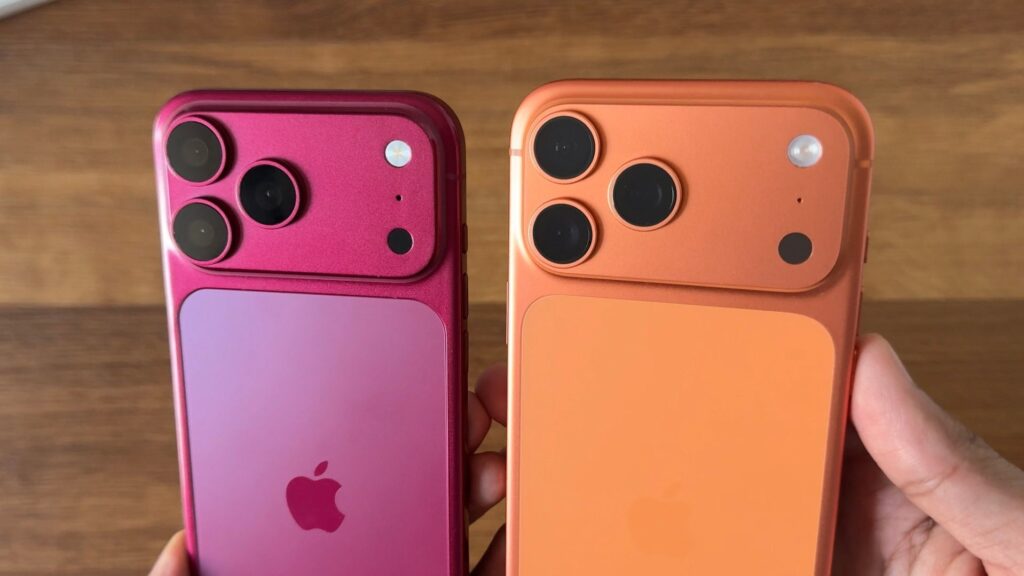
The phones are also nearly indistinguishable in appearance.
In practice, the 18 Pro adds a variable-aperture main camera, the faster A20 Pro and a smaller Dynamic Island. The author calls these pleasant additions but describes the result as essentially the same smartphone. They would not pay the full price of a new iPhone for that difference, especially after accounting for what is lost when reselling the old one.
iPhone 18 Pro next to iPhone 17 Pro
The author reaches a similar verdict for the iPhone 16 Pro and 16 Pro Max. Apple already moved to 6.3-inch and 6.9-inch screens in the 16 series, so there is no gain in display size. The 16 Pro models also have a 48 MP ultra-wide camera and a 5x telephoto. The author expects the difference to show mainly in demanding games. Without a vapor chamber, the 16 Pro runs hotter and throttles sooner. For everyday tasks such as messaging, social media, navigation and photography, the author believes its performance will remain sufficient for several more years.
iPhone 15 Pro: the upgrade becomes noticeable
The source author says the difference is clearly felt when moving from an iPhone 15 Pro or 15 Pro Max. These are the main improvements.
Display
The display is the first thing users will notice. The 18 Pro has a 6.3-inch screen against 6.1 inches on the 15 Pro, and the 18 Pro Max has 6.9 inches against 6.7. According to the source, the body grew only slightly because the bezels are thinner. Outdoor brightness rises to 3,000 nits from 2,000 nits, which the author says is noticeable in summer sunlight.
Heat management
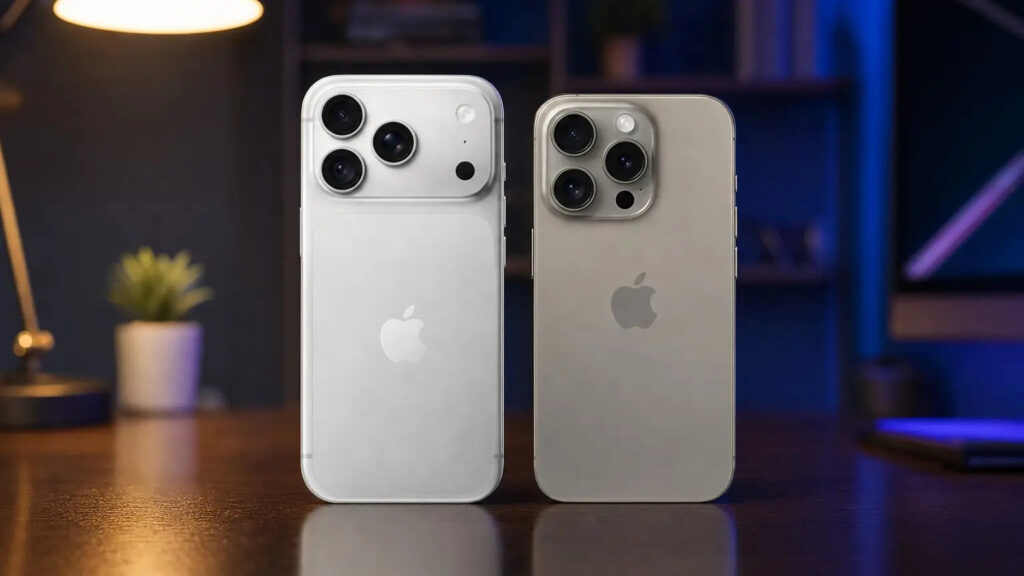
The author notes that many people remember the iPhone 15 Pro as one of the hottest-running iPhones, especially in its first months on sale. The iPhone 18 Pro has a vapor chamber, which the 15 Pro lacks entirely. According to the source, this means the new phone sustains performance longer during gaming, long 4K video recording and charging in a car while navigation is running.
iPhone 18 Pro next to iPhone 15 Pro
Cameras
The source author considers the cameras the most interesting change. All three rear cameras on the iPhone 18 Pro are 48 MP. On the 15 Pro, only the main camera is 48 MP, while the telephoto and ultra-wide remain at 12 MP.
The new telephoto offers 4x optical zoom, and its high-resolution sensor allows 8x zoom without quality loss. The author describes this as a different level compared with the 15 Pro’s 3x zoom. The 15 Pro Max’s 5x telephoto wins on paper against 4x. However, according to the author, zoomed shots from its 12 MP sensor show noticeably less detail, especially in overcast weather.
The 18 Pro’s main camera also has a variable aperture. Stopping it down keeps more of a scene with people or objects in focus, rather than only the foreground.
Smaller improvements
The source lists several smaller changes that add up:
- RAM increases to 12 GB from 8 GB, so apps are reloaded in the background less often.
- Base storage starts at 256 GB rather than the 128 GB of the base 15 Pro, which eases storage pressure for 4K video. The 15 Pro Max already started at 256 GB.
- Battery capacity is larger, especially on the Pro Max.
iPhone 14 Pro, 13 Pro and 12 Pro: time to upgrade
According to the source, all of these phones received iOS 27 but not all of its features. Many new features work only on recent models, and the author expects the list of supported features on older devices to shrink with each update.
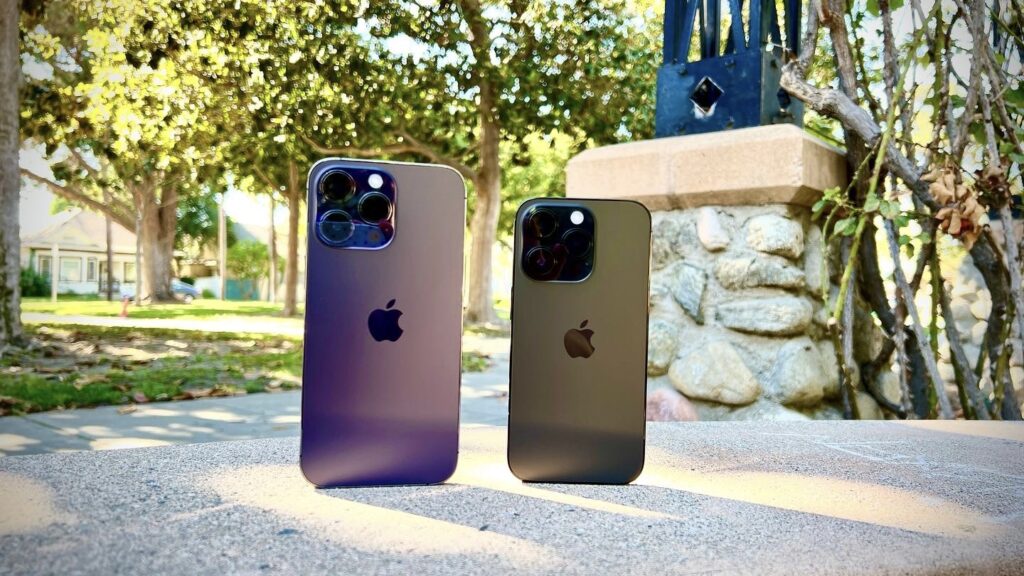
iPhone 14 Pro Max next to iPhone 14 Pro
iPhone 14 Pro
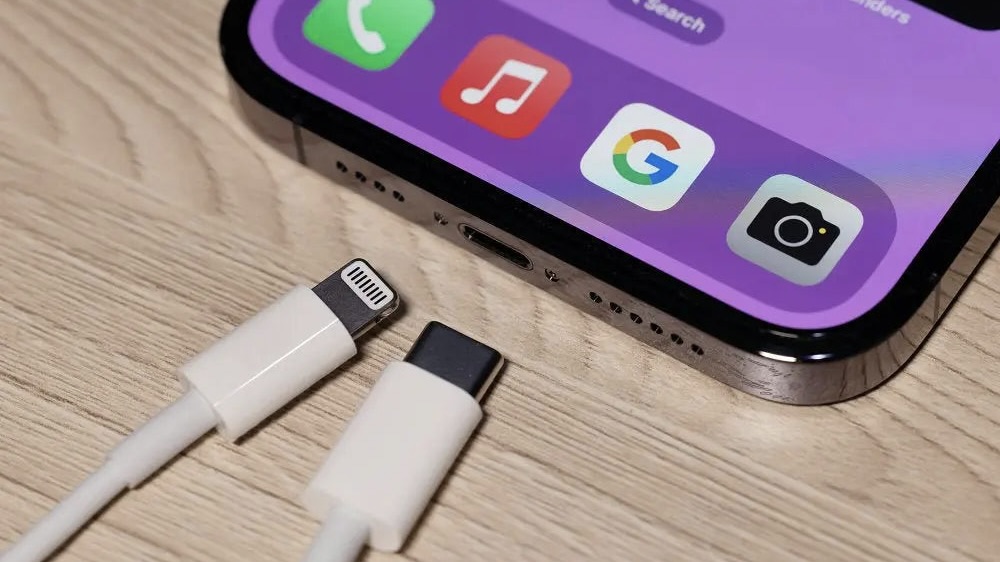
iPhone 14 Pro owners would get everything 15 Pro owners gain, plus more. The most noticeable change is USB-C instead of Lightning. The author points out that one cable for an iPhone, MacBook, iPad and headphones makes life much simpler, especially when travelling.
Data transfer also improves to 10 Gbit/s, compared with USB 2.0 speeds over Lightning. The author says the difference is huge for anyone who shoots ProRes video and transfers it to a computer. The 14 Pro also has only 6 GB of RAM, half as much as the new model.
Lightning and USB-C cables next to an iPhone
iPhone 13 Pro and 12 Pro
The author sees an even simpler case for the iPhone 13 Pro and 12 Pro. Both have 12 MP cameras, a notch instead of a Dynamic Island, and displays with 1,200 nits of brightness. The iPhone 12 Pro also lacks ProMotion, so its screen runs only at 60 Hz. In the author’s view, going back to such a display after using 120 Hz and the smaller Dynamic Island on the iPhone 18 Pro would be difficult.
The batteries in these phones are also four to five years old. If the battery has never been replaced, the source says the phone will likely struggle to last until evening. Anyone moving from Lightning should also remember that they will need USB-C cables and chargers.
Should you upgrade? A quick verdict by model
| Your iPhone | Upgrade to the 18 Pro? |
|---|---|
| iPhone 17 Pro / 17 Pro Max | No. Same display, telephoto camera, memory and cooling |
| iPhone 16 Pro / 16 Pro Max | No. The difference shows only in demanding games |
| iPhone 15 Pro / 15 Pro Max | Worth considering. Larger screen, less heat, better cameras |
| iPhone 14 Pro / 14 Pro Max | Yes. Adds USB-C and twice the RAM |
| iPhone 13 Pro / 13 Pro Max | Yes. Better in every area, from cameras to battery life |
| iPhone 12 Pro / 12 Pro Max | Definitely. It is a different generation of smartphone |
Check your battery first
Before buying, the source recommends checking the battery condition of your current iPhone under Settings → Battery → Battery Health. If capacity is still above 85% and you are fully satisfied with the phone, the author suggests that 15 Pro owners can wait. If the battery has degraded and a replacement would be expensive, the author considers an upgrade far more logical.
iPhone 18 Pro or 18 Pro Max?
According to the source, the choice between the two comes down to size because their cameras are identical. The Pro is easier to hold in one hand and carry in a pocket. The Pro Max is almost 40 grams heavier (249 g vs. 211 g) but offers a much larger screen for video and games. The author also describes its battery as the largest of any iPhone. For people who travel often and do not want to worry about charging before evening, the author recommends the Max. The author adds that the upgrade looks especially worthwhile for owners of the 12 Pro Max or 13 Pro Max.