Scientists thawed a mouse brain and it turned out to be almost alive
Cryonics has long moved from science fiction into serious laboratories, but the main problem has always remained the same: frozen organs turned into useless mush after thawing. Ice crystals ruthlessly destroyed cells from the inside, and there was no question of any “resurrection.” But now German scientists have for the first time recorded the restoration of electrical activity in a mouse brain that was preserved in a vitreous state at -196 degrees Celsius. To put it simply, in the future we have a chance to freeze people for their resurrection in the future.
What is vitrification in chemistry
Classical cryopreservation, essentially freezing, kills complex tissues. The thing is, during cooling, water inside cells forms ice crystals that literally tear apart cell membranes and destroy the finest connections between neurons. The brain is particularly vulnerable: it contains hundreds of millions of nerve cells connected by countless contacts — synapses. Even if individual neurons survive freezing, their network ends up destroyed.
Vitrification works in a fundamentally different way. Instead of allowing water to freeze, scientists replace it with special substances that transition into a glass-like state upon cooling. Simply put, the tissue doesn’t freeze but turns into glass. No crystals, no tears. Molecules simply stop in place, like an insect in amber.
Vitrification itself is not new: it has long been used for preserving embryos and egg cells in reproductive medicine. But the brain was considered too complex and fragile for this approach. Before this study, no one had achieved full restoration of electrical activity in an adult mammalian brain after vitrification.
How scientists revived a frozen mouse brain
A team of German scientists developed an improved vitrification protocol to minimize tissue swelling, crystallization, and mechanical damage. The researchers used a variant of a solution containing dimethyl sulfoxide, ethylene glycol, formamide, and polyvinylpyrrolidone.
First, the mouse brain was vitrified whole. Then it was warmed and cut into thin slices of the hippocampus — the brain region responsible for memory formation and learning processes. After that, testing began: structure, metabolism, electrical activity.
The results were impressive. Not all samples recovered, but those that “woke up” showed significant neuronal activity. Synapses responded to stimulation, neurons were excitable, and basic synaptic transmission was working. But most importantly, long-term potentiation was recorded. It sounds complex, but this is a key cellular mechanism through which frequently used synapses strengthen and transmit information more effectively.
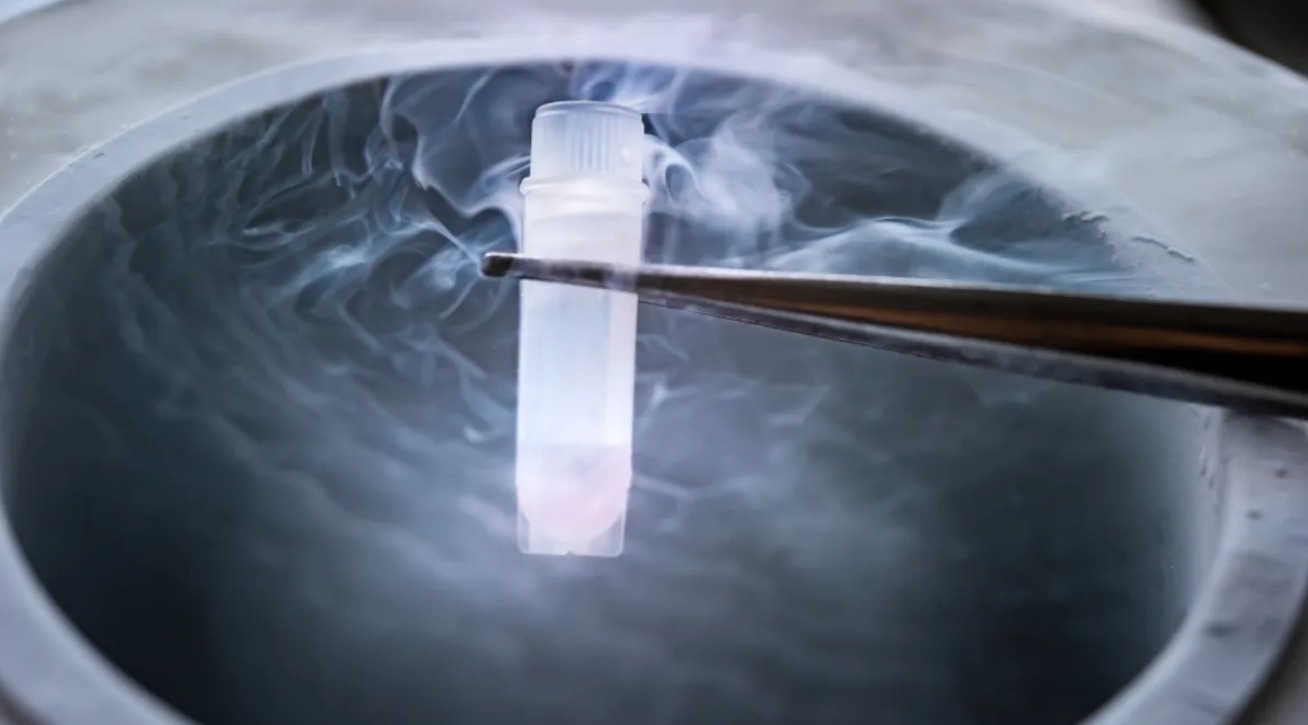
Not all tested brain samples recovered activity, but those that did showed significant activity. Image source: iflscience.com
Why brain thawing matters
The key point for us is not simply that some cells survived, but that the tissue retained its fundamental functional characteristics after warming, including neuronal excitability, synaptic transmission, and long-term potentiation, — said Dr. Alexander Herman.
According to him, this suggests that the neural architecture was preserved well enough for the circuits to start working again.
As for practical applications, in the near term it is primarily about science. This approach will allow preserving viable neural tissue and distributing experiments across time and space. This could improve the reproducibility of results and reduce the number of laboratory animals.
In the longer term, the results are important for cryonics as a whole. Progress in vitrification could help better preserve organs for transplantation and open new possibilities for protecting the nervous system in cases of severe injuries or diseases. However, scientists emphasize that for now this concerns short-term recovery in mouse tissue, and transferring the method to large organs or clinical practice is still a long way off.
Can a frozen human brain be revived
This is where it gets most interesting. Neurobiologist Dr. Ariel Zeleznikov-Johnston, author of the book The Future Loves You about prospects for conquering death (he was not involved in the study), called the work impressive. In his assessment, this is the first study to demonstrate any recovery of electrophysiological function (i.e., “brain waves”) in a brain that was vitrified and then warmed. Previously, this had only been achieved with thin slices, but not with a whole brain.
But there is a caveat. From a mouse brain to the brain of a large mammal (rat, pig, monkey, and especially human) — the distance is enormous. Nevertheless, the study reinforces two important points:
- Brain activity can be at least partially restored after complete cessation and solidification.
- Someday it may become possible to reversibly place an organism in a state of stasis — vitrify it at low temperatures for an indefinite period, and then warm it and return it to behavioral activity.
It sounds like a scenario from the movie “Alien,” where the spaceship crew emerges from a frozen state. But the study authors emphasize: clinical application is still very far away, and calling this a breakthrough to immortality is premature.
What is the future of cryonics
The study was published in the journal PNAS — one of the most authoritative scientific publications in the world. And although science still has a long way to go before “resurrecting” a frozen human, each such step pushes the boundaries of what is possible.
The main thing the German scientists’ work demonstrated: brain tissue can be “stopped in time” and then reactivated, with preservation not just of individual cells, but of functional neural circuits. This is a fundamental result that expands the known biophysical limits of brain recovery from the hypothermic to the cryogenic range.
For comparison: previously it was believed that the brain could only recover after deep cooling (as in operations with hypothermic circulatory arrest), but never after complete cessation of molecular mobility. Now this boundary has been pushed further.