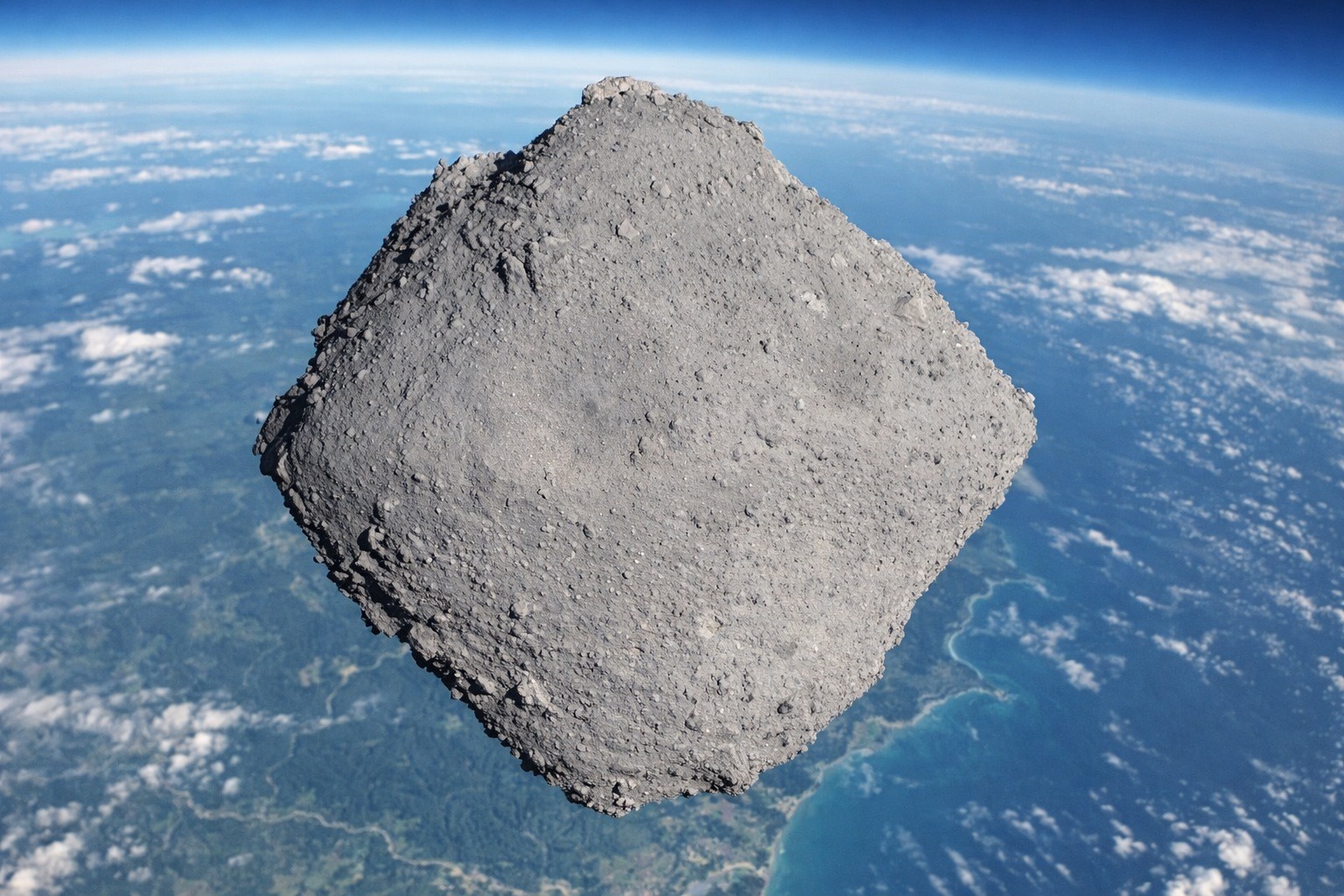
There is a high probability that life on Earth appeared thanks to asteroids
When we talk about the origin of life on Earth, the first thought is volcanoes, hot springs, and the oceans of a young Earth. But what if the main ingredients for the emergence of all living things arrived from space riding on a rocky boulder? A new analysis of samples from the asteroid Ryugu showed that they contain all five key nucleic acid bases that make up DNA and RNA. And this is already the second asteroid with a complete set, which is forcing scientists to reconsider their view on how common the “recipe for life” is in the Solar System.
What Is the Difference Between DNA and RNA
All life on Earth relies on two molecules for storing and transmitting genetic information: deoxyribonucleic acid (DNA) and ribonucleic acid (RNA). Both molecules, in turn, are assembled from five molecular building blocks — the so-called canonical nucleic acid bases: adenine, cytosine, guanine, thymine, and uracil.
DNA uses adenine, cytosine, guanine, and thymine. RNA works with almost the same set, except it has uracil instead of thymine. Understanding where these molecules came from on early Earth and how widespread they were is critically important for solving the mystery of how life originated in the first place.
And it turned out that the answer should be sought not only on our planet but also beyond it — on carbonaceous asteroids that are literally packed with organic molecules formed at the dawn of the Solar System.
How Asteroid Ryugu Became “Two Out of Two”
In recent years, two space missions delivered samples directly from asteroid surfaces to Earth: Japan’s Hayabusa-2 brought soil from Ryugu, and America’s OSIRIS-REx brought samples from Bennu. Analysis of the Bennu samples, the results of which were announced in January 2025, had already shown the presence of all five nucleic acid bases. But Ryugu at that point had only “yielded” one — uracil.
Now a team of Japanese scientists has analyzed two separate samples of Ryugu material and found all five canonical nucleic acid bases in both. The results are published in the journal Nature Astronomy.
The point is that this is already the second asteroid with a complete set. Two out of two — a one hundred percent hit. This means that the ingredients of life may be far from rare in our Solar System.
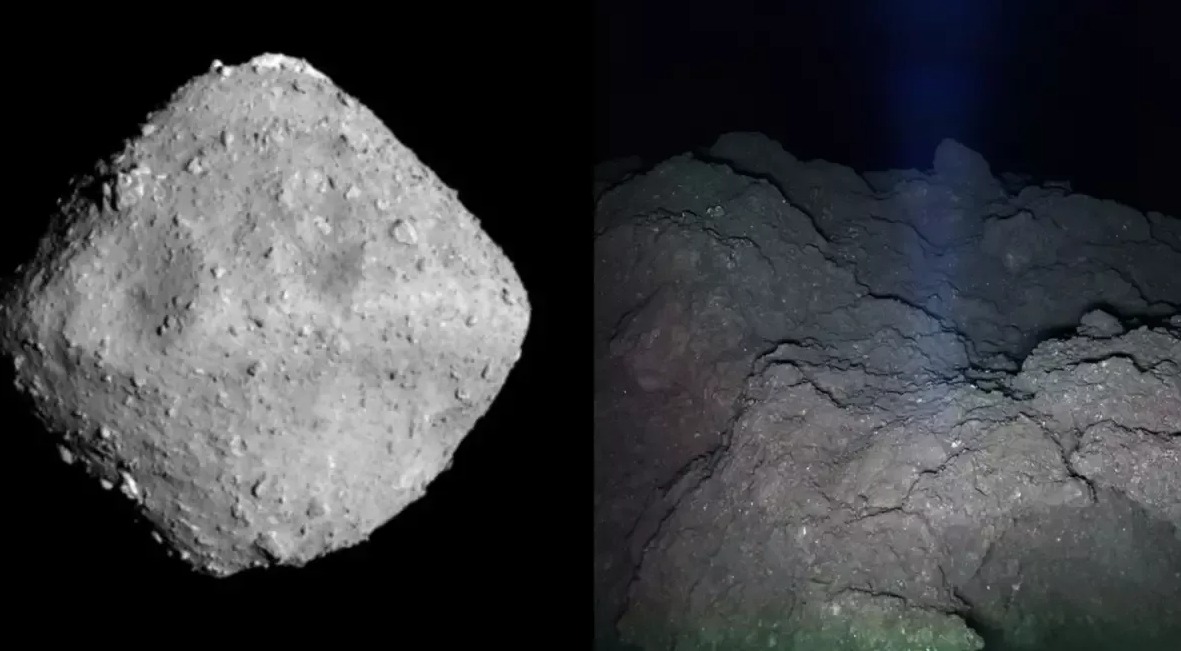
Five letters of the genetic code — and all of them, it seems, traveled through space long before the first cells appeared. Image source: ladbible.com
How the Composition of Asteroids and Meteorites Differs
Asteroids are not the only space rocks in which scientists have found nucleic acid bases. There are two famous carbonaceous meteorites that fell to Earth where a complete set was also discovered: Murchison and Orgueil. To get a more complete picture of the distribution of nucleic acid bases in the Solar System, researchers compared the composition of Ryugu with Bennu and these two meteorites.
The results turned out to be intriguing. The five bases are divided into two families: purines (adenine and guanine) and pyrimidines (cytosine, thymine, and uracil). Ryugu showed an approximately equal ratio of purines to pyrimidines. Bennu and Orgueil turned out to be richer in pyrimidines, while Murchison was richer in purines.
Scientists found that these differences are related to the level of ammonia in the samples. Simply put, the chemical environment inside the parent bodies of asteroids affects which specific nucleic acid bases are formed. This is not random chaos — it is chemistry governed by perfectly understandable rules of the game.
Why Scientists’ Ideas About the Origin of Life Have Changed
The discovery of thymine presents a particular intrigue. There is a popular hypothesis about how life originated — the so-called “RNA world.” According to it, RNA appeared first, and DNA arose later. Thymine is essentially a chemically modified form of uracil, and uracil is considered simpler to synthesize under prebiotic chemistry conditions. Therefore, scientists believed that uracil was far more available on early Earth.
The previous detection of only uracil on Ryugu fit perfectly into this picture. But the new discovery of thymine complicates everything. It turns out that asteroid chemistry is capable of producing both nucleic acid bases rather than “choosing” one of them. This means that early Earth could have received a complete set of molecular building blocks through asteroid bombardment — for both RNA and DNA simultaneously.
As the study authors write, the detection of all five canonical nucleic acid bases on both carbonaceous asteroids underscores the potential contribution of these extraterrestrial molecules to the organic inventory that supported prebiotic molecular evolution and ultimately made the emergence of RNA and DNA possible on the young Earth.
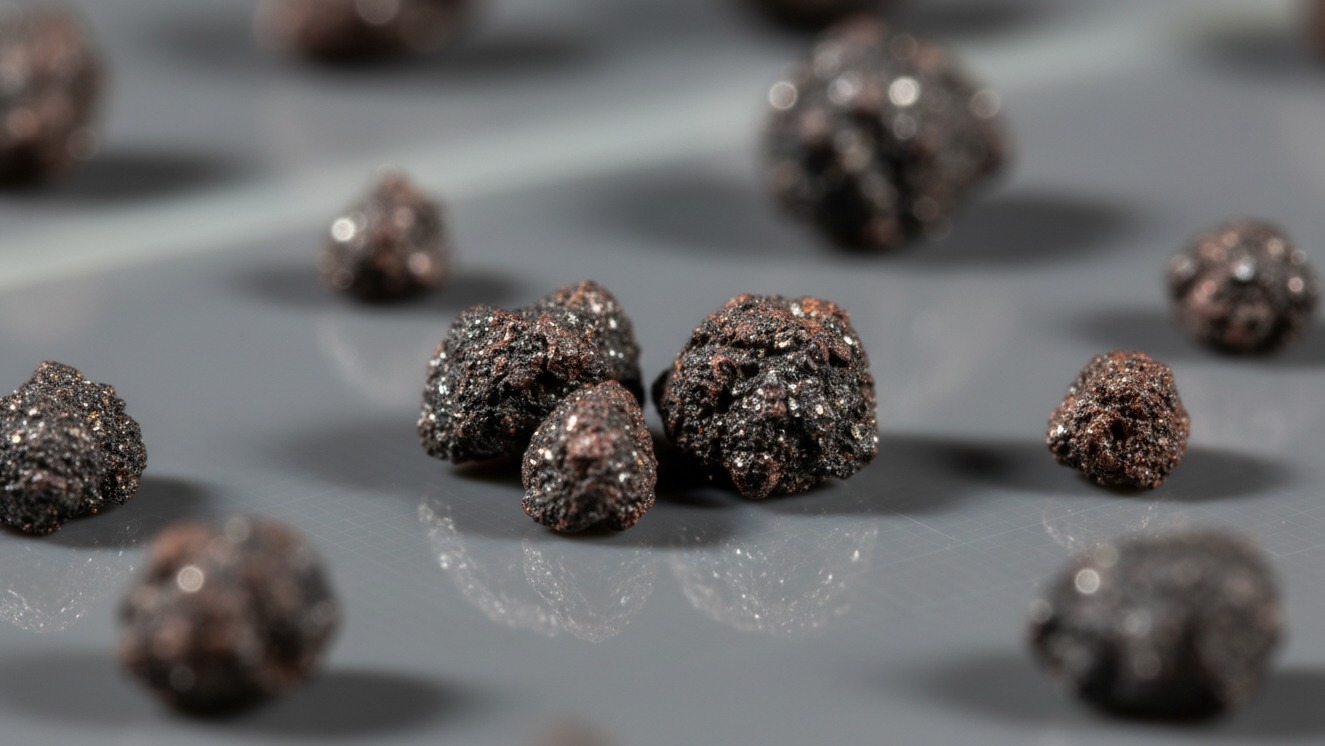
Two tiny samples from Ryugu — and they contained the entire “recipe” for creating the genetic code
Is There Other Life in the Solar System
Ryugu is an asteroid about 1 kilometer in diameter. It might seem like an unremarkable fragment. But it is precisely such carbon-rich bodies that could have seeded the young Earth with a complete set of genetic ingredients during the era of intense bombardment.
And if two out of two studied asteroids contain all five nucleic acid bases, it is logical to assume that similar molecules are widely distributed on carbonaceous bodies throughout the Solar System. This, in turn, raises a fascinating question: if the “building blocks of life” are flying everywhere, perhaps they landed not only on Earth?
Two tiny samples of cosmic dust, delivered from a distance of hundreds of millions of kilometers, have overturned our understanding of how rare life is in the Universe. It turns out the recipe is not written in just one cookbook — it is scattered throughout the entire Solar System. All that remains is to understand where else it was successfully “cooked.”