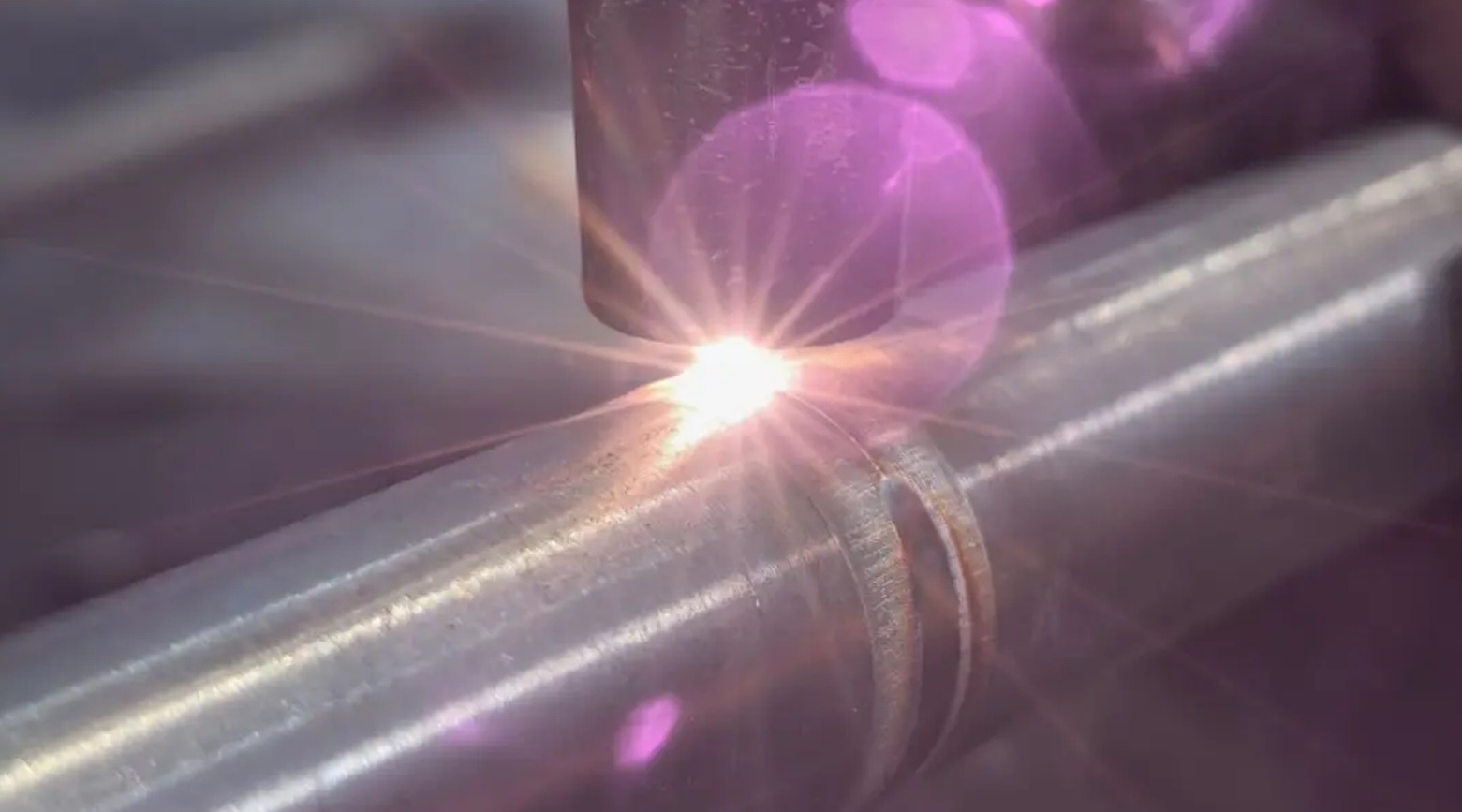
The new type of steel can withstand temperatures up to 600 degrees Celsius. Image source: interestingengineering.com
When it comes to nuclear reactors, most people think about radiation and potential danger. But nuclear engineers will tell you that the main headache is materials. The steel from which a reactor is built must operate for years at hellish temperatures and under intense neutron bombardment. And now Russian scientists have created a new type of steel capable of operating reliably at temperatures exceeding 600 degrees Celsius. This opens the door to next-generation reactors that previously existed only on paper.
Why Nuclear Reactors Need Special Steel
Modern nuclear power plants predominantly operate on water-cooled reactors. The temperature in their active zone usually does not exceed 300–350 degrees — a serious figure, but well within the capabilities of traditional grades of stainless steel. However, the world of nuclear energy is rapidly changing. Fourth-generation reactors, using fast neutrons with liquid metal or gas coolants, promise much higher efficiency and the ability to reprocess nuclear waste.
The problem is that operating temperatures of such installations jump to 600 degrees and above. For comparison, at such temperatures aluminum already begins to lose strength and deform, while ordinary structural steel behaves unpredictably. Add to this the constant bombardment by fast neutrons, which literally “shatters” the crystal lattice of the metal from within.
The thing is that neutron radiation causes so-called radiation swelling — the material increases in volume, becomes brittle, and eventually fails. This is precisely why creating steel that can withstand both heat and radiation simultaneously has become one of the key challenges in nuclear materials science.
How Scientists Solved the Radiation Swelling Problem
The development was carried out by specialists from Russian scientific centers associated with the nuclear industry. Their approach turned out to be both elegant and technologically complex. Instead of simply adding more chromium or nickel (the classic composition of heat-resistant steels), the researchers focused on the microstructure of the alloy — on how exactly the atoms are arranged inside the metal.
The key idea was creating a special ferritic-martensitic structure with the addition of specially selected alloying elements. In simpler terms, the scientists “tuned” the internal structure of the steel so that it could self-heal damage from neutron bombardment. When a fast neutron knocks an atom out of its place in the crystal lattice, voids are formed. If too many such voids accumulate, they merge into pores, and the material swells. In the new alloy, special nanoscale inclusions act as “traps” for these defects: they intercept vacancies before they can cluster into dangerous concentrations.
The test results are impressive. Samples of the new alloy demonstrated several times less radiation swelling compared to traditional steels under the same irradiation conditions. This is actually a colossal difference: we’re talking not about percentages, but about a manifold improvement in resistance.
Which Nuclear Reactors Will Use the New Steel
The new alloy was not developed abstractly but for specific projects. First and foremost, it concerns fast neutron reactors with liquid metal coolant — sodium or lead-bismuth. Russia holds a special position here: it is the only country in the world that operates industrial fast reactors — BN-600 and BN-800 at the Beloyarsk Nuclear Power Plant.
But there’s a nuance. Existing reactors are already operating at the limits of current structural materials’ capabilities. The next generation — the BN-1200M reactor and the promising lead-cooled reactor BREST-OD-300 — requires a qualitative leap in materials science. It is precisely for them that the new steel is being created.
What is especially important: the lead coolant in the BREST reactor operates at temperatures of about 540–600 degrees and is chemically aggressive to most known steels. It literally “corrodes” conventional alloys. The new material was developed with this specificity in mind — it is resistant not only to heat and neutrons but also to corrosion in liquid lead. This means the reactor will be able to operate for decades without replacing key components, which drastically reduces operating costs.
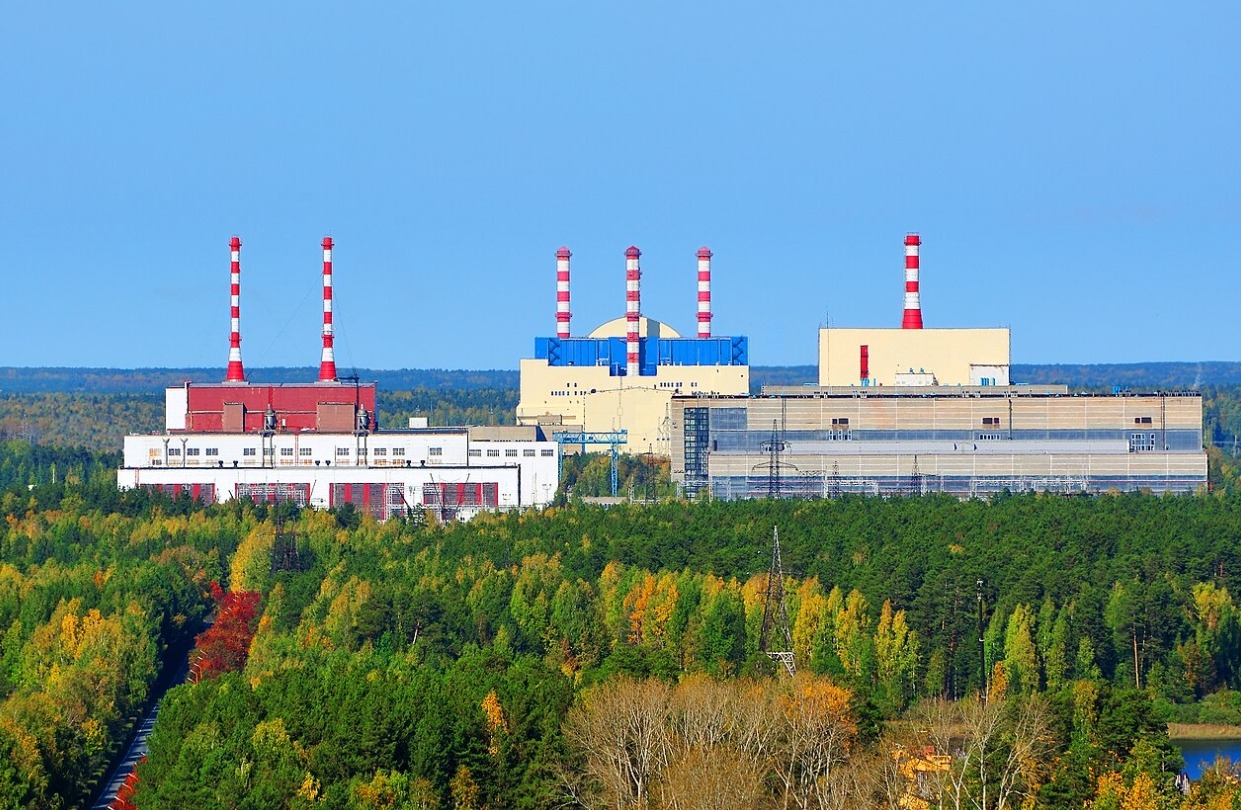
Beloyarsk Nuclear Power Plant. Image source: wikipedia.org
Why This Development Matters Beyond Russia
It might seem like just another steel grade — what’s so global about it? In reality, the problem of structural materials for next-generation reactors is holding back nuclear energy worldwide. Similar research is being conducted by the USA, France, China, Japan, and South Korea, but no one yet has a ready industrial solution.
The main thing to understand is that fourth-generation reactors are not simply “more powerful nuclear power plants.” They are capable of running on reprocessed nuclear fuel and even on waste from conventional reactors. In simpler terms, what is currently stored as dangerous radioactive waste could become fuel for hundreds of years to come. But for this, reactors that can withstand extreme conditions are needed. And those reactors need the appropriate steel.
Global enriched uranium reserves are limited, and the transition to a closed fuel cycle with fast reactors is the only way to provide nuclear energy with resources for millennia, not just decades. For comparison, when using fast reactors, the efficiency of natural uranium utilization increases approximately 100 times compared to current thermal reactors. However, all this potential will remain theoretical without materials capable of withstanding operating conditions.
When Will the New Steel Appear in Real Reactors
Laboratory samples are one thing, and industrial production is quite another. The path from an experimental alloy to finished reactor structures usually takes 5 to 15 years. Extensive endurance testing must be conducted: the material must confirm its properties not during short-term heating but during years of continuous operation.
Nevertheless, Russia has already built the logistics chain. Construction of the BREST-OD-300 reactor is in full swing, and new structural materials are being developed in sync with the design of the installation itself. This means the first industrial application of the new alloy could take place by the end of this decade.
Nuclear energy is often perceived as a technology of the last century, but right now it is experiencing a quiet revolution. New materials, new types of coolants, a closed fuel cycle — all of this adds up to a picture where peaceful atom can become a truly sustainable and practically inexhaustible energy source. And the key to this future, surprisingly, lies not in nuclear reaction physics but in metallurgy.