Redmi Note 15 and realme C85 are two smartphones that cost roughly the same but offer buyers completely different sets of priorities. One bets on the screen, performance, and camera, while the other focuses on protection and battery life. At the same time, they overlap in some of these categories, offering very similar capabilities. These are the most interesting comparisons: when there’s no clear winner, and the choice depends solely on what matters to you personally. We’ve broken it down across all key parameters and put together a detailed side-by-side review.
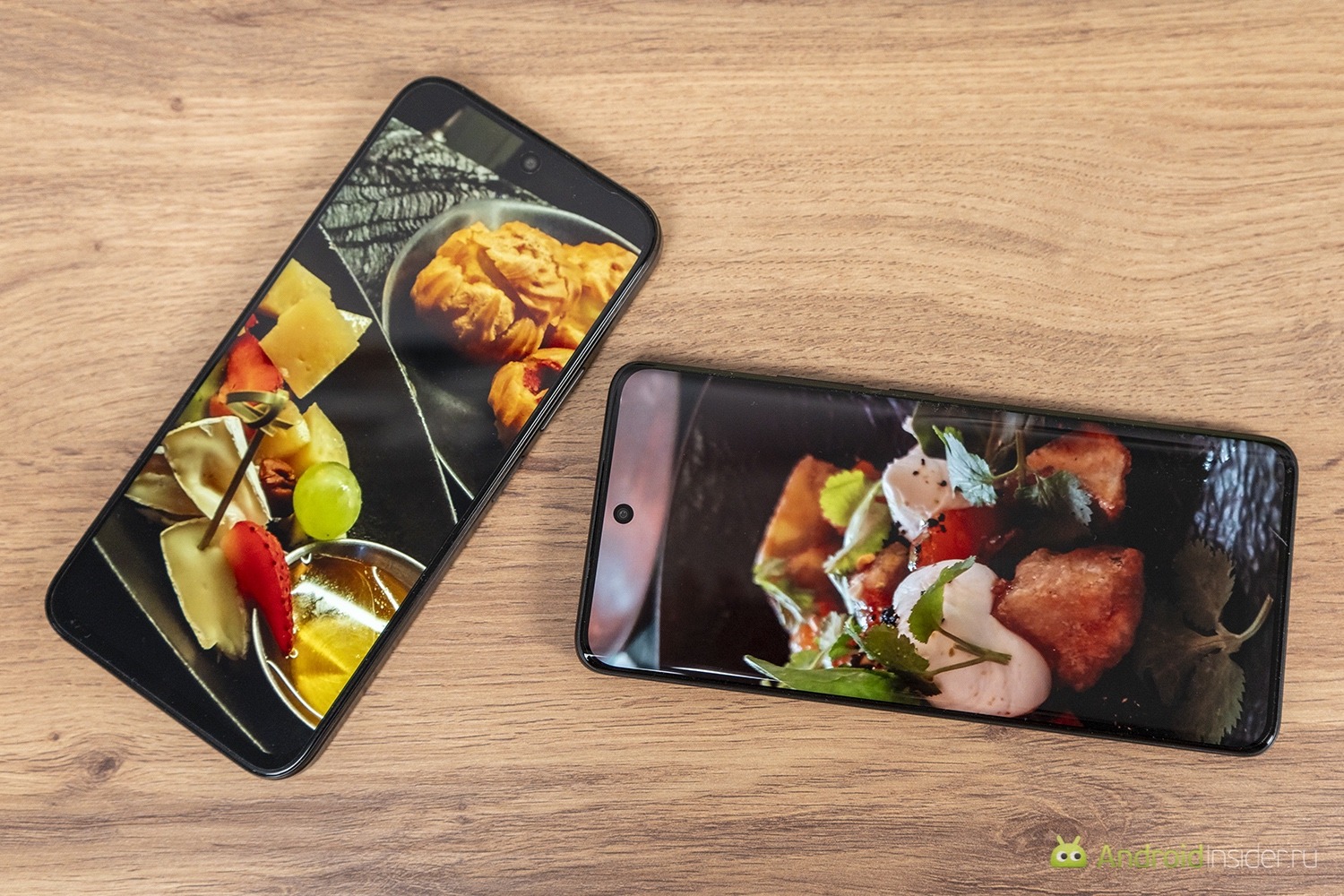
Comparing two worthy phones.
Redmi Note 15 or realme C85: Key Differences
Before diving into the dry specification numbers, it’s important to understand the concept behind each device — what the manufacturer wanted to convey with this smartphone and who it was designed for.
Redmi Note 15 is about comfort and screen quality. A thin body, AMOLED panel, gaming processor, high-megapixel camera — the classic recipe for a good everyday smartphone. Xiaomi has traditionally been able to pack maximum specs into a minimal budget, and the Note 15 continues this tradition.
realme C85 chose durability as its priority: a 7000 mAh battery, MIL-STD-810H military protection certificate, and IP69 Pro rating. Such a combination is extremely rare even among smartphones costing significantly more. This is a device for those who don’t want to worry about charge and aren’t afraid of rain, puddles, and accidental drops.
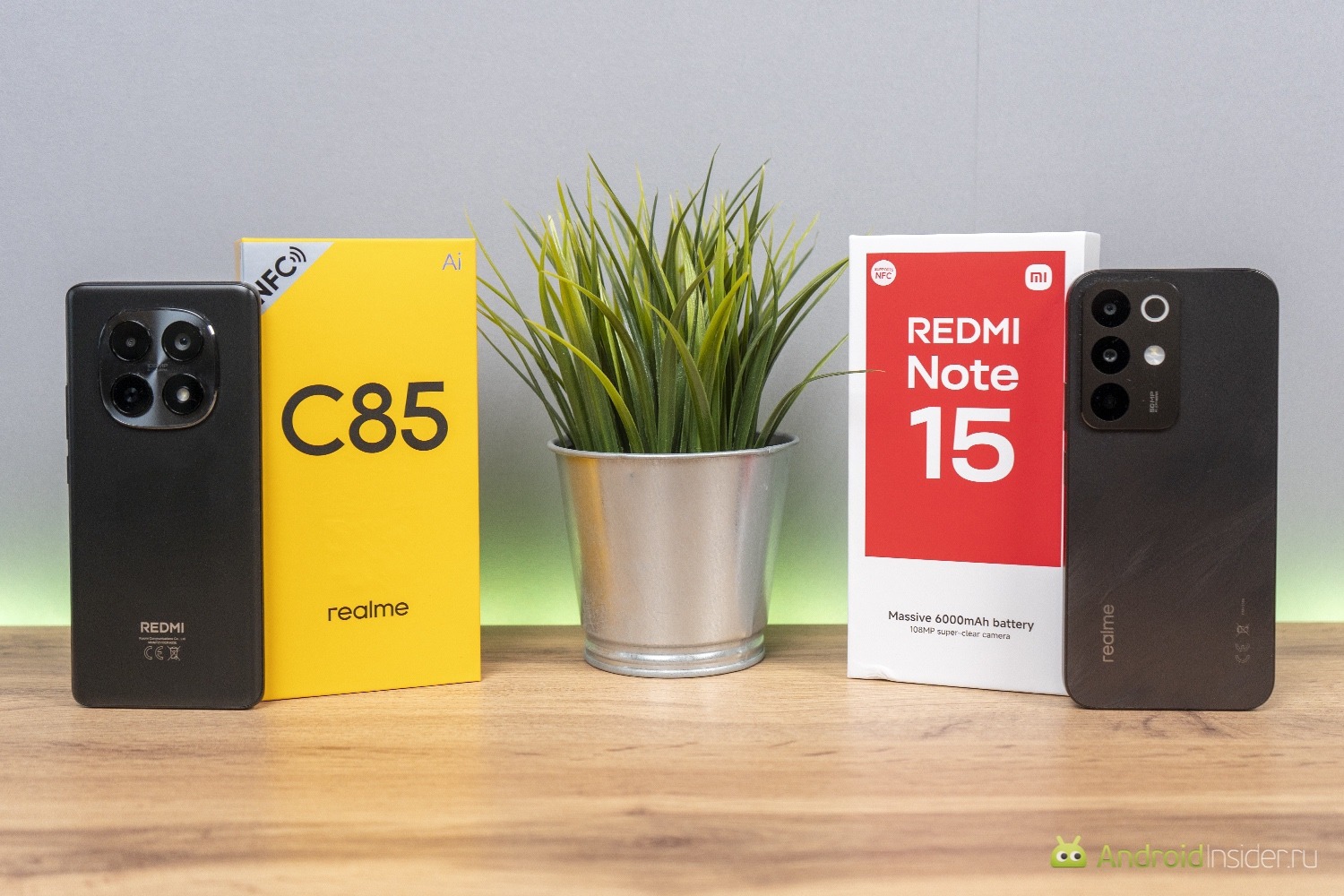
Boxes in brand style.
The boxes for both are typical for their respective brands. Xiaomi goes with white but without a smartphone image on the box. realme sticks to its signature yellow color and a minimalist model name on the cover. Both come with a standard kit: charger, USB-C cable, and silicone case. However, realme’s charger is 45W, while REDMI’s is only 35W. A nice bonus from realme: a screen protector film comes pre-applied from the factory — a small thing, but nice not to have to worry about it yourself.
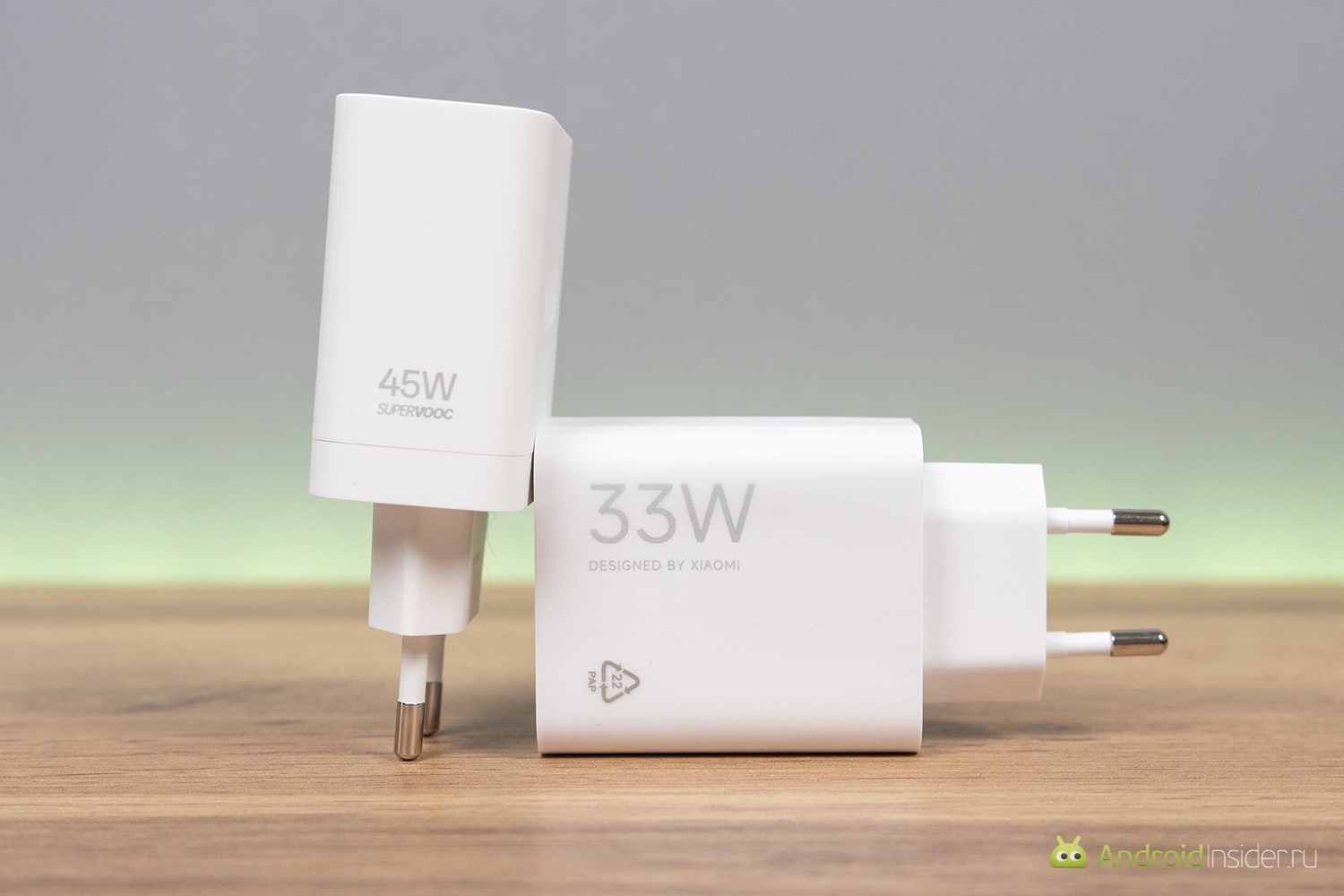
realme’s charger is more powerful.
Design and Dimensions: Lightweight Redmi vs. Rugged realme
When you pick up both smartphones at the same time, the difference is immediately obvious. Redmi Note 15 weighs 184 grams at a thickness of 7.94 mm. It sits comfortably in one hand, easily fits in a jeans pocket, and doesn’t cause fatigue during extended use. The smartphone feels modern and well-built — no creaks, no wobbles, nothing superfluous.
realme C85 is noticeably more substantial: 215 grams and 8.38 mm thick. The nearly 30-gram difference is noticeable in a direct comparison, but it’s not so significant that anyone would find it uncomfortable to use. For some, it actually provides a greater sense of confidence. Especially since the reason is clear and justified: inside hides a battery with record capacity for this class, and the weight compromise is perfectly logical here.
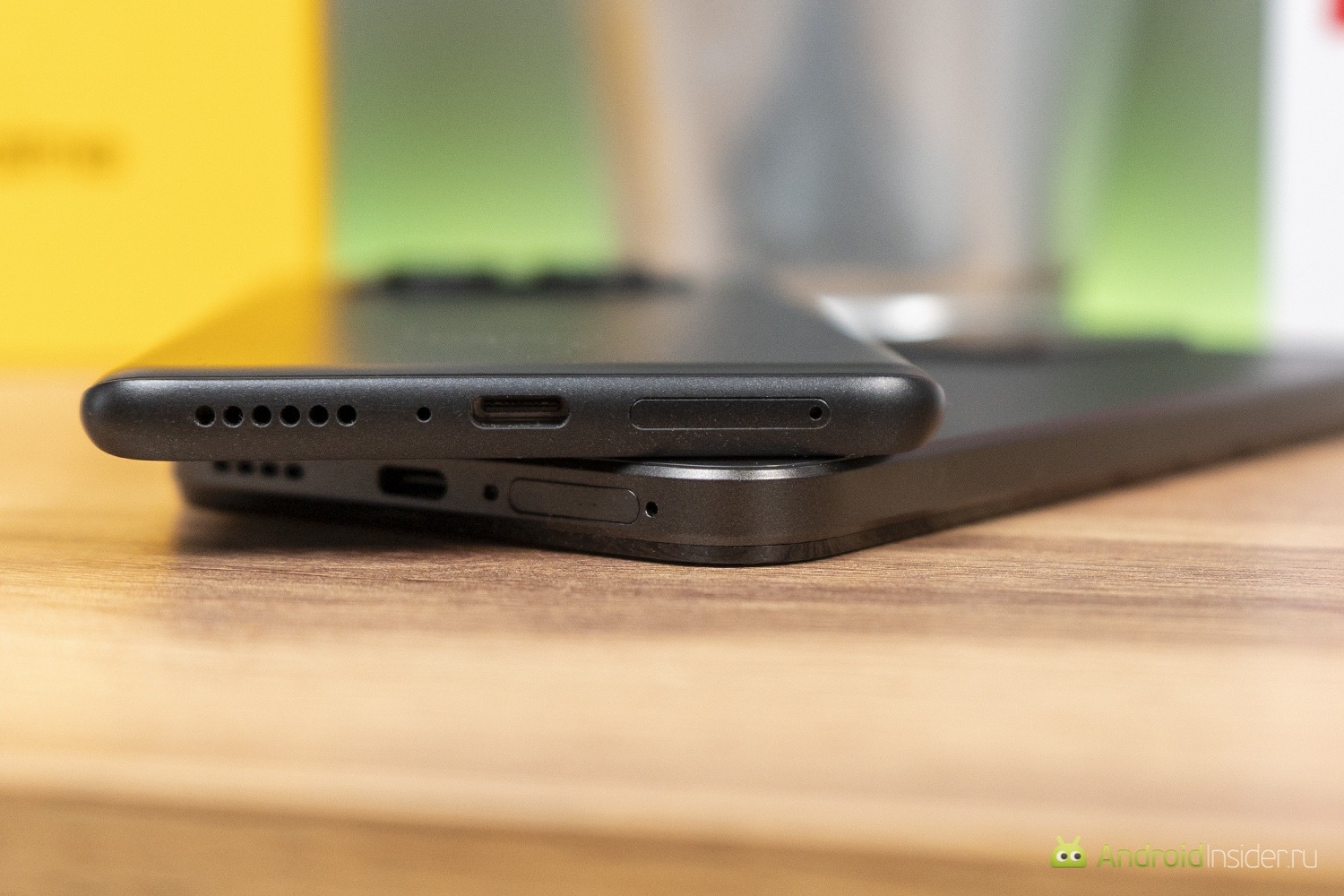
The thickness difference is barely noticeable by eye.
In terms of appearance, the devices are also different, and each has its own audience. Redmi Note 15 looks restrained and modern: thin bezels, clean body lines, Gorilla Glass on the screen for scratch protection, and an elegant camera module. This smartphone looks appropriate both in a business setting and at a gathering with friends.
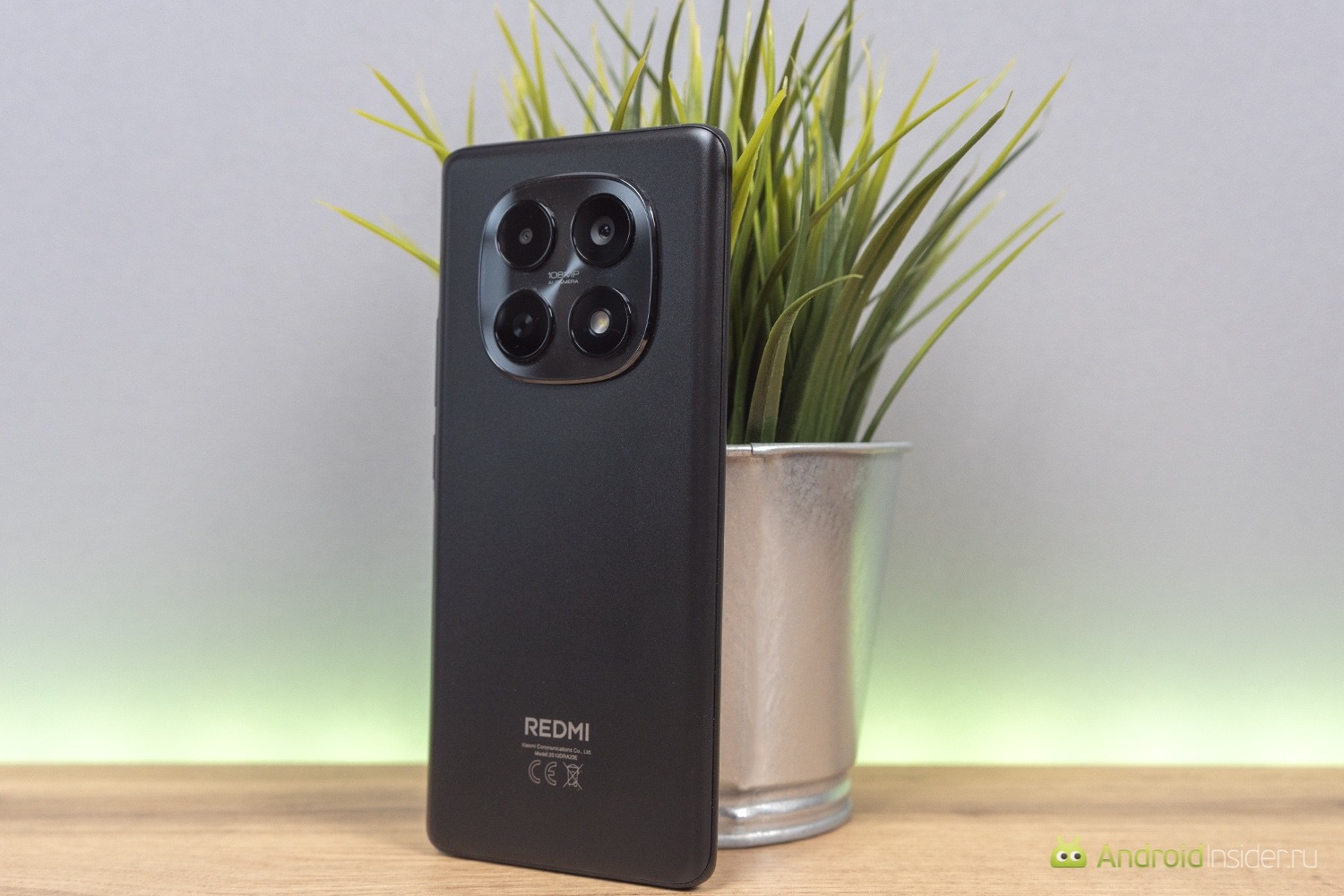
Redmi Note 15 — a strict classic phone.
realme C85 is more distinctive. The back cover with a light-catching pattern, ring LED illumination, and a strict rectangular camera module — all of this sets it apart from competitors. Some might find it flashy and overloaded, others — original and memorable. Available colors: blue, purple, and black, which under certain lighting gives off a brown hue. The design is definitely not for everyone, but on a store shelf it catches attention faster than its gray neighbor.
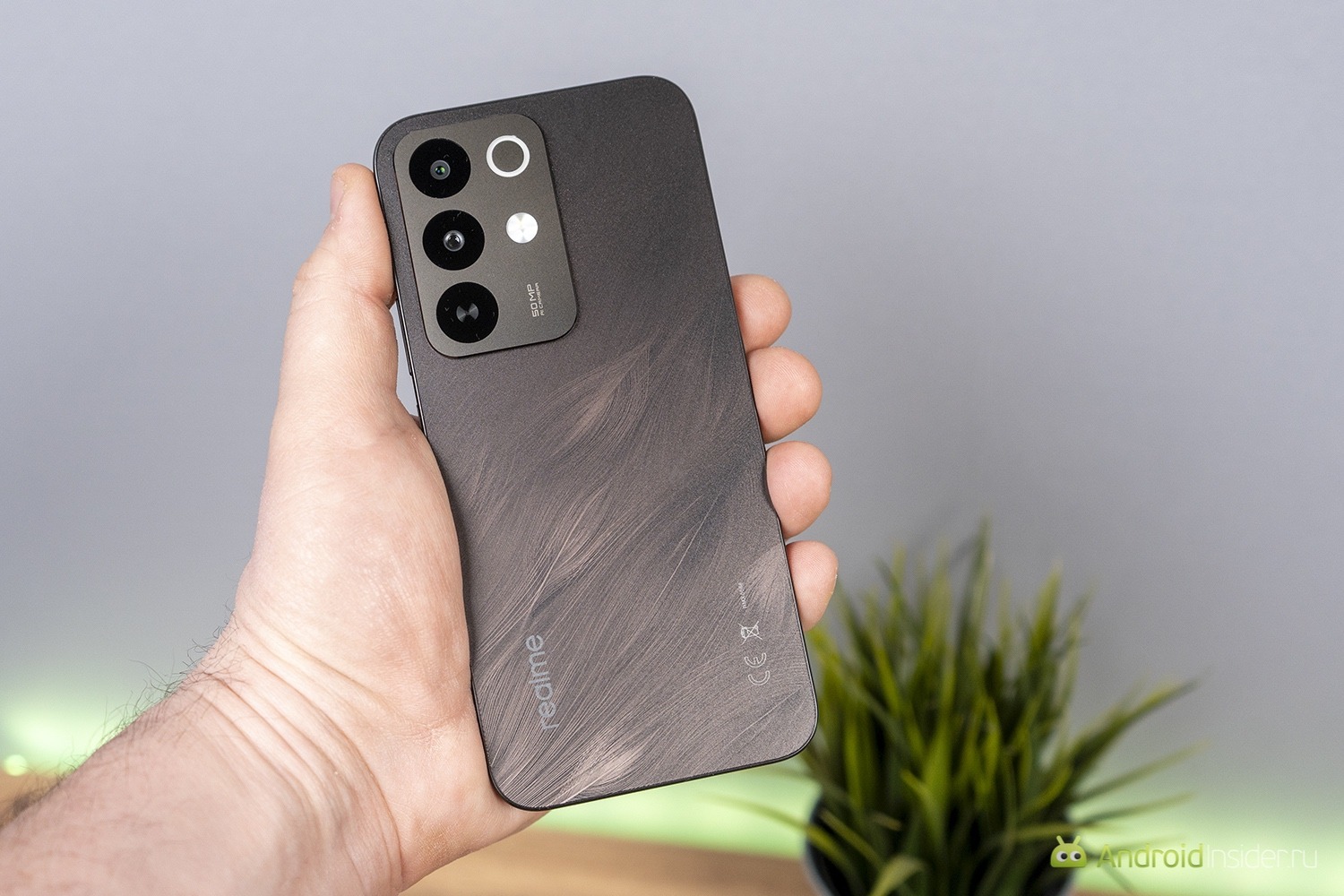
At a certain angle, the realme body changes from near-black to brown.
The biometric placement also differs. Redmi Note 15’s fingerprint scanner is built into the screen, which may seem more convenient but doesn’t work as well with wet fingers. realme C85 has a side-mounted scanner, combined with the power button — less flashy but more reliable. Under good conditions, both respond quickly and produce virtually no false readings. Personally, I prefer the side scanner for convenience. You simply press the button, the fingerprint is read instantly, and the phone unlocks. This way you need at least one fewer movement, and the unlock feels more intuitive.
Phone with Water and Shock Protection
This is perhaps the most unexpected section in a comparison of smartphones at this price point. realme C85 offers IP69 Pro protection — this isn’t just “splash resistance” like most competitors. This is resistance to powerful pressurized water jets and brief submersion. There’s no point even testing this, as the phone will withstand anything, especially in a short-term test. But I did put it under a stream of water — everything was fine.
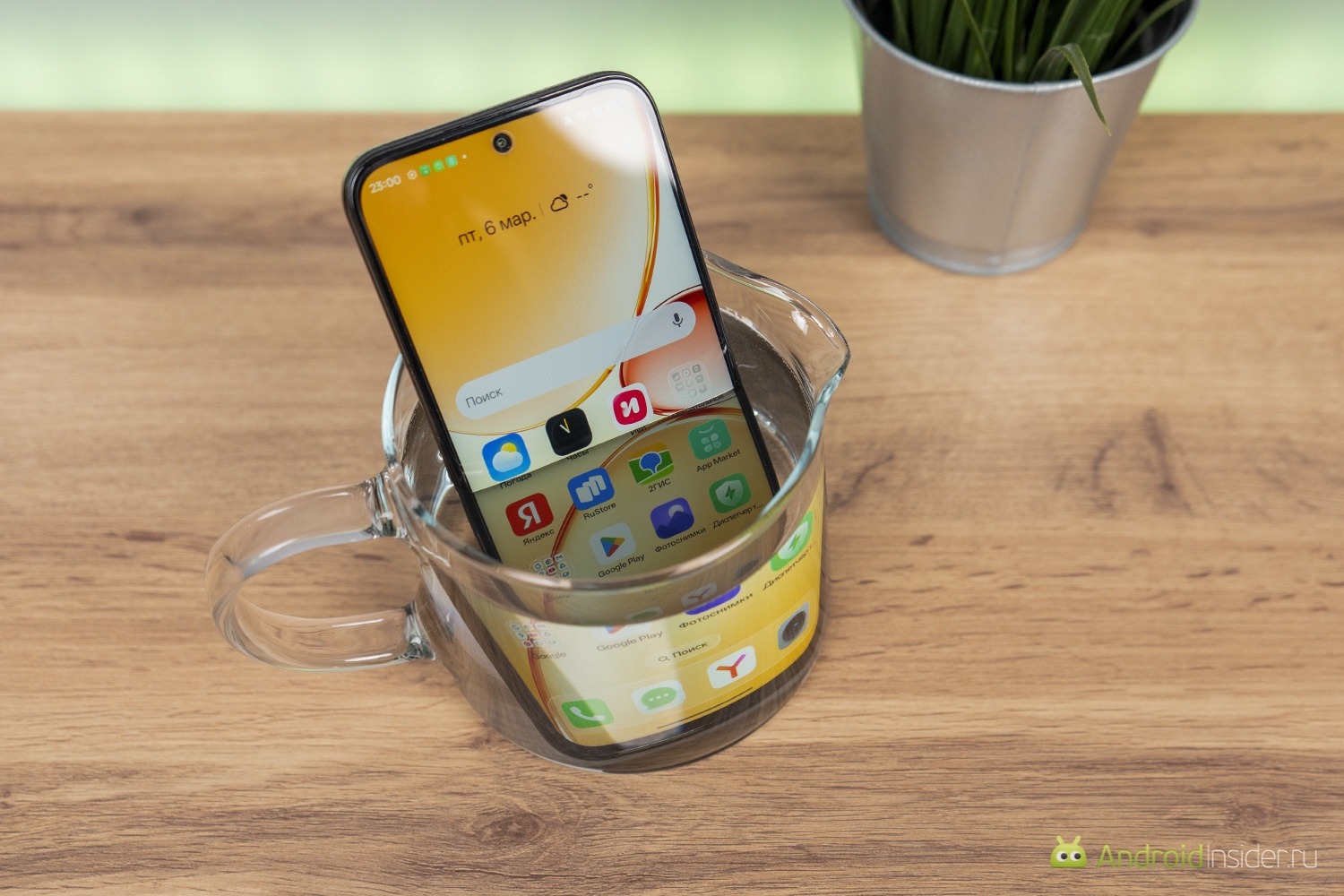
You won’t scare realme C85 with tests like these.
Additionally, the manufacturer claims MIL-STD-810H certification: this is a military standard involving tests for shock resistance, temperature extremes, vibration, and high humidity. For a smartphone priced as a budget device, this is truly impressive.
Redmi Note 15 has an IP64 rating — sufficient for protection against rain, occasional splashes, and dust, but nothing more. For the vast majority of urban users, this is more than enough. But if you work outdoors, engage in active sports, or simply have a habit of dropping phones at the worst possible moments — the choice is obvious. In terms of protection, the C85 isn’t just a step above — it’s in a different league entirely.
Comparing Screens: Redmi Note 15 and realme C85
The display gap between the smartphones is also clear, but this time in Redmi’s favor. The Note 15 features an AMOLED panel measuring 6.77 inches with a resolution of 2392×1080, peak brightness of 3200 nits, and a 120 Hz refresh rate. Special attention goes to the high-frequency PWM dimming at 3840 Hz — a critically important parameter for those who spend a lot of time looking at the screen and by evening complain about eye fatigue and headaches. Deep blacks, saturated colors, and visibility under direct sunlight — all top-notch.
realme C85 is equipped with a 6.8-inch IPS display with a resolution of 1570×720 pixels. For some, this is an immediate dealbreaker, while others will say that at this screen size, the difference from Full HD+ is only noticeable upon close inspection. Brightness goes up to 1200 nits, which is perfectly acceptable outdoors. The refresh rate is listed at 144 Hz — higher than the Note 15. However, most apps and games only use 60–90 Hz. Overall, for a budget smartphone, the screen is functional and without obvious complaints, but next to the AMOLED competitor, the difference in picture quality is hard to miss.
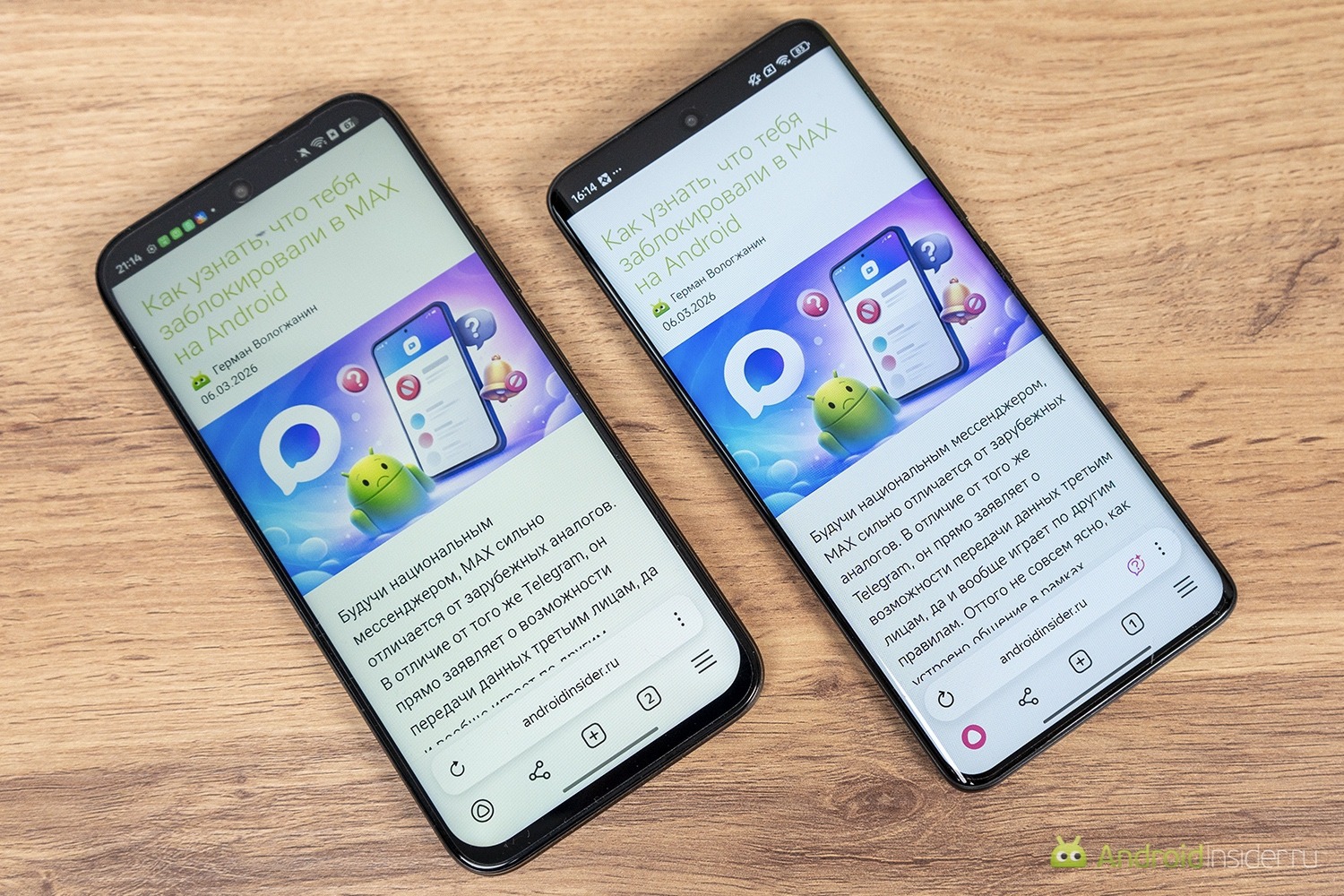
realme on the left, Redmi on the right.