You bought a flagship phone for 60–80 thousand rubles, but its bundled charger stayed at home or wasn’t even included in the box. You grab the first available 65W power block, plug in the cable, and see “Charging” on the screen instead of the expected “Fast Charging.” It’s as if the smartphone took offense at the unfamiliar adapter and decided to charge at a leisurely pace. In practice, that’s exactly what happens: many manufacturers build a recognition system into their devices that works on a “friend or foe” principle. If the power block doesn’t pass the check, the phone intentionally limits charging power. Why does this happen and can anything be done about it? Let’s figure it out.
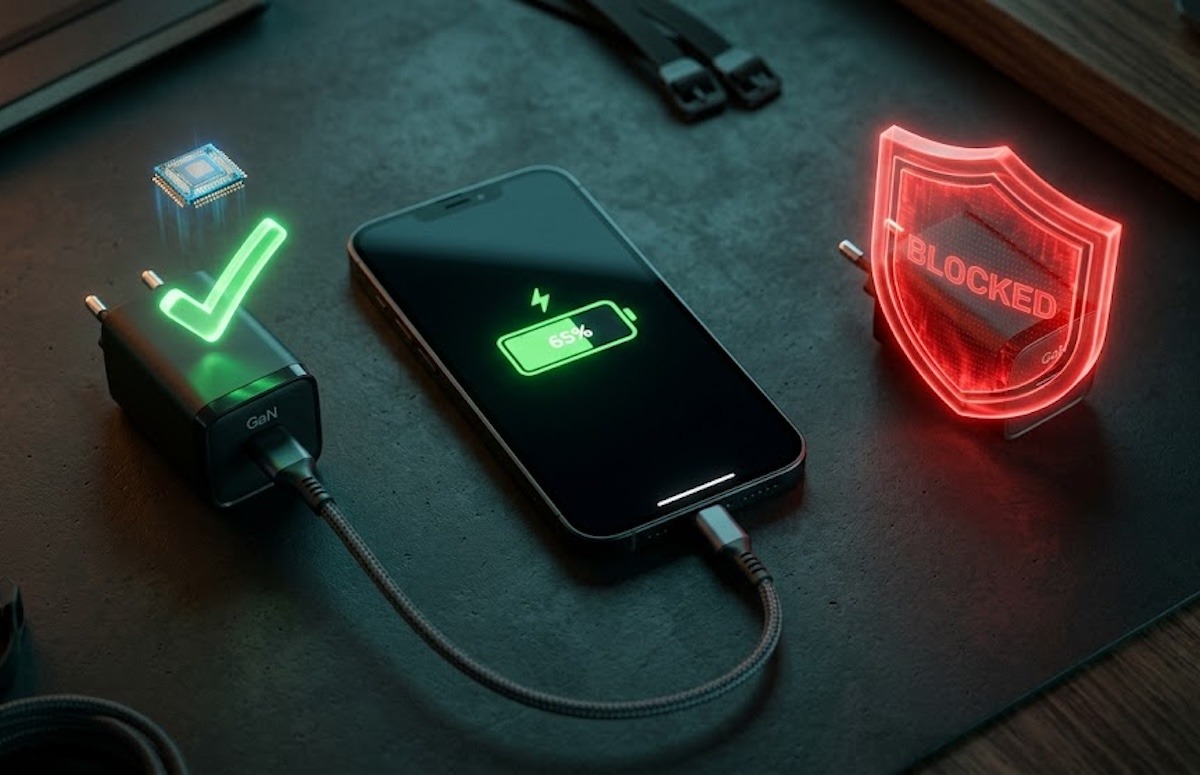
Not every charger can charge a smartphone the way it should.
How a Smartphone Identifies an Original Charger
When you plug a cable into your smartphone, negotiations begin between the device and the adapter. This isn’t a metaphor — it’s a very real data exchange over the CC (Configuration Channel) line in the USB Type-C connector. The charger reports which protocols it supports and how much power it can deliver, while the smartphone selects the appropriate mode.
If we’re talking about a universal standard like USB Power Delivery, everything is straightforward: the devices agree on voltage and current, and charging begins. But manufacturers like OPPO, Xiaomi (in flagship models prior to the 17 series), and Huawei went further. They developed their own protocols with additional verification levels. The smartphone literally asks the adapter: “Are you one of ours?” And if the answer doesn’t match expectations, maximum power is cut to a modest 15–27W instead of the advertised 80, 120, or even 240W.
Proprietary chips play a key role in this process. OPPO, for example, embeds special microchips in its adapters and cables that exchange closed commands with the phone. Without this chip, SuperVOOC charging simply won’t activate. Xiaomi acted similarly with its Mi TurboCharge and HyperCharge protocols: inside the branded power block sits a controller that “speaks” a language understood only by smartphones of that brand.
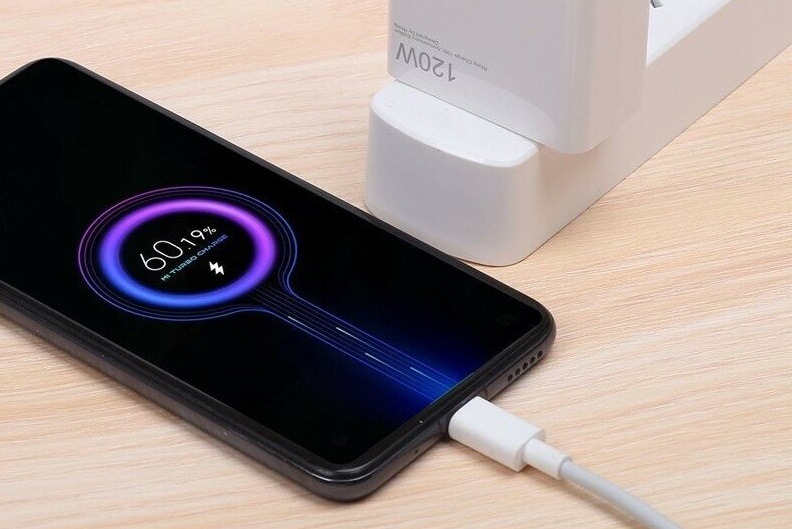
By the way, fast charging isn’t harmful enough to worry too much about. Image: Xiaomi
What Happens When Using a Third-Party Charger
Honestly, nothing critical. Your smartphone won’t break or catch fire from a third-party adapter. Charging will simply work slower — sometimes significantly so. Here’s a typical scenario: you take a quality 65W GaN block with USB Power Delivery support and connect it to an OPPO smartphone. Instead of the branded 80W via SuperVOOC, the device will draw at most 18–27W via PD. Instead of half an hour to a full charge, you’ll have to wait an hour to an hour and a half.
The situation with Xiaomi was similar until recently. Smartphones in the 14 and 15 series supported proprietary charging at 90–120W, but from a third-party PD adapter, they received at best 27–33W. At the same time, the phone itself contains two charging controllers: one for the proprietary protocol and another for universal PD with PPS. This creates a paradox: the hardware allows faster charging, but software restrictions prevent it.
Samsung behaves more democratically in this regard. Their Super Fast Charging is based on the open USB PD PPS standard, so to charge a Galaxy S25 Ultra at full 45W power, any adapter with PPS support will work. You don’t need to buy a branded block — just make sure the box says “PD PPS.” Personally, I consider this the right approach, but not all manufacturers share this position.
Why Each Phone Has Its Own Charger
Manufacturers have two arguments, and both sound quite convincing. The first is related to safety. When the adapter, cable, and smartphone work as a single system with a proprietary control chip, the manufacturer fully controls the charging process. They know exactly what current will flow through the cable, how voltage will change, and at what temperature power needs to be reduced. OPPO uses five levels of protection and a dedicated intelligent chip within SuperVOOC that monitors battery status in real time. If you connect a third-party block, this chain of control is broken.
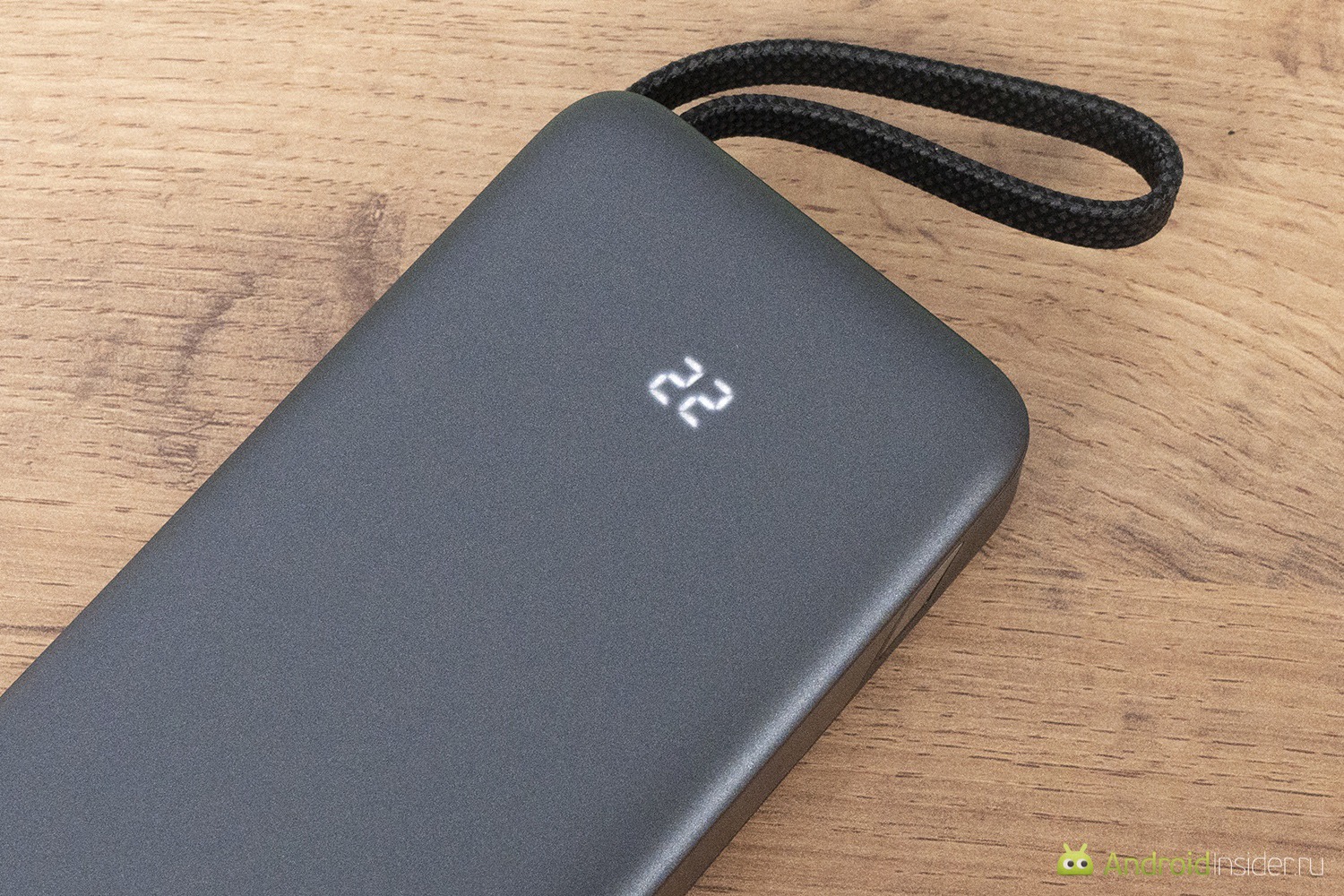
Power banks can also do fast charging.
The second argument is, let’s say, economic. Proprietary chargers cost more than third-party alternatives, and the manufacturer earns money on accessories. Try finding an original SuperVOOC cable at a retail store. Most likely, you’ll have to order from a marketplace where genuine items are mixed with fakes that don’t support fast charging, even though the packaging bears the right markings.
In fairness, both arguments have their weak points. Regarding safety, the USB PD PPS standard also provides dynamic current and voltage regulation with 20mV steps. And regarding earning from accessories — Chinese manufacturers are increasingly removing chargers from the box, making the lock-in to a proprietary block even more painful for the wallet.
Why Xiaomi 17 Changed Its Charging Approach
In the fall of 2025, Xiaomi introduced the Xiaomi 17 smartphone lineup, and for the world of fast charging, this became a truly significant event. For the first time in the brand’s history, the flagship series supports fast charging at 100W via the open USB PD PPS protocol. This means you no longer need a branded Xiaomi block for full-power charging. Any adapter with PPS support will work — even a laptop charger.
Xiaomi and Redmi product manager Zhang Yu called this transition an “epic upgrade,” and I’d have to agree. With battery capacities of 6,300–7,500 mAh in the lineup’s models, this truly changes the game. You can walk into any café, borrow a charger from someone with a laptop, and your Xiaomi 17 Pro will charge at full speed. Previously, this was only possible with Samsung.
This step may push other Chinese manufacturers to abandon proprietary protocols as well. Although for now, OPPO, OnePlus, Realme, and Vivo continue to use SuperVOOC for maximum power levels.
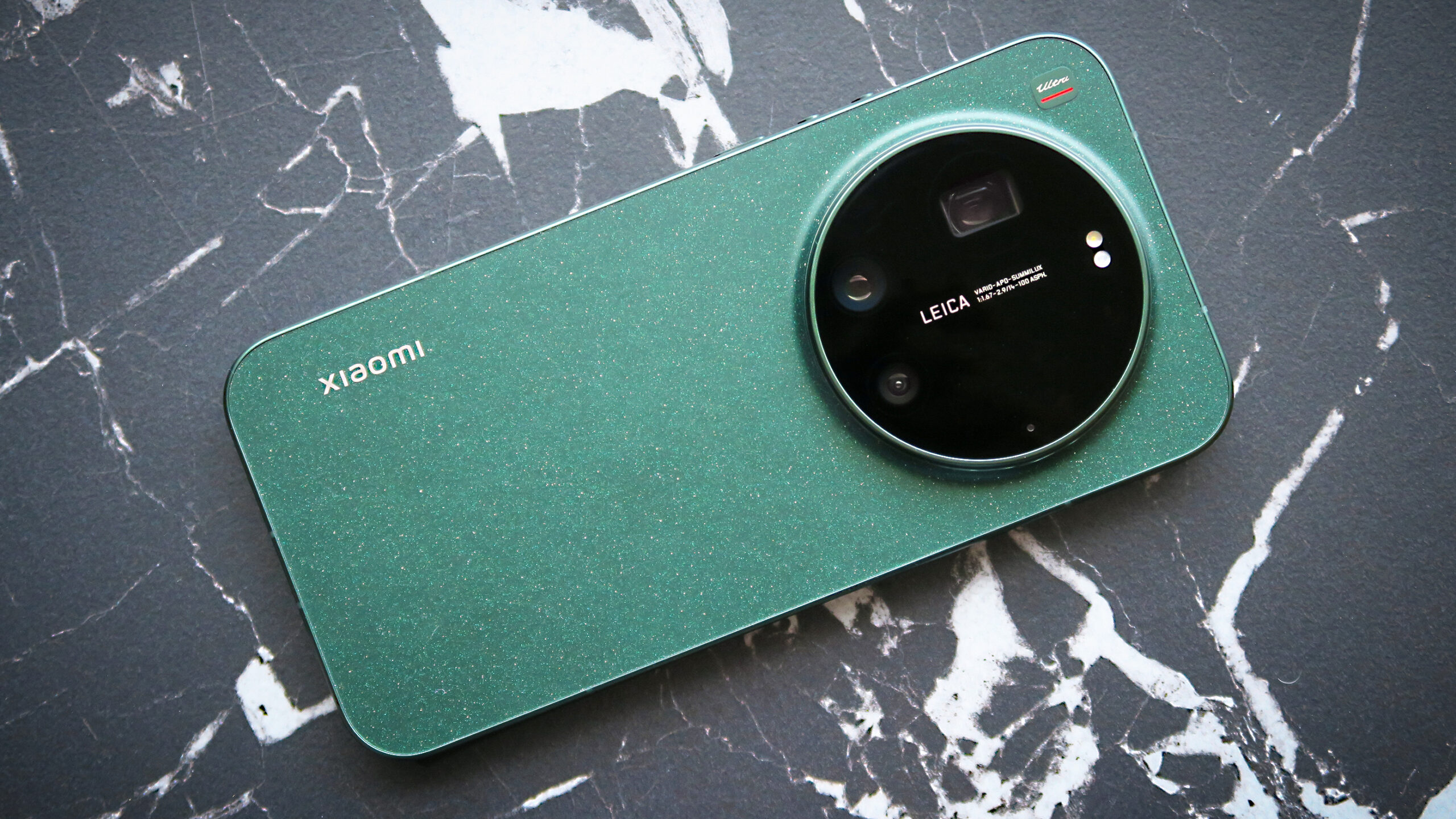
Xiaomi changed its approach to charging. Image: techradar.com
What Is UFCS 2.0 and How Will It Help
In May 2025, Huawei, Honor, OPPO, and Vivo signed an agreement to support the unified fast charging standard UFCS 2.0 (Universal Fast Charging Standard). The idea is simple: if you have a Huawei charger and an OPPO phone, you’ll be able to get 40W fast charging without any hassle.
It sounds like a breakthrough, but there are nuances. 40W via UFCS 2.0 is certainly better than 10–18W via basic USB, but it’s far from the maximum 80–240W offered by the proprietary protocols of those same brands. So for “basic” compatibility the standard works, but for full speed you still need the original block. Additionally, Xiaomi, which participated in developing the first version of UFCS back in 2021, has not yet confirmed support for version 2.0. Samsung and Apple are also standing on the sidelines.
Honestly, for now UFCS 2.0 looks more like a step in the right direction than a solution to the problem. The real solution, as shown by the Xiaomi 17 example, lies in a full transition to USB PD PPS for all power levels — not just the basic 40W.
How to Choose a Charger Without Overpaying
If you have a Samsung, life is simple. Grab any adapter labeled USB PD PPS at the required wattage (45W for the Galaxy S25 Ultra, 25W for most other models) and don’t worry. UGREEN, Baseus, Anker — even a laptop charger will do.
If you have a Xiaomi 17 or newer, the situation is the same. Look for a block with PD PPS at 100W, and you’re all set. However, owners of OPPO, OnePlus, Realme, Vivo, and Huawei smartphones will have a harder time.