Every year it’s the same story: a powerful Chinese phone comes out with aggressive specs — and the debates immediately begin about whether it’s worth the money compared to an iPhone. In 2026, the challenger is the OnePlus 15T, and its opponent is the base iPhone 17. On paper, the difference between them seems like a chasm: twice the battery, four times faster charging, a brighter and smoother display. But if smartphones were chosen by spec sheets alone, Apple would have gone bankrupt long ago. So let’s break it down calmly — without fanaticism in either direction.
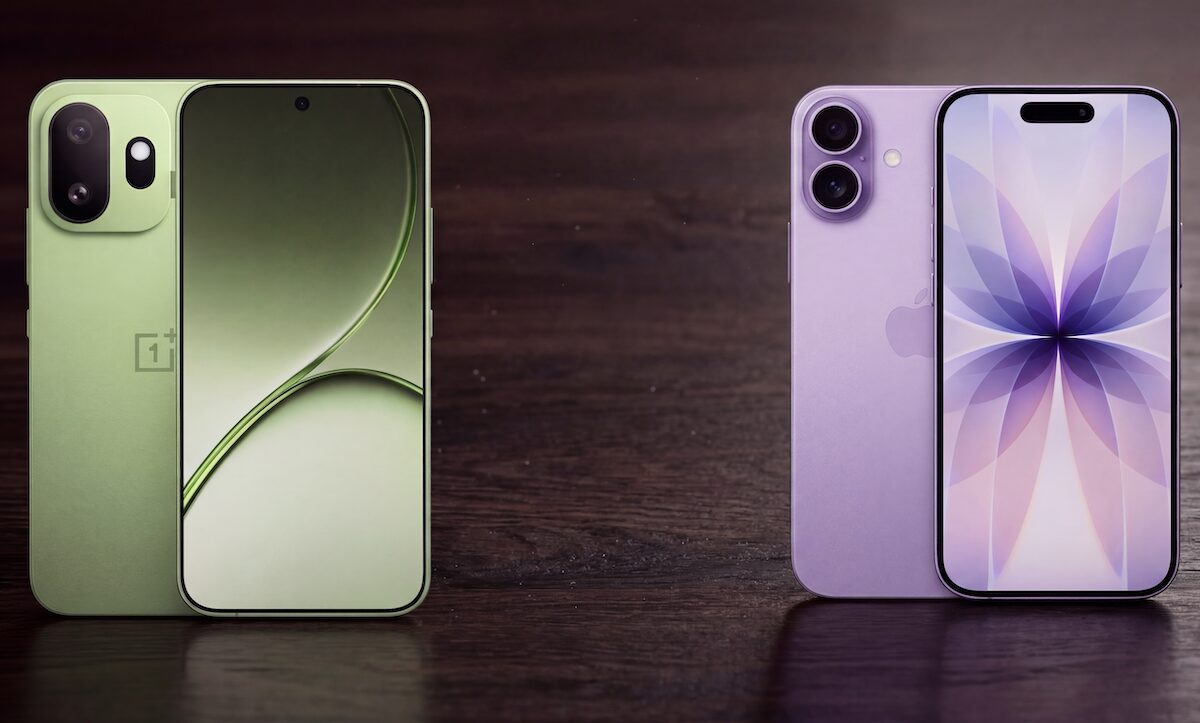
These two smartphones can both be called flagships, but which one is better is hard to say right away.
How the OnePlus 15T Differs from the iPhone 17
The first thing you feel when picking up both devices is a completely different philosophy. The OnePlus 15T is made of aluminum with a fiber-reinforced back panel. Sounds modest, but it has IP68/IP69K protection — and that’s a serious claim to durability. If you drop your phone more often than you’d like to admit — that’s an argument.
The iPhone 17, in turn, stays true to glass and aluminum with a Ceramic Shield 2 coating. The feel in your hand is “more premium,” the build is tighter, and gaps are nonexistent as a class. Honestly, in terms of tactile experience, Apple is still ahead, but water and dust protection on the OnePlus is formally higher.
Which Screen Is Better: OnePlus 15T or iPhone 17
Here, OnePlus decided to go all out. An AMOLED panel with a 165 Hz refresh rate, peak brightness up to 3600 nits, and an advanced PWM dimmer for those whose eyes get tired. If you read a lot on your screen or game — the difference from 120 Hz will be noticeable, though not revolutionary.
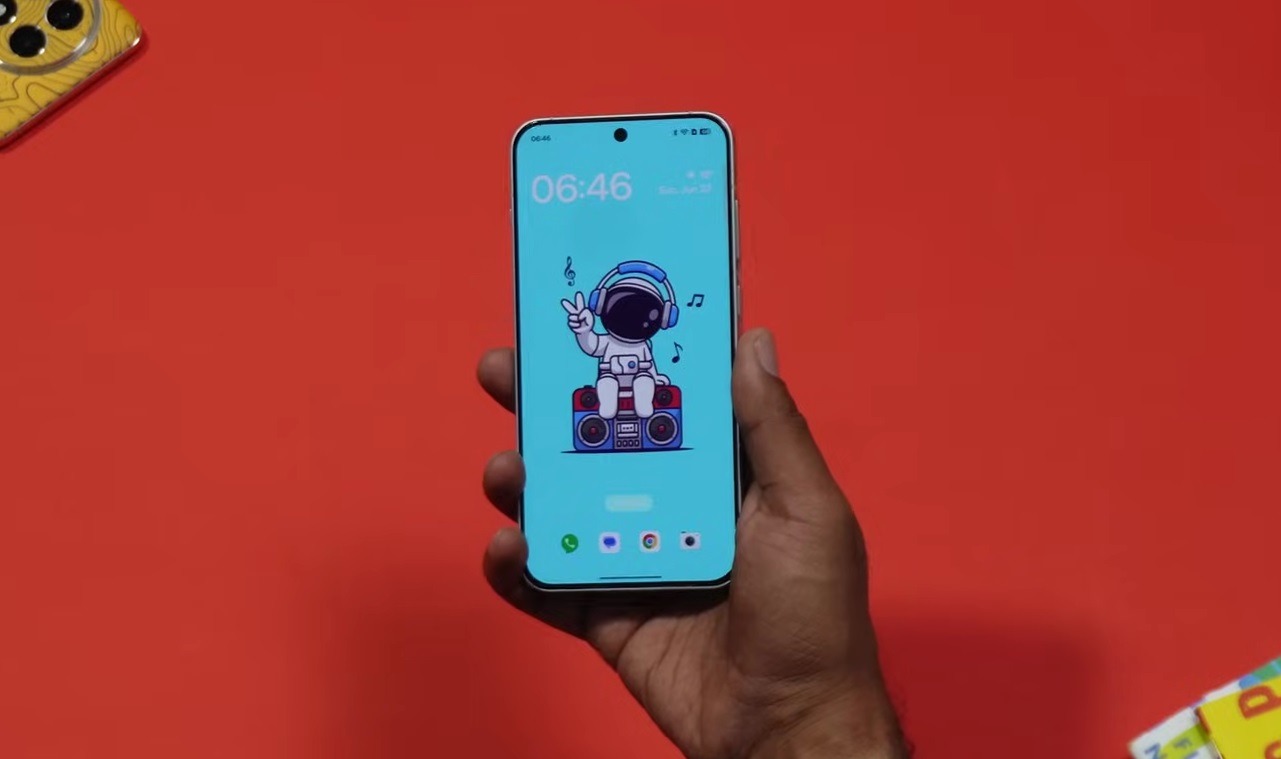
The OnePlus 15T screen bezels should become thinner
The iPhone 17 has an LTPO OLED at 120 Hz with peak brightness of 3000 nits. More modest on paper, but Apple traditionally wins through calibration. Colors look more natural, HDR content displays exactly as the director intended, and the anti-glare coating actually works in sunlight. In practice, the iPhone 17 screen looks more balanced, while the OnePlus looks more saturated and aggressive. To each their own.
Performance: OnePlus 15T and iPhone 17
The OnePlus 15T runs on the Snapdragon 8 Elite Gen 5 — the top Android chip with power reserves for years to come. Up to 16 GB of RAM and up to 1 TB of UFS 4.1 storage — it sounds like a workstation, not a phone. For heavy gaming and multitasking, this is exactly what you need.
The iPhone 17 got the A19 chip, and here it’s the usual story: Apple doesn’t chase peak benchmark numbers, but iPhone 17 performance in everyday tasks is more stable. Apps open instantly, animations don’t stutter even after a year and a half of use — and this isn’t marketing, but the real experience of previous generation owners.
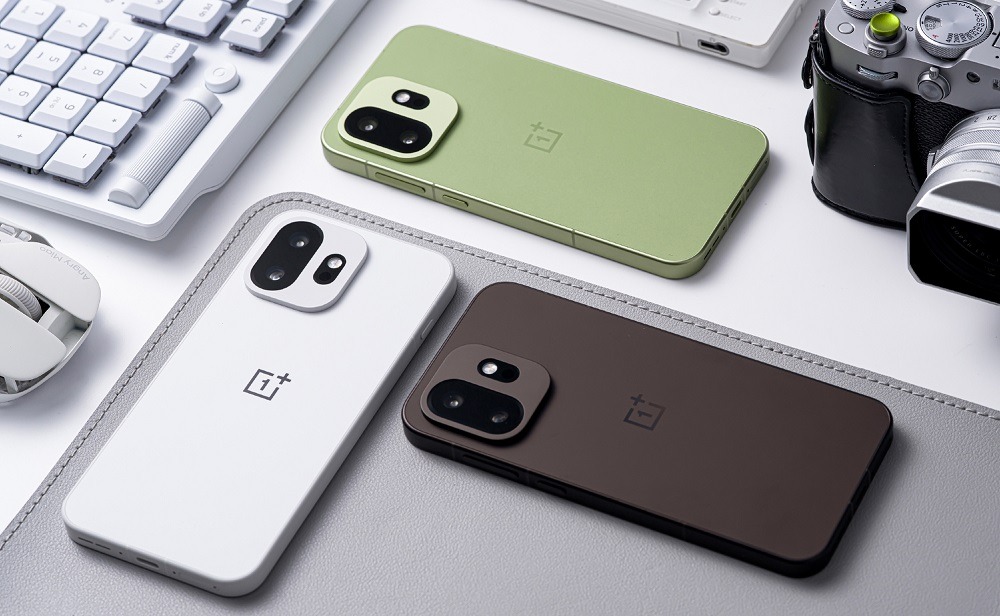
OnePlus is not yet available everywhere. Image: OnePlus
Battery: OnePlus 15T and iPhone 17
This is where OnePlus delivers its main blow. The OnePlus 15T battery is 7500 mAh. That’s not a typo. For comparison, the iPhone 17 has 3692 mAh — roughly half as much. Add 100W wired charging and 50W wireless charging, and it becomes clear why this smartphone is so attractive to those who are on their feet all day.
The iPhone, of course, compensates for its modest battery capacity with optimization. iOS has historically been more energy-efficient, and MagSafe charging has gotten slightly faster. But let’s be honest: when the capacity difference is twofold, no optimization can fully save the day. If battery life is your number one priority, the choice is obvious.
Camera Comparison: OnePlus 15T and iPhone 17
The OnePlus 15T offers a 50-megapixel main module and a telephoto with 3.5x optical zoom. For portraits from a distance, architectural details, and street photography — it’s an excellent set. Photos come out sharp with a lean toward contrast, which not everyone likes, but it looks striking on social media.
The iPhone 17 camera has a 48 MP main module and a 48 MP ultra-wide. There’s essentially no zoom, but color reproduction is consistently accurate, and 4K Dolby Vision video remains unrivaled on the market. Apple’s front camera is also better — with autofocus, a 3D sensor, and confident video recording. If video and selfies matter more to you, the iPhone wins. If zoom — OnePlus.
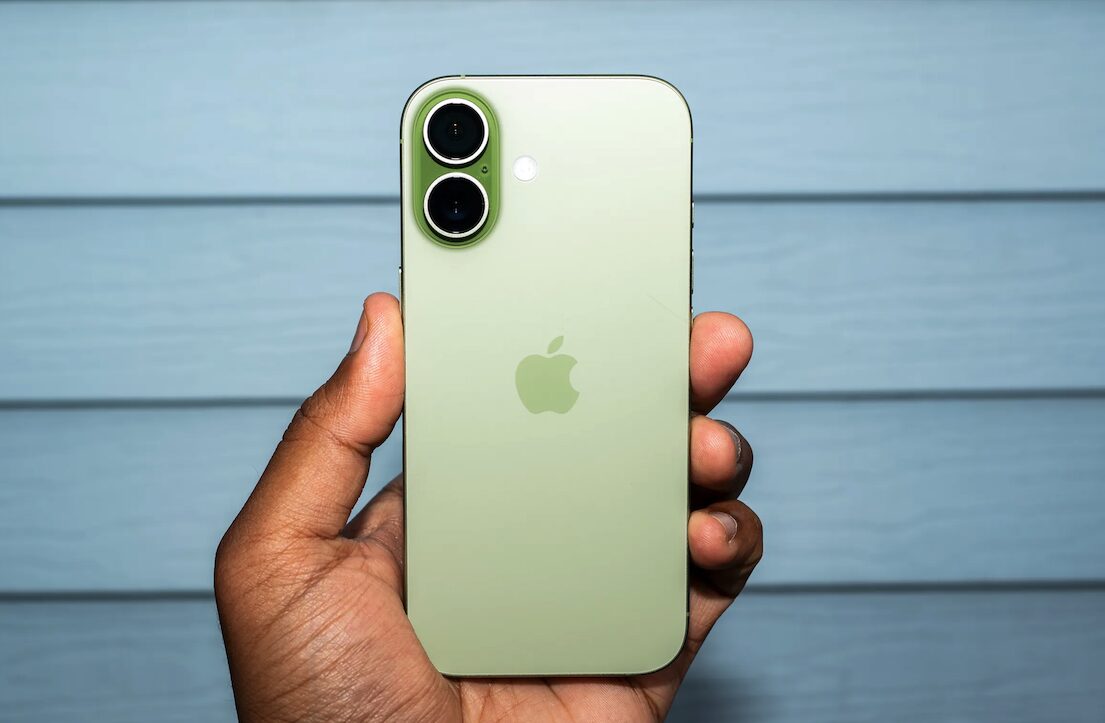
iPhone 17 wins on camera.
Which Phone to Buy: OnePlus 15T and iPhone 17 in 2026
The OnePlus 15T price starts at around 49,000 rubles, while the iPhone 17 will cost at least 65,000 rubles. The 16,000-ruble difference is essentially the cost of good wireless earbuds or a six-month cloud subscription. For that money, OnePlus offers a bigger battery, faster charging, more memory, and a brighter screen. Apple, in turn, wins with its ecosystem, long-term updates, and resale value stability.
If you live within the Apple ecosystem — with AirPods, MacBook, and Apple Watch — switching to OnePlus will be painful, and no 7500 mAh battery will compensate for that. But if you’re choosing a smartphone as a standalone device and value power, battery life, and Android flexibility, the OnePlus 15T objectively offers more for less money.
iPhone 17 is stability, camera, video, and the confidence that three years from now the phone will work just as it did on the day of purchase. OnePlus 15T is the here and now: maximum hardware, minimum compromises in specs. The choice, as always, is yours.