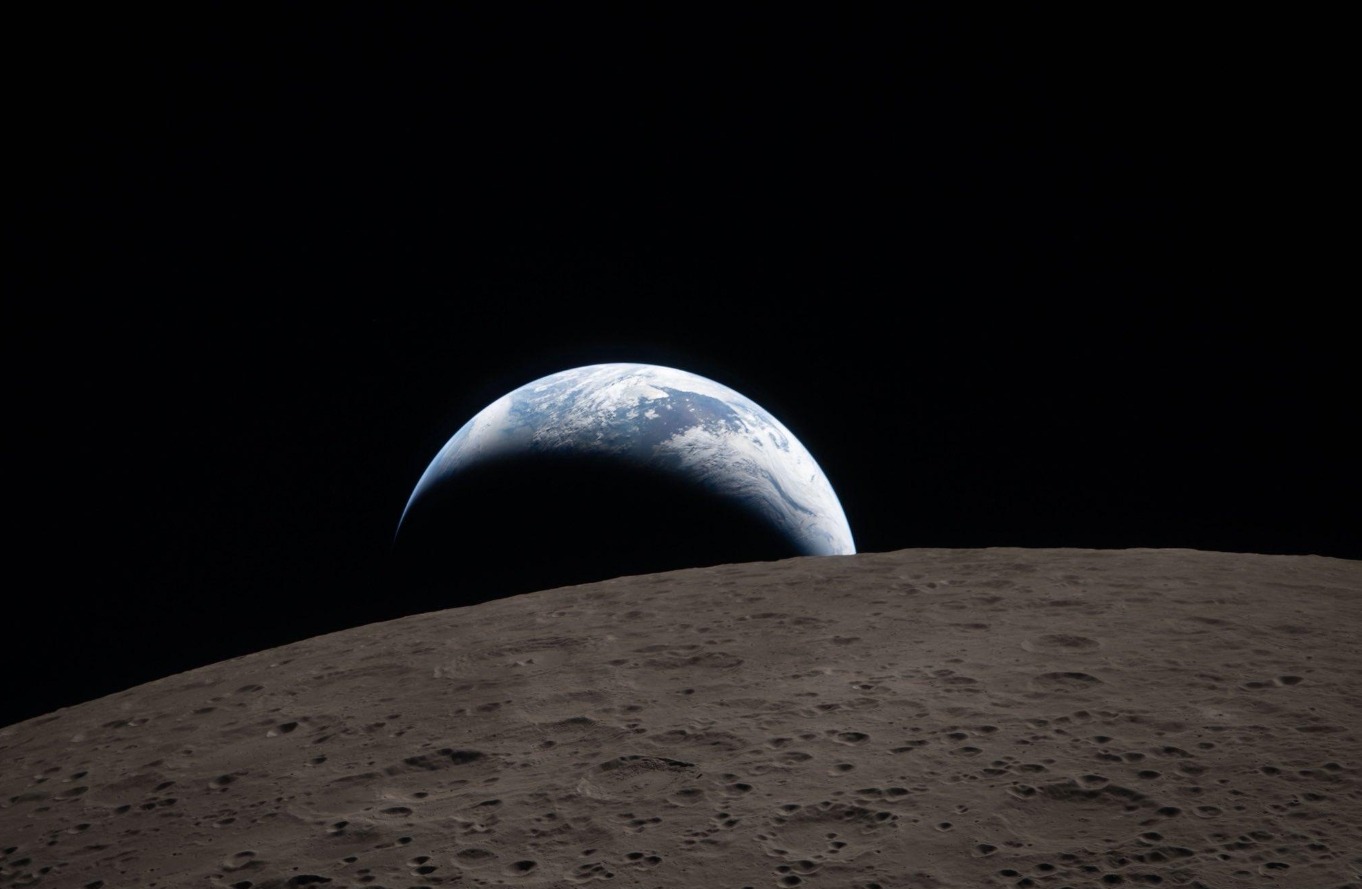
Photograph of Earth taken by the Artemis 2 mission crew. Image source: NASA
The four astronauts of the Artemis 2 mission have just transmitted to Earth the first photographs of the far side of the Moon taken by humans since 1972. Among the images is the moment when Earth disappeared behind the lunar horizon, the solar corona embracing the lunar disk, and two unnamed craters for which the crew proposed names. One of them was suggested in honor of the commander’s late wife.
The first human flight to the Moon in the 21st century
The Artemis mission launched on April 1, 2026, from Kennedy Space Center in Florida. It is a ten-day crewed lunar flyby with a crew of four astronauts. The flight became the first crewed mission of the Artemis program and the first crewed flight beyond low Earth orbit since Apollo 17 in 1972.
The crew included Commander Reid Wiseman, Pilot Victor Glover, and Mission Specialist Christina Koch — all three from NASA. Mission Specialist Jeremy Hansen from the Canadian Space Agency also joined the team. Glover became the first Black person, Koch — the first woman, and Hansen — the first non-American to fly around the Moon.
Artemis 2 is the second flight of the SLS (Space Launch System) rocket and the first crewed mission of the Orion spacecraft. This is a test flight: the astronauts tested life support systems, manual spacecraft maneuvering, spacesuits — everything that future landing missions will need.
Photos of the far side of the Moon in 2026
The far side of the Moon, the one that is always turned away from Earth due to tidal locking, looks completely different from the familiar “near side.” Compared to the visible side, the far side’s terrain is rougher, with numerous impact craters and very few dark lunar maria. While the visible side is covered by solidified lava seas over 35% of its surface, the far side has less than 1% of such areas.
Flying over the far side, the crew photographed and described terrain features: impact craters, ancient lava flows, fractures, and ridges formed during the Moon’s slow evolution. They also noted differences in color, brightness, and texture that provide clues about the composition and history of the lunar surface.
Why are human observations so valuable when we have satellites? Differences in surface color are hard to detect from satellite images, but the human eye excels at such nuances. Astronaut Hansen, for example, described greenish tones on a plateau that he hadn’t seen anywhere else on this side of the Moon, and numerous areas with a brownish tone. All these observations will help scientists better understand the mineral composition of the lunar soil.
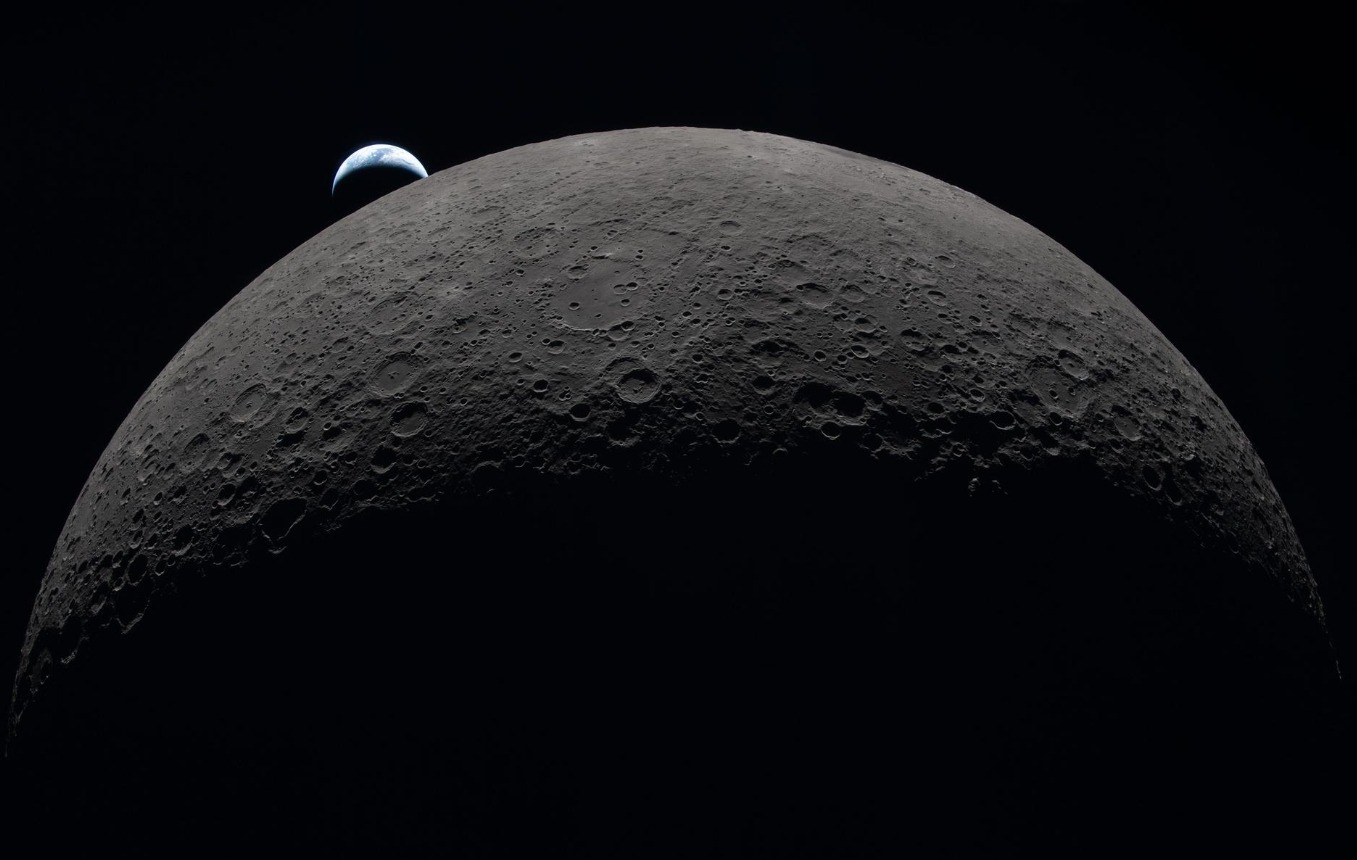
A photograph of the far side of the Moon that will certainly make it into textbooks. Image source: NASA
“Earthset” and a solar eclipse in space
When Orion went behind the Moon, something happened that until now only Apollo astronauts had witnessed. The crew observed an “Earthset” — the moment when our planet disappeared behind the lunar horizon — and then an “Earthrise” when the spacecraft emerged from the other side. About 40 minutes of complete silence passed between these two moments: the spacecraft entered a planned communications blackout zone because the Moon blocked the signal between Orion and Earth.
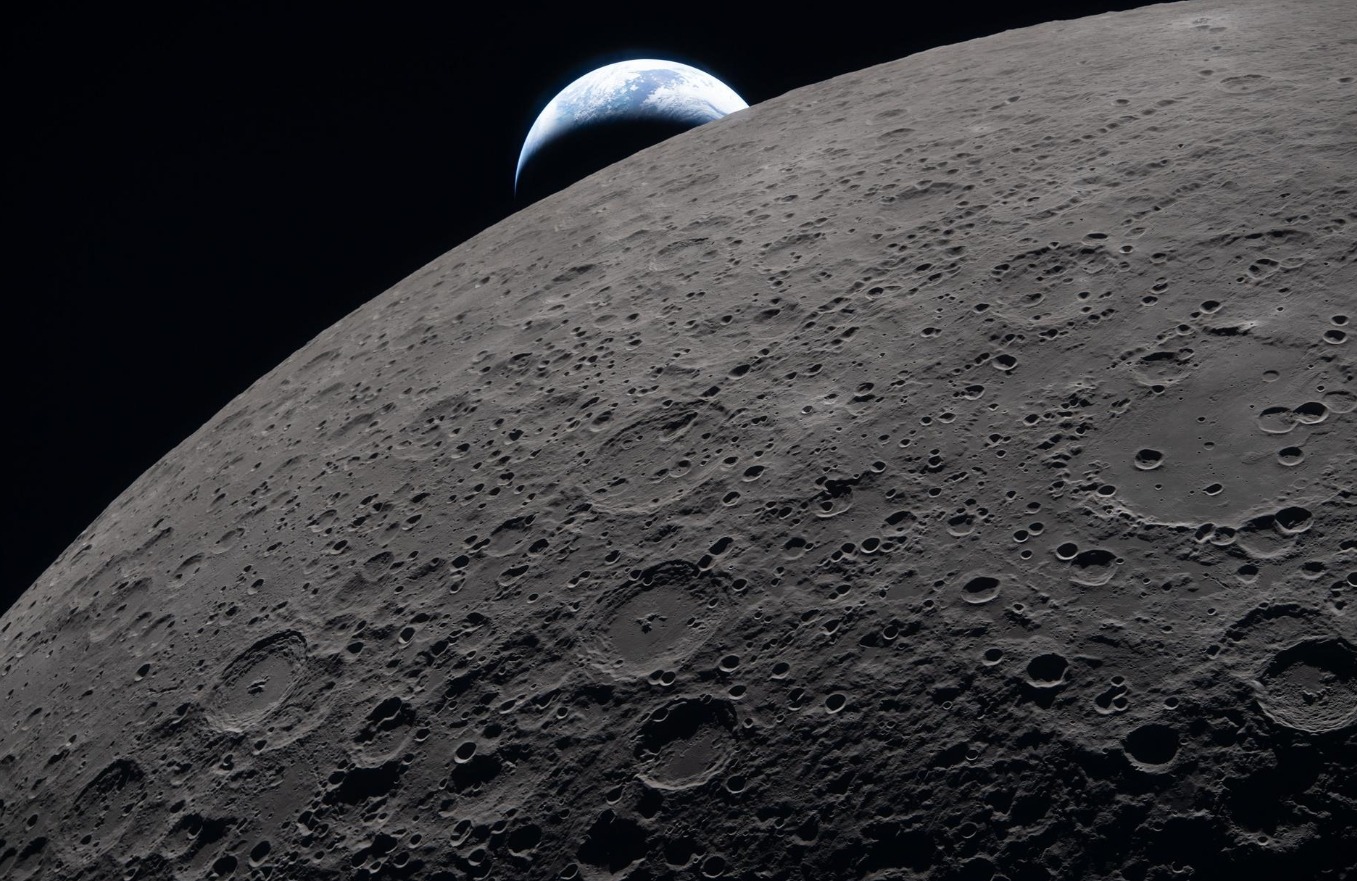
Earthset captured by the Artemis 2 mission astronauts
But the main spectacle was a solar eclipse seen from behind the Moon. Toward the end of the flyby, the crew witnessed a nearly hour-long solar eclipse: the spacecraft, the Moon, and the Sun aligned, and the astronauts could study the solar corona — the Sun’s outer atmosphere — as it appeared around the lunar edge. This is the first solar eclipse ever observed by humans from behind the Moon.

Photograph of the solar eclipse. Image source: NASA
Pilot Victor Glover described what he saw during a live broadcast:
The Sun went behind the Moon, and the corona is still visible. It’s bright and creates a halo almost all the way around the Moon. Earth shines so brightly from there, and the Moon just hangs in front of us.
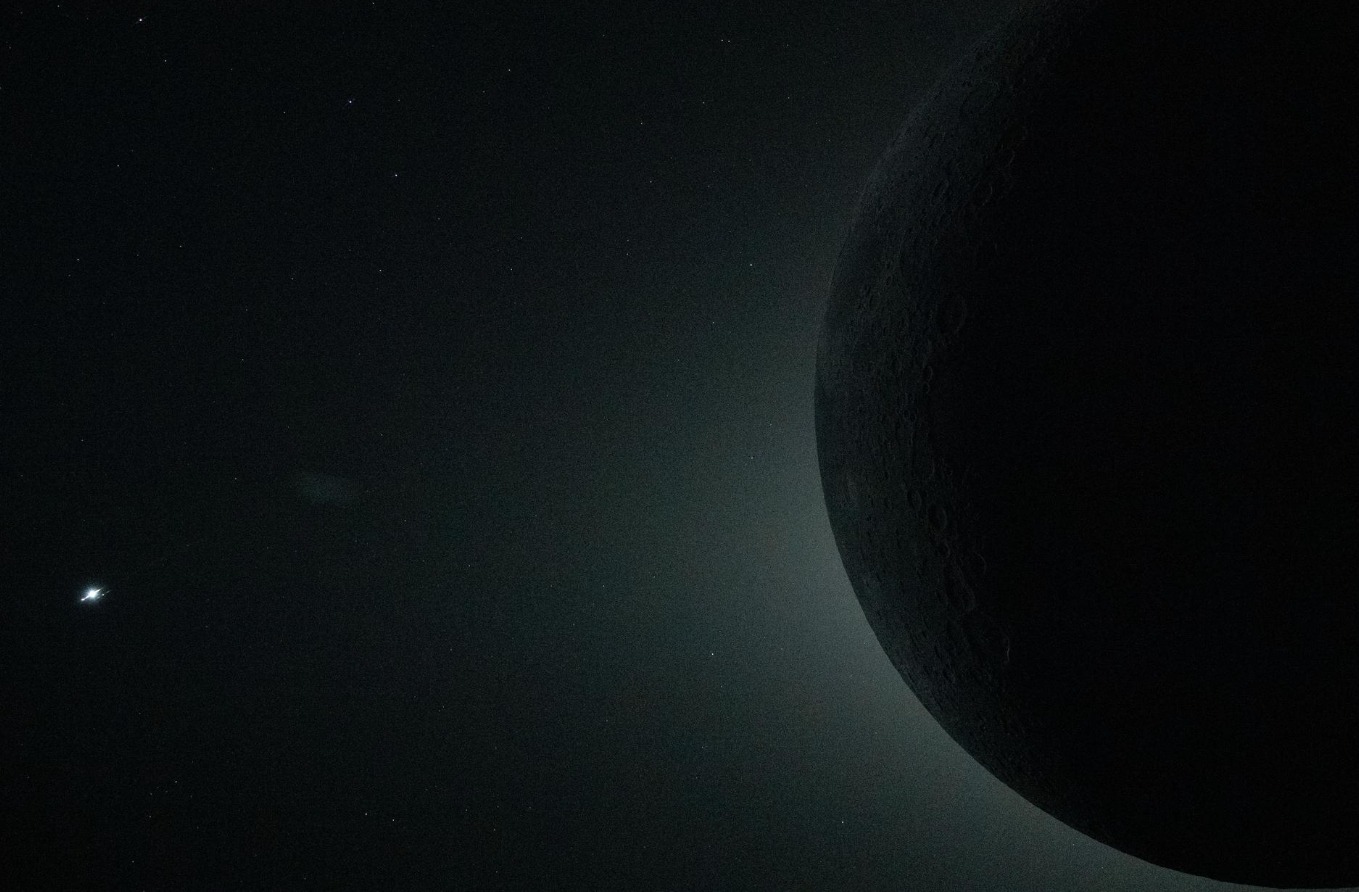
The bright dot on the left is Venus. Image source: NASA
New craters on the Moon
At the terminator — the boundary between lunar day and night — the low Sun cast long shadows, and the crew spotted two previously unnamed craters. The astronauts proposed naming the first crater Integrity — after their spacecraft, and the second — Carroll, in memory of Commander Wiseman’s late wife.
Carroll Taylor Wiseman was a pediatric nurse. She passed away on May 17, 2020, at the age of 46 after a five-year battle with cancer. Carroll insisted that her husband continue his spaceflight training in Houston even as her illness progressed. After her death, Reid has been raising their two daughters on his own.
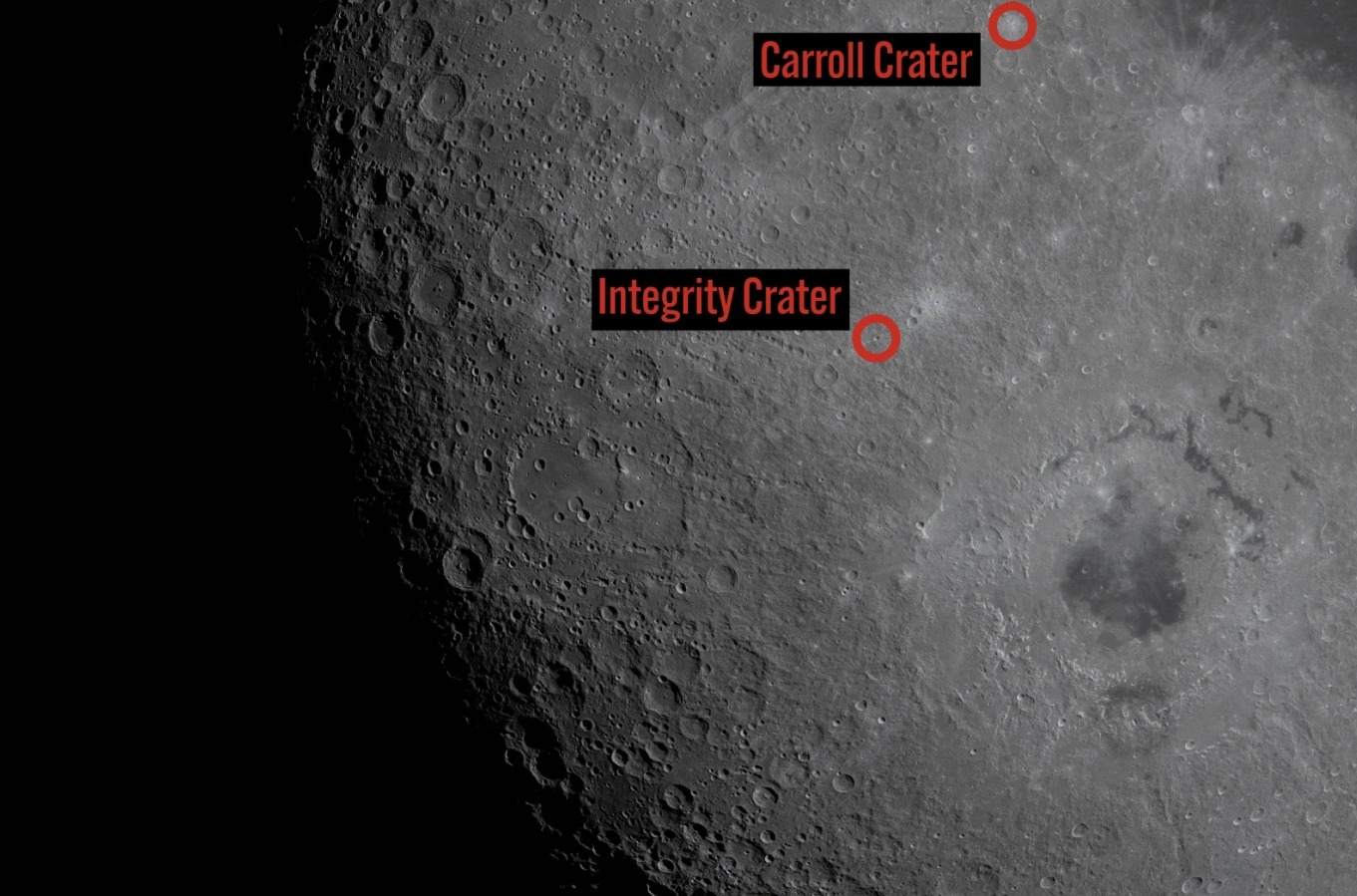
Location of the new craters on the Moon. Image source: NASA
Carroll crater is located on the boundary between the near and far sides of the Moon — at a “bright spot” that under certain conditions can be seen from Earth. When Hansen read the dedication over the radio, the astronauts could not hold back tears. After his words, the crew embraced in zero gravity, and Wiseman and Koch wiped away tears.
After the mission is complete, the proposed names will be officially submitted to the International Astronomical Union — the organization that governs the naming of celestial bodies and their surface features. There is precedent: in 1968, astronaut Jim Lovell on Apollo 8 proposed naming a mountain after his wife Marilyn, but the name was not officially approved until 2017.
Why Moon photographs matter
Orion and its crew are returning home with new knowledge about the lunar surface and key test flight data that will help future missions — with a human landing on the Moon’s surface as early as 2028. One goal of the observations was a potential landing site for a future uncrewed cargo mission. The crew also caught a brief glimpse of the lunar south pole — a region where humans could land as early as 2028.
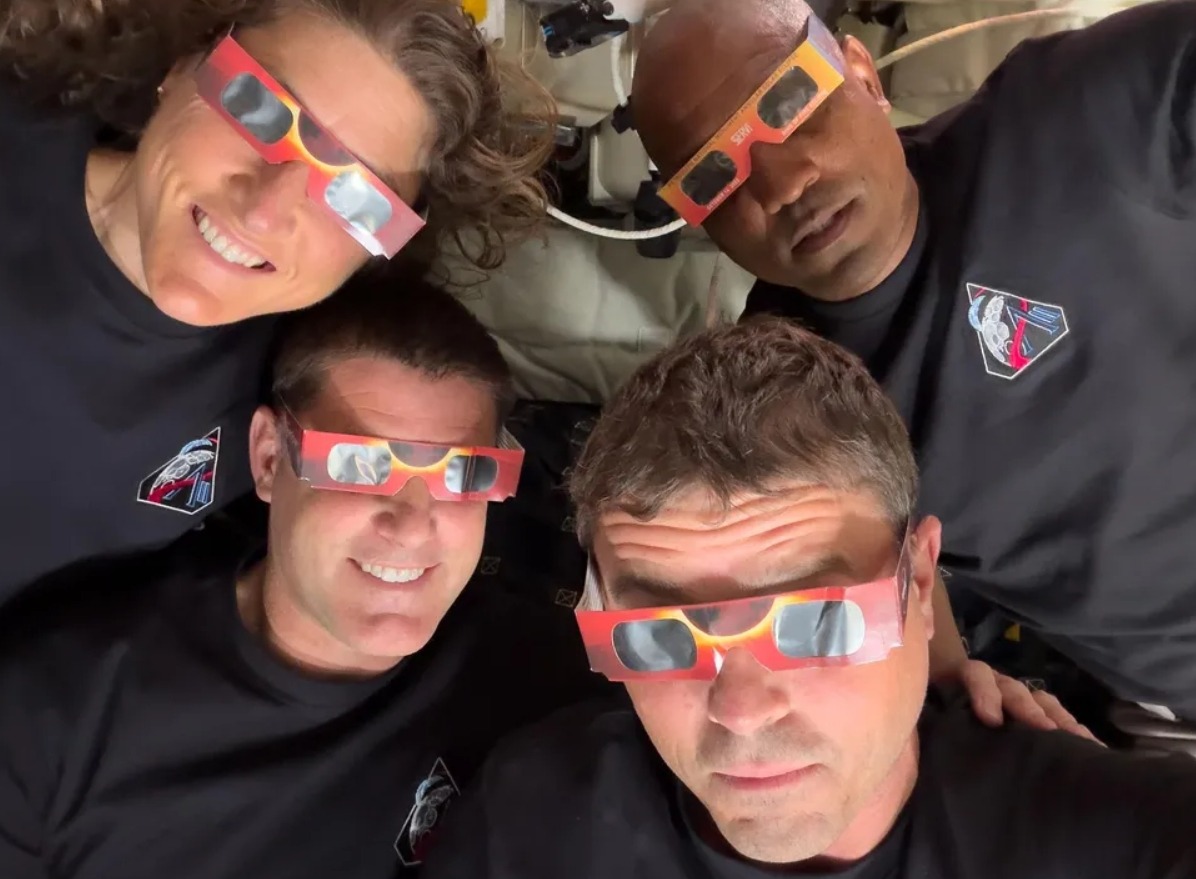
Artemis 2 mission crew members. Image source