
The same tar could both hold a spear together and protect a wound from infection. Not a bad toolkit for the Stone Age
When we hear the word antibiotic, we think of pills, pharmacies, and doctor’s prescriptions. But it turns out that the fight against infections began long before modern medicine. Neanderthals may have used birch tar as an antibiotic to treat wounds more than 150,000 years ago. However, they likely didn’t realize they had found an antibiotic.
How Neanderthals Used Birch Tar
Birch tar is a sticky, dark substance obtained from birch bark. Archaeologists find it at Neanderthal sites across Europe so frequently that it no longer surprises them. For a long time, it was believed to be simply an ancient equivalent of glue: Neanderthals used tar to attach stone tips to wooden shafts and repair tools.
But some researchers couldn’t shake the question: was it really only used for tools? The thing is, indigenous peoples of northern Europe and Canada still use birch tar to treat wounds today. Meanwhile, evidence is accumulating that Neanderthals practiced medical care in general, including caring for sick and injured members of their group. If you add to this the fact that they knew how to make tools, collected various objects, and even drew with peculiar “crayons,” the picture turns out to be far more complex than was long believed.
For centuries, Neanderthals were considered primitive beings barely capable of thought. But recent studies have been consistently dismantling this stereotype, showing that our distant relatives were more inventive than we could have imagined.
How Scientists Recreated the Ancient Recipe
To test the hypothesis about the medicinal properties of tar, researchers decided to recreate the entire manufacturing process from scratch. They took bark from modern birches, but of species known to have grown in the areas of Neanderthal sites. They then used methods available to the Neanderthals themselves: distilling tar in a clay pit and condensing it on a stone surface.
The mess that birch tar production creates deserves a special mention. Every stage is a full sensory experience, and washing tar off your hands after hours of work by the fire was a real ordeal every time, — the researchers shared.
In other words, the scientists literally felt firsthand what Neanderthals went through tens of thousands of years ago. And the resulting tar samples were sent to the laboratory for the main test.
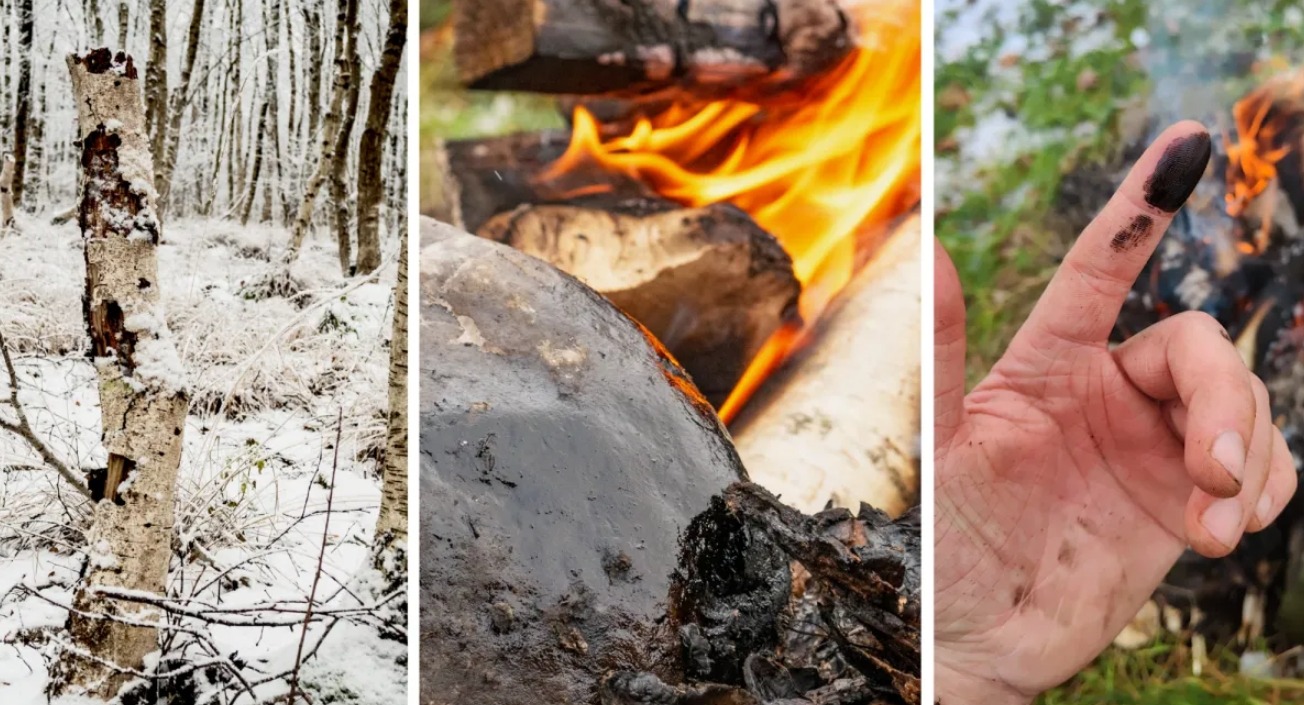
Birch tar production is a dirty, aromatic, and very ancient process. Image source: popsci.com
Tar vs. Bacteria
In the laboratory, the tar samples were exposed to several bacterial strains. The result was impressive: all tar samples effectively inhibited the growth of bacteria of the genus Staphylococcus, which are known as the primary causative agents of wound infections. Staphylococci remain a serious problem in medicine today, causing everything from minor suppurations to life-threatening sepsis.
We found that birch tar produced using Neanderthal and early human methods possesses antibacterial properties. This is important for understanding how Neanderthals could reduce the burden of disease during the last ice ages, and adds to the growing body of evidence for medical care in these early human communities, — the scientists stated.
Additionally, tar could have been used as an insect repellent — yet another practical function that made this substance truly versatile.
Birch Tar in Modern Medicine
In fact, this research is not just a curious historical fact. It is directly related to one of the most serious threats to modern healthcare: antibiotic resistance in bacteria. The number of bacteria that no longer respond to existing drugs is growing every year, and scientists around the world are searching for alternative solutions.
By combining research into indigenous medicine and experimental archaeology, we are beginning to understand the medical practices of our distant ancestors and their closest relatives. Furthermore, this research may contribute to the rediscovery of antibiotic agents at a time when we are facing an increasingly acute antibiotic resistance crisis.
In other words, by looking 150,000 years into the past, we may be finding clues for the future. Natural substances, proven by millennia of real-world use, could become a starting point for developing new medications.
Neanderthals never read microbiology textbooks, but they intuitively found a remedy that works against staphylococci even thousands of generations later. Perhaps it is in these forgotten recipes that the answer lies to how humanity will defeat the superbugs of the future.