You know what’s annoying about modern smartwatches? Every year new sensors and pretty graphs appear. In the end, you keep expecting something, but get almost no real benefit. I’ve been wearing Samsung Galaxy Watch 4 since late 2021, and over five years I’ve tried everything Samsung Health has to offer. Honestly, the company has never offered anything more useful than body composition analysis, which debuted in the fourth series. Let’s figure out why.
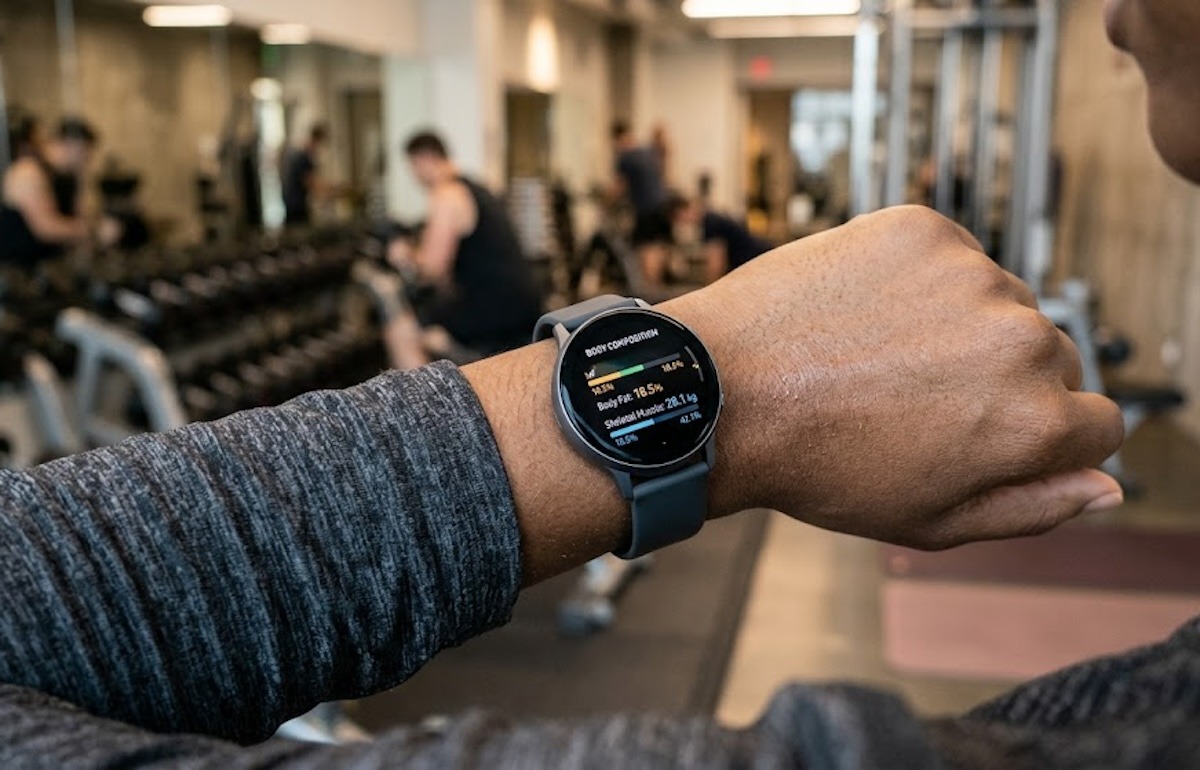
Even the old Galaxy Watch 4 can still do a lot.
How Body Composition Analysis Works on Galaxy Watch
The body composition analysis feature arrived with the Galaxy Watch 4 and remains unique among smartwatches to this day. Neither Apple Watch nor Pixel Watch offer anything like it. It works through a bioelectrical impedance analysis (BIA) sensor. You touch the side buttons, the watch sends a weak electrical signal through your body, and based on tissue resistance, it calculates your percentage of fat, muscle mass, and water.
In practice, the BIA sensor’s accuracy in a watch is inferior to professional equipment, and Samsung itself warns about this. But absolute numbers aren’t as important here as trends. If you see that over a month your muscle mass percentage is growing while your fat layer is decreasing, it means your workouts are working. And if it’s the opposite, it’s time to change something.
Why Measure Body Composition, Not Just Weight
Many people rely only on scale weight, and that’s a trap. You started working out and gained a kilogram and a half in a month. Seems like a failure? But in reality, it could mean muscle mass growth with fat reduction — and muscle is heavier. Regular scales won’t show you that.
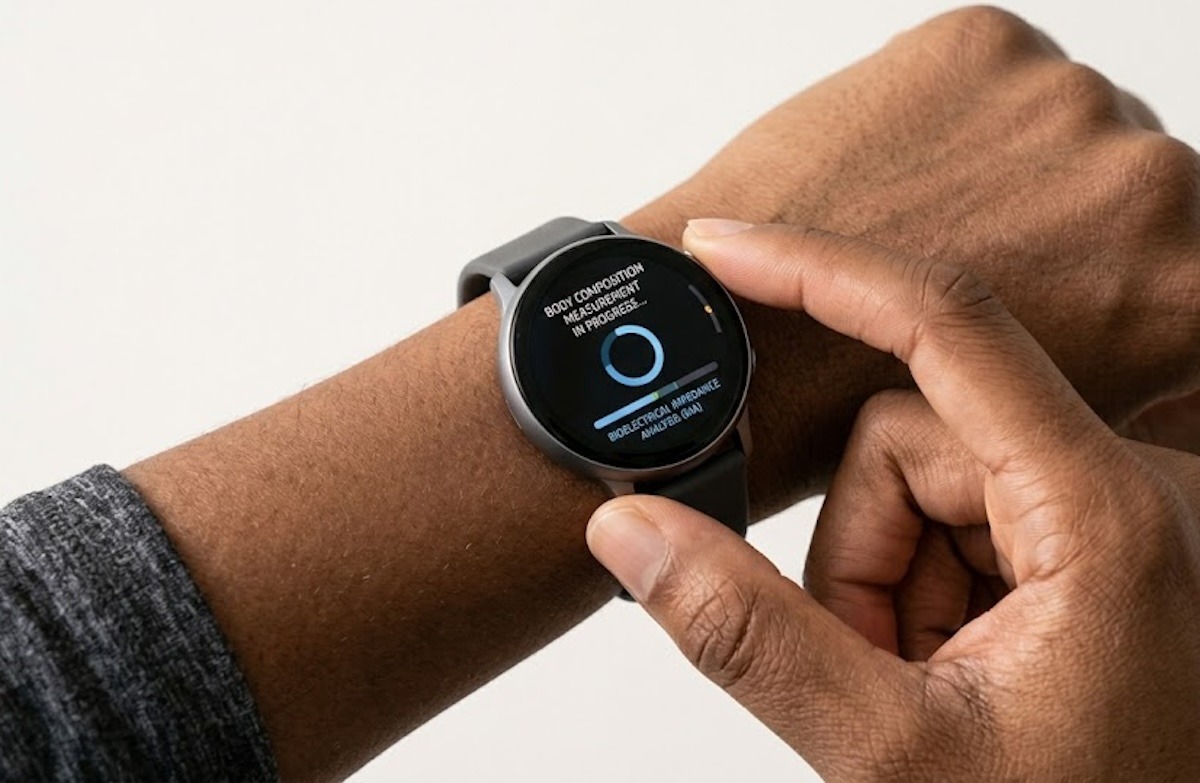
Body composition tracking is a useful feature.
This is where the Galaxy Watch becomes a truly useful gadget. I track each metric separately and compare them with how I feel. I feel like I’ve gotten stronger, but the numbers say muscles haven’t grown? Time to revise my program. This is concrete information, not an abstract health score.
What Health Features Are Available in New Galaxy Watches
Over the past few years, Samsung has added several new metrics to its watches, and on paper, they look promising. But in practice, the situation isn’t as rosy.
Take Energy Score, for example. In theory, it’s an indicator of your energy for the day, calculated based on yesterday’s activity and sleep quality. Sounds like the perfect assistant for those who work out. But I found that the feature constantly contradicts itself. The watch shows a high score and immediately recommends rest. Or conversely, gives a low rating even though I feel great. Honestly, it’s unusable.
Then there’s the AGEs Index, which evaluates metabolic health. In theory, it’s a useful thing, but for adequate results, you need to manually enter food and water data into Samsung Health. If I need to keep a food diary for the watch to show something meaningful, I’d rather do without this feature.
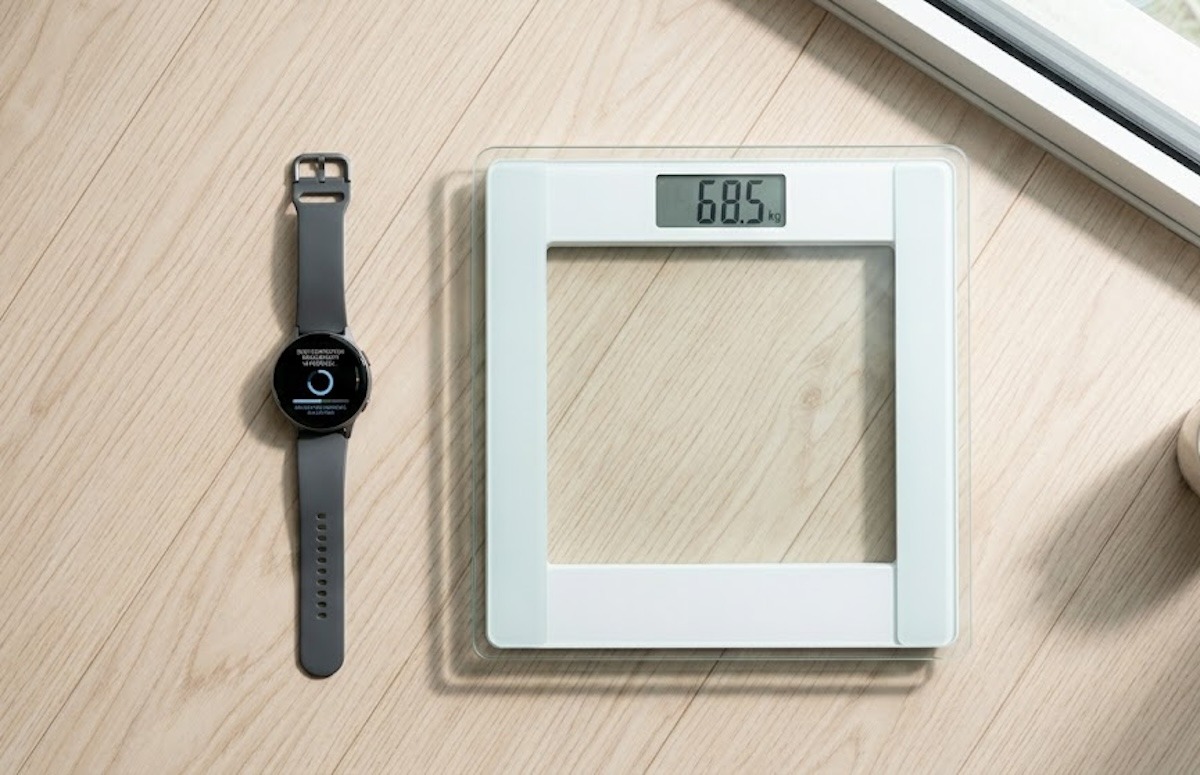
Scales don’t always reflect as accurate a picture as a watch with body composition detection.
Vascular Load appeared in the Galaxy Watch Ultra and Watch 7. For heart health monitoring, the metric is potentially useful. But if your goal, like mine, is fitness rather than cardiology, the practical value approaches zero.
Is It Worth Buying Galaxy Watch 4 in 2026
Buying Galaxy Watch 4 in 2026 is no longer worth it. Update support is ending, and the screen and battery are inferior to newer models. But the body composition analysis feature is available on all Galaxy Watches starting from the fourth series, including Galaxy Watch 5, Galaxy Watch 6, Galaxy Watch 7, and Galaxy Watch Ultra.
Personally, I still haven’t upgraded because newer models haven’t offered anything as useful in everyday life. Screens are brighter, batteries are bigger, but no new sensor has provided information I could actually apply. But the BIA sensor does. For those who watch their fitness and want to see specific changes in their body, body composition analysis on Galaxy Watch remains the best health feature among all smartwatches. Not perfect, but the most practical.