Starting July 1, 2026, transfers and payments through Russia’s Faster Payments System (SBP) will require a mandatory Taxpayer Identification Number (TIN) — both for person-to-person transfers and for transactions between businesses and individuals. What does this mean for everyone? We break it down in this article.
Sending money without a TIN will no longer be possible
What Exactly Is Changing in SBP Starting July 1, 2026
The new requirement was announced by Nikita Yurkov, head of the SBP division at NSPK’s anti-fraud center, at the “Antifrodum” forum. According to him, filling in a TIN will become mandatory for transfers and payments between individuals, as well as between legal entities and individuals.
NSPK is the operator of the “Mir” payment card and the SBP infrastructure. All operations in the Faster Payments System go through this organization.
It is not yet entirely clear how banks will implement this feature in their apps — whether you’ll need to enter a TIN manually for each transfer or whether the bank will fill it in automatically. The source does not disclose these technical details, so it’s too early to draw specific conclusions about convenience.
Why SBP Is Being Linked to TIN — Fighting Money Mules
The main goal of the new requirement is to combat money mule operations (droppership). Money mules are people who provide their bank cards and accounts to scammers for withdrawing and laundering stolen money. On average per month, Sber alone blocks 80,000–100,000 mule cards — those used by criminals to launder stolen funds.
As Yurkov explained, a money mule can change their phone number, reissue a bank card, open a new account, and even get a new passport. However, a TIN is a credential that is virtually impossible for an individual to change. This makes it a convenient universal identifier that allows tracking suspicious activity of the same person across both the “Mir” payment system and SBP simultaneously.
What Mandatory TIN in SBP Means for iPhone Owners
Apple Pay in Russia in 2026 is unavailable for Russian bank cards. The Faster Payments System is the primary tool for paying for goods and services without a card for iPhone users. Payments via QR codes in banking apps, transfers by phone number — all of this goes through SBP and will fall under the new requirement starting July 1.
In the worst case, before each transfer you’ll need to enter the recipient’s TIN or confirm your own. In the best case, banks will pull the TIN automatically from the data they already have from when the account was opened. For the average user, the key question is how seamlessly banking apps will be able to implement this.
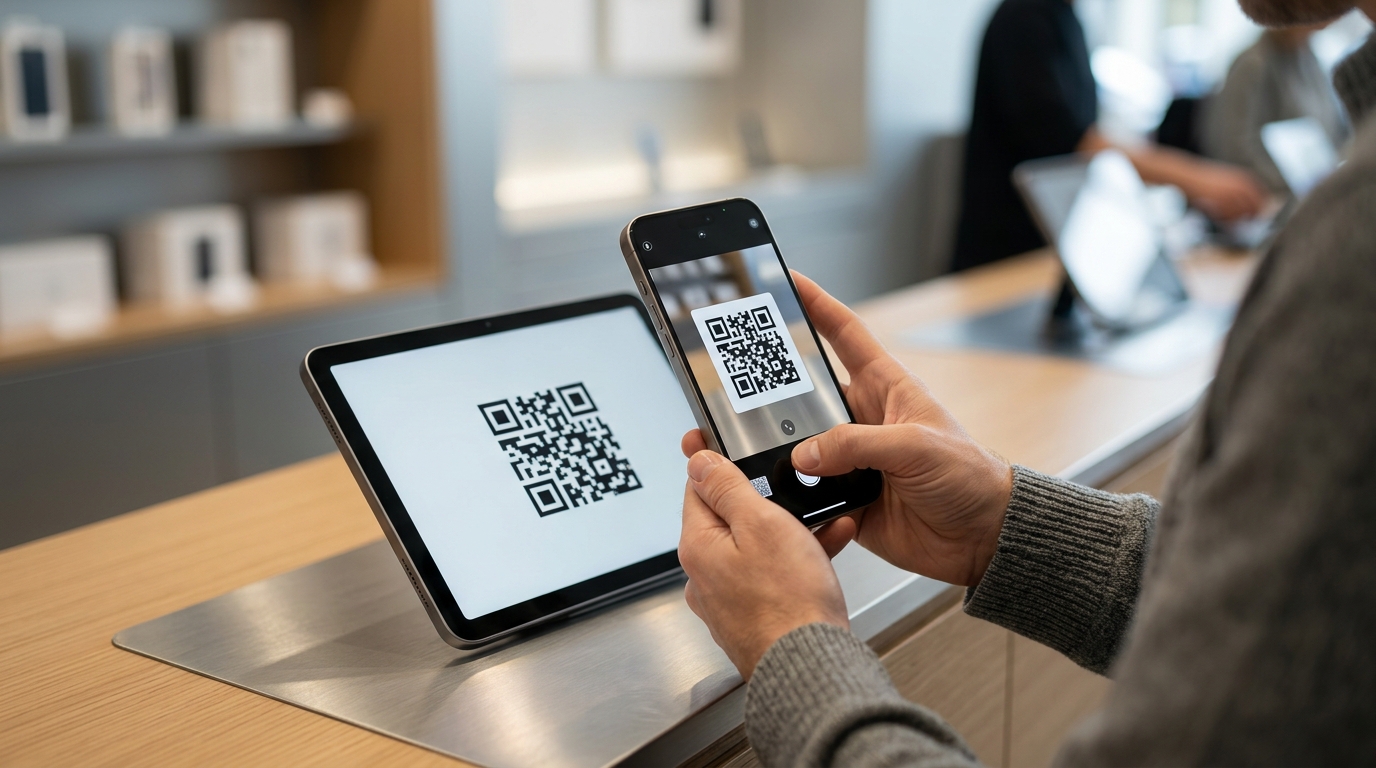
Paying via QR code in a store — the main way to pay with an iPhone in Russia
If you’re used to paying for purchases with your iPhone via SBP QR codes or contactless payment via Bluetooth, keep an eye on banking app updates closer to July. Most likely, the interface will change — the only question is how noticeably.
SBP in 2026: Control Is Tightening Not Just Through TIN
Mandatory TIN is not the only tightening measure for the Faster Payments System this year. Here’s what has already happened or will happen:
- In 2026, new financial control standards began operating in Russia. Starting January 1, Central Bank rules came into effect that expanded the list of suspicious transaction indicators from 6 to 12.
- Starting September 1, 2026, Rosfinmonitoring will gain direct access to data on SBP transfers — the corresponding law has been signed by the President.
- When transferring to yourself via SBP for amounts exceeding 200,000 rubles, you should be prepared for additional verification.
The context is clear: the government is systematically closing loopholes for scammers and gray schemes. For regular users, these measures shouldn’t create problems, but it’s worth being prepared for the fact that the payment process is gradually becoming slightly less anonymous.
Should Regular Users Worry About TIN Linking in SBP
If you simply transfer money to loved ones or pay for purchases via QR codes at the checkout — most likely, very little will change in your daily life. Banks have known your TIN since the moment you opened your account and will most likely be able to fill it in automatically.
But it’s important to understand the context: TIN is becoming a unified identifier across the entire payment infrastructure — both in “Mir” and in SBP. This means that any suspicious activity will be tied not to a card or phone number (which are easy to change), but to a specific person.
So make sure you know your TIN (it’s available in the “Gosuslugi” app and on the Federal Tax Service website), and watch for banking app updates in June–July. If the bank implements automatic TIN insertion, you won’t even notice it. If not — you’ll need to spend a couple of seconds on each transfer.