The MAX messenger has updated its privacy policy to state that it collects information about how users interact with channels and content, including which channels they subscribe to and unsubscribe from. The stated purpose is personalizing informational, entertainment and advertising content. According to the source author, the new version appeared on the company’s website without any announcement, push notification or in-app warning. The author concludes that the change is not unexpected but is worth knowing about.
What you need to know
- The revised MAX privacy policy dated 25 September adds a ninth category of collected data covering interaction with channels and content, including subscribing to and unsubscribing from channels.
- MAX lists the purpose of this data as personalizing informational, entertainment and advertising content.
- The earlier policy already covered name, phone number, IP address, device type, operating system and interface activity.
- The source author says the update formalizes existing practice rather than changing it, and advises against using MAX for personal communication.
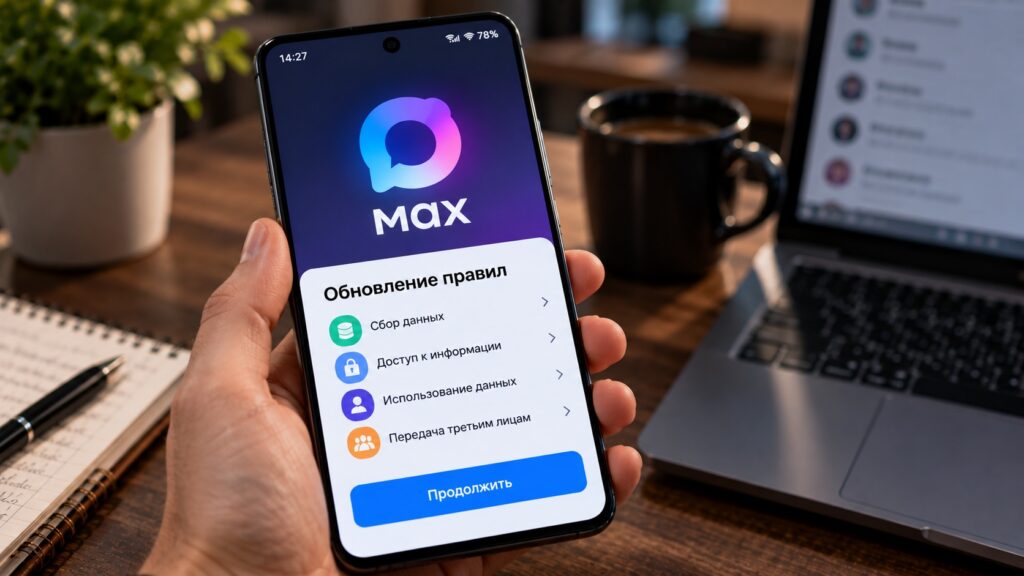
MAX messenger privacy policy update on Android
What changed in the policy
Under the previous version of the policy, MAX collected what the source describes as a standard set of data: name, phone number, IP address, device type and operating system, and activity within the app interface. The source author notes that this is the kind of data any messenger collects, including Telegram, despite its emphasis on secret chats.
The new version of the policy, dated 25 September, adds a ninth item. Translated from Russian, it covers “other information about the User’s use of the Service, including information about interaction with Channels and Content (including subscribing to and unsubscribing from Channels).”


The new clause in the MAX privacy policy
The policy gives the purpose of this data as the “personalization of informational, entertainment and advertising content.” In practical terms, the source reads this to mean that MAX now formally records which channels a user follows, which ones they leave, and how they interact with content inside them, and uses that information when selecting ads.
What it means for users
The source author argues that the change makes official what was already happening informally. Recommendation algorithms in any messenger look at what people read, the author notes, because they cannot work otherwise. In this view, MAX has simply stated the practice openly in its policy document.
According to the source, the practical consequences are:
- channel subscriptions in MAX are data that the company stores and analyzes;
- if a user follows political, medical or other topic-specific channels, MAX knows this and uses it in that user’s profile;
- ads shown in the app will be selected partly on the basis of those subscriptions.
The author stresses that this is not a disaster, since almost all advertising platforms work this way. However, the source draws what it calls a fundamental distinction between Telegram and MAX. It describes Telegram as a commercial product of a company registered in the UAE, and MAX as a messenger with state participation that hands data over to law enforcement on request. The article does not cite documentation for these characterizations.

The source author’s view: use it, but without illusions
The source author reports using MAX out of necessity, for building residents’ chat notifications, work groups and some channels that have moved there from Telegram. Even so, the author says it would be inaccurate to call MAX a private messenger.

A man holding a phone with MAX installed
In the author’s assessment, the policy update did not fundamentally change anything; it formalized existing practice. It does, however, serve as a reminder: anyone using MAX should assume that everything they do there, including subscriptions, reading and messaging, is potentially accessible. The author attributes this not to targeted surveillance of individuals but to the architecture of the service and the legal framework it operates under.
The source’s practical suggestion
The source author recommends keeping in MAX only what users would not mind exposing, such as news, work chats on neutral topics and official notifications. For personal communication, the author advises using messengers with end-to-end encryption. Readers who want to check exactly what MAX says it collects can consult the official privacy policy directly.