Crypto hardware-wallet maker Ledger has unveiled the Ledger Atom, shown on October 15. It looks like an ordinary Android smartphone and is priced like a flagship, but it cannot make regular cellular calls. Ledger does not call it a phone. It calls the Atom a “signing device.” Android runs alongside Ledger’s own operating system, Ledger OS, which sits on a separate secure chip and takes over the screen when the user confirms a transaction. Prices start at $849. Shipping is promised for summer 2027.
What you need to know
- The Atom runs two operating systems: the basic open version of Android for everyday apps, and Ledger OS on a separate secure chip with an EAL6+ security level.
- A physical switch cuts power to the camera and microphone. Tamper sensors run on a separate battery even when the device is switched off.
- The eSIM handles mobile data only, so the Atom cannot make regular cellular calls. It comes with Ledger’s crypto wallet and a store of 1,500 Solana apps.
- The Founders Edition costs $849 and the standard version $899. Reservations require a refundable $100 deposit. Shipping is promised for summer 2027, after certification.
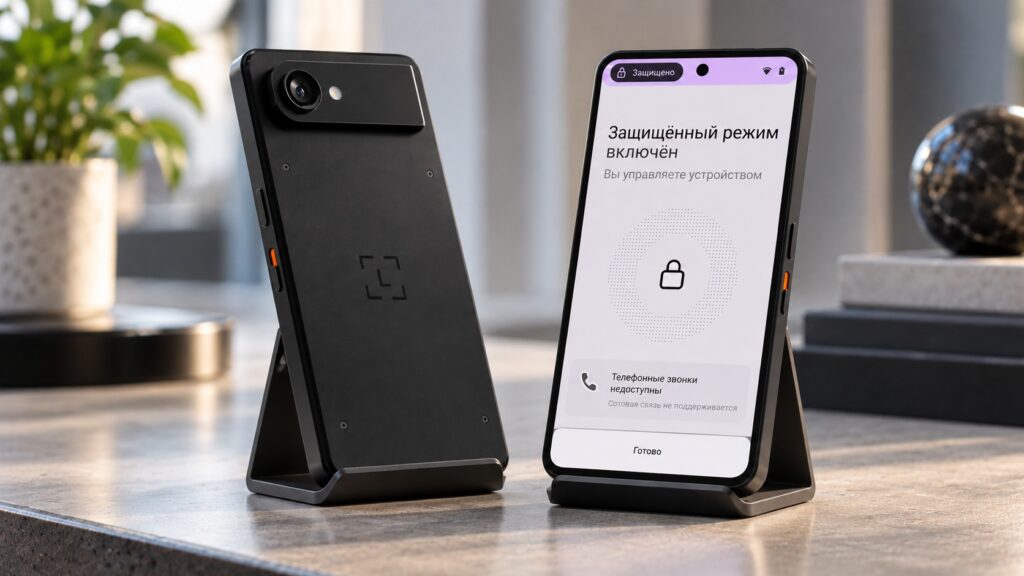
The unusual Ledger Atom
A no-calls device from a hardware-wallet maker
Ledger is a French company. It is little known outside the cryptocurrency world but well known within it. The company makes hardware wallets: small, USB-stick-sized devices that store the keys to cryptocurrency holdings. According to the company, it has sold more than 8 million devices in 165 countries.
Such a wallet works like the key to a safe. The money is not stored in the wallet itself but on the network. Without the wallet, however, no one can move it. The Atom is an attempt to turn that key into a device with a large touchscreen and ordinary apps.
Two operating systems that don’t trust each other
The Atom runs two operating systems at once. The first is the basic open version of Android, which runs familiar apps. The second is Ledger OS, which runs on a separate secure chip. Chips of this kind are used in bank cards and passports. This one has an EAL6+ security level, described as one of the highest in the industry.
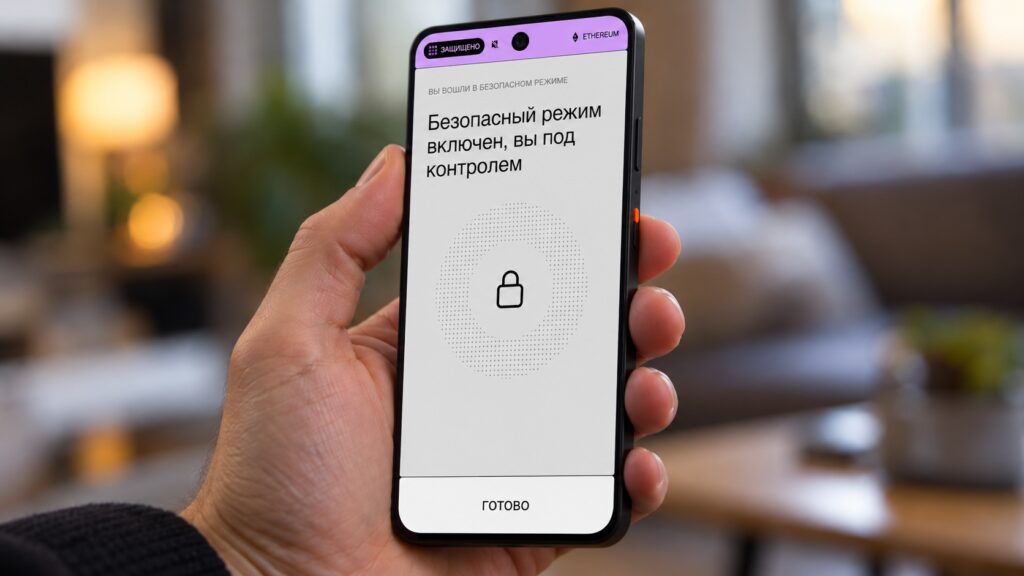
The device switching into Ledger’s own Ledger OS
Another chip sits between the two systems and prevents Android from seeing into the secure side. When the user confirms a transfer, the device switches into a “secure mode.” In that mode, Ledger OS controls the screen and touch input instead of Android.

Ledger’s stated intent is that malware on the Android side should not be able to alter the amount or the recipient address shown on screen. It is similar to confirming a purchase with an SMS code. The difference is that both the code and the check stay inside a separate vault within the device.
A switch that cuts power to the camera and microphone
The second unusual feature is a physical switch that cuts power to the camera and microphone. With the power cut, no app can secretly take pictures or listen in. In secure mode, the camera and microphone turn off automatically. On a regular Android phone, this protection depends only on app permissions, which users have to check manually.
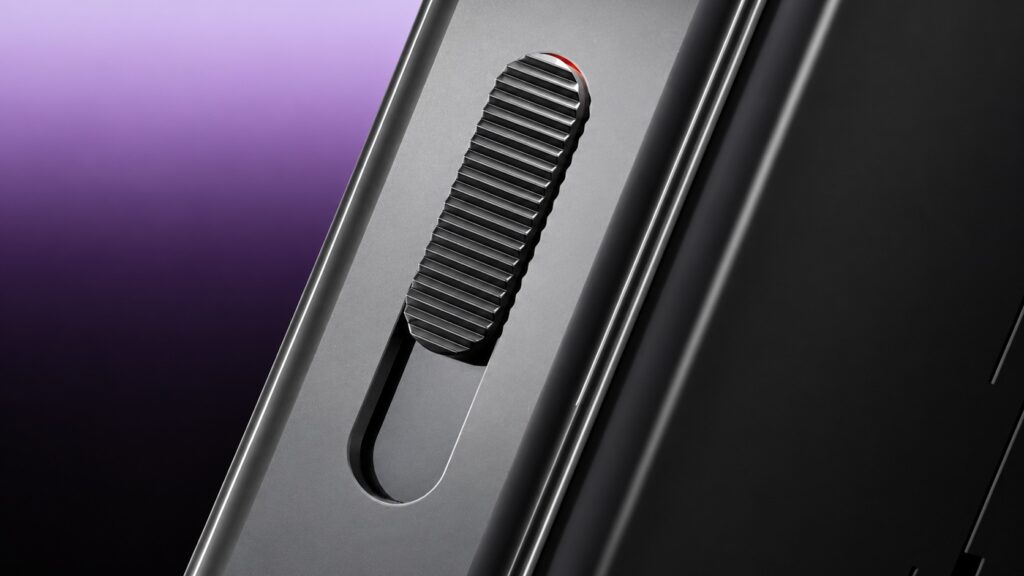
The physical switch that cuts power to the camera and microphone
Tamper detection, and why it matters
The Atom also monitors for physical tampering. Its sensors detect removal of the screen or casing, and they run on a separate battery even when the device is switched off.
This is not paranoia. Ledger is currently dealing with a case in which a reseller in Southeast Asia sold its wallets with a spying implant. The implant captured the secret recovery phrase used to restore access and sent it to attackers. Researchers link the implant to losses of more than $86 million. Ledger itself has not confirmed that figure.
Modest hardware at a flagship price
On paper, the Atom is a mid-range device:

- a 6.77-inch OLED display;
- a Qualcomm Dragonwing processor;
- a 4,000 mAh battery;
- an eSIM for mobile data only, with no regular cellular calls.
Owners can send encrypted messages to other Atom owners. The device comes with the Ledger crypto wallet preinstalled, along with an app store offering 1,500 apps for the Solana cryptocurrency.
There is also an AI feature. Users can let an AI assistant carry out small transfers on its own, for example up to $100. Anything above that limit must be confirmed manually.
Pricing and availability
The first batch, called the Founders Edition, costs $849. The standard version costs $899. For now, the Atom can only be reserved with a refundable $100 deposit. Ledger promises to start shipping in summer 2027, after certification. The device will be sold only through Ledger’s website.
Who the Atom is for
The Atom is not a smartphone in the usual sense. It is closer to a cryptocurrency vault with a screen and apps. It is aimed at people who hold significant amounts of crypto themselves, outside exchanges, and who worry about malware and counterfeit hardware. For an ordinary Android user, it offers little beyond a flagship price tag and no phone calls.
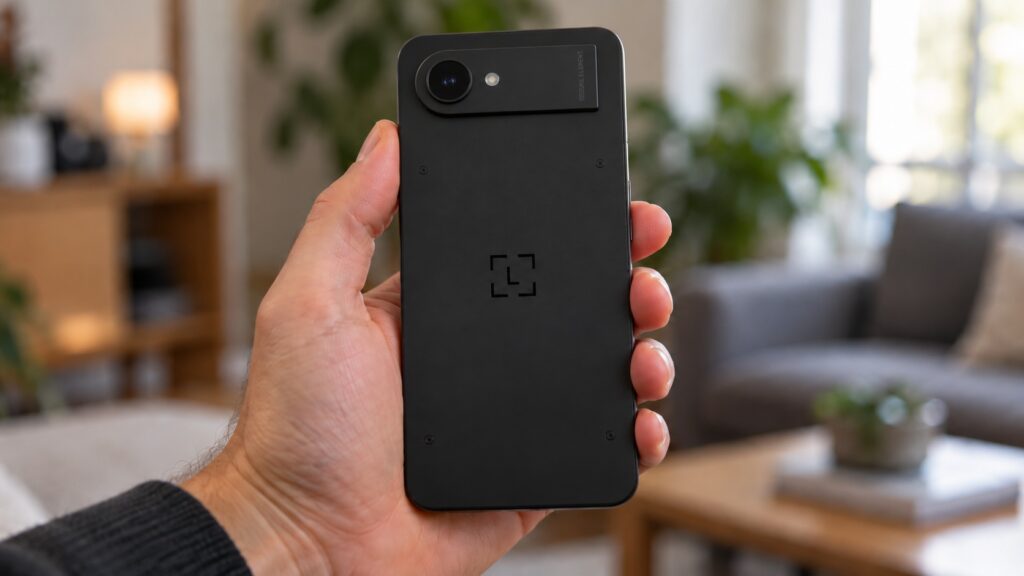
The Ledger Atom in hand
A regulatory caveat in Russia
Self-custody of crypto in a non-custodial wallet is exactly what the Atom is designed for. In Russia, however, guidance from the Bank of Russia states that the law does not permit individuals to transfer cryptocurrency to such a wallet. Peer-to-peer crypto transactions in Russia are also set to become unavailable from July 1, 2027. That is roughly when Atom shipments are due to begin. This restriction is specific to Russia.
The broader takeaway
The Southeast Asian implant case points to a wider lesson. Any device you trust with your money should be bought only from an official seller, not from resellers.