Apple has been circling around foldable smartphones for years while Samsung, Google, and Chinese manufacturers churn out flip phones one after another. And now, it seems, things are finally moving. Alleged 3D CAD files featuring the iPhone Fold design — the first foldable iPhone in history — have leaked online. Even from these files alone, you can see the key difference between the foldable iPhone Ultra and other similar smartphones. The renders look convincing enough to set the entire world of Apple enthusiasts buzzing. Let’s break down exactly what the files revealed and whether it’s time to start saving up.

iPhone with a foldable screen: a secret design leak in 3D files
What the Leaked iPhone Fold CAD Files Revealed
The source of the leak was 3D CAD renders that are claimed to be based on actual Apple engineering files. Such data typically leaks through component suppliers or case manufacturers to whom Apple provides exact dimensions of future devices in advance for accessory preparation. And while no one can give a 100% guarantee of authenticity, similar leaks in the past have turned out to be surprisingly accurate — just recall the CAD renders of the iPhone 16 Pro, which practically matched the final product.
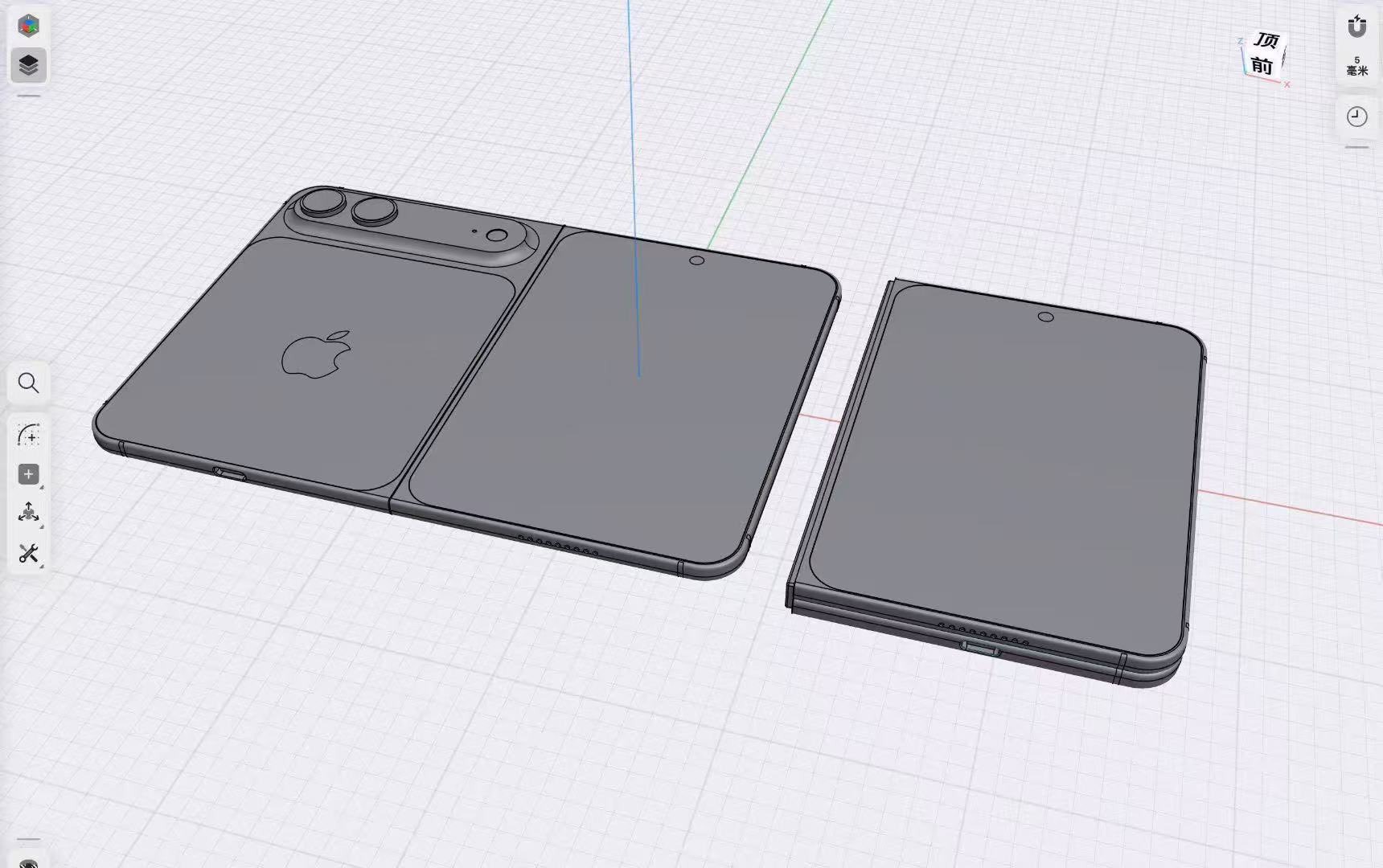
This is what the exterior will look like. Image: @SonnyDickson
According to the files, the iPhone Fold will feature a “book” form factor — meaning it folds along a vertical axis, opening into a device with a large screen, rather than a compact “flip” like the Galaxy Z Flip. Essentially, it’s closer to what Samsung does with the Galaxy Z Fold lineup. But Apple, as usual, has taken its own approach.
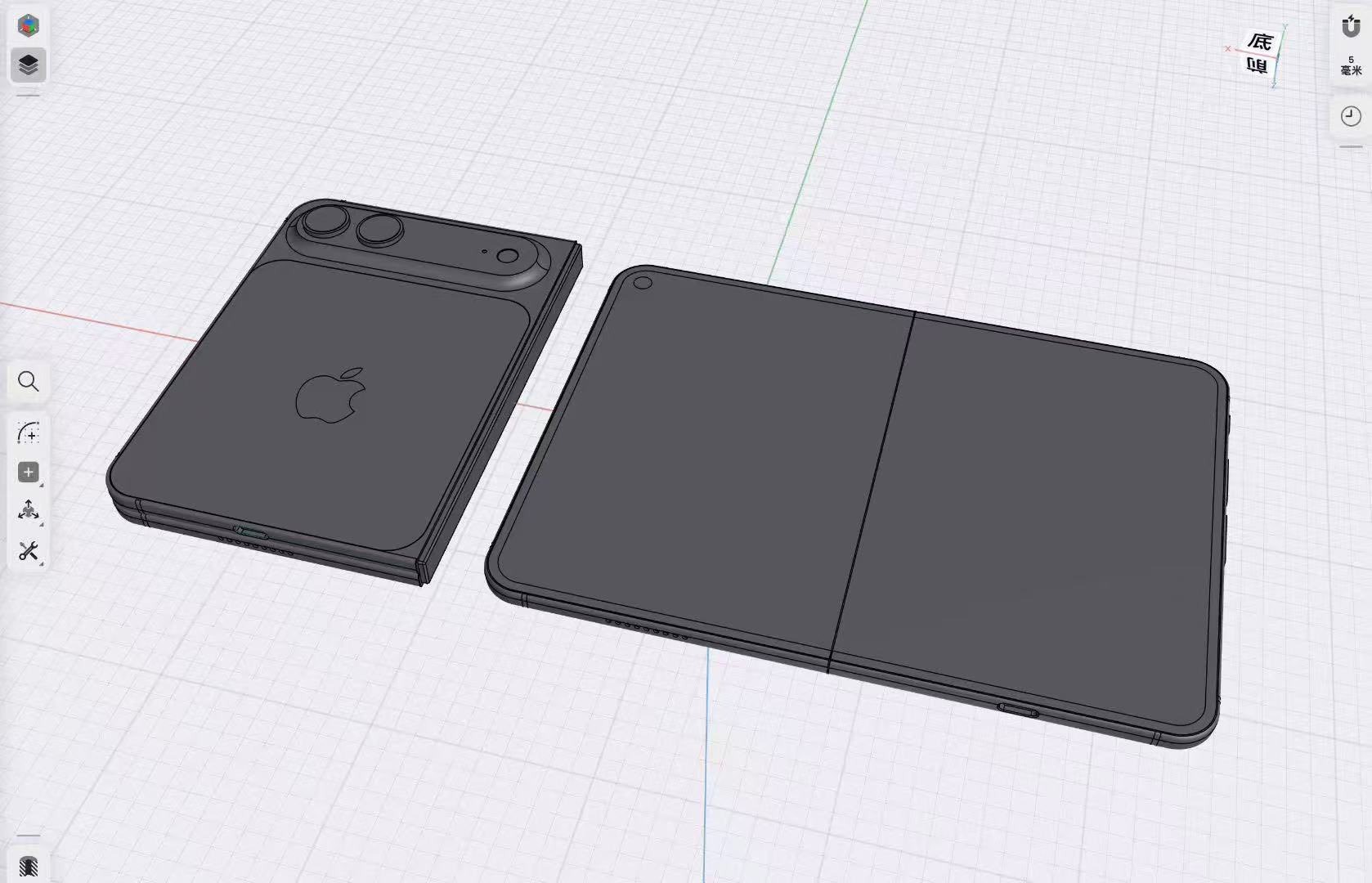
And this is what the inner screen will look like. Image: @SonnyDickson
The renders show that the device in its folded state is noticeably thinner than current competitors. Apple has apparently bet on thickness — or rather, on minimizing it. This is very much in the spirit of a company that just recently released an incredibly thin iPad Pro with the M4 chip.
Design and Construction: How iPhone Fold Differs from Competitors
The main thing that catches the eye in the renders is the hinge mechanism. It looks significantly more compact than that of the Samsung Galaxy Z Fold. The screen crease — the main headache of all foldable smartphones — judging by the construction, should be less noticeable. Apple has clearly spent considerable time on the engineering of this component.
The outer screen, visible when the device is folded, takes up virtually the entire front panel. Bezels are minimal, and the camera is located in the familiar “island” — Dynamic Island appears to have migrated here as well. When unfolded, the inner screen is truly large. Exact dimensions aren’t available yet, but according to preliminary estimates, the inner display diagonal could be around 7.5–8 inches.
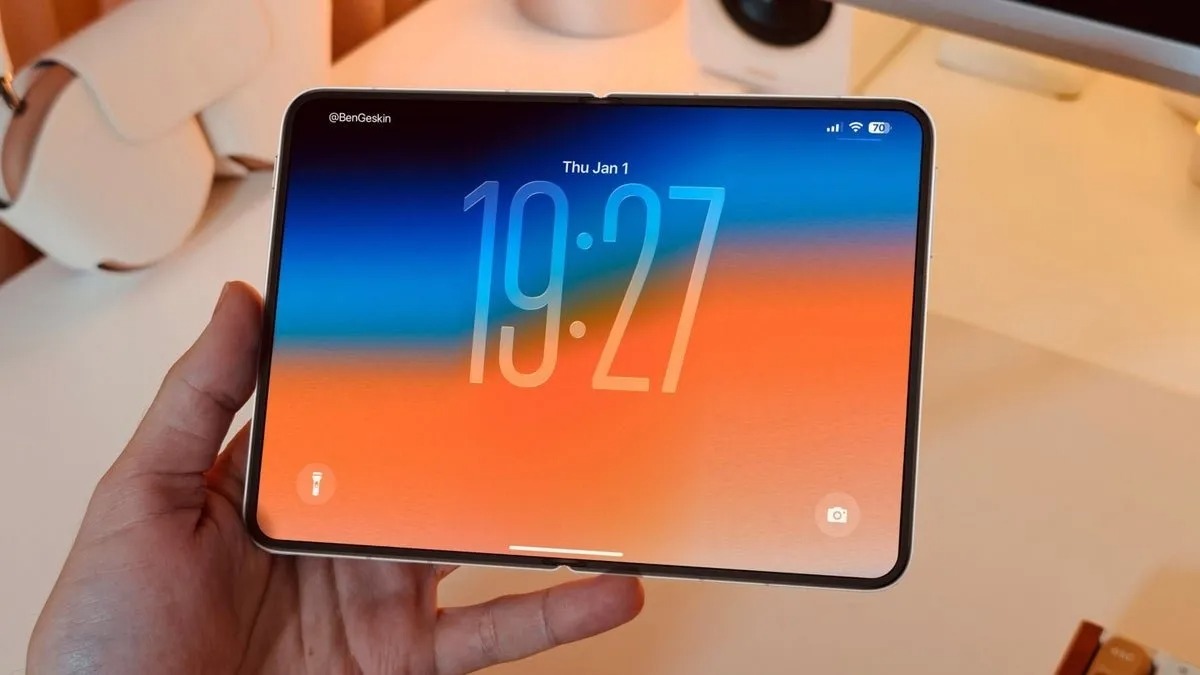
Thanks to the new hinge and screen manufacturing technology, the inner display will have almost no crease. Image: blog.stls.store
What’s actually surprising is something else: the renders show a nearly bezel-free inner display with no visible front camera on the inner side. This could mean that Apple will either hide the camera under the screen or forgo it on the inner panel entirely, offering users the outer screen and main cameras for selfies. The second option sounds more logical and simpler to implement.
The main camera module on the back panel resembles the iPhone Air. Most likely, the foldable iPhone will feature a dual camera instead of a triple one — a compromise for the sake of device thickness.
When to Expect the iPhone Fold Release and What the Price Will Be
This is where things get the most interesting — and the most unclear. The appearance of CAD renders usually means the device is in the final stages of development. The design has been approved, accessory manufacturers have received dimensions, meaning mass production isn’t far off.
According to various sources, iPhone Fold could be unveiled as early as 2026 — possibly in the fall, alongside the iPhone 18 lineup. But a separate announcement isn’t out of the question either: Apple loves hosting special events for fundamentally new product categories, as it did with Apple Watch and Vision Pro.
As for the price — no surprises here. Foldable smartphones are expensive, and Apple has never aimed to be cheaper than competitors. The Samsung Galaxy Z Fold starts at $1,800. It’s logical to assume that the iPhone Fold will cost no less than $1,999, or even more. For the Russian market, factoring in all markups, this could translate into an astronomical sum. But it’s not that simple: there’s no precise pricing data yet, and any figures are speculation.
How Much Can You Trust This Leak
Let’s be honest: CAD renders are not photos of a finished device. These are engineering files that may reflect an intermediate stage of development. Apple could easily change the final design. Remember how many times renders of products leaked that ended up looking different or never came out at all.
Meanwhile, the story of the foldable iPhone has been going on for several years now. Apple’s patents for foldable devices number in the dozens, and analysts like Ming-Chi Kuo and Mark Gurman regularly confirm that the project exists and is actively progressing. This current leak fits perfectly into the overall picture.
I’d estimate the probability of the leak being genuine at around 70–80 percent. The form factor, camera placement, design style — it all looks logical and aligns with what we know about Apple’s plans. But the final product may differ in details.
Is It Worth Waiting for the iPhone Fold
If you’ve been eyeing foldable smartphones for a while but aren’t ready to leave the Apple ecosystem — your patience, it seems, is about to pay off. The CAD file leak suggests that the iPhone Fold is real and at an advanced stage of development.

Apple will once again show the world how to make smartphones and set trends for years to come. Image: appleinsider.com
But should you rush to buy it on launch day? The first generation of any fundamentally new Apple product always comes with compromises. The first Apple Watch was slow, the first Vision Pro was expensive and heavy. The first-generation iPhone Fold will almost certainly cost an exorbitant amount, and its camera and battery life will likely fall short of the regular iPhone Pro.