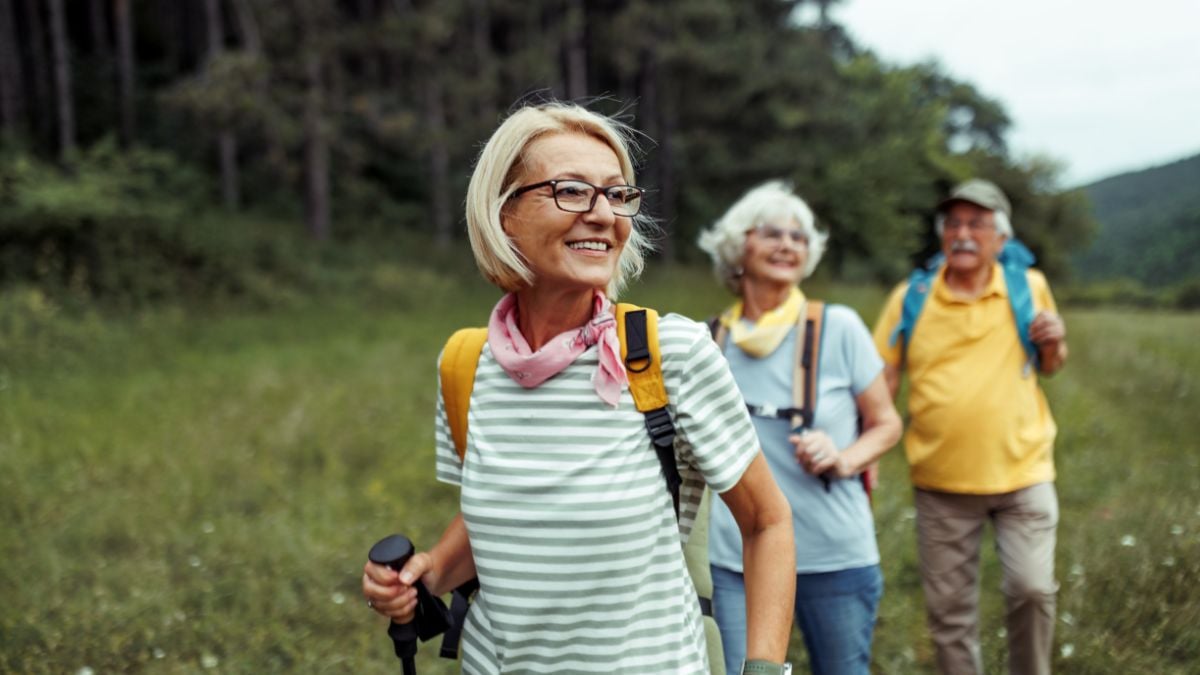
What exercises help maintain the health of aging joints?
The gradual destruction of cartilage in joints affects more than 500 million people worldwide, and this number continues to grow. Many people, when faced with knee or hip pain, instinctively try to move less. But science says exactly the opposite: properly selected exercises are not just safe for joints — they actually help protect them.
Why Joints Hurt With Age and Osteoarthritis Develops
Every joint in our body — whether it’s the knee, hip, or shoulder — is designed like a well-thought-out mechanism. The ends of bones are covered with articular cartilage — a smooth and elastic tissue that works as a shock absorber. Inside the joint capsule is synovial fluid — a thick lubricant that reduces friction between surfaces and delivers nutrients to the cartilage.
The problem is that cartilage heals poorly. It has no blood supply of its own, so damage accumulates. Moreover, hidden knee damage after age 30 is much more common than it seems, even in people without obvious pain. Over the years, cartilage tissue thins, synovial fluid decreases, and joints begin to ache and lose mobility. This process is called osteoarthritis (or osteoarthrosis — in Russian-language medicine the terms are used as synonyms).
According to a large-scale analysis from the Global Burden of Disease Study 2021, published in The Lancet Rheumatology, approximately 595 million people suffer from osteoarthritis — that’s about 7.6% of the world’s population. The most commonly affected are the knee, hip, and spinal joints. Moreover, since 1990, the incidence has increased by more than 130%.
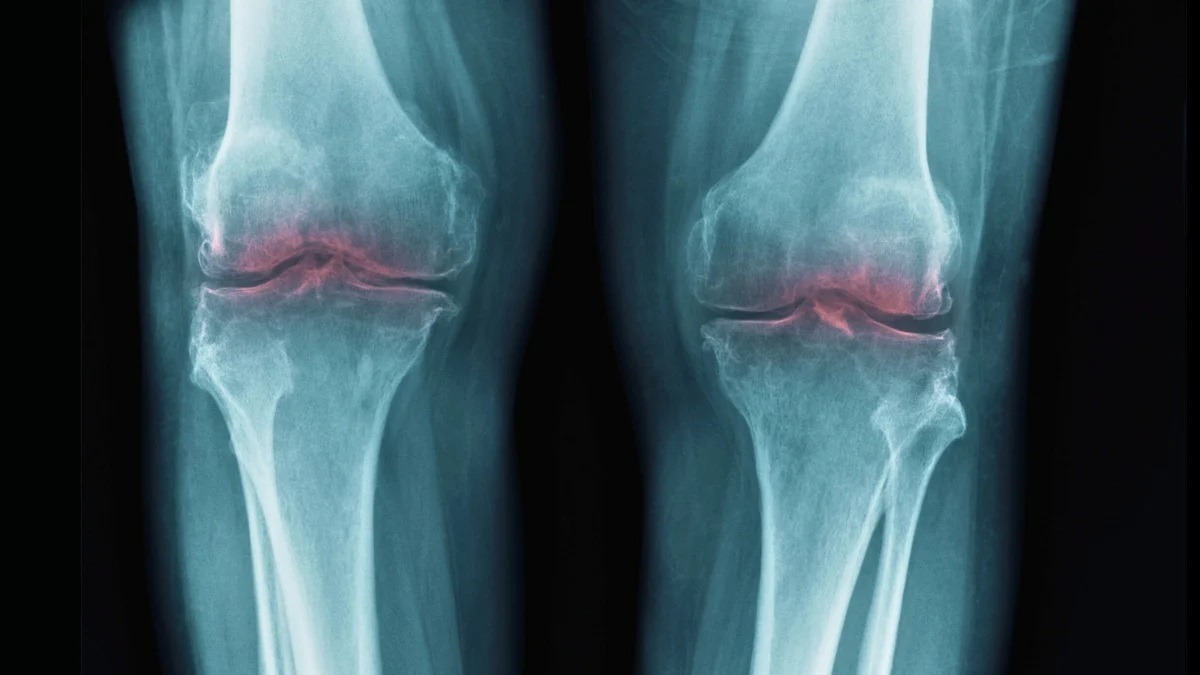
With age, joints can become stiff and painful, which may be a symptom of osteoarthritis
How Joint Exercises Help With Osteoarthritis
It would seem that if cartilage is already wearing out, why put additional load on it? The answer lies in mechanics: synovial fluid is distributed throughout the joint precisely during movement. Without movement, cartilage receives neither lubrication nor nutrition — like a sponge that dries out if you don’t squeeze it.
But there’s a second mechanism. Muscles around the joints work as natural shock absorbers. The stronger they are, the less impact load falls on the cartilage itself. This is especially important because muscles weaken with age, and along with them, the natural protection of joints decreases. Studies show that strength exercises targeting the quadriceps are particularly effective at reducing pain in the knee joints.
A major Cochrane review, which included 139 randomized trials involving more than 12,000 people, confirmed: physical exercises reduce pain and improve joint function in people with knee osteoarthritis. The review, updated in 2024, also showed that the effect is comparable to that of anti-inflammatory drugs — but without the characteristic side effects such as stomach problems.
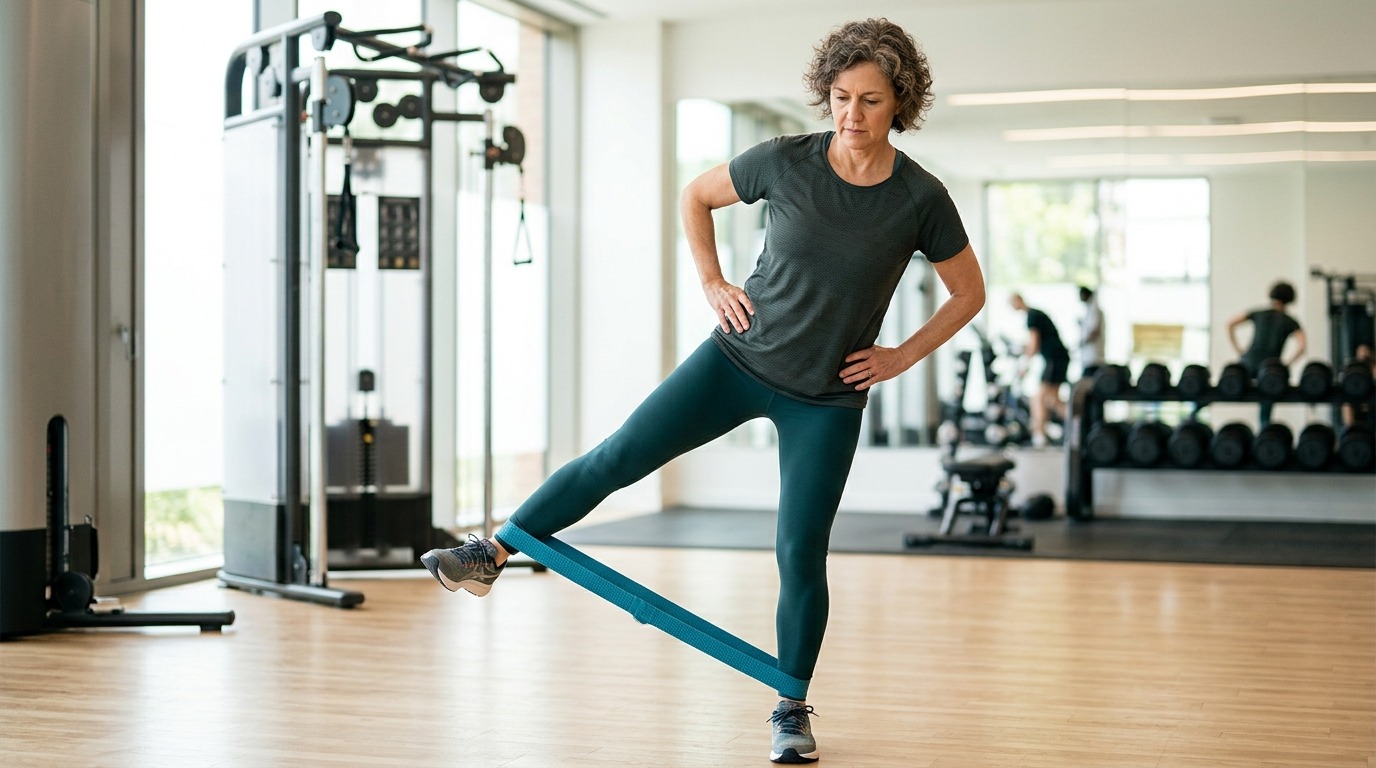
Strengthening thigh muscles helps reduce the load on knee joints
An important caveat: the review authors note that the level of evidence is currently rated as low or moderate, and the clinical significance of improvements in some cases remains questionable. This doesn’t mean exercises are useless — rather, that science continues to refine which types of activity and in what dosages work best.
Best Exercises for Knee Joints Without Load
When it comes to joints, the concept of low-impact exercise is especially important — that is, exercises in which at least one foot remains on a support or the body is supported in some other way. This approach reduces pressure on the joints and lowers the risk of additional damage.
Here are the types of activity that have been studied the most:
- Swimming and water aerobics. Water supports up to 90% of body weight, which dramatically reduces the load on joints. At the same time, muscles work actively due to water resistance.
- Cycling. Riding a bicycle is one of the best exercises for knee joints. Studies confirm that cycling is gentle on the knees while maintaining mobility.
- Yoga. Helps strengthen muscles around the joints and improve flexibility — but requires a careful approach to range of motion.
- Tai chi. This traditional Chinese practice, combining slow, smooth movements with breathing and meditation, has shown impressive results. A 2016 randomized study published in the Annals of Internal Medicine compared tai chi with standard physical therapy in 204 patients with knee osteoarthritis. The result: both groups showed comparable pain reduction, but the tai chi group additionally demonstrated improvements in depression levels and quality of life.
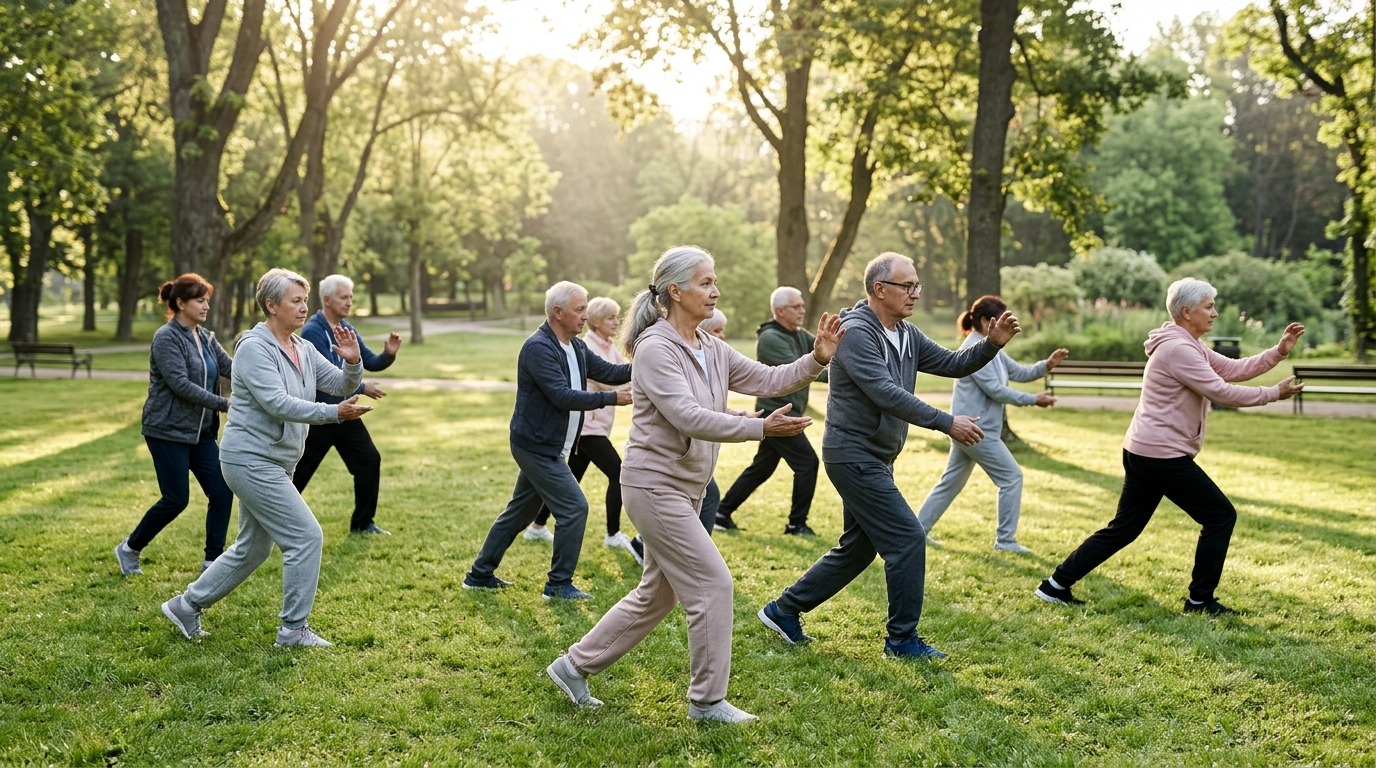
Tai chi practice in the park — gentle exercise accessible to people of any age
Joint Exercises for Older Adults: Balance and Walking
With age, a person’s proprioception — the brain’s ability to sense the body’s position in space — decreases. Joints begin to receive less accurate signals, the load is distributed unevenly, and cartilage wears out faster. That’s exactly why walking on uneven surfaces — grass, gravel, sand — turns out to be such a beneficial exercise. It forces the ankle, knee, and hip joints to constantly adjust, training coordination. It’s no coincidence that gait reveals much more about health than it might seem.
A study from 2026 published in the journal Scientific Reports showed that training on unstable surfaces significantly improves postural control (the ability to maintain stability) in older adults. And a systematic review from the Cochrane Library found that balance exercises reduce the frequency of falls by approximately 23%.
This is a critically important figure. According to the WHO, falls are one of the leading causes of traumatic death in people over 65. According to the MSD Manual, in people of this age, falls are the leading cause of death from injuries. So this isn’t just about comfort — it’s about preserving life.
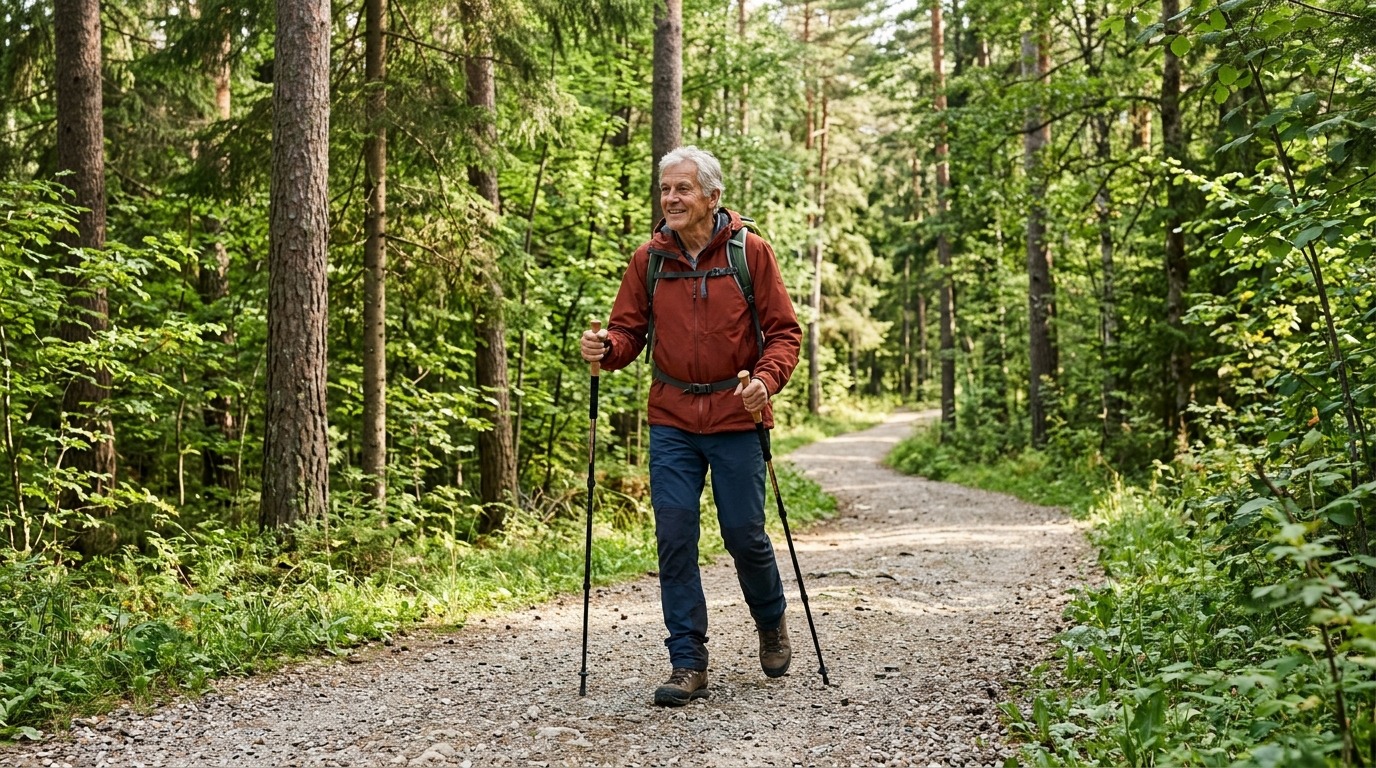
Walking with poles on a forest trail — a simple but effective balance exercise
How to Start Joint Training Without Pain and Risk
To begin, you don’t need a gym or special equipment. Here are three principles that will help you get into a training routine without risk:
- Start small. Choose walking on grass or sand instead of asphalt.