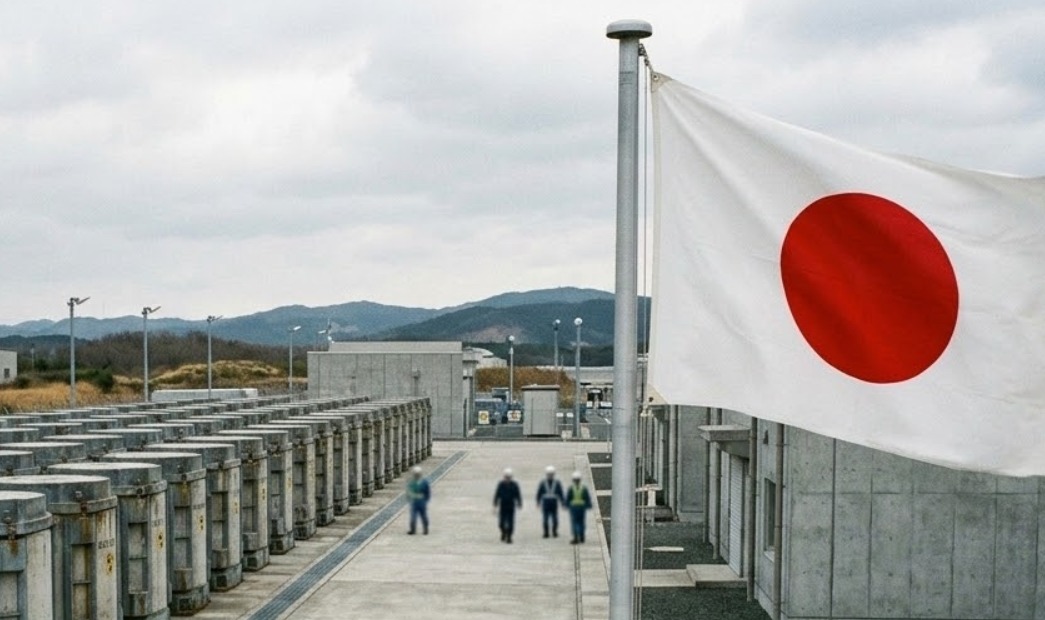
Japan is gradually restarting its reactors. But each one produces waste that needs a permanent home
When it comes to nuclear waste, most people think of concrete bunkers deep underground somewhere in a deserted wasteland. But Japan appears to have found a far more exotic approach. The country’s authorities are considering the tiny coral island of Minamitorishima, located nearly 2,000 kilometers east of Tokyo, as a potential site for radioactive waste disposal. So in the future, this speck of land could join the list of the most radioactive places in the world.
Where Is Minamitorishima Island Located
Minamitorishima is perhaps one of the most remote locations within Japanese territory. It is a tiny coral atoll with an area of just over one square kilometer. For comparison, that’s roughly the size of 150 football fields. The island has no permanent population: it hosts only a small naval base and a meteorological station.
The island is located in the Pacific Ocean, approximately 2,000 kilometers east of the capital. The nearest inhabited settlement is Iwo Jima, and even that is over 1,000 kilometers away. Simply put, it is one of the most isolated places that Japan can call its own territory.
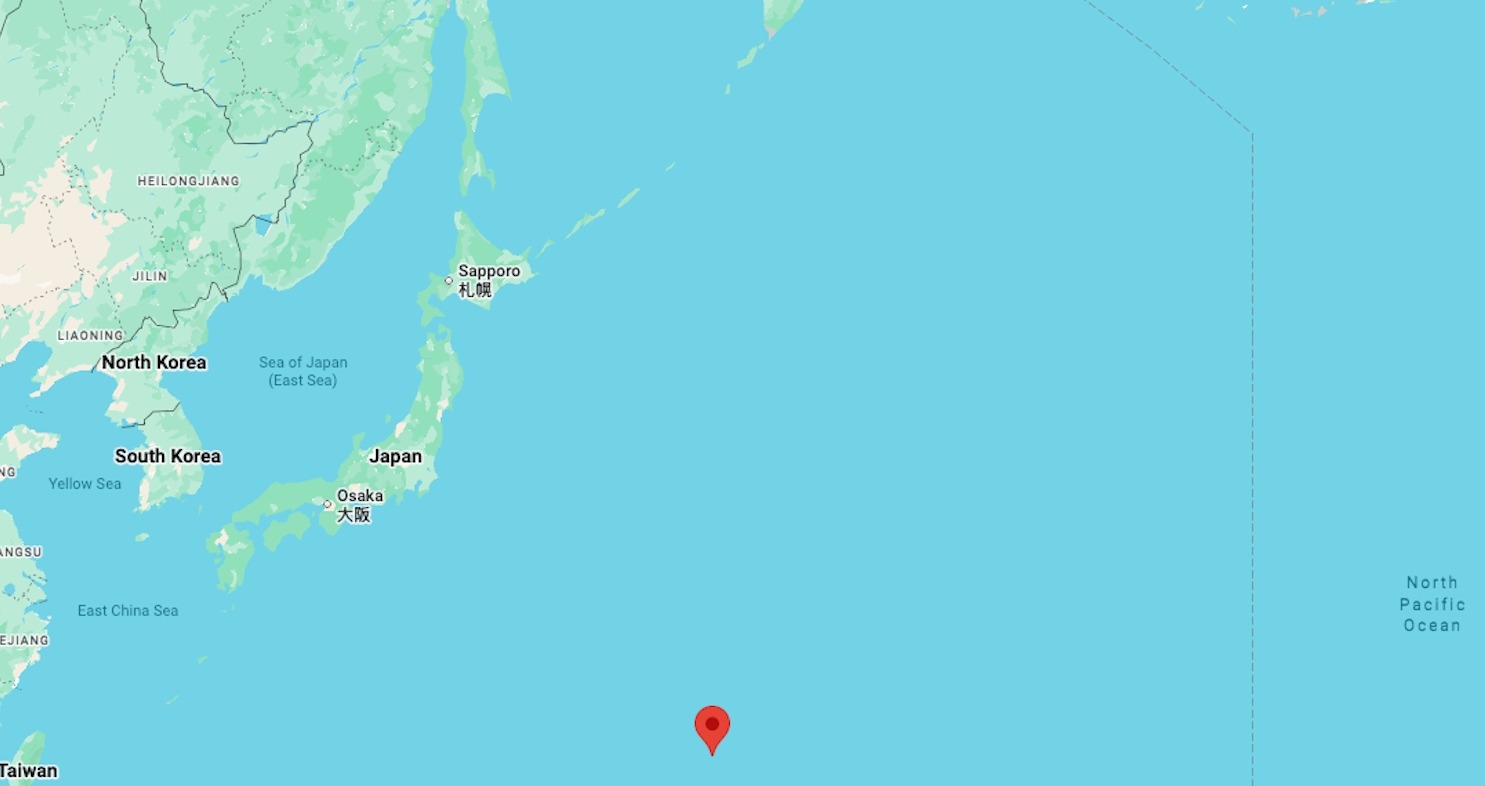
Minamitorishima Island on the map. Image source: popsci.com
It is precisely this remoteness that makes Minamitorishima an attractive candidate. For decades, Japan has tried to find a site for deep geological disposal of radioactive waste, but has faced fierce opposition from local residents every time. On an uninhabited island, this problem simply doesn’t exist. Additionally, scientists have long discovered large deposits of rare earth elements on the ocean floor around the atoll, adding strategic value to the island.
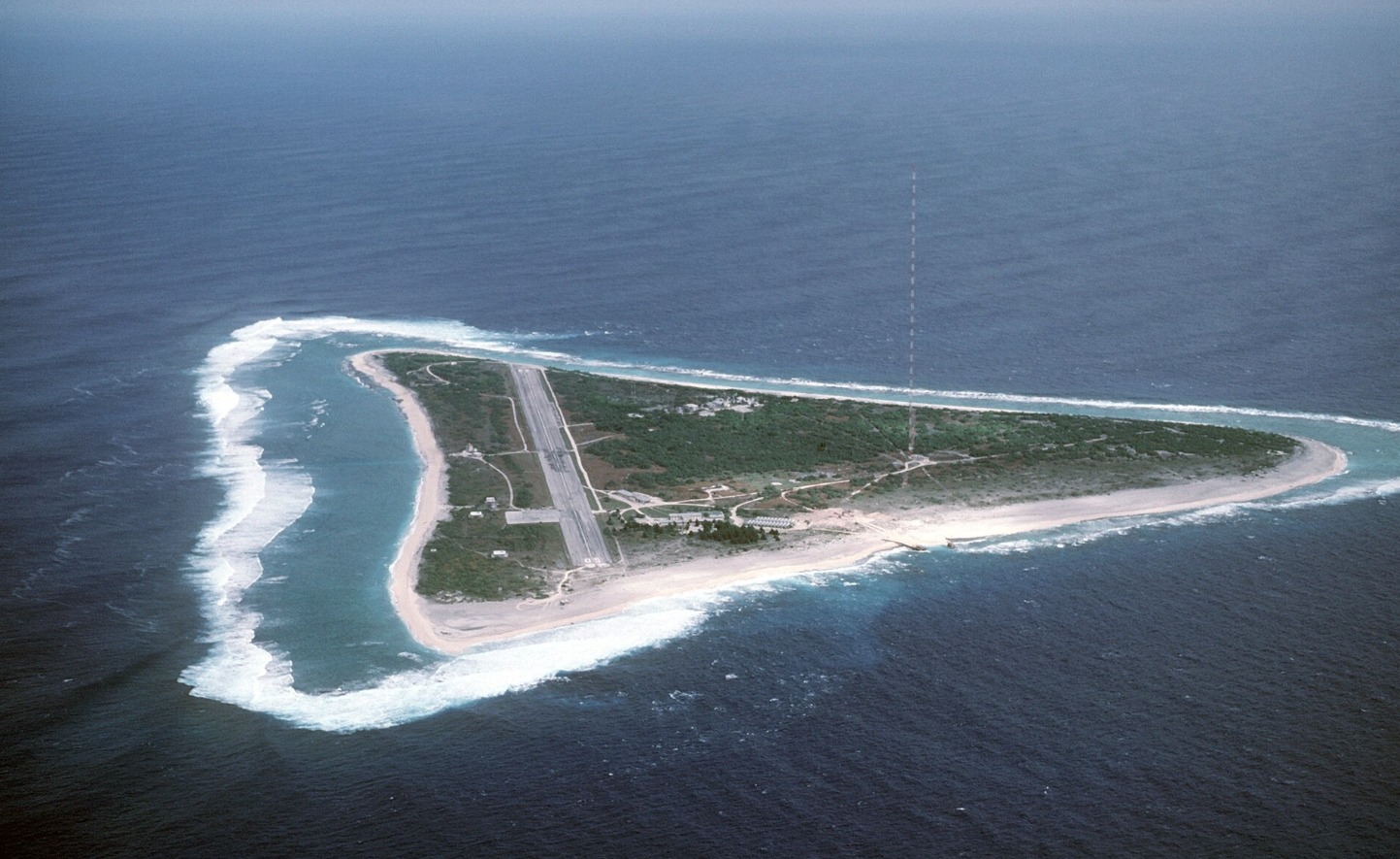
Minamitorishima Island from a bird’s-eye view. Image source: wikipedia.org
Japan’s Nuclear Waste Problem
Japan is the world’s third-largest nuclear energy power. Dozens of reactors operate across the country, and decades of their operation have produced enormous quantities of spent nuclear fuel. And radioactive waste remains dangerous for hundreds of thousands of years.
Japan is a densely populated country located in one of the most seismically active zones on the planet. Earthquakes, tsunamis, volcanic activity — all of this makes choosing a site for an underground repository a true geological quest. After the Fukushima disaster, public distrust of the nuclear industry grew dramatically. Not a single prefecture on the main islands wanted to take responsibility for storing radioactive waste.
To this day, the only realized deep geological repository project in the world remains Finland’s Onkalo nuclear fuel storage facility — a repository whose construction took over 20 years. Japan, despite all its attempts, has not advanced beyond the preliminary research stage. The idea of using Minamitorishima Island is an attempt to break the deadlock.
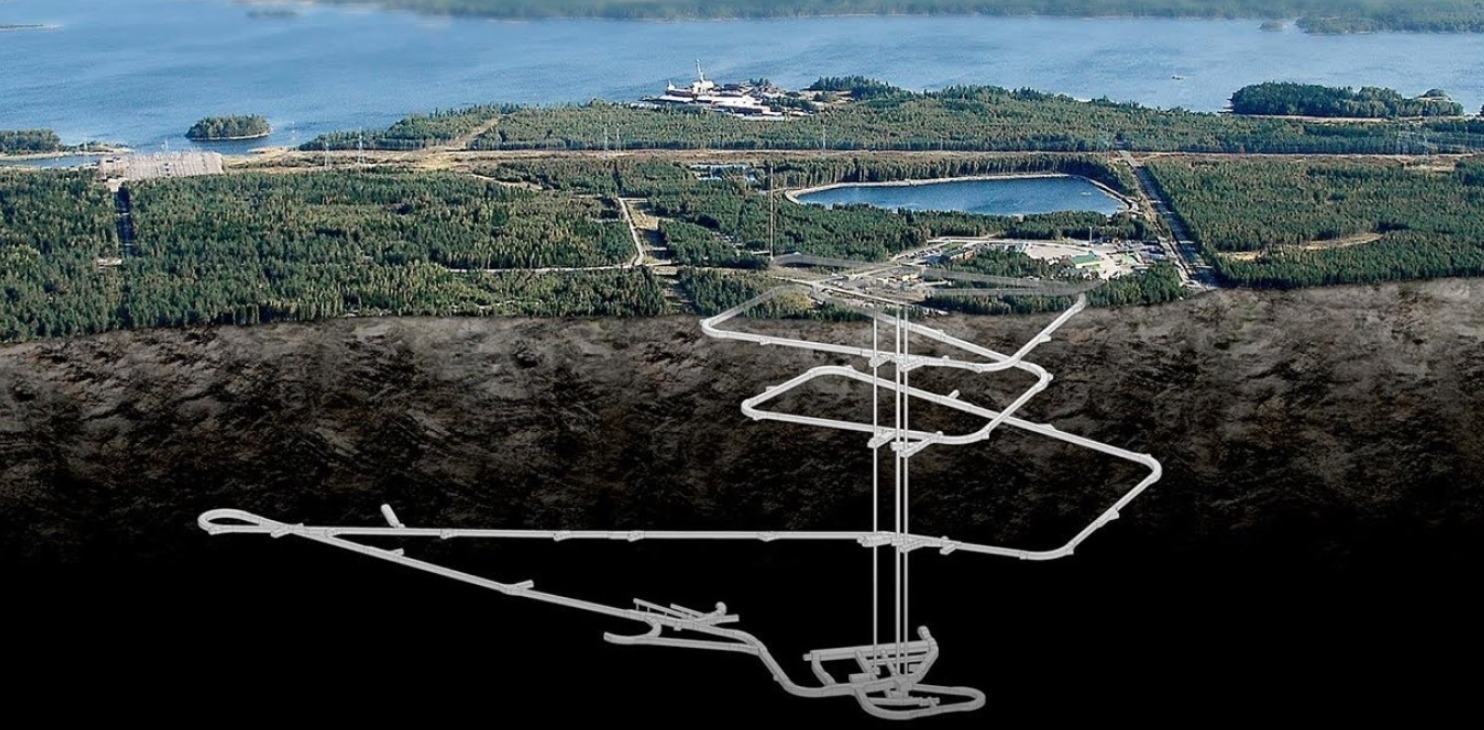
Diagram of the Onkalo repository. Image source: atomic-energy.ru
How Japan Plans to Store Nuclear Waste
In reality, this isn’t about simply dumping barrels of radioactive waste on a coral shore. Japanese authorities are considering the creation of a deep underground repository in the rock formations beneath the island and the adjacent seabed. The concept involves drilling shafts to a depth of 300 to 500 meters, where waste would be sealed in special containers made of multiple layers of steel, copper, and bentonite clay.
But there’s a catch. The geological conditions of the island have not yet been studied sufficiently. The atoll consists of coral deposits, with volcanic rock underneath. Scientists will need to determine how stable this structure is and how it will behave under seismic activity over thousands of years. Preliminary research will take at least 10-15 years.
Another important aspect is logistics. Delivering heavy containers with radioactive materials to an island in the middle of the ocean is quite a challenge. It will require construction of a specialized port and infrastructure capable of withstanding the typhoons that regularly batter this region of the Pacific Ocean. The cost of the project has not yet been disclosed, but experts estimate it could run into tens of billions of dollars.
The Dangers of Nuclear Waste Disposal
Environmental organizations have already expressed concern. The main question is what would happen if the containers ever develop leaks. The Pacific Ocean is not just water — it is an entire ecosystem that millions of people depend on. A leak of radioactive materials into the ocean could have catastrophic consequences for marine life and the fishing industry.
Furthermore, the area sits on the Pacific Plate, which, as is well known, is not exactly calm. It turns out that some of the most powerful earthquakes on the planet occur precisely at the junction of this plate with the Philippine Plate. However, proponents of the project argue that the island itself is located far from subduction zones, and risks can be minimized with the proper choice of burial depth.
There is also a political dimension. Neighboring countries, primarily China and South Korea, may react negatively to plans for placing nuclear waste in the Pacific Ocean. After Japan began discharging treated water from Fukushima in 2023, diplomatic scandals continued for months. The new project risks reigniting the conflict.
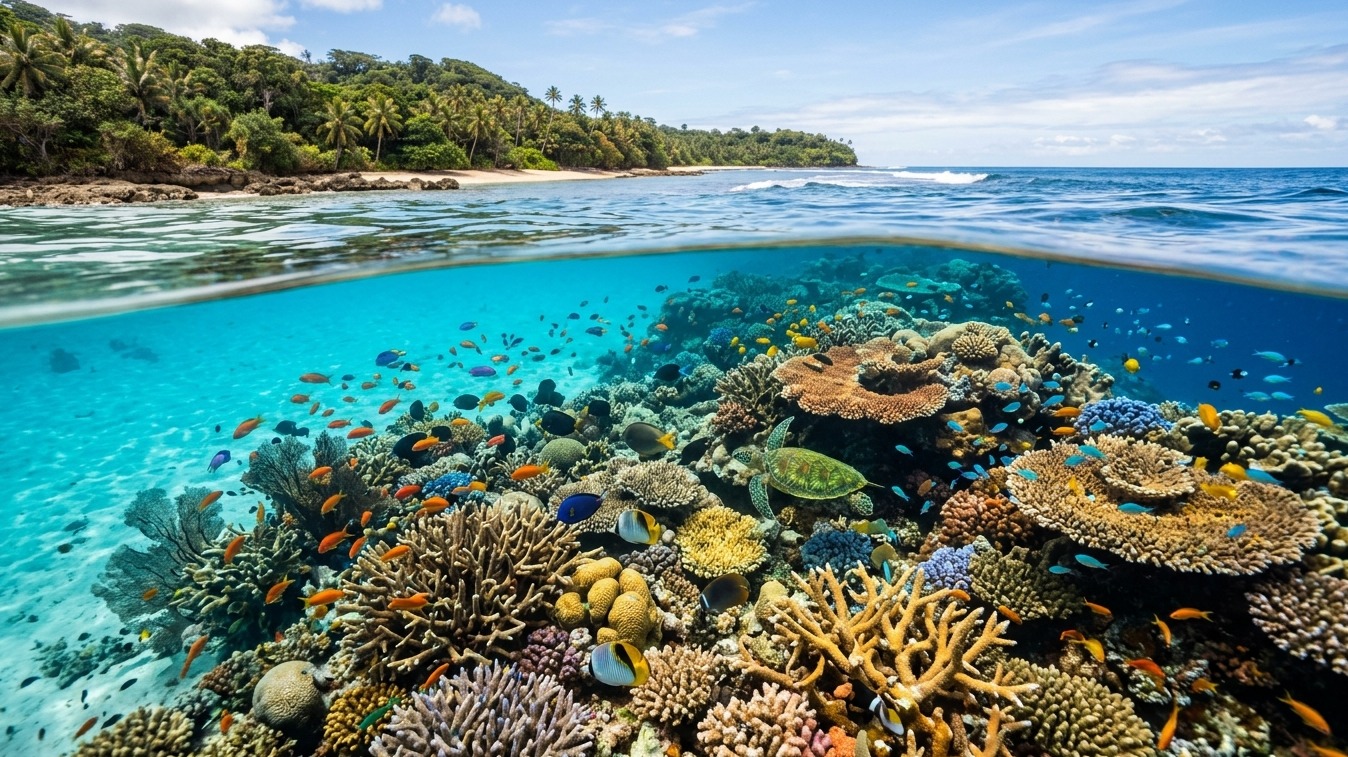
This is the beauty that environmentalists fear losing. The coral reefs around the island are home to hundreds of marine species
When Will Japan Build a Nuclear Waste Repository
For now, the project is at its earliest stage. The Japanese government has merely included Minamitorishima on the list of potential sites for study. This means years of geological research, environmental assessments, and public consultations lie ahead. According to the most optimistic forecasts, a final decision will not be made before 2035-2040, and the construction of the repository itself could take another 20-30 years.
Meanwhile, spent nuclear fuel continues to accumulate at Japanese nuclear power plants. Temporary storage facilities are filling up, and there are no new solutions yet. Japan will have to choose: either an exotic but potentially viable option with an island in the middle of the ocean, or continue postponing a problem that only gets worse with each passing year.