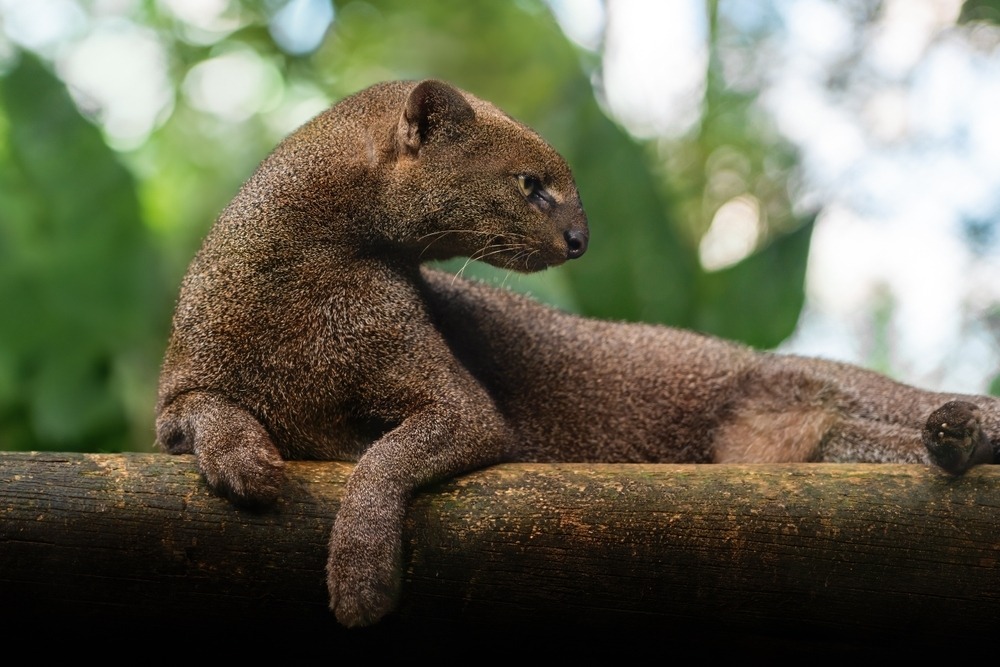
A cat that doesn’t look like a cat — that’s the jaguarundi. It loves figs and can produce an enormous variety of different sounds. Image source: moya-planeta.ru
Among all the wild cats on the planet, there is one that can easily be mistaken for an otter, a weasel, or even a small puma. This is the jaguarundi — a secretive, agile, and completely atypical feline creature. Its main superpower is its voice: the jaguarundi produces more than thirteen different sounds, from bird-like chirping to piercing whistles. This is why it has been nicknamed the “whistling cat.”
What Does the Jaguarundi Look Like and How Does It Differ from Other Cats
The jaguarundi (Herpailurus yagouaroundi) is a small predator from the cat family that inhabits a vast territory from the southern United States and Mexico through all of Central America to Argentina. Yet seeing one in the wild is an enormous stroke of luck. The jaguarundi leads a secretive, solitary lifestyle and prefers dense thickets where it is extremely difficult to spot.
At first glance, this animal doesn’t look like a cat at all. The jaguarundi has an elongated, low-slung body, short legs, a long tail, and a small flat head. It resembles a large weasel or marten more than a typical cat.
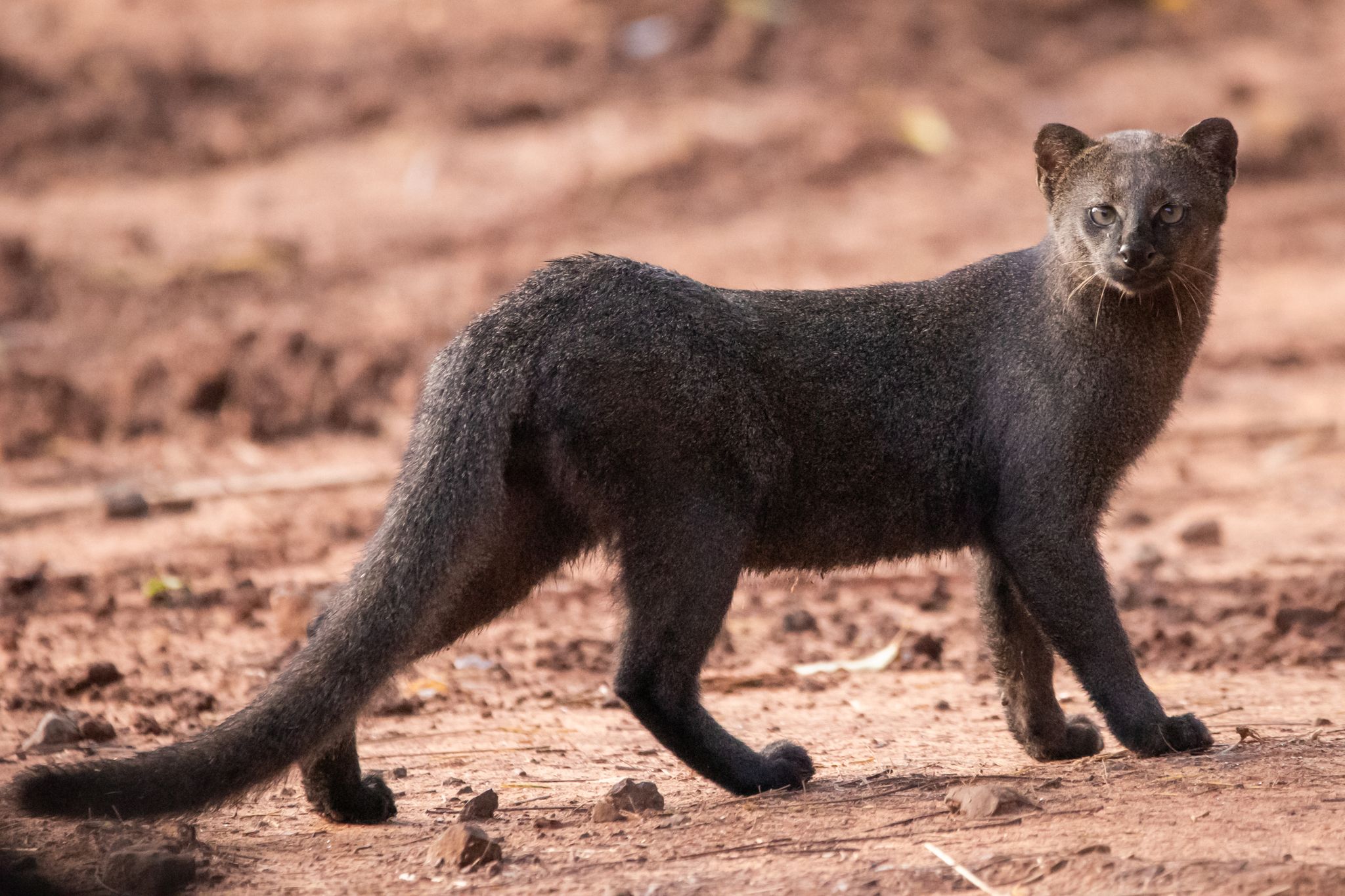
A jaguarundi in its natural habitat: the characteristic elongated body and short legs are visible. Image source: in.pinterest.com
Its size is roughly that of a medium domestic cat: body length about 50–70 centimeters plus a tail of approximately the same length, weighing from 3.5 to 9 kilograms. Different felines have plenty of strange anatomical details.
The jaguarundi’s coat is solid-colored, without spots or stripes — yet another feature that sets it apart among cats. There are two main color forms: dark brown (almost black) and reddish-chestnut. Interestingly, kittens of different colors can be born in the same litter.
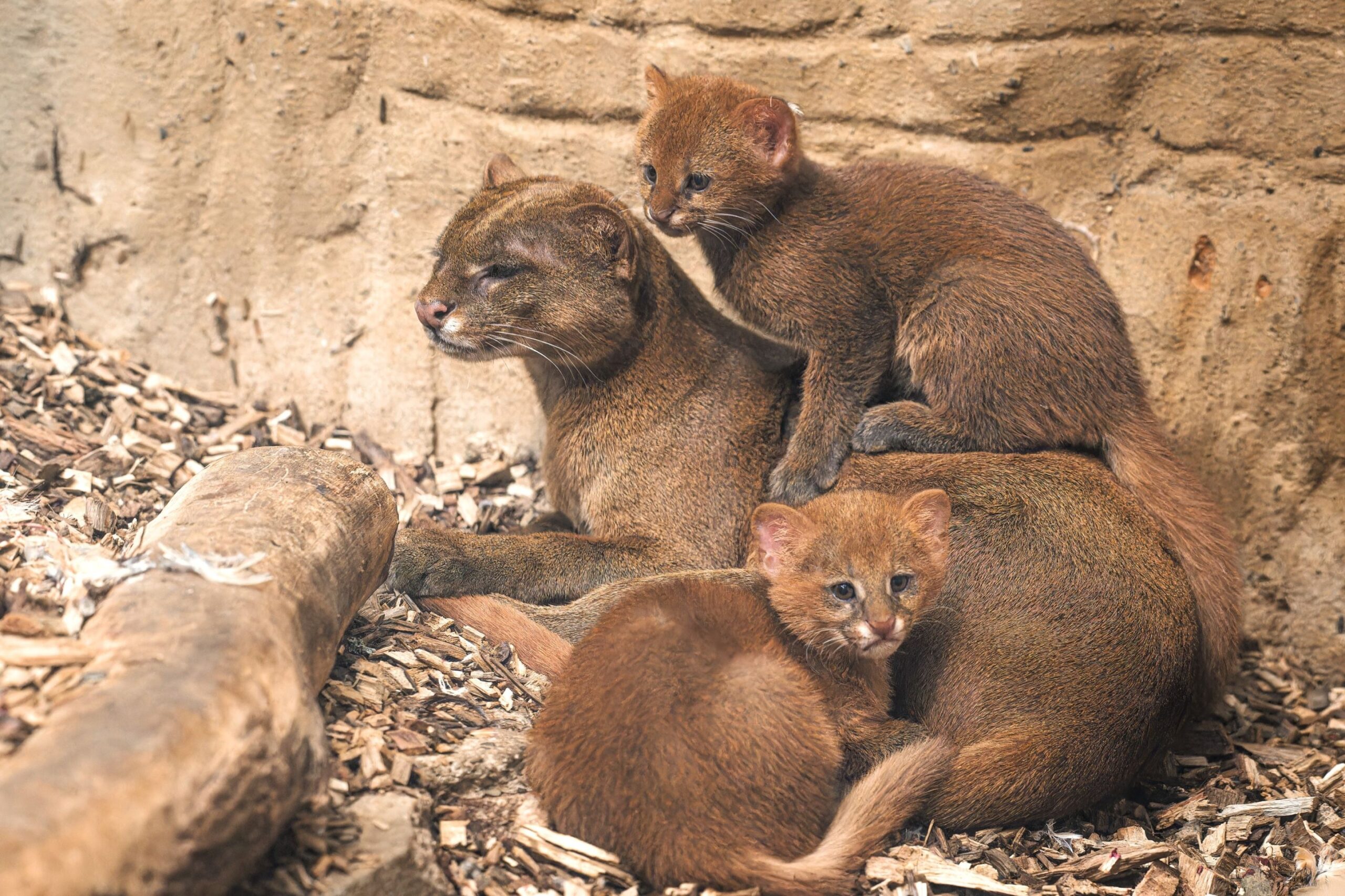
Newborn jaguarundis sometimes have a finely speckled coloring. Adult individuals have no spots on their body — only light markings on the sides of the nose and chest. Image source: zoopraha.cz
Why the Jaguarundi Is Called a Small Puma
Despite its outward resemblance to martens and otters, the jaguarundi is genetically closest to the puma. These two species are nearest relatives, although the size difference between them is enormous: an adult puma weighs up to 100 kilograms, while a jaguarundi weighs ten times less.
The common ancestor of the puma and jaguarundi lived several million years ago. Since then, their paths diverged: the puma became a large apex predator, while the jaguarundi occupied the niche of a small and inconspicuous hunter. But their kinship shows in the details — for example, both species lack the spots on their coat characteristic of many cats, and their skull structure shows notable similarities.
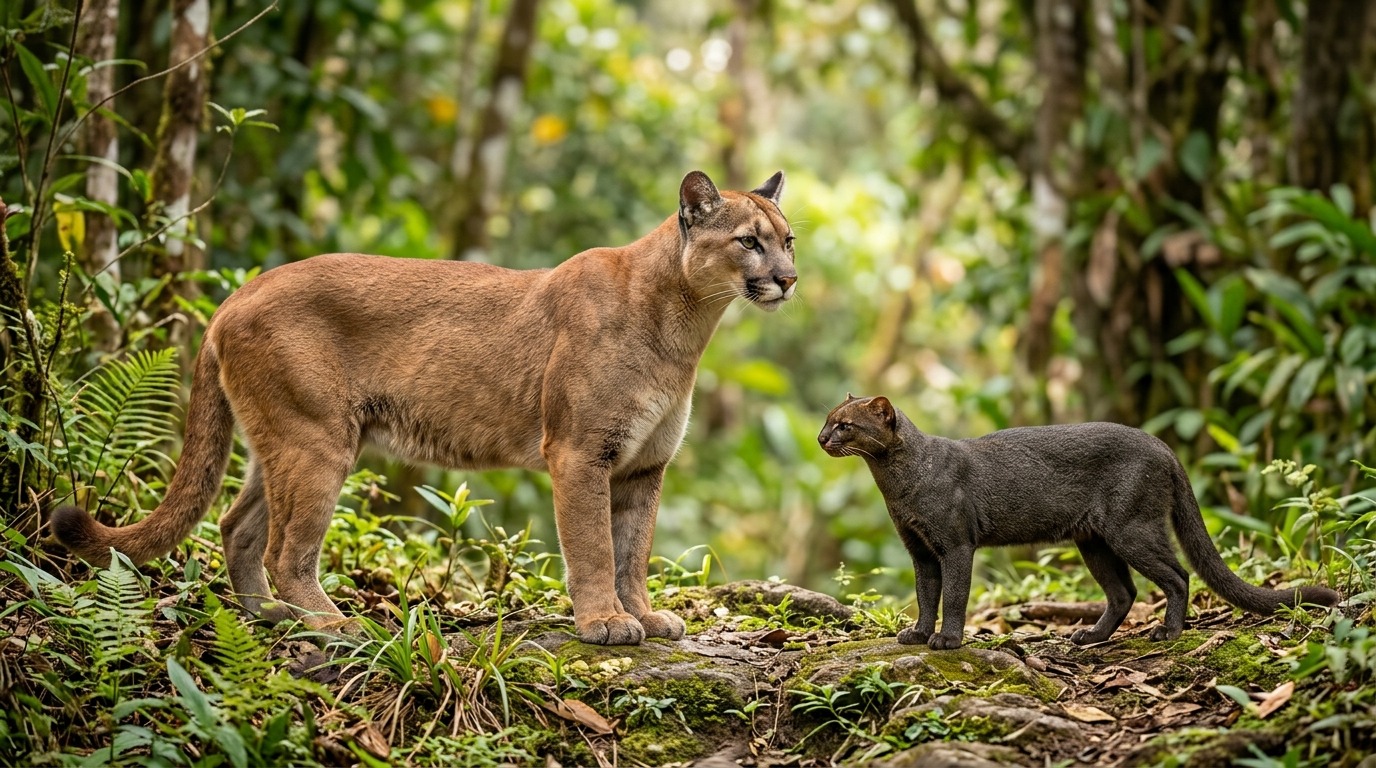
The puma and jaguarundi — closest relatives with a huge difference in size
What Sounds Does the Jaguarundi Make and Why Are There So Many
Now we’ve reached the most unusual part. Most felines have a rather modest repertoire: meowing, purring, hissing, growling — and that’s about it. The jaguarundi, however, is capable of producing more than thirteen different types of sounds.
This “vocabulary” includes:
- chirping similar to birdsong;
- short whistles;
- purring;
- growling and grumbling;
- crackling, “chattering” sounds;
- thin squeaks;
- a cry resembling weeping.
For its habit of whistling — yes, actually whistling — the jaguarundi earned the nickname “whistling cat.” If you heard this sound in the forest, you would more likely think a bird was nearby rather than a predatory mammal. Such a diversity of vocalizations probably helps the jaguarundi communicate with others of its kind across distances in dense tropical thickets where visual contact is nearly impossible.
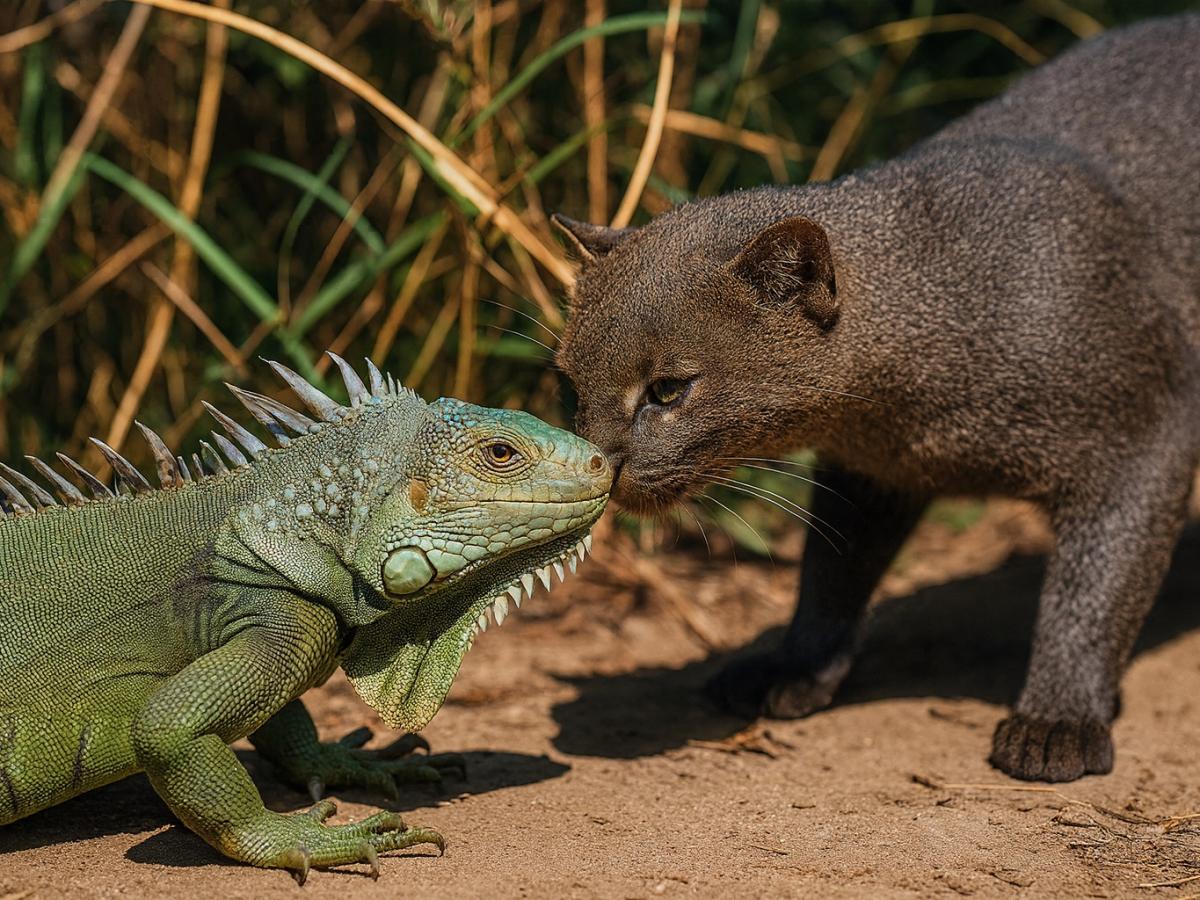
The jaguarundi is an example of how intelligence and behavioral flexibility help an animal coexist with other species. Image source: pravda.ru
What Does the Jaguarundi Eat and How Does It Hunt During the Day
Unlike most wild cats, the jaguarundi is predominantly active during the day. This is quite unusual: as a rule, small felines hunt at dusk or at night to avoid encounters with larger predators. But the jaguarundi has adapted to a diurnal lifestyle — possibly to avoid competing for prey with other nocturnal hunters, such as ocelots.
The diet of this cat is diverse: small rodents, birds, lizards, frogs, insects, fish, and even fruit. Yes, a gastronomic peculiarity of the jaguarundi is that it doesn’t mind snacking on fruit — its diet includes grapes, figs, dates, and bananas.
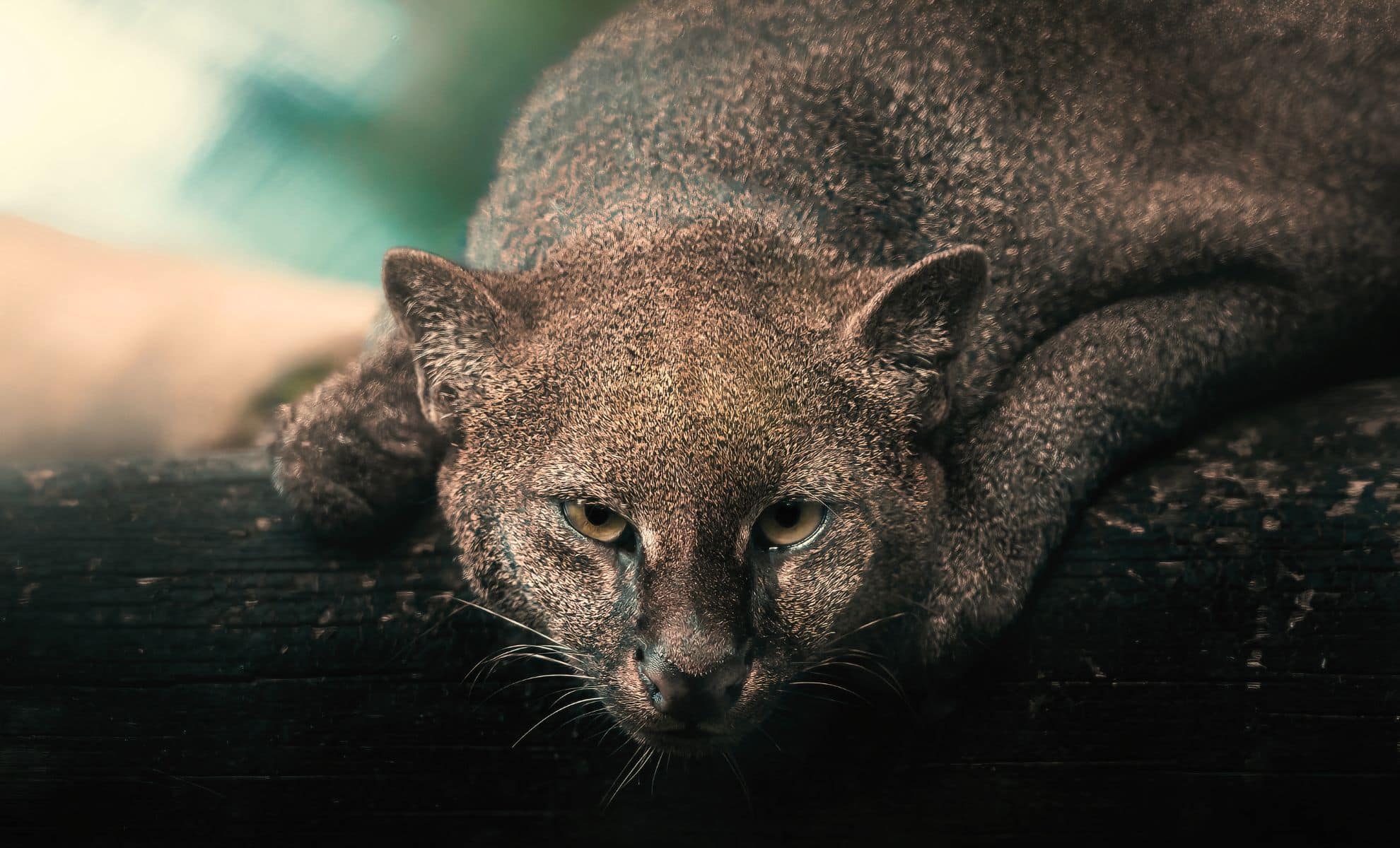
Sometimes the jaguarundi raids poultry farms and fruit plantations where bananas and figs are grown. It often does this together with accomplices — monkeys: they pick the fruit, and the jaguarundi collects it. Image source: dishcuss.com
The jaguarundi is an excellent swimmer and climber, although it prefers to hunt on the ground, making its way through the underbrush in quick, low-crouching dashes. The territory of a single jaguarundi can range from 6 to 100 square kilometers — the variation depends on food abundance and vegetation density. Males control larger areas, females — smaller ones. The animal regularly patrols its territory and marks it. And it’s best not to intrude on this territory — the jaguarundi is aggressive, fearless, and cunning.